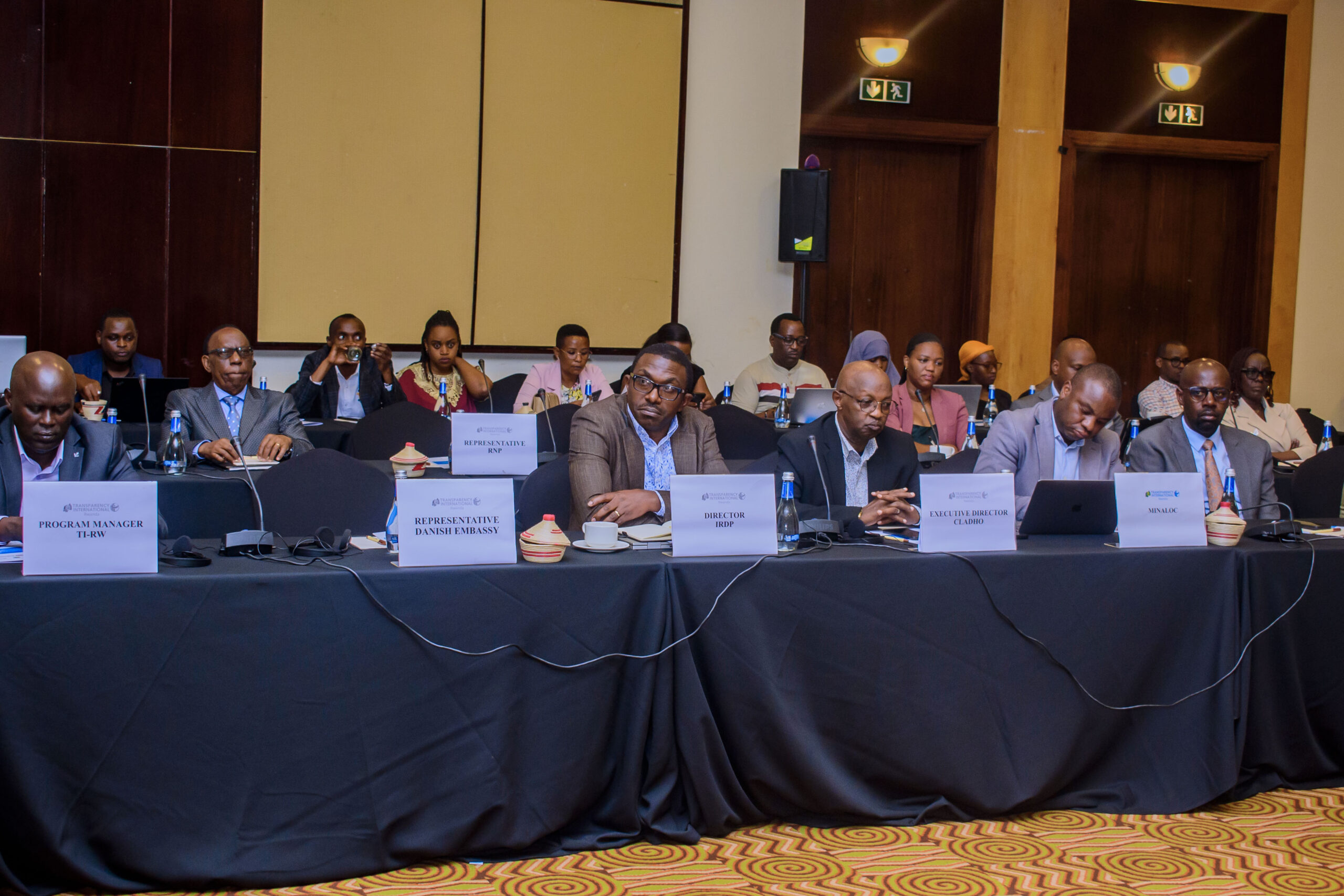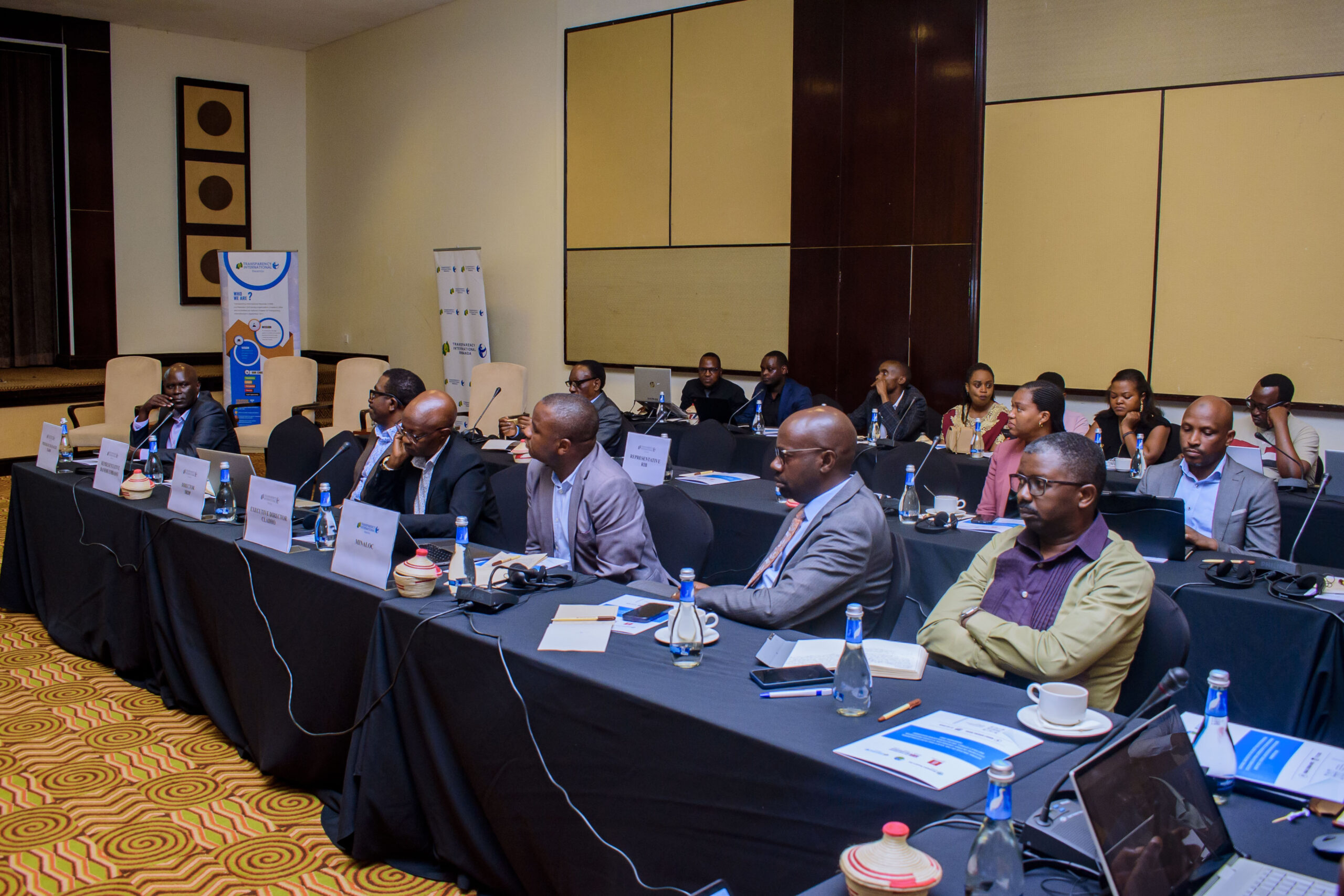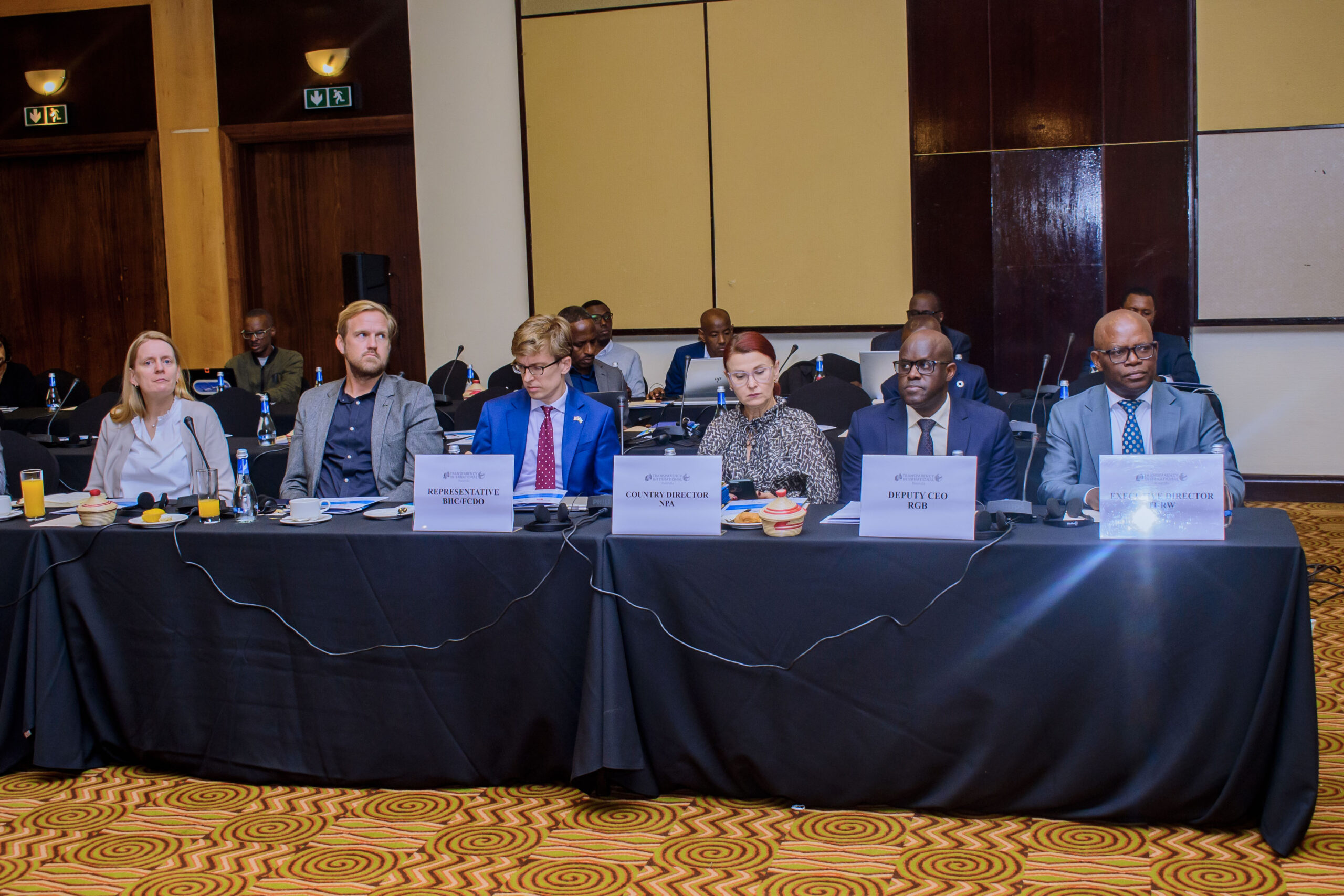



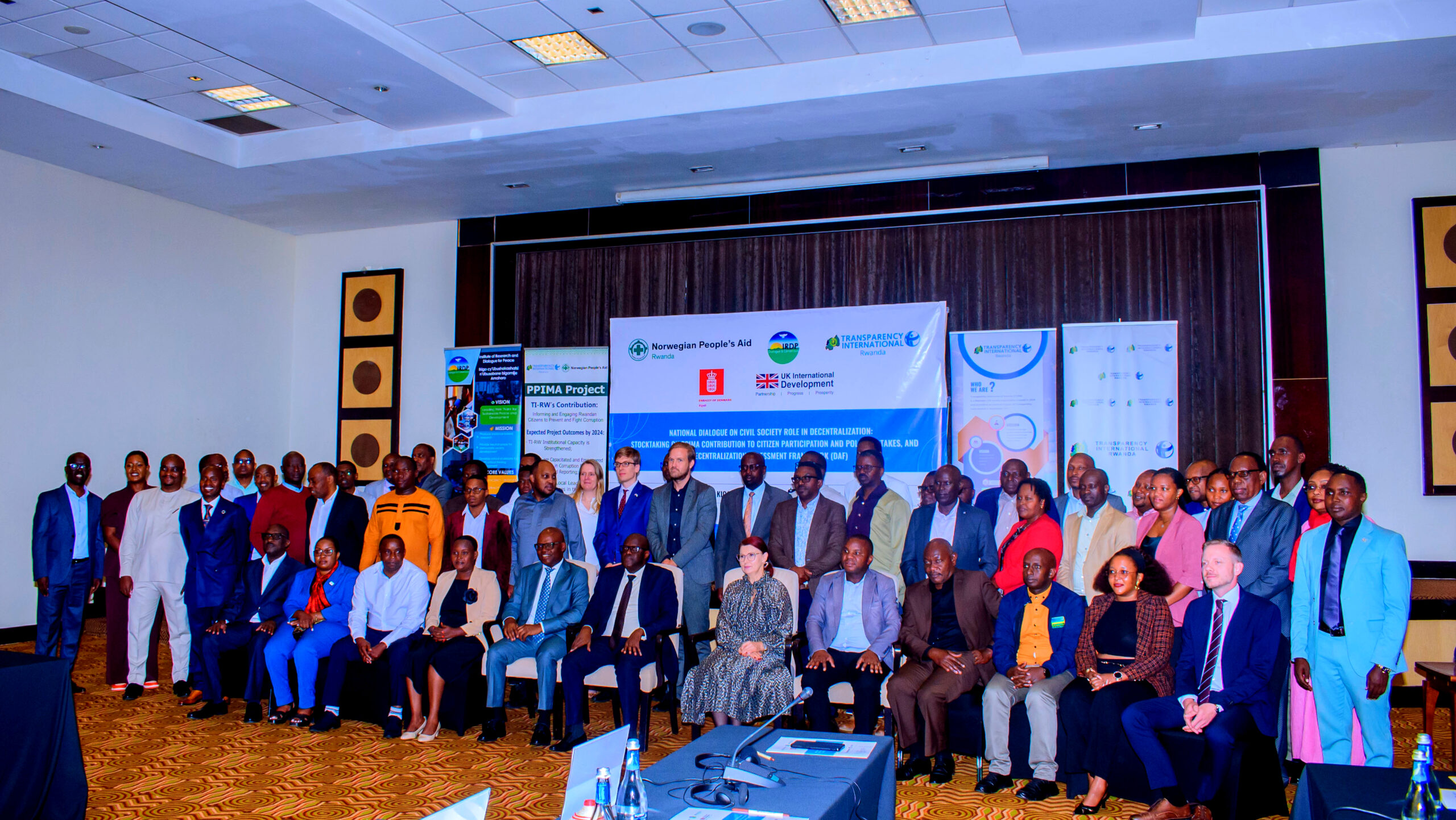
The Danish Embassy in Rwanda has announced a new governance programme that will build on the achievements of the 15-year-old Public Policy Information, Monitoring and Advocacy (PPIMA) project, which has played a significant role in strengthening citizen participation and civil society engagement in Rwanda’s governance and public policy processes.
The announcement was made on December 17 during the official phase-out of PPIMA, a project coordinated by Norwegian People’s Aid (NPA) and implemented by Transparency International Rwanda in partnership with several local civil society organisations (CSOs).
Implemented in four phases with a wide range of stakeholders, PPIMA has recorded notable successes in promoting accountability, citizen engagement, and policy influence at both local and national levels.
Community Score Card: A Flagship Innovation:
One of PPIMA’s most impactful innovations is the Community Score Card (CSC), a participatory social accountability tool that enables citizens to assess the quality of public services such as health, water, and agriculture.
Through structured “interface meetings,” citizens and service providers jointly review CSC findings and agree on action plans to address service delivery gaps. The effectiveness of this approach has prompted the Rwanda Governance Board (RGB) to explore integrating CSC mechanisms into official government feedback systems.
Impact studies show that CSC implementation has significantly enhanced citizen participation in governance processes, including performance contracts (Imihigo). Comparative assessments also reveal stronger demand and impact in rural communities, highlighting the need for scaling up the tool nationwide.
Policy Influence and Tangible Results:
PPIMA partners have contributed to shaping key national policies, including the 2018 revision of the Rwanda Penal Code and inputs into the National Strategy for Transformation (NST).
The project has also strengthened justice and anti-corruption efforts through the establishment of Anti-Corruption and Justice Information Centres (AJICs), which provide legal advice and support citizens in reporting corruption-related cases.
At the community level, citizen feedback facilitated through PPIMA has led to the construction of schools, improved access to clean water, and better distribution of agricultural inputs such as seeds and fertilisers.
Advancing Gender and Social Change: PPIMA has also been instrumental in amplifying women’s voices in governance. In 2011, the project supported the publication of Rwanda’s first report on gender-related corruption, a previously taboo subject.
Advocacy efforts under PPIMA have further contributed to social change, including improved access to sexual and reproductive health services for young people and progress on sensitive social policy discussions.
New Governance Programme:
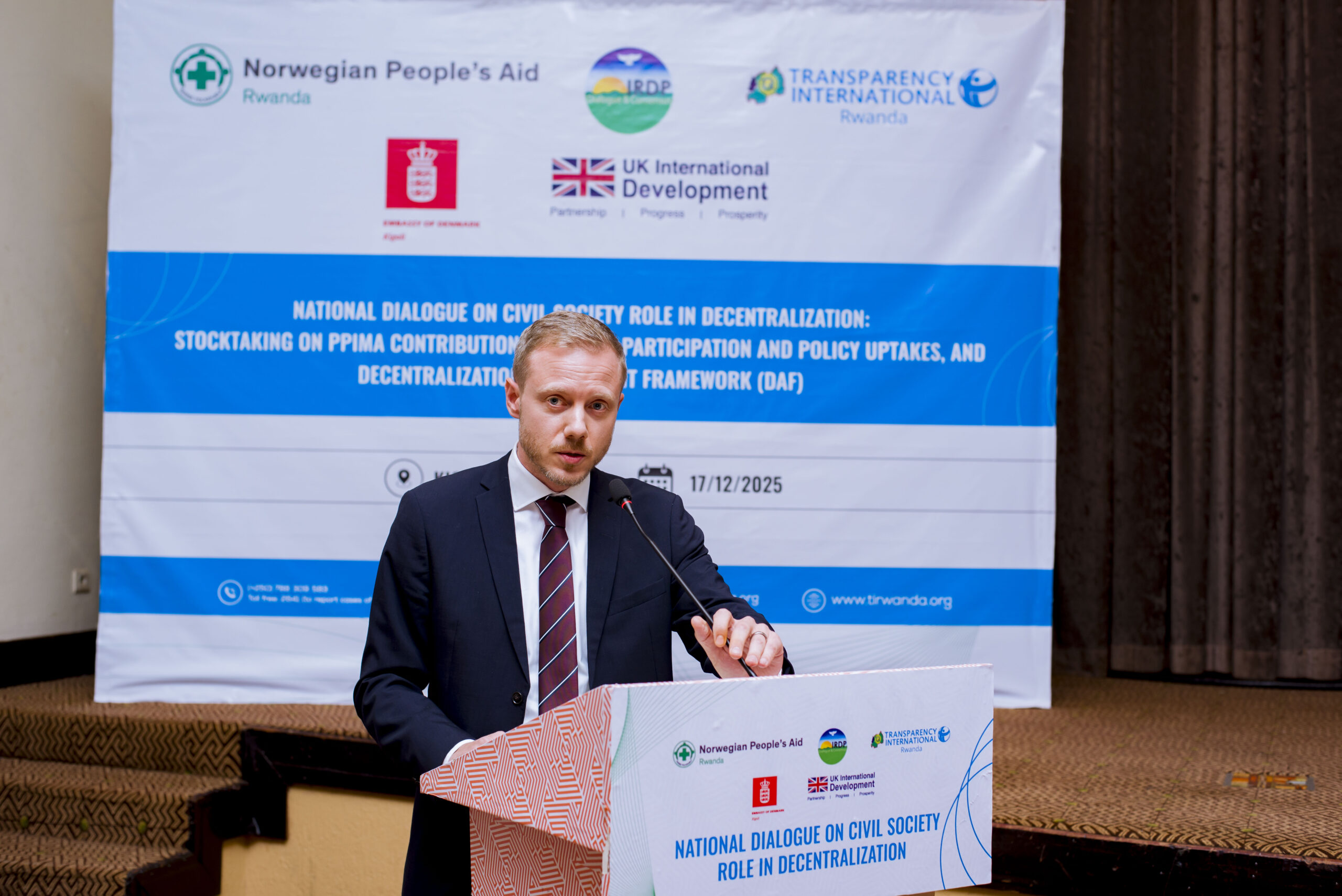
Ambassador Casper Stenger Jensen
Speaking at the event, Danish Ambassador to Rwanda Casper Stenger Jensen praised the achievements of PPIMA and its partners, noting the visible impact of citizen participation through the Community Score Card.
“Through PPIMA’s phases, we have seen citizens actively participating in community development, with many partners here today playing a critical role,” Jensen said, commending Norwegian People’s Aid and its partners, including Transparency International Rwanda, Tubibe Amahoro, ADEPE, CLADHO, FVA and AJPRODHO.
Jensen announced that, drawing on lessons from PPIMA and related initiatives, Denmark has developed a new programme titled “Governance, Human Rights and Reconciliation.”
The approximately three-year programme will be implemented with local CSOs and national institutions.
Under the new initiative, Denmark will support citizens and CSOs to:
* Actively and meaningfully participate in governance and accountability dialogues for climate-resilient local growth;
* Improve delivery of and access to justice services;
* Build resilient, cohesive and inclusive communities through integrated approaches to healing, livelihoods, civic participation, and conflict resolution.
An official programme launch is planned for early next year.
Stronger CSO Engagement:

RGB Deputy CEO Dr. Felicien Usengumukiza stressed the importance of both qualitative and quantitative evidence in informing policy decisions. He noted that CSO involvement in policy formulation remains one of Rwanda’s weakest governance areas.
He also highlighted ongoing challenges related to public awareness, inclusiveness, and citizens’ capacity for meaningful participation, warning that declining donor funding could undermine CSO effectiveness.
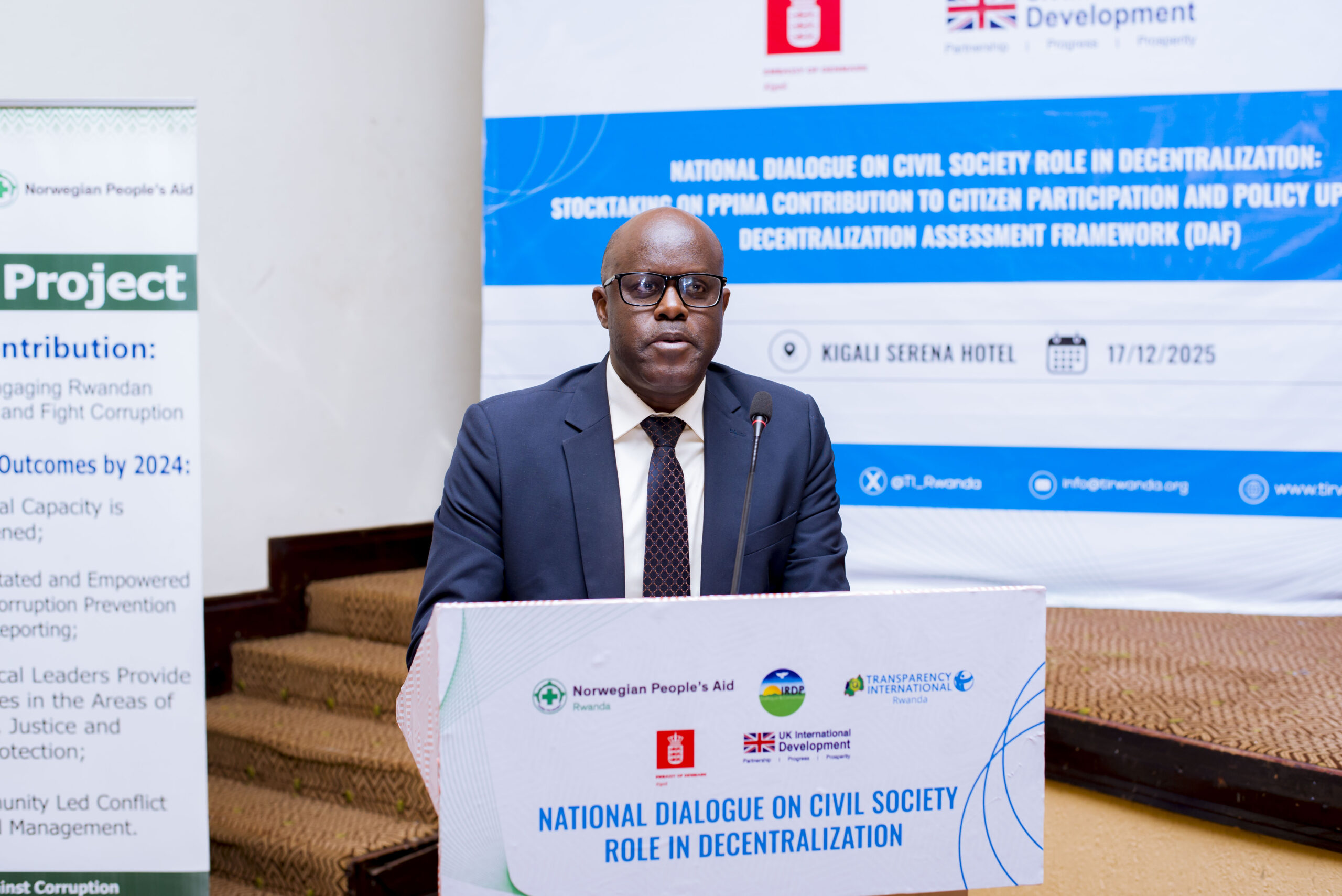
Dr. Felicien Usengumukiza
International Perspectives and the Road Ahead:
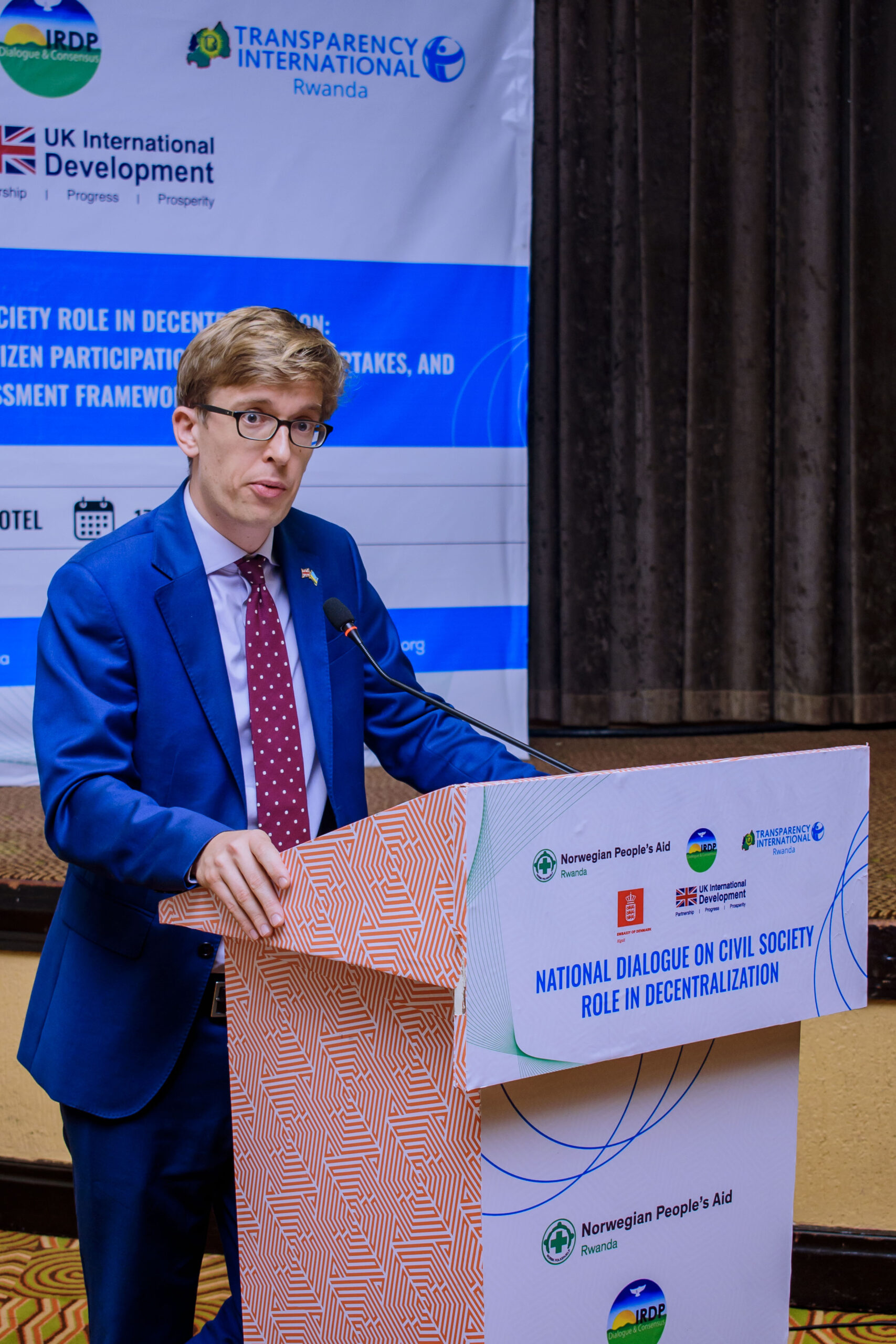
A representatives from the British High Commission emphasised the need to consolidate PPIMA’s gains in support of Rwanda’s second National Strategy for Transformation (NST2). From a UK perspective, decentralisation—particularly devolution—was highlighted as a key driver of growth.
The Decentralisation Assessment Framework (DAF), under the Governance and Decentralisation Sector Strategic Plan (2024–2029), was cited as a critical tool for strengthening evidence-based decision-making and deepening the UK–Rwanda governance partnership.
Financing and Sustainability Challenges:
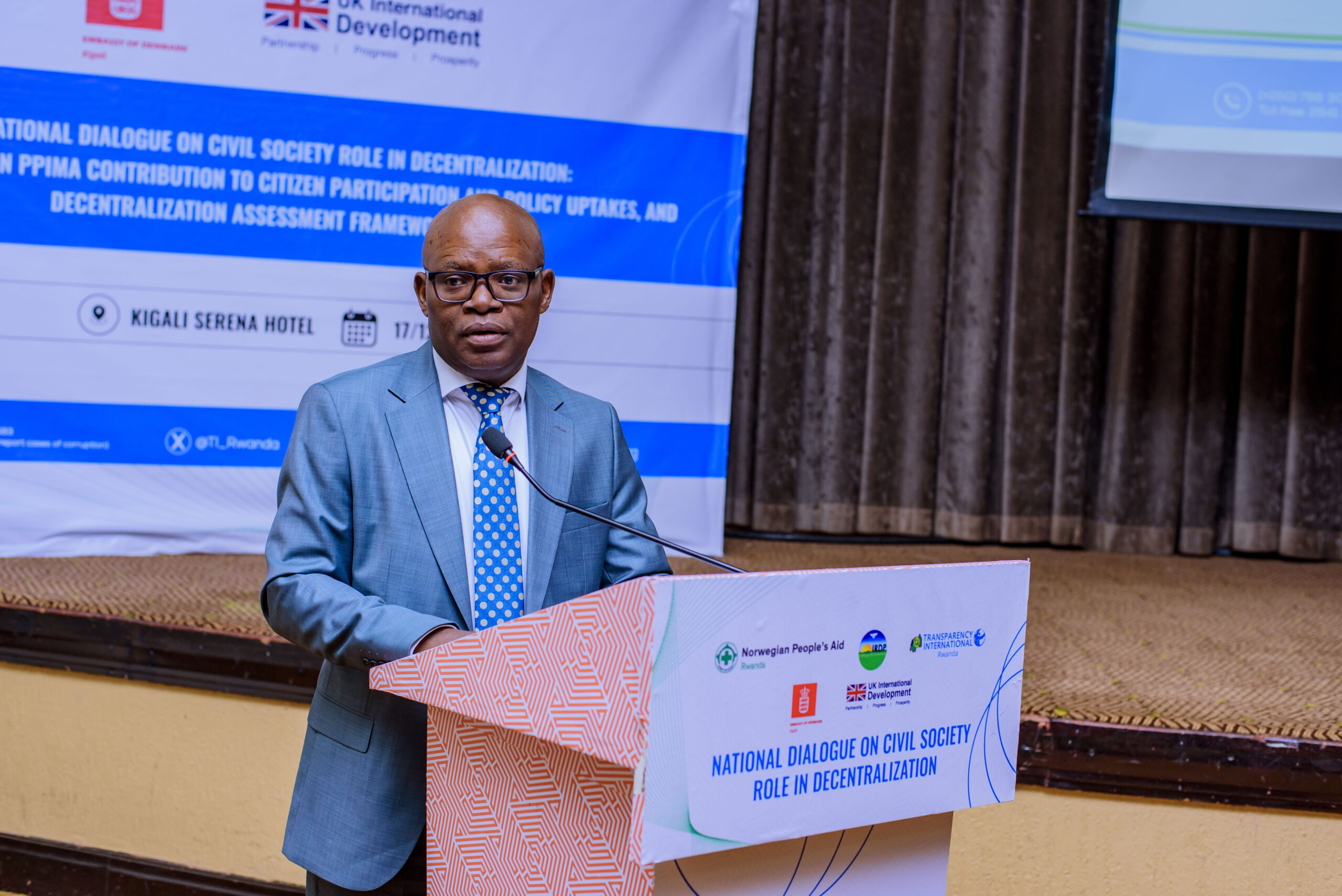
Apollinaire Mupiganyi, Executive Director, Transparency International – Rwanda (TI-R) thanked the CSOs and development partners for delivering a successful citizen-based project
A cost analysis of the Community Score Card shows it is currently implemented in 19 of Rwanda’s 30 districts. Nationwide rollout would require an estimated Rwf1.4 billion annually, with an additional Rwf135 million for CSO training and scale-up.
Stakeholders agreed that long-term sustainability will depend on strong CSO involvement and repositioning the CSC as a homegrown government–citizen engagement tool rather than a donor-driven initiative.
Ministry of Local Government Director General for Community Mobilisation and Youth Volunteers Coordination, Richard Kubana, said the project has helped increase service delivery to citizens from almost zero to 44 percent, with ambitions to reach 70 percent.
Gatsibo District Mayor Richard Gasana described PPIMA as vital in enabling direct citizen engagement, despite the challenges of meeting all public demands.
Civil society leaders and participants also called for deeper grassroots decentralisation at cell and village levels and better alignment between CSO activities and existing national plans to ensure sustainability.
As PPIMA concludes, stakeholders agree that its legacy offers a strong foundation—but sustaining and institutionalising citizen engagement will be the defining challenge for Rwanda’s governance reforms going forward.