


Rwanda’s National Conference on Early Childhood Development (ECD) has called for stronger collective efforts to scale up caregiver and parental capacity, strengthen financing, and leverage information and communication technology (ICT) to nurture a capable and healthy generation by 2030.
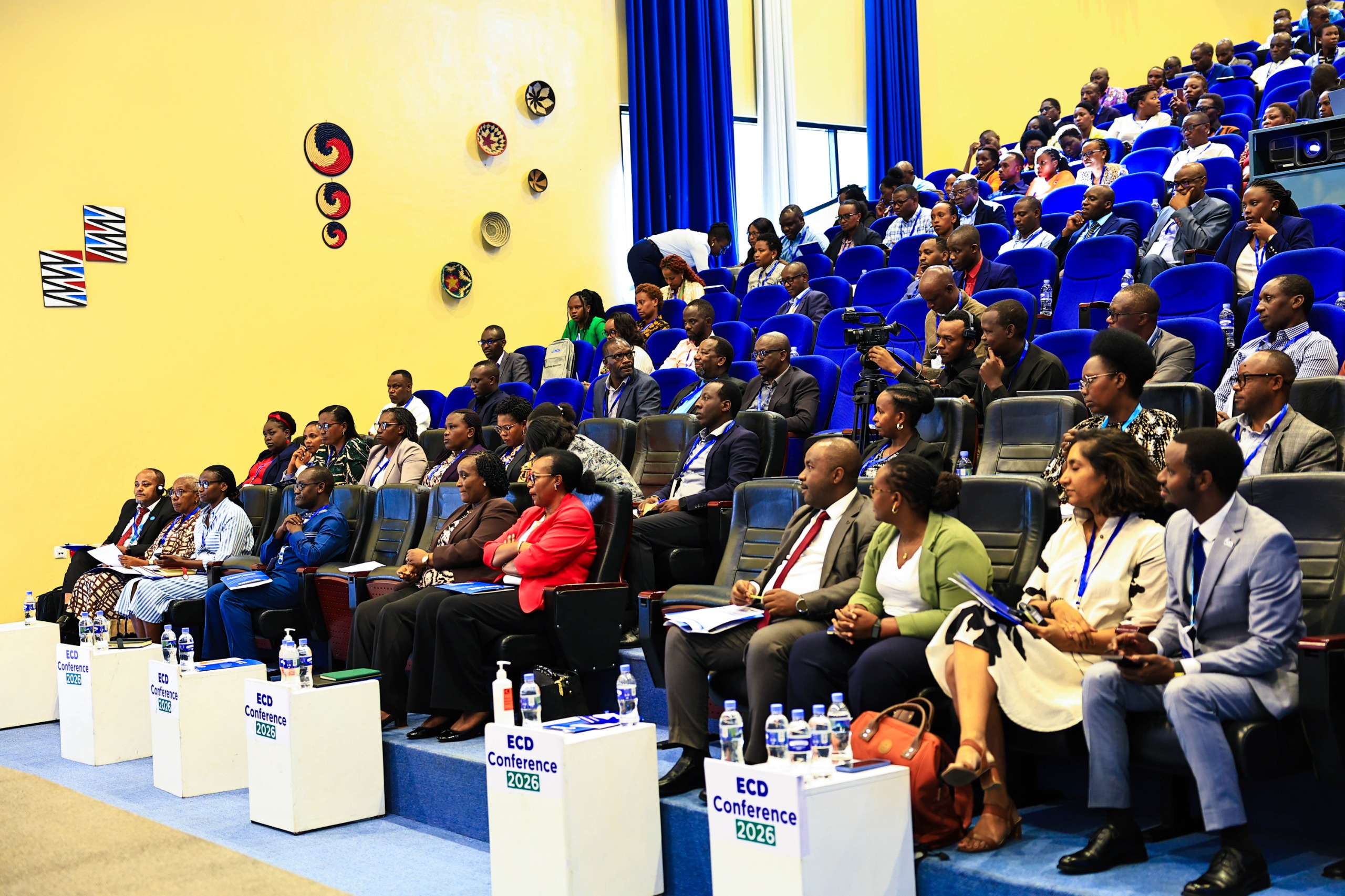
The two-day National ECD Conference 2026, which opened in Kigali on January 15, brought together government officials, development partners, civil society, and experts to review progress, share innovations, and agree on strategies to accelerate outcomes for young children.
Opening the conference, the Minister of Gender and Family Promotion, Consolee Uwimana, said Rwanda has made commendable progress since the National Early Childhood Development Policy was established in 2016, with tangible improvements already transforming the lives of children and their families.
“Among the achievements are the expansion of ECD centers closer to communities, capacity building for parents and caregivers, improved teaching and learning materials, and stronger coordination among partners,” Uwimana said.
She added, however, that challenges remain, including uneven service quality, gaps in infrastructure and equipment, and the need to reach more parents with behavior change communication messages that support healthy child development.
Rapid Growth, Measurable Impact:
 Presenting the current status of ECD in Rwanda, National Child Development Agency (NCDA) Director General Ingabire Assumpta highlighted significant growth over the past five years. The number of ECD centers has expanded from a few pilot sites to more than 32,205 centers nationwide. Child enrollment rose sharply from 297,021 in 2020 to 1,165,384 in 2025, served by more than 101,800 caregivers.
She also reported a notable reduction in stunting among children under five, from 33.1 percent in 2019 to 27 percent in 2025 — an average decline of about one percentage point per year.
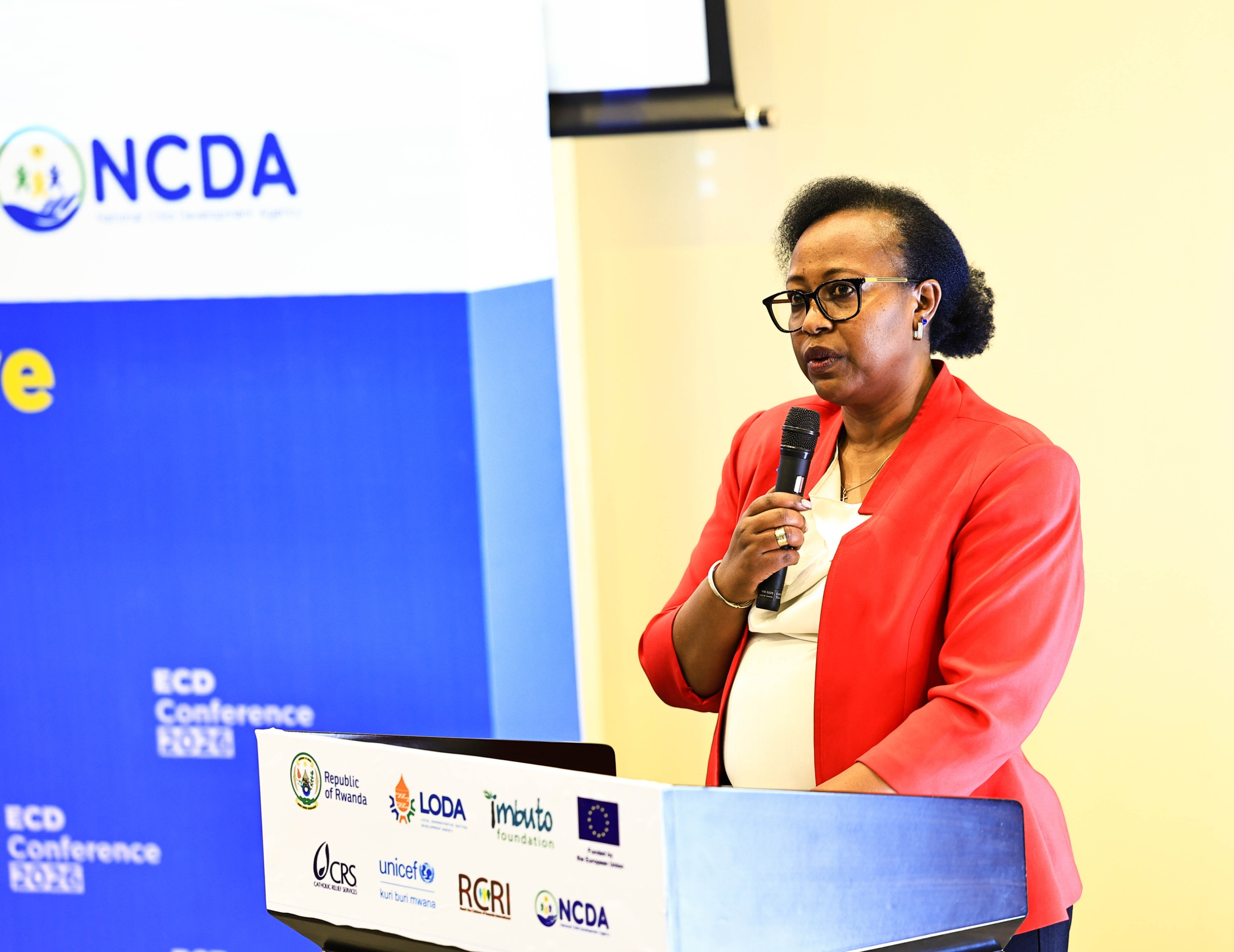
“We have achieved a lot so far, including training 67,695 caregivers and parents, representing 74 percent coverage,” Ingabire said. “However, much remains to be done. If every district performs well, we can make malnutrition a thing of the past.”
While overall performance is encouraging, she noted that progress has been uneven across districts, prompting plans to work with the National Institute of Statistics of Rwanda (NISR) to analyze what worked best in high-performing districts and replicate those approaches elsewhere.
District Performance and Remaining Gaps:
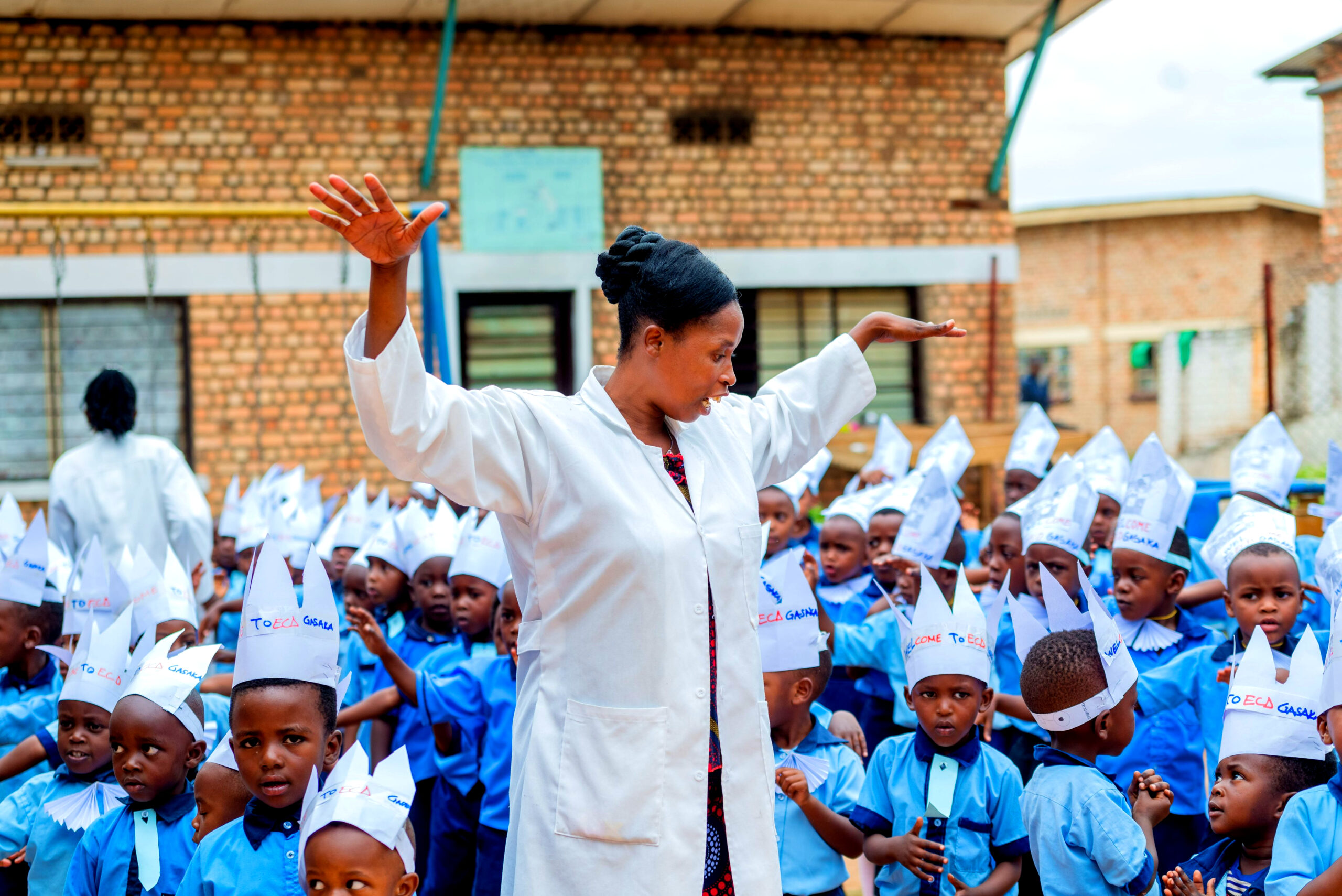
Data shared at the conference showed that while 14 of Rwanda’s 30 districts previously recorded stunting rates above 30 percent, only three remain in that range today. However, progress has varied by region.
In the Northern Province, Rulindo recorded only a one percent reduction over five years, while Gicumbi and Burera saw limited change. In the Southern Province, Kamonyi and Huye also showed minimal improvement.
In the Western Province, Karongi and Rusizi registered no change, while Rutsiro, Nyabihu, and Ngororero achieved reductions of more than 10 percent, with Ngororero recording a 15 percent drop. In the Eastern Province, Ngoma saw significant improvement, while Gatsibo and Kirehe experienced rising stunting rates.
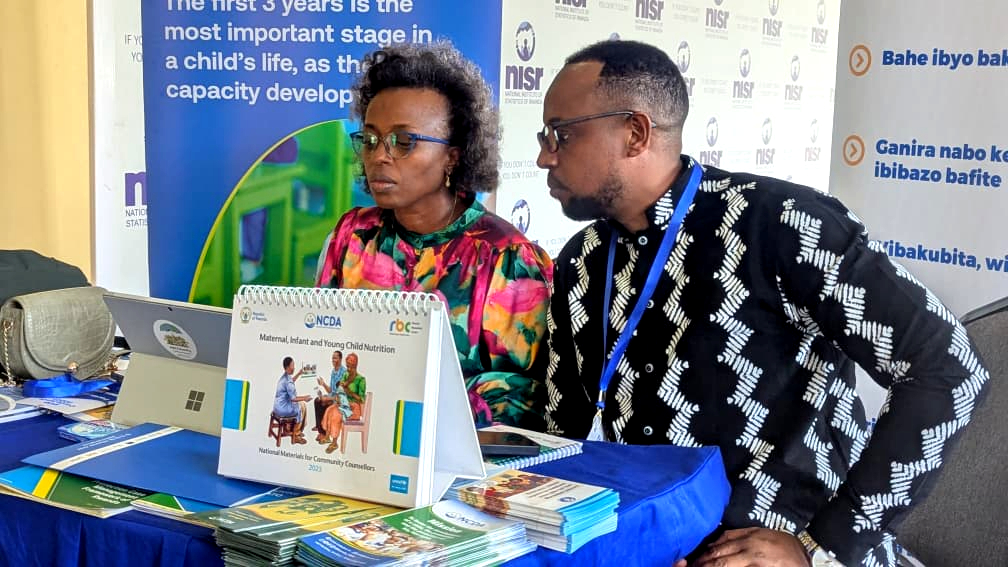
Dr. Aline Uwimana (left)
Dr. Aline Uwimana, Division Manager for Maternal, Child, and Community Health at the Rwanda Biomedical Centre (RBC), attributed persistent stunting to inadequate quantity, quality, and frequency of diets, compounded by food insecurity affecting 21 percent of households, poor maternal nutrition during pregnancy, repeated infections, and weak water, sanitation, and hygiene (WASH) practices.
Partners Urge Alignment, Innovation, and Scale:
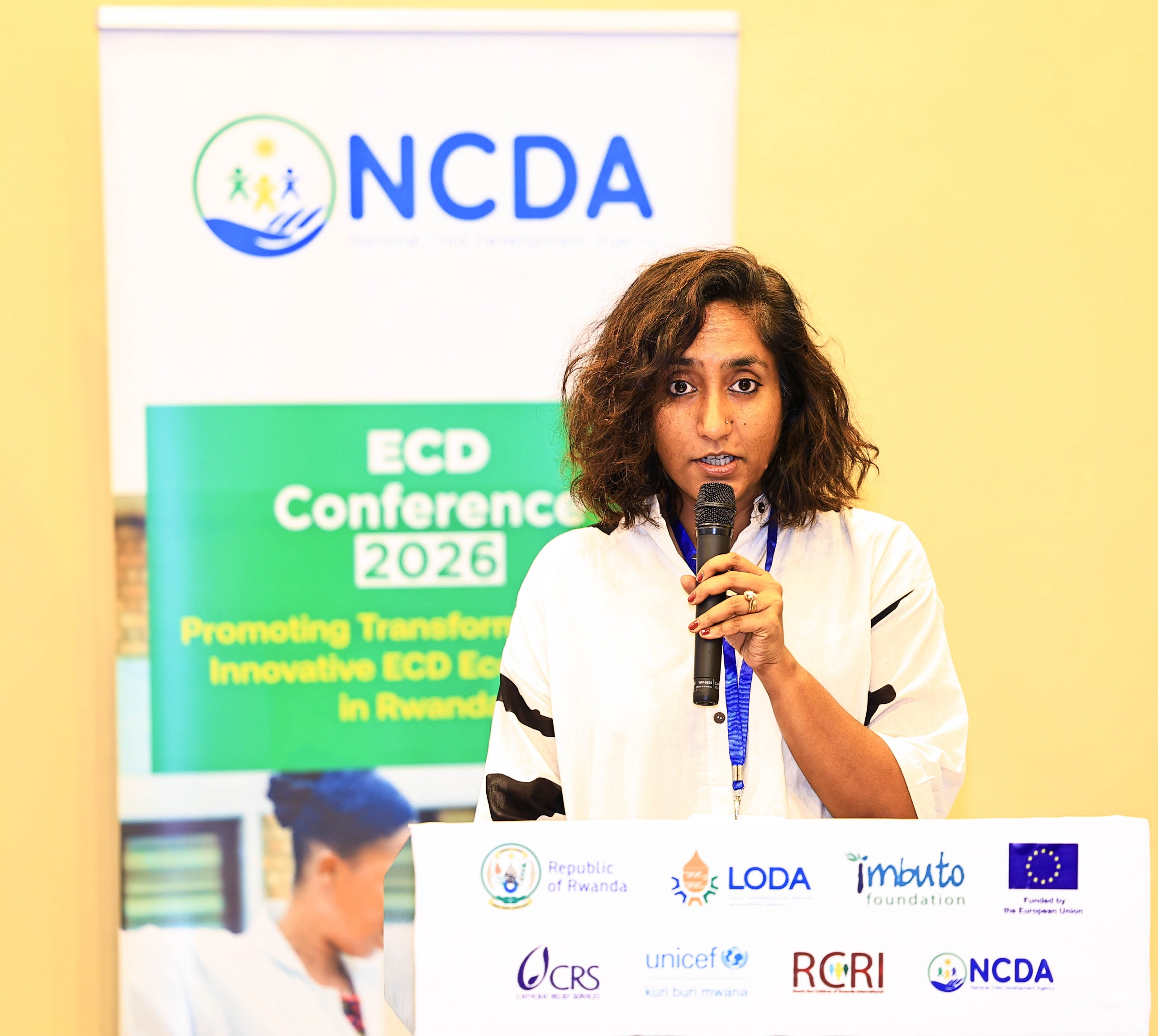
Kumud Chandra
CRS Rwanda Country Representative Kumud Chandra said achieving Rwanda’s targets of 65 percent ECD access and reducing stunting to 15 percent by 2029 will require strong alignment with national systems and standards.
“We must invest in solutions that are scalable and sustainable, and use data not only to report progress but to improve practice,” Chandra said. “Investment in early childhood leads to better health, enhanced learning, higher adult earnings, reduced poverty and inequality, and a more peaceful society.”
She reaffirmed CRS’s commitment to supporting Rwanda in testing and scaling homegrown ECD solutions, particularly in digital innovation. These include routine digital monitoring, caregiver e-learning platforms, data-driven decision-making, and cost-effective capacity-building approaches.
Chandra also called for a focus on equitable, inclusive approaches that prioritize vulnerable children, scaling up proven parenting models, strengthening continuous professional development for caregivers, and introducing incentives and retention mechanisms to sustain service quality.
From Access to Excellence:

UNICEF-Rwanda officials echoed the call to move “from access to excellence,” emphasizing the need for consistent quality across all ECD settings — whether in markets, schools, or home-based centers.
“We need fully institutionalized ECD partnerships, child-centered and rights-based approaches, and sustainable financing tied to quality, effective monitoring, and data sharing,” said Samson Desie, UNICEF Rwanda Chief of Health and Nutrition.
UNICEF urged that ICT innovations in ECD be aligned with national digital policies, inclusive by design, localized, and focused on nurturing skills rather than simply digitizing childhood. Examples cited included parent-focused applications that build nurturing care skills without disconnecting children from their environment.
Innovation on the Ground:
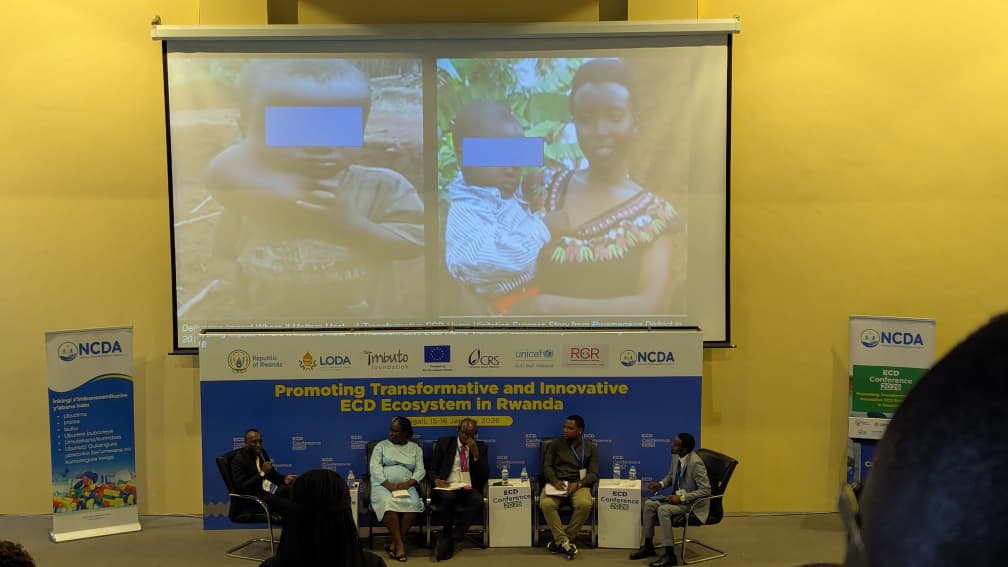
Panel discussions showcased practical innovations already transforming children’s lives. In Nyabihu District’s Bigogwe sector, seven cows donated to an ECD center have multiplied to 15, with milk used to improve children’s nutrition. Another case highlighted a girl from Gitagata who entered an ECD center unable to walk and confined to a wheelchair; today, she is completing primary school and walking with crutches after early intervention and inclusive support.
The Director and Founder of Reach the Children of Rwanda (RCR), Benjamin Musuhukye, advocated for simple digital applications loaded with educational content on tablets to professionalize caregiver services and support daily practice.
Looking Ahead to 2030:
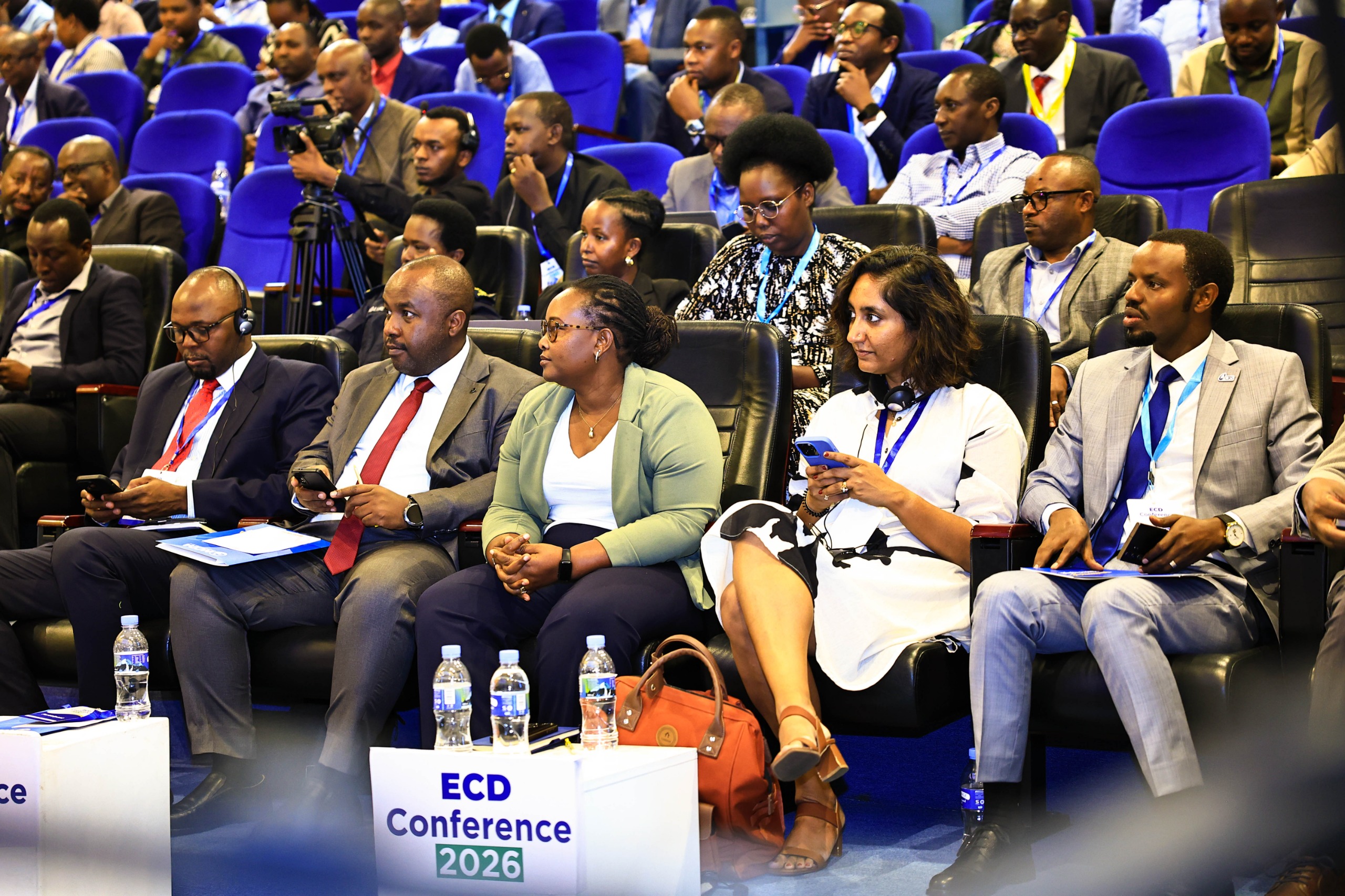
NCDA Deputy Director General Gilbert Munyemana reviewed resolutions from the fourth ECD conference, noting progress in private sector engagement — including 45 workplace ECD centers in tea plantations, mining sites, and markets — the development of harmonized ECD standards, and integration of early disability detection.
He highlighted persistent gaps, including shortages of specialized trainers for children with disabilities and the need for stronger monitoring of inclusive housing models.
As Rwanda increasingly explores advanced technologies, including artificial intelligence, to monitor ECD services and outcomes, conference participants stressed that future innovations must build on existing systems rather than operate in silos.
Experts concluded that reaching the 2030 targets will require certifying all caregivers, ensuring strong and consistent budget support, deepening parental engagement, and accelerating capacity building. With stunting declining by about one percent per year, participants agreed that Rwanda must intensify efforts to surpass current approaches and secure lasting gains for every child.