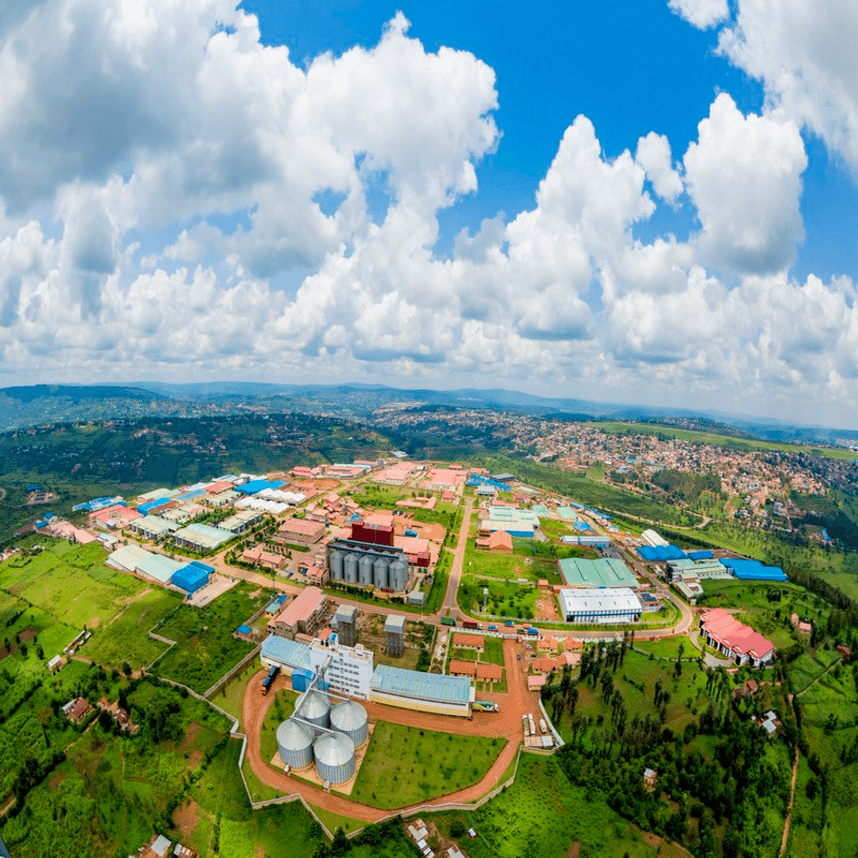
Kigali Special Economic Zone, Rwanda’s flagship industrial hub, hosts a growing cluster of manufacturing firms supported by modern infrastructure, as the country pushes to accelerate industrialisation and attract investment.
KIGALI, April 15 — Rwanda’s Senate has launched a nationwide review of industrial parks amid concerns over whether the country’s manufacturing zones are ready for business, with investors citing high land costs and gaps in infrastructure.
Special economic zones and industrial parks are central to Rwanda’s push to accelerate industrialisation, boost exports and reduce import dependence. By clustering manufacturers in serviced areas, authorities aim to lower production costs, improve efficiency and strengthen environmental and regulatory compliance, while attracting investment and creating jobs.
The assessment by the Senate Standing Committee on Economic Development and Finance, chaired by Fulgence Nsengiyumva, follows a resolution directing the government to speed up infrastructure development in designated industrial zones.
Early consultations with the Private Sector Federation (PSF) and the Rwanda Development Board (RDB) pointed to progress in developing industrial parks, but also highlighted persistent constraints around affordability, infrastructure rollout and management.
Rwanda is expanding industrial zones under a directive requiring factories to relocate to fully serviced parks within 10 years to improve regulation, environmental compliance and efficiency.
The government has prioritised investment in roads, electricity, water supply and waste treatment systems, with 10 billion Rwandan francs allocated in the 2025–2026 budget to parks in Musanze, Rwamagana, Muhanga and Bugesera.
Key sites under review include the Kigali Special Economic Zone and the 330-hectare Bugesera Special Economic Zone being developed by ARISE Integrated Industrial Platforms near the future Bugesera International Airport. Provincial parks in Rwamagana, Musanze, Muhanga, Huye, Rusizi, Nyabihu and Rubavu are also part of the assessment, alongside plans for a mining processing zone in Gahanga, Kicukiro District.
Costs and Coordination Challenges Persist
Private sector representatives warned that rising land prices could undermine the viability of industrial parks.
PSF officials said land speculation is pushing prices above official rates, with some plots of about 600 square metres reportedly selling for as much as $250,000, while most industrial investors require at least five hectares.
Jules Murekezi, First Vice Chairperson of the PSF Industry Cluster, called for more structured consultation in planning and financing industrial zones, including stronger public-private partnerships.
“We need consultation in the planning of zones and on PPP models,” he said.
Josiane Nsanza Usanase, Chairperson of the PSF Industry Cluster, said Rwanda could draw lessons from Ethiopia’s state-led model and Morocco’s hybrid approach combining government planning with private sector participation and global value chains.
She said the Moroccan model may offer a more sustainable path, citing financing constraints and management challenges in fully state-led projects.
Under a proposed PPP framework, the government would focus on core infrastructure, while the private sector would take on a larger role in operations and maintenance.
Senate Steps Up Oversight as Targets Loom
Nsengiyumva said the committee will conduct field visits to all 11 industrial zones to assess infrastructure, environmental compliance and implementation at the district level.
“This is the first phase of engagement. We will follow it with field visits to assess the situation on the ground,” he said.
Rwanda’s industrial sector is expected to grow productivity by 10.6% annually under the National Strategy for Transformation (NST2) for 2024–2029, a target lawmakers say will depend on functional, accessible and efficiently managed industrial parks.
Findings from the review are expected to inform policy decisions, particularly on financing models and private sector participation, as Rwanda seeks to strengthen its manufacturing base and competitiveness.