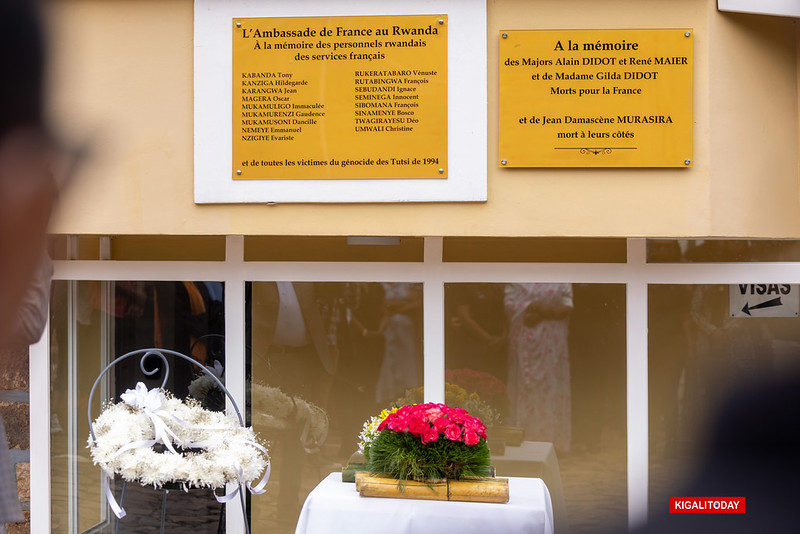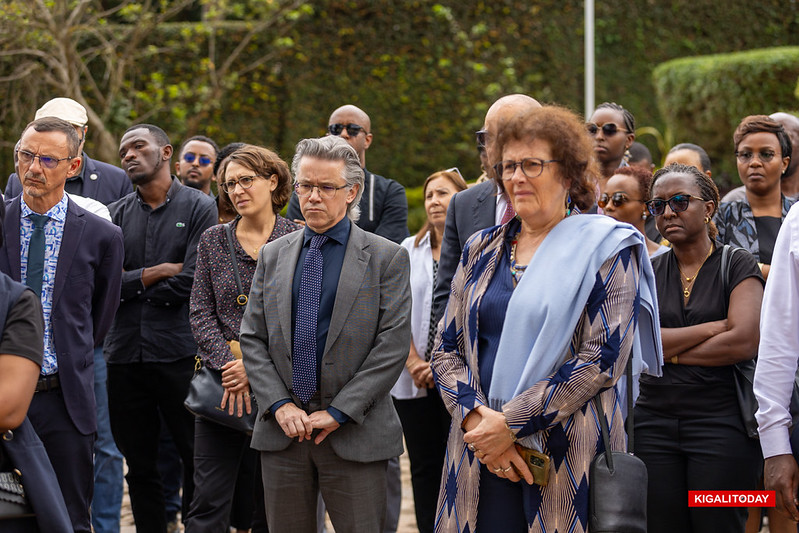
Staff members of the French Embassy in Kigali pay respects to colleagues killed during the 1994 Genocide against the Tutsi.
KIGALI — France is investigating 36 Rwandans suspected of involvement in the 1994 Genocide against the Tutsi, a senior French prosecutor said on April 23, underscoring ongoing efforts to address one of the most sensitive chapters in relations between Kigali and Paris.
Olivier Christen, France’s national anti-terrorism prosecutor, made the remarks in Kigali during a commemoration event organized by the French Embassy to honor French personnel who were killed during the genocide.
When asked why so many suspects remain in France, the prosecutor explained that the situation stems from long-standing bilateral ties and migration flows, which saw numerous genocide perpetrators seek refuge in France following the 1994 atrocities.
France hosts one of the largest Rwandan diaspora communities in Europe and has long been a focal point for justice advocates. Among the high-profile individuals residing there is Agathe Kanziga Habyarimana, the former First Lady and a prominent member of the ‘Akazu’—the inner circle of power that orchestrated the killings. Her presence, along with other accused perpetrators who settled in France after 1994, has fueled decades of persistent demands for prosecution from the Rwandan government and survivors’ groups.
Christen said 12 cases have so far been tried before the Paris Criminal Court, with eight individuals convicted.
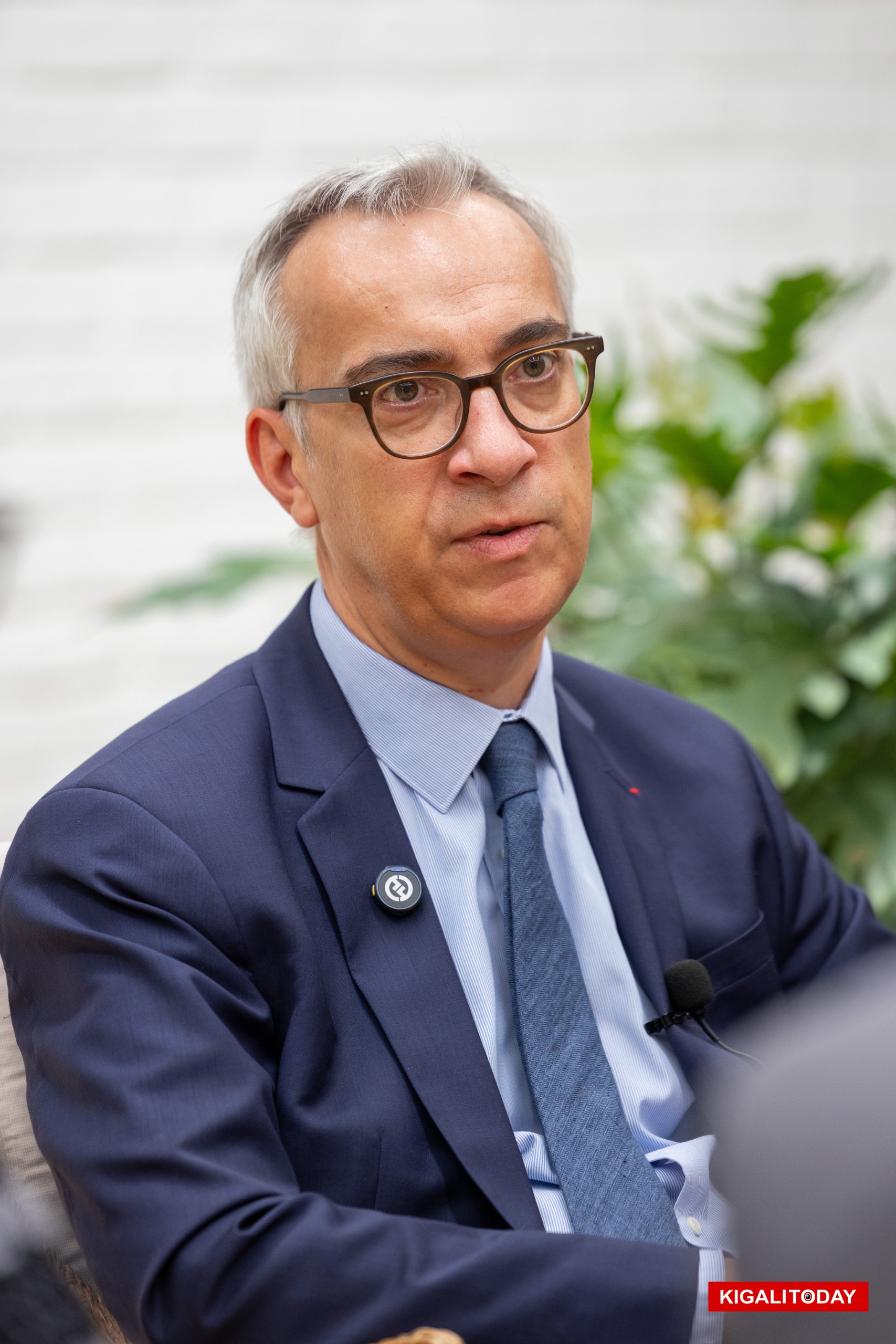
Olivier Christen, France’s National Anti-Terrorism Prosecutor, speaks in Kigali on April 23. Christen revealed that French authorities are currently investigating 36 individuals suspected of involvement in the 1994 Genocide against the Tutsi.
“Other trials are ongoing and scheduled,” he said. “Appeal hearings are set for June and July, while additional first-instance trials are planned for November and December 2026. This shows the process is still active. At least two more cases are expected to be heard between 2027 and 2028. So this is far from over.”
He added that investigations are ongoing into 36 suspects linked to crimes committed during the 100 days of the genocide, when over one million Tutsi were killed.
The issue of genocide suspects in France is closely tied to the broader and often contentious history between the two countries during the events of 1994. For years, France faced criticism over its political and military support to the then Rwandan government before and during the early stages of the genocide.
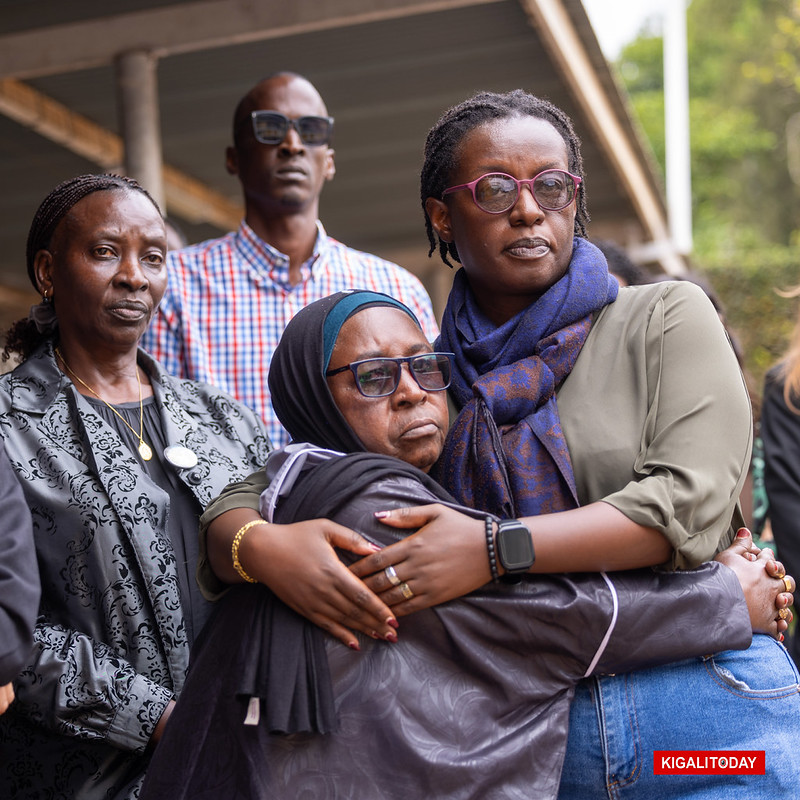
Mourners comfort each other during a commemoration event organized by the French Embassy in Kigali on April 23 to honor French personnel killed during the 1994 Genocide against the Tutsi.
A 2021 report commissioned by President Emmanuel Macron acknowledged that France bore “serious and overwhelming responsibilities” due to its failures and longstanding support for a regime that enabled the genocide, while stopping short of concluding that France was complicit.
Rwanda’s own independent inquiry, known as the Muse Report, similarly found that French actions had contributed to creating an environment in which the genocide was possible, citing political, military, and diplomatic backing to the former government.
These findings have since shaped a gradual thaw in relations between Kigali and Paris, with both sides expressing commitment to cooperation on justice, including the prosecution of genocide suspects living in France.
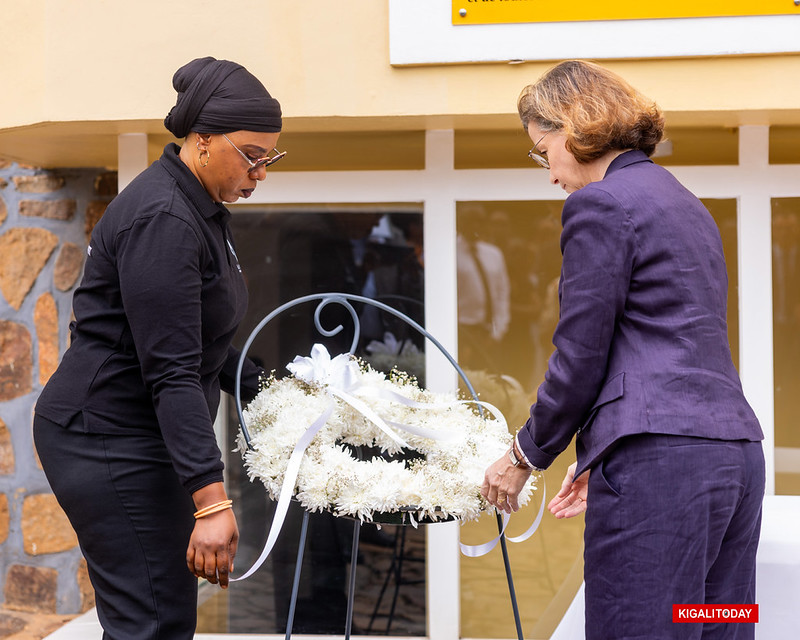
The French Ambassador to Rwanda, H.E. Aurélie Royet-Gounin (right), is assisted as she lays a wreath during a ceremony at the French Embassy in Kigali.
Christen said that improved bilateral relations are reflected in France’s judicial efforts.
“French justice is fully committed to the fight against impunity for those responsible for the genocide against the Tutsi,” he said, echoing statements previously made by President Emmanuel Macron.
Despite progress, Christen acknowledged persistent challenges, particularly the passage of time. Many suspects are now elderly, while survivors and witnesses are also aging, complicating efforts to secure detailed and reliable testimony and slowing court proceedings.
To address this, French prosecutors and judges travel to Rwanda at least twice a year to collect evidence and testimonies, working closely with Rwandan authorities to strengthen case files.
More than three decades after the genocide, the presence of suspects abroad — including in France — remains a key issue for survivors and the Rwandan government, who continue to push for accountability beyond Rwanda’s borders.
France’s ongoing investigations into 36 Rwandans signal that, despite delays and legal complexities, efforts to deliver justice are continuing.