



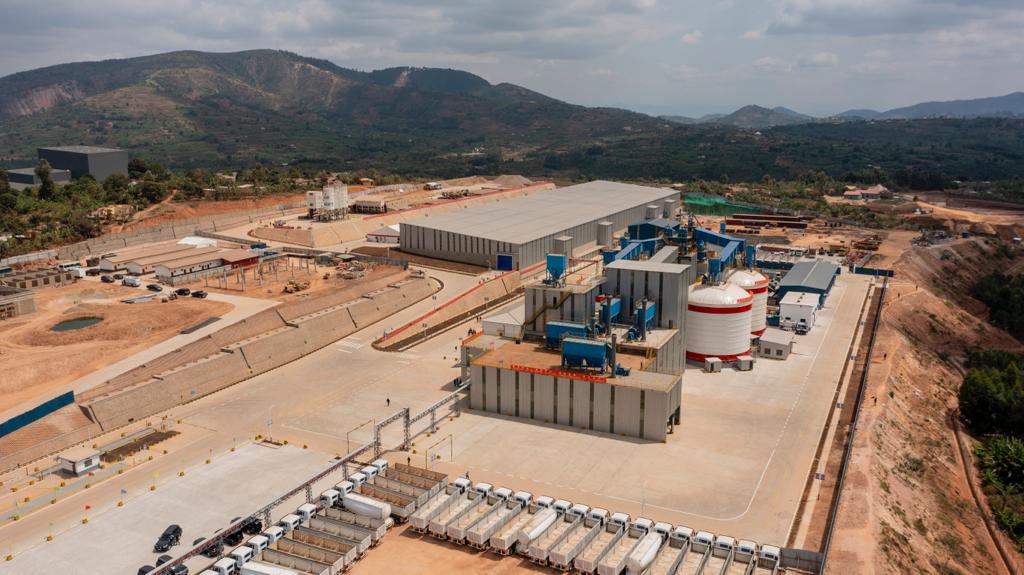
The Anjia Cement plant stands as a landmark of the Muhanga Industrial Park. Producing 1,500 tons of “Cheetah Cement” daily, it serves as the literal foundation for Rwanda’s nationwide construction boom.
MUHANGA —Muhanga Industrial Park, home to the landmark Anjia Cement plant, is fast emerging as one of Rwanda’s key manufacturing hubs. Spanning 135 hectares in the Nyamabuye Sector, it is one of eight designated zones designed to slash imports and anchor the Made-in-Rwanda agenda.
From construction staples to daily essentials, the park has become a diverse ecosystem of value addition.
A Foundation Built on Stone and Clay
The park’s role in reshaping Rwanda’s skyline begins with Mountain Ceramics Company Ltd. As a key player in the construction sector, the company produces ceramic floor and wall tiles that were once almost exclusively imported.
Chief Executive Officer Eric Bugingo notes that Muhanga was a strategic choice, offering easy access to raw materials like silica sand and Rupari stone. Since firing up production in December 2025, the market response has been explosive; the company sold 100,000 square meters of tiles in its first six weeks.
“This shows the market is ready for locally made products,” Bugingo says. “By selling in local currency, we remove the need for foreign exchange, making high-quality finishes more accessible to Rwandans.”
From Heavy Construction to Essential Hygiene
While Mountain Ceramics provides the literal floor for Rwandan homes, Basil Industries Ltd is ensuring those homes are stocked with essential hygiene products. Bridging the gap in a market long dominated by imports from Uganda and Kenya, Basil Industries has scaled rapidly since its 2024 launch.
With the capacity to produce one million boxes of sanitary and paper products—including toilet paper and pads—the company serves both domestic needs and the eastern DR Congo market. Notably, the firm aligns with Rwanda’s green goals by incorporating recyclable materials into its paper production processes.
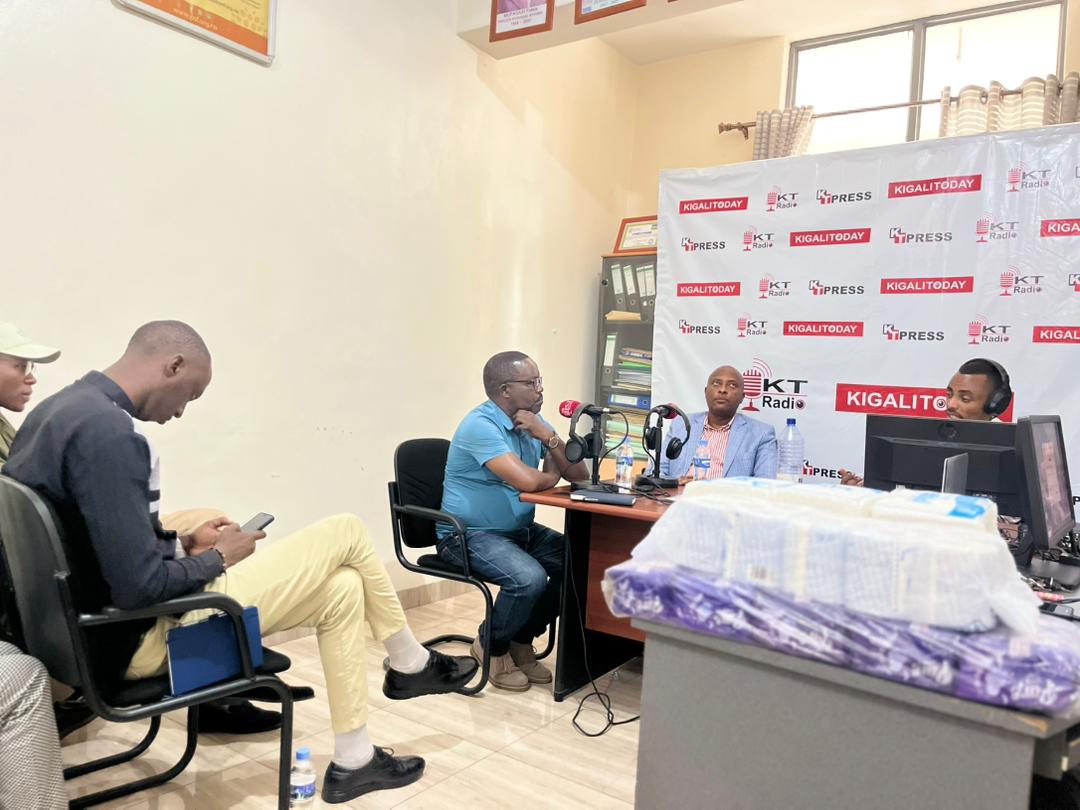
KT Radio presenter Janvier Ruzindana (right) hosts a live “Muhanga Today” broadcast from the park. The special segment brought investors and local leaders together to discuss how the 135-hectare zone is accelerating the “Made-in-Rwanda” agenda.
Cement and Infrastructure
This momentum in manufacturing is anchored by one of the park’s largest residents: Anjia Cement, the producer of Cheetah Cement. If Mountain Ceramics provides the finish, Anjia provides the strength.
Producing 1,500 tons of cement daily, the plant is a critical engine for Rwanda’s construction boom. To maintain this pace, representative Emmanuel Ndacyayisenga explains that the company has become a master of regional logistics. While sourcing was once heavy on Burundi, the plant now utilizes a diversified supply chain stretching to Kenya and Tanzania.
To balance this high output with environmental stewardship, the plant utilizes modern emission sensors and rigorous safety monitoring, ensuring that industrial growth doesn’t come at the cost of the local ecosystem.
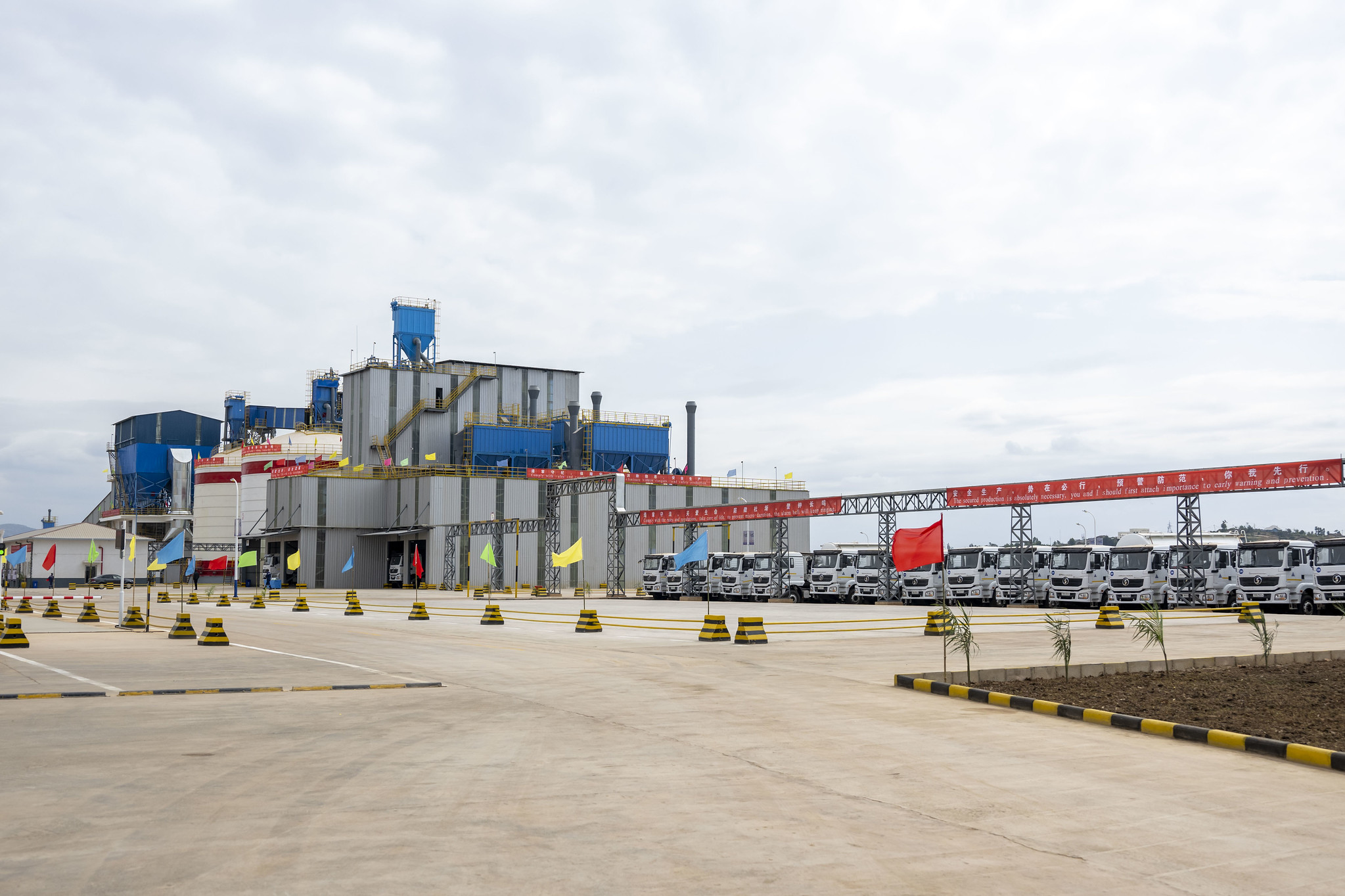
A wide-angle view of the Anjia Cement plant, a result of strategic international investment and Chinese engineering. The facility utilizes modern emission sensors to balance high-volume industrial output with environmental sustainability.
Aluminum and Apparel
The industrial diversity of Muhanga extends into the kitchen and the closet. Seven Hills Ltd contributes to the park’s variety by manufacturing approximately 500 aluminum household items daily—from cooking pots to tiffin boxes. While they currently meet significant local demand, the company is actively working to overcome raw material constraints to further scale their reach.
The shift toward self-reliance is perhaps most visible in the textile sector through Janiya Investments. Having grown from a small 2019 operation into a significant garment manufacturer, Janiya is a direct answer to Rwanda’s move away from second-hand clothing imports.
By leveraging tax exemptions on locally sourced raw materials, Janiya keeps international-standard apparel affordable. “We want to expand access while keeping prices stable,” says representative Arsene Masabo, noting that Muhanga’s proximity to Kigali makes it the perfect logistical base for their retail outlets across the country.
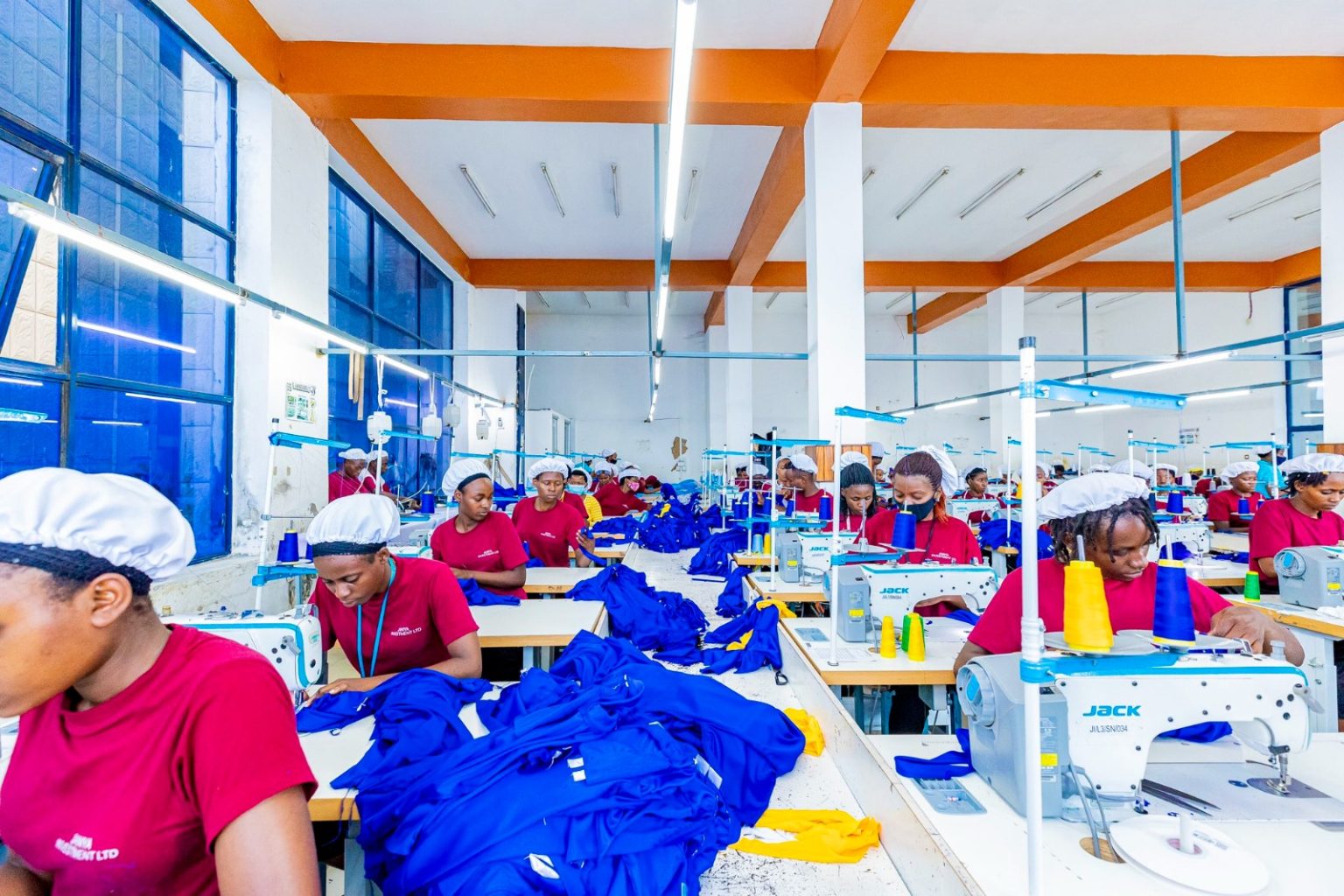
Workers at Janiya Investments Ltd craft high-quality apparel.
The Big Picture
As investment flows into these five distinct sectors, Muhanga Industrial Park has transformed from a plot of land into a pillar of national transformation. By weaving together cement, ceramics, textiles, and hygiene products, the park is doing more than just building factories—it is building a self-reliant Rwandan future.
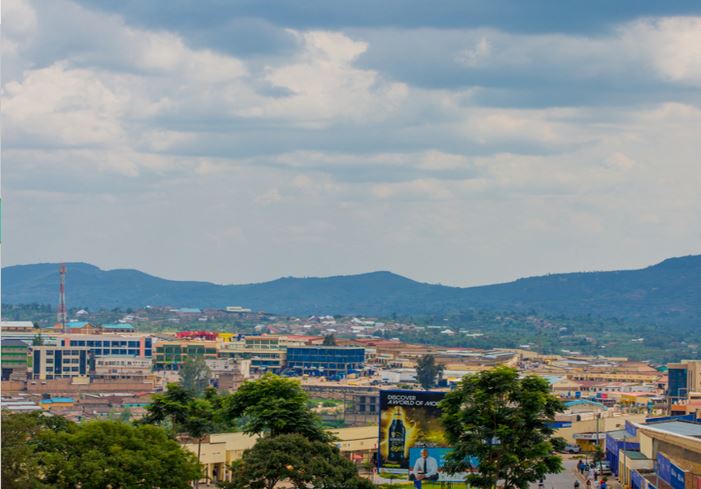
The Strategic Hub: An aerial perspective of Muhanga. Its proximity to Kigali and its role as a manufacturing gateway make it a vital pillar in Rwanda’s mission to slash imports and foster a self-reliant economy.