


Who decides Congo’s future? power, sanctions, and sovereignty
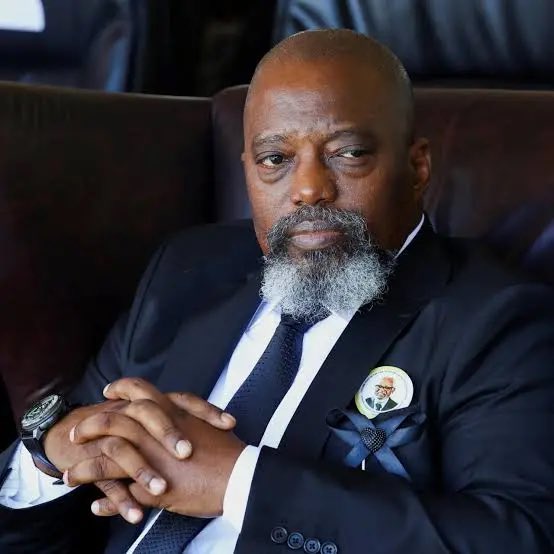
Former DR Congo President Joseph Kabila
The decision by the United States to sanction former Congolese President, Joseph Kabila has reignited a familiar but uncomfortable question: when external powers step into Congolese affairs, are they promoting stability or shaping outcomes to fit their own priorities?
To understand the weight of these sanctions, it is necessary to revisit the political trajectory of the country. Joseph Kabila governed for nearly two decades, a period marked by both consolidation and controversy.
After the devastating wars of the early 2000s, his leadership oversaw a form of territorial reunification and macroeconomic recovery, largely driven by the mining sector.
When Félix Tshisekedi came to power, he carried the expectations of a political break. His presidency has been defined by a different strategy one that leans more heavily on international partnerships and diplomatic engagement.
Under the current ruler Felix Tshisekedi, the security situation in the Eastern Democratic republic of Congo has worsened.
State-funded illegal armed groups continue to operate, and the resurgence of movements such as M23 are a result of Tshisekedi’s bad governance, discrimination and corruption.
It is within this fragile landscape that the United States has chosen to act. By imposing sanctions, Washington presents itself as a defender of stability and accountability. But such actions inevitably raise deeper questions.
On what basis does an external actor determine responsibility in a conflict as layered as that of eastern Congo? And more importantly, whose interests are ultimately being served?
The American government has used sanctions tool as a selective intervention in DRC whose vast mineral wealth remains central to global economic competition. In this view, sanctions are not just about governance; they are also about influence.
The United States is neither a neutral observer nor an all-powerful architect of Congolese politics. It is one actor among many, navigating its own interests while responding to unfolding events.
Yet its decisions carry disproportionate weight, and that alone reshapes the political conversation in the country.
The latest sanctions development brings us back to the central issue not whether the United States is right or wrong, but whether Congo’s political direction can truly be determined from within.
As long as external endorsements, pressures, and sanctions play a decisive role, sovereignty remains a negotiated space rather than a fixed reality.
In the end, the question is not simply about Kabila or Tshisekedi. It is about whether the Congolese state can define its future on its own terms or whether that future will continue to be shaped, at least in part, from the outside by special-interest states or organizations.
