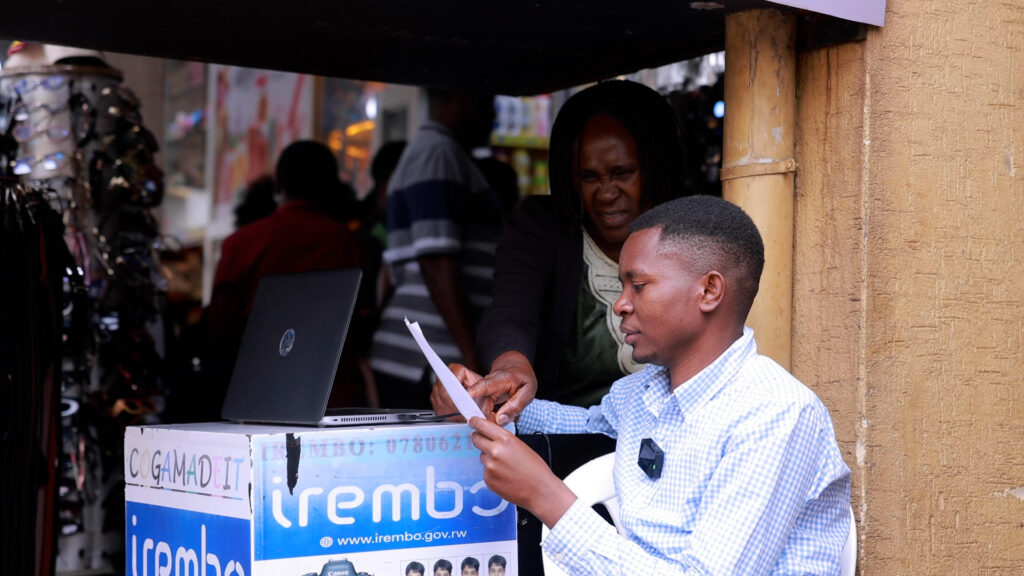
A bank agent helps a client with a transaction. There is a noticeable transition especially for small businesses to deviate from operating entirely in cash.
KIGALI – As Rwanda approaches the deadline for phasing out banknotes issued between 2004 and 2013, the National Bank of Rwanda (BNR) says almost none of the old money is still circulating in the economy.
According to Chantal Kasangwa, the Executive Director- Market and Banking operations at the central bank, old-series notes now account for only about 0.3 percent of Rwanda’s total currency circulation, currently estimated at around Frw525 billion.
For a process that would normally trigger panic deposits, hidden cash resurfacing or pressure on banks, the transition has been unexpectedly calm.
“Actually, it’s not such a big worry. As it stands, when we collect deposits from banks, we can see around 0.3 percent of this old series. It’s really a very minimal amount.” Kasangwa said on the demonetization process.
At first glance, the figure may appear technical. But behind it lies a much deeper story about how Rwandans are quietly changing the way they use, move and store money.
From Cash to Everyday Digital Transactions
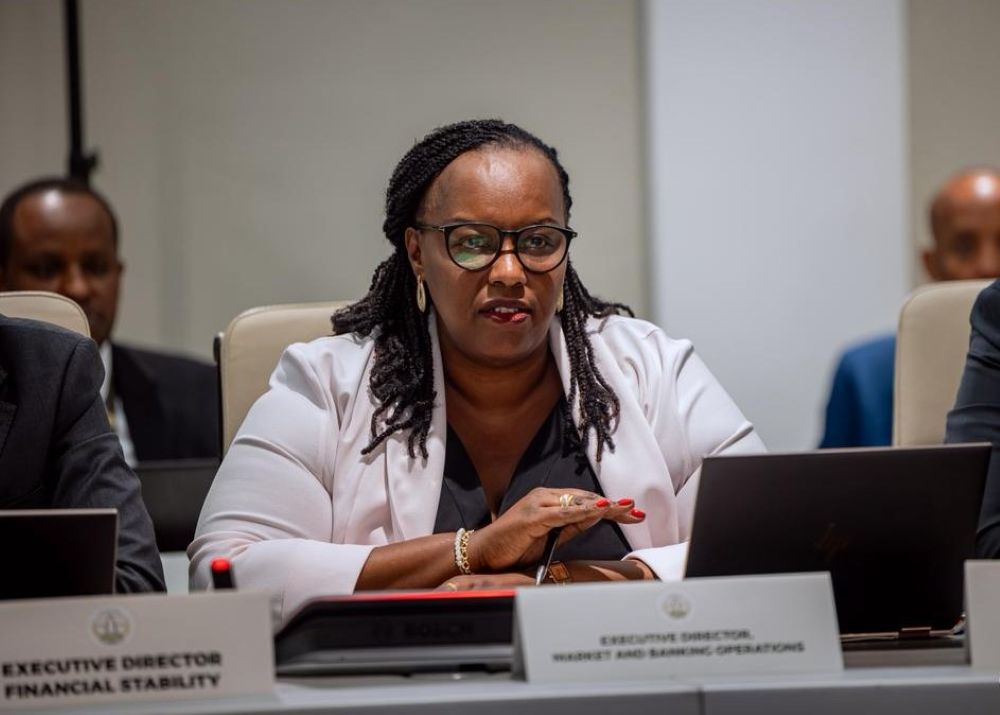
Chantal Kasangwa, the Executive Director- Market and Banking operations at the central bank says that old-series notes now account for only about 0.3 percent of Rwanda’s total currency circulation,
A decade ago, much of Rwanda’s informal economy operated almost entirely in cash. Small traders kept earnings in shops or homes. Many businesses worked outside formal banking systems, while physical banknotes dominated everyday transactions.
Today, the pattern is steadily shifting.
Motorcycle taxi riders increasingly receive payments through mobile phones. Small grocery stores display digital payment codes near counters. Customers buying fuel, food or household items often pay through mobile wallets without withdrawing cash.
Jean de Dieu Habimana, a bank agent based in Nyamirambo sector in Nyarugenge district say that says the return of old notes has been far lower than he expected.
“Most people already moved those notes through the banking system naturally over time. Customers are using accounts, mobile banking and digital payments much more than before,” he said.
Although cash is still important, Habimana notes that fewer people are keeping large amounts outside the system. That shift is increasingly becoming visible in the central bank’s own figures.
The small amount of old notes still circulating suggests that money is increasingly moving continuously through banks, SACCOs and digital payment systems instead of remaining hidden in homes, shops or informal businesses.

A Quiet Financial Transition across the Continent
At the recent Africa CEO Forum, Coura Carine Sène, Regional Director at Wave Mobile Money Group, one of Africa’s fast-growing mobile money companies, noted that digital finance is transforming how ordinary economic activity is recognized and recorded.
“When transactions become digital, they begin to tell a story. They show consistency, demand, business rhythm and economic resilience. For many entrepreneurs, especially women, operating small businesses becomes a possible reality,” the representative said. “
That transformation is particularly important for small businesses that have historically operated almost entirely in cash.
A cosmetics trader in Kigali, a food vendor in Nyabugogo or a market seller in Musanze may have regular customers and stable income but still struggle to access financing because their business activity remains largely undocumented.
Digital transactions are slowly changing that reality.
“The deeper issue is that our financial systems have traditionally been better at recognizing assets than activity. They could measure what someone owned, but not always what someone was building Sène noted.

Coura Carine Sène, Regional Director at Wave Mobile Money Group, speaking at the recent Africa CEO Forum in Kigali
Making Small Businesses Visible
That observation reflects a broader shift now unfolding across Rwanda’s economy. As more people use mobile money, bank transfers and digital payment platforms, financial activity is becoming easier to track, understand and integrate into formal systems.
The Central Bank of Rwanda also says counterfeit currency levels remain extremely low, estimated at around 0.0001 percent, helping strengthen confidence in the country’s financial sector.
“In currency matters, we should be worried when we have a high level of counterfeit notes. But we have a very minimal level of counterfeit notes, so there is really no issue about our currency circulation or sector stability,” Kasangwa said.
The new generation of banknotes incorporates improved security and printing technologies designed to facilitate trade and strengthen protection against counterfeiting. But beyond the introduction of new notes, the central bank’s figures reveal that Rwanda’s relationship with cash is steadily changing.
The disappearance of old banknotes is increasingly becoming less about demonetization itself and more about evolving financial habits.
Rwanda is quietly moving toward a more digitally connected economy where money circulates faster, becomes more visible, and depends less on physical cash than it once did.