




Zipline Rwanda Ltd is set to build a new drone hub in Karongi district, Western province.
KIGALI – For nearly a decade, the sight of a Zipline drone crossing Rwanda’s skies meant that a hospital was waiting for blood, a health centre needed vaccines, or a patient required medicine that could not arrive fast enough by road.
Today, Rwanda is preparing to task the same technology to also deliver everyday goods.
That possibility moved a step closer this Monday after Cabinet approved the lease of public land in Karongi district to Zipline Rwanda Ltd, paving the way for construction of a new drone hub in the Western province.
While the decision may appear administrative, it points to a much broader shift in how drones could be used in Rwanda’s economy. Since launching operations in 2016, Zipline has become one of the country’s most visible examples of technology solving real-world problems.
The company has built its reputation over the years by delivering blood and medical supplies to hospitals, particularly in areas where difficult terrain and long travel times could delay urgent treatment.
With time, the network expanded to include vaccines, laboratory supplies and other essential medical products, helping health facilities receive critical deliveries in minutes rather than hours. During the COVID-19 pandemic, the service also supported the distribution of health supplies across the country.
What began as a healthcare innovation is now evolving into something bigger. Recently, Zipline Rwanda Managing Director Pierre Kayitana, said that the company plans to introduce a new generation of drones capable of supporting deliveries beyond the health sector.
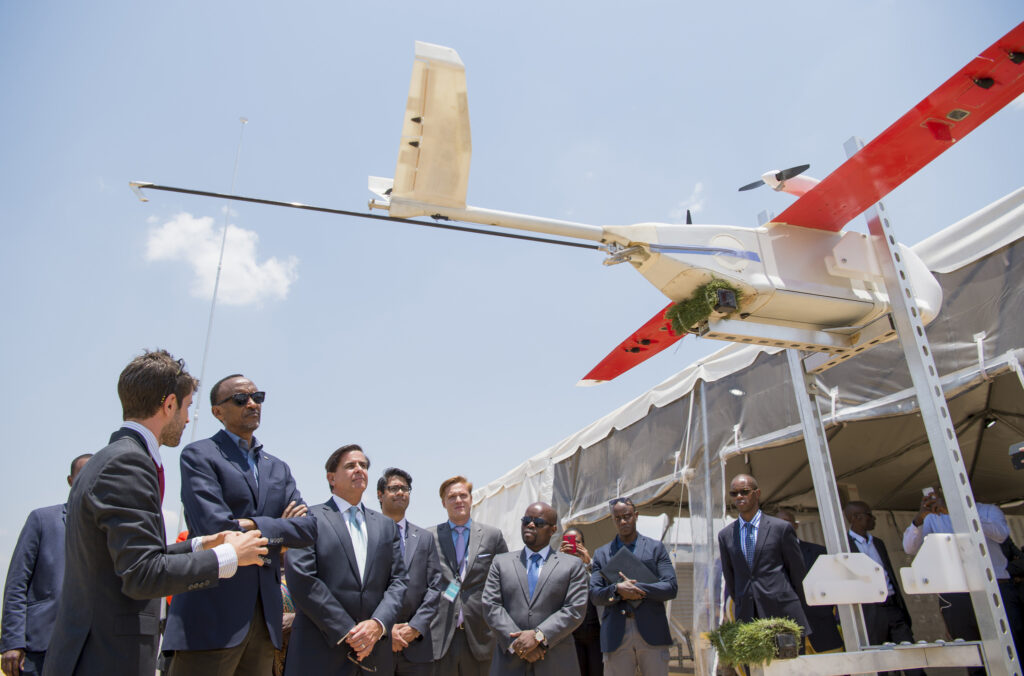
Zipline launched its operations in 2016 and has since become one of the country’s most visible examples of technology solving real-world problems.
Beginning in 2027, the network is expected to continue transporting blood and medicines while gradually expanding into commercial services, including food deliveries and consumer goods.
For ordinary Rwandans, that could bring a technology once associated exclusively with hospitals much closer to daily life.
A shop owner waiting for urgently needed stock, a family in a hard-to-reach community, or a customer expecting an online purchase could eventually benefit from the same speed that hospitals have relied on for years.
The planned Karongi hub will become Zipline’s third operational centre in Rwanda after Muhanga and Kayonza. It is expected to strengthen service coverage across the Western province, including districts such as Rusizi and Nyamasheke as well as communities on Nkombo island.
The expansion reflects a challenge Rwanda has long faced of how to move goods quickly across a landscape known for its hills, lakes and scattered settlements. For years, drones helped solve that challenge for healthcare. The next phase is expected to do the same for commerce.
A decade ago, the idea of blood arriving by drone sounded futuristic. Today, it is part of everyday healthcare delivery.
The conviction is that the same technology can transform how groceries, food orders and other goods reach consumers. If all goes as to plan, the next drone flying overhead may not be responding to a medical emergency at all. It may simply be making a lunch delivery.