KIGALI — When Stanislas Simugomwa arrived at Kigali’s main referral hospital in April 1994, he believed he had found a place of safety.
Instead, he says he walked into a killing ground where patients, caregivers and medical staff were being hunted down during the Genocide against the Tutsi.
Among the memories that have remained with him for more than three decades is that of a senior hospital employee whom staff nicknamed “Perefe” (The Prefect) because of the influence she wielded within the institution.
According to Simugomwa, the woman, identified as Victoire Nyirampondo, regularly moved around the University Teaching Hospital of Kigali (CHUK) accompanied by her two teenage sons, whom she said had come to the hospital for holiday work.
“Their work was to kill Tutsi,” Simugomwa recalled during a commemoration ceremony held Friday at CHUK in memory of staff, patients and others killed there during the 1994 Genocide against the Tutsi.
A former Ministry of Health employee, Simugomwa said the boys moved from ward to ward searching for Tutsi patients.
“They would go from bed to bed. Once they identified someone as Tutsi, they would drag them from the ward and take them away,” he said.
According to his testimony, victims were often beaten to death with stones and other objects.
“We would hear screams from people being killed. We saw it happening, but there was little we could do. I spent most of my time hiding because I knew I could be next.”
Simugomwa arrived at CHUK on April 10, 1994, just days after the genocide began. Although he had initially come seeking treatment and safety, he quickly realized that being inside the hospital offered no guarantee of survival.
What shocked him most, he said, was that some of those involved in identifying and targeting victims were people entrusted with saving lives.
“There were doctors and nurses who should have been protecting patients, but instead some became part of what was happening,” he said.
As the violence intensified, Simugomwa said Nyirampondo worked closely with Stéphanie Ndayambaje, a nurse who supervised hospital staff. According to him, the two openly questioned why Tutsi employees and patients were still being allowed to remain at the hospital.
Fearing for his life, Simugomwa decided to disappear within the hospital rather than attempt a dangerous escape through Kigali’s streets.
He sought help from a former supervisor for whom he had once worked as a driver. The man arranged for him to hide inside one of the hospital wards.
“I wore the hospital’s green uniform and blended in,” he said. “Unless I introduced myself, people could not easily recognize who I was.”
From his hiding place, he watched as wounded victims continued arriving at CHUK.
Many had survived machete attacks or gunshot wounds and came hoping to receive treatment. Others sought refuge, believing a hospital would be spared from the violence engulfing the country.
Instead, many found death.
“We treated people who arrived injured, but later some would be taken away and killed,” Simugomwa said. “There came a time when the number of Tutsi seeking refuge here became very large because they believed they were safer inside the hospital than outside.”
He recalled scenes of overwhelming horror as bodies accumulated faster than they could be removed.
According to his testimony, victims killed inside the hospital and others brought from neighborhoods such as Nyamirambo and Kiyovu were piled together before being loaded onto trucks.
Many were later dumped in mass graves in Nyamirambo.
As conditions deteriorated, Simugomwa adopted a false identity to survive. With the help of documents identifying him as a member of the Batwa community, he eventually managed to leave Kigali aboard a CHUK vehicle carrying hospital employees who feared remaining in the capital.
He later reached southern Rwanda, where he survived the genocide.
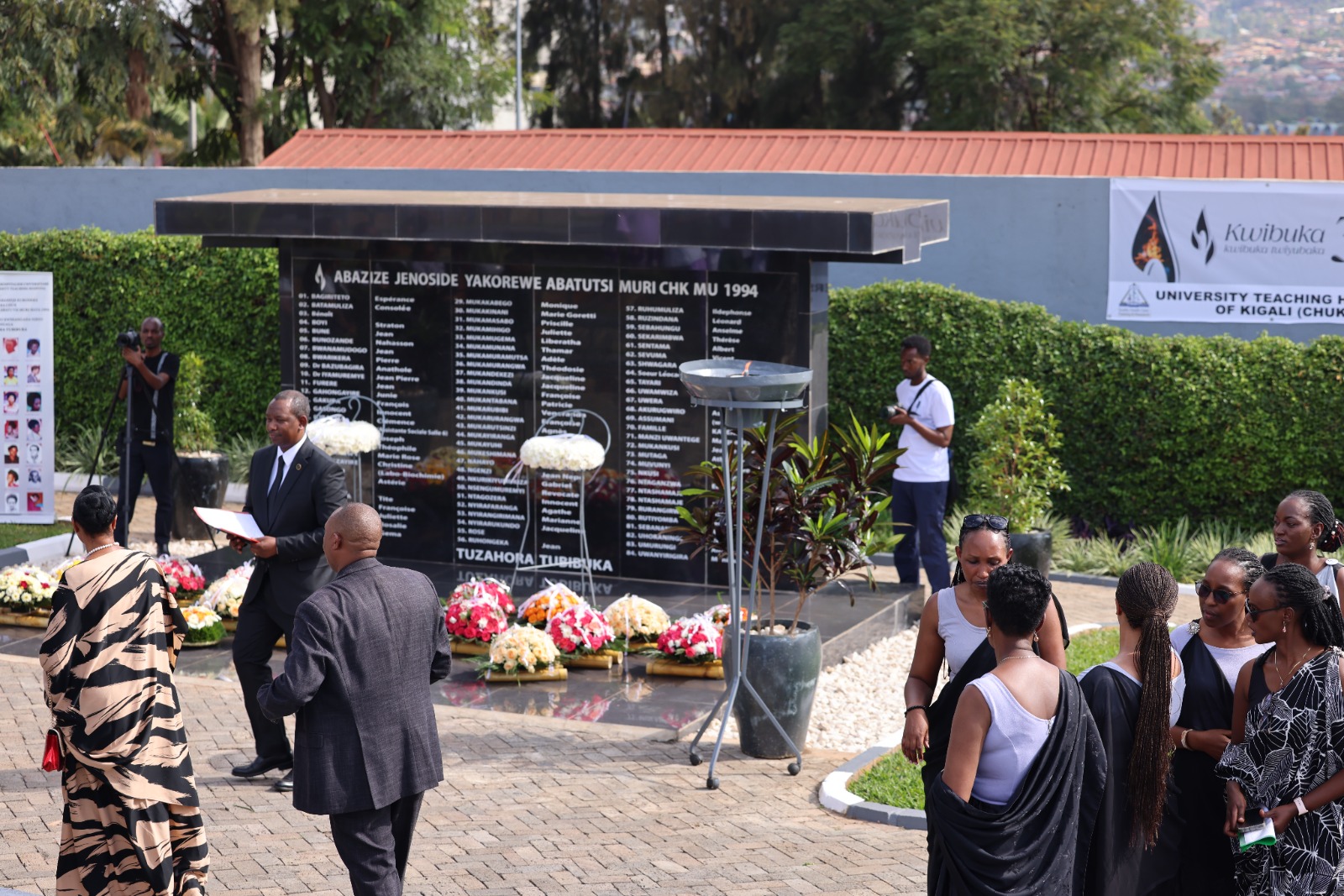
Friday’s commemoration honored former CHUK staff, patients, caregivers and other people who were killed after seeking treatment or refuge at the hospital.
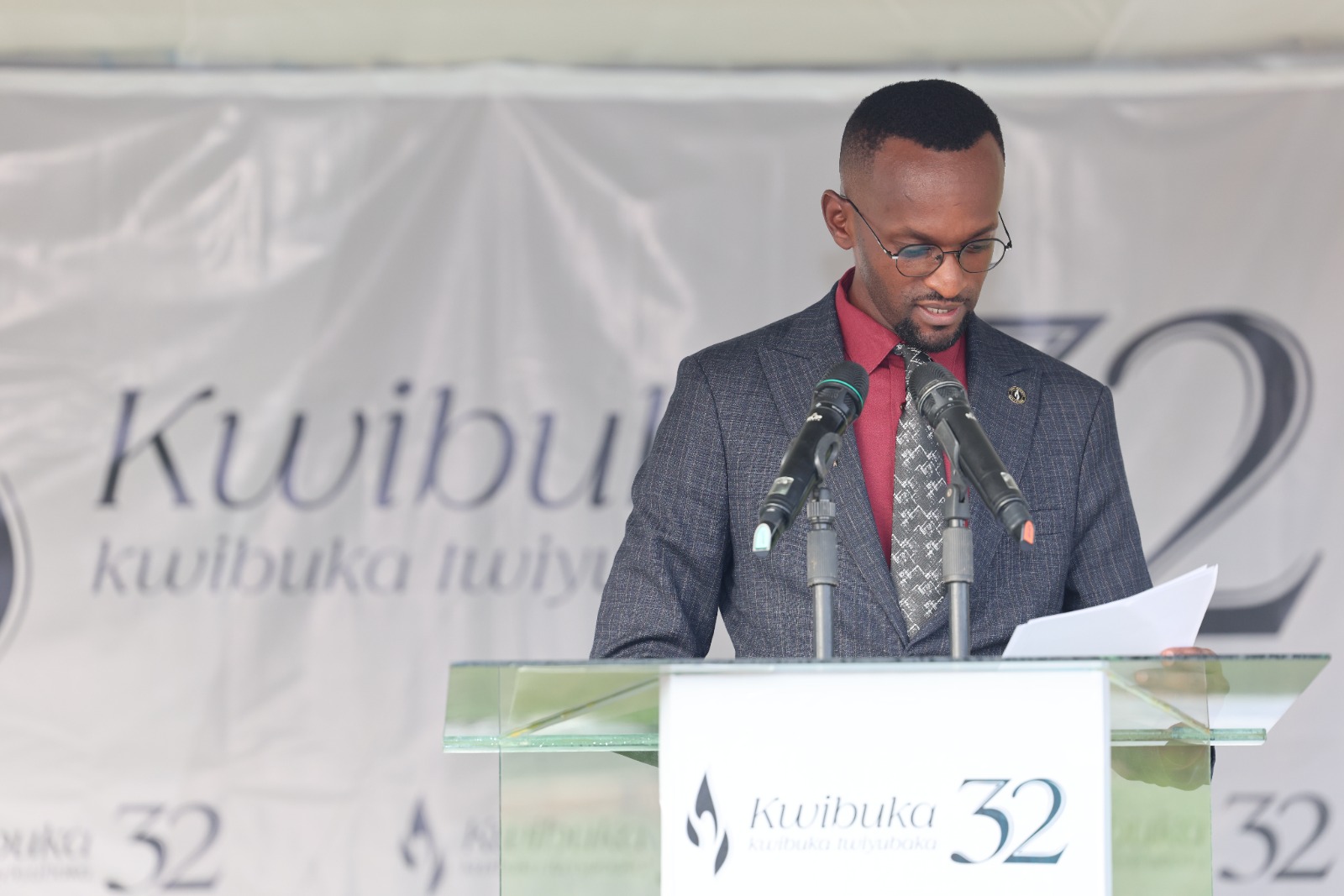
Speaking at the event, CHUK Director General Dr. Tharcisse Mpunga said the institution remembers not only those who worked there but also the many victims who came looking for life and instead found death.
“The fact that we stand here today remembering them is proof that we overcame the hatred that sought to destroy us,” he said. “Every day at CHUK, we fight death and care for people without discrimination. That is one way of honoring those we lost.”
Dr. Menelas Nkeshimana, Director of Human Resource Development and Training at the Ministry of Health, said the events that unfolded at CHUK remain among the darkest chapters in the history of Rwanda’s health sector.
“These grounds witnessed unimaginable atrocities,” he said. “Tutsi were killed here, including people who came seeking treatment and protection. We condemn the health professionals who failed in their duty and became complicit in crimes against those they were supposed to care for.”
He said the memory of what happened at CHUK should continue to serve as a warning against genocide ideology and hatred.
Although the CHUK Genocide Memorial currently bears the names of 84 identified victims, officials say many more people were killed at the hospital and their identities have yet to be fully established.
For survivors like Simugomwa, the memories remain vivid 32 years later—a reminder that during the genocide, even a hospital dedicated to saving lives became a place where the sick, the wounded and those seeking refuge were hunted and killed.