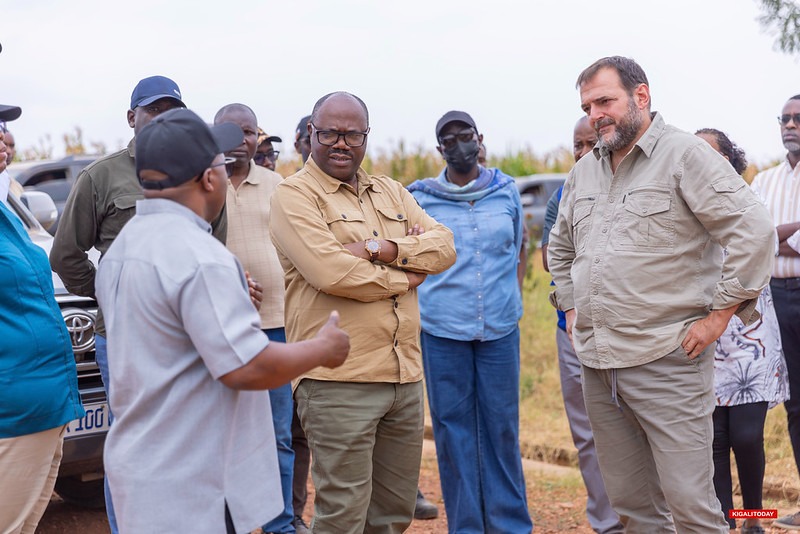
NYAGATARE, Rwanda — Rwanda’s Prime Minister Dr. Justin Nsengiyumva, traveled to one of the country’s largest state-backed farming projects on Saturday with a clear message for investors: produce more.
The visit to the Gabiro Agribusiness Hub, a vast commercial farming estate in Rwanda’s Eastern Province, underscored the government’s determination to transform agriculture into a more productive, export-oriented sector.
But it also exposed a growing tension between policymakers eager to boost yields and investors who say soaring irrigation costs are making those ambitions increasingly difficult to achieve.
Meeting with the six companies operating at the hub, Dr. Nsengiyumva reviewed production figures crop by crop, comparing current performance with targets previously agreed upon with the government. While he acknowledged progress, he told investors that output remained below expectations.
His strongest message was directed at passion fruit production, one of the hub’s principal export crops. Average yields currently stand at about 12 tonnes per hectare, he noted, but should reach 20 to 25 tonnes per hectare if Rwanda is to maximize the potential of the project.
The Gabiro Agribusiness Hub covers more than 5,600 hectares in Nyagatare District, near Rwanda’s borders with Uganda and Tanzania. Developed by the government along the Akagera River, the project is central to Rwanda’s strategy of modernizing agriculture by pairing public investment in land preparation and irrigation infrastructure with private capital and commercial farming expertise.
The government provides serviced farmland, irrigation systems and supporting infrastructure, while private investors lease plots to cultivate crops ranging from passion fruit and chili peppers for export markets to maize and beans destined for domestic consumers.
Among those meeting the Prime Minister was Emmanuel Harerimana, chief executive of Garden Fresh, which farms about 185 hectares within the estate.
Harerimana said passion fruit accounts for roughly 60 percent of the company’s production, alongside fresh and dried chili peppers. To improve quality and ensure continuous harvesting, he said, the company plants about eight hectares each week under a staggered production system.
Current yields average about 12 tonnes of passion fruit and 15 tonnes of chili peppers per hectare, he said.
Dr. Nsengiyumva responded that considerably higher yields should be attainable through improved farming practices and more intensive management.
MORE PHOTOS – Prime Minister’s Visit to Muvumba Multipurpose Dam & Gabiro
Agriculture Minister Télesphore Ndabamenye echoed that assessment, saying higher productivity would depend on greater investment in farm inputs, stronger crop management, expanded irrigation and improved seed varieties. Most investors, he said, remain in the early stages of scaling up production, and the government intends to continue supporting their efforts.
Government says the project’s first phase has already created employment for more than 6,000 people in the surrounding communities.
The Cost of Water
If the Prime Minister’s priority was higher productivity, investors had a different concern.
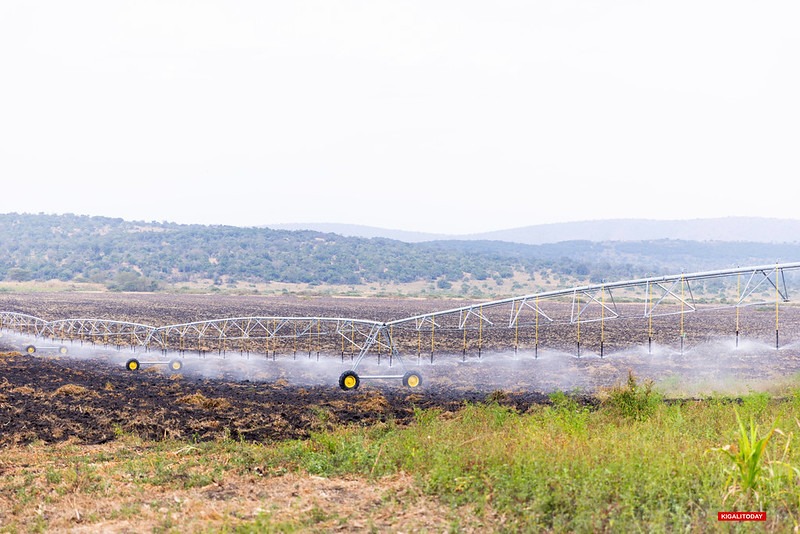
Several participants told him that the cost of irrigation water has become one of the largest obstacles to expanding production.
Unlike many other farm inputs, irrigation water at Gabiro is billed in U.S. dollars, exposing investors to exchange-rate fluctuations while adding substantially to operating costs.
Harerimana said irrigation alone adds about Rwf175 to every kilogram of produce harvested. Transporting that produce to Kigali costs an additional Rwf1,000 per kilogram, significantly squeezing profit margins before crops reach the market.
For Augustin Twagirumukiza, chief executive of Agropark Gabiro Ltd, the challenge is even broader.
He said irrigating a single hectare can cost close to Rwf2 million, making water one of the largest production expenses faced by commercial farmers at the hub.
Twagirumukiza proposed that the government either reduce water tariffs or allow investors to construct and manage their own water distribution systems. Although such infrastructure would require significant upfront investment, he argued, it would lower operating costs over time and improve the financial viability of large-scale farming.
Sage Mutoniwase, Operations Manager at KINVEST, which grows fruits and vegetables at the Gabiro Agribusiness Hub, said regular engagement with government institutions has been key to addressing operational challenges.
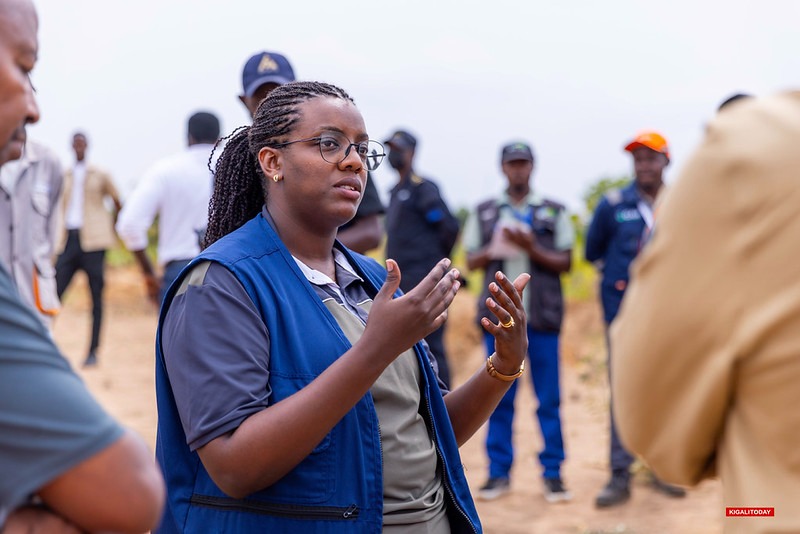
While acknowledging that irrigation costs remain a concern, she said continued dialogue with the Ministry of Agriculture and local district authorities has helped the company resolve issues ranging from water access to staffing needs.
Rather than calling for an immediate change in water pricing, Mutoniwase expressed confidence that sustained collaboration between investors and government would produce practical solutions over time.
She added that KINVEST remains optimistic about its investment in Gabiro and believes the project will contribute to Rwanda’s long-term agricultural and economic development.
Another investor noted that pricing water in dollars creates additional uncertainty because production costs rise whenever the Rwandan franc weakens. Since many crops grown at Gabiro are sold domestically rather than exported, investors said high irrigation costs make it harder to compete with producers facing lower input costs elsewhere.
Ndabamenye acknowledged the concerns, saying the government is exploring ways of aligning water charges more closely with farm productivity so that higher yields would reduce the relative burden of irrigation costs. He said discussions with investors would continue as officials seek a longer-term solution.
The exchange illustrated one of the central challenges facing Rwanda’s agricultural modernization drive. While the government is pressing investors to produce more from every hectare, those investors say achieving that goal will require reducing some of the costs that make commercial farming less competitive.
For Gabiro, one of Rwanda’s flagship agribusiness projects, the success of that partnership may determine whether the hub can deliver on its promise of becoming a model for commercial agriculture in the country.