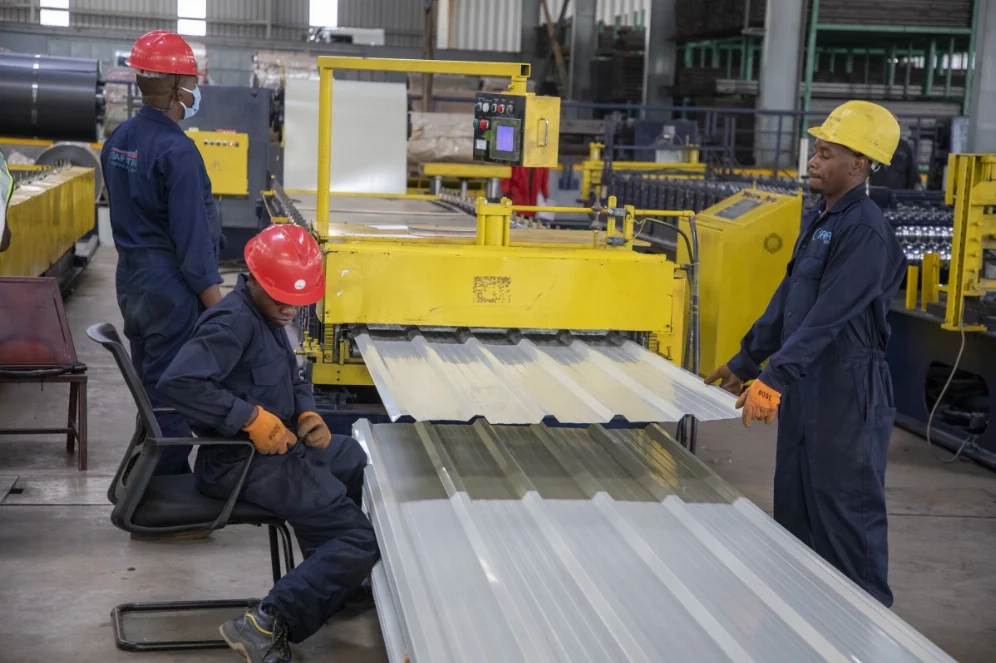
Rwanda’s industrial sector has pushed Rwanda’s economy to a 9.4% growth.
KIGALI – Rwanda’s industrial sector is becoming a more powerful engine of economic growth, with its expansion helping push the economy to 9.4% growth in the second quarter of 2026, new figures from the National Institute of Statistics of Rwanda show.
Industry grew by 18% in the quarter, more than twice the pace recorded by services and more than four times agriculture’s growth.
The performance was led by construction, mining and manufacturing, portraying a continuation of a broader realization that has seen industry steadily increase its weight in the economy.
Ten years ago, Rwanda’s industrial sector accounted for 17% of GDP. By 2024, its share had risen to 21%, according to NISR data. Manufacturing alone increased its contribution from 7% to 9% over the same period, while construction rose from 7% to 9%.
The latest figures suggest that momentum is continuing. The economy expanded to Frw7,174 billion in the second quarter, up from Frw5,799 billion a year earlier.
In industry, the strongest manufacturing performance came from metal products, machinery and equipment, whose output increased by 51%. Manufacturing of non-metallic mineral products rose 22%, while textiles, clothing and leather products increased 13%.
The performance builds on an industrial trend that was already visible before this quarter. Industry grew 11% in 2025, with manufacturing supported by increased production of construction materials.
That makes the latest growth cumulative where construction and manufacturing are increasingly feeding into each other as Rwanda expands infrastructure and seeks to meet more of its demand for construction materials locally.
A Growth Engine with a Pressure Point
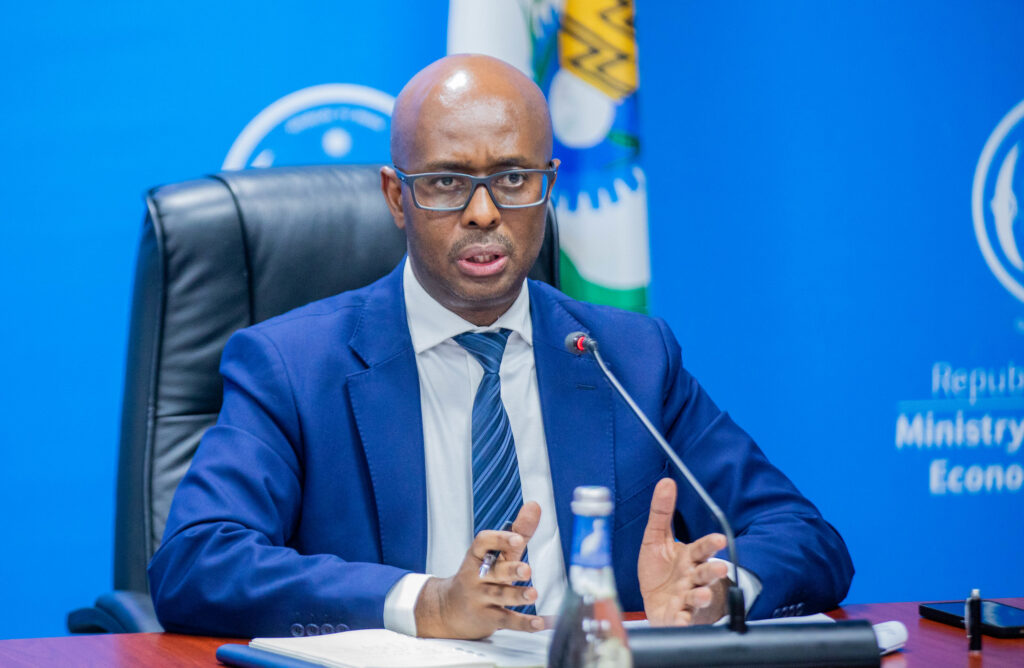
Finance and Economic Planning Minister Yusuf Murangwa.
Finance and Economic Planning Minister Yusuf Murangwa said the strong performance in trade and industry shows that economic activity remains resilient despite the pressure created by higher commodity prices and geopolitical tensions.
“Economic development is not something you can determine in a short period, but the figures, especially in trade and industry, show that people are able to buy. The purchasing power is good,” Murangwa said.
He said the strength of trade could have been even greater without the increase in commodity prices, arguing that the latest figures point to continued expansion in the longer term.
“What we are seeing is a gradual increase. If commodity prices had not increased, the increase in trade would have been even higher, which indicates that we are seeing growth that can continue in the long run,” he said.
The government also says measures introduced to limit the effects of the conflict in the Middle East have helped the economy maintain its momentum.
“There are some measures we have put in place to counter the effects of the Middle East war. Yes, the effects are there, but the measures have paid off,” Murangwa said.
Agriculture Remains the Weak Link
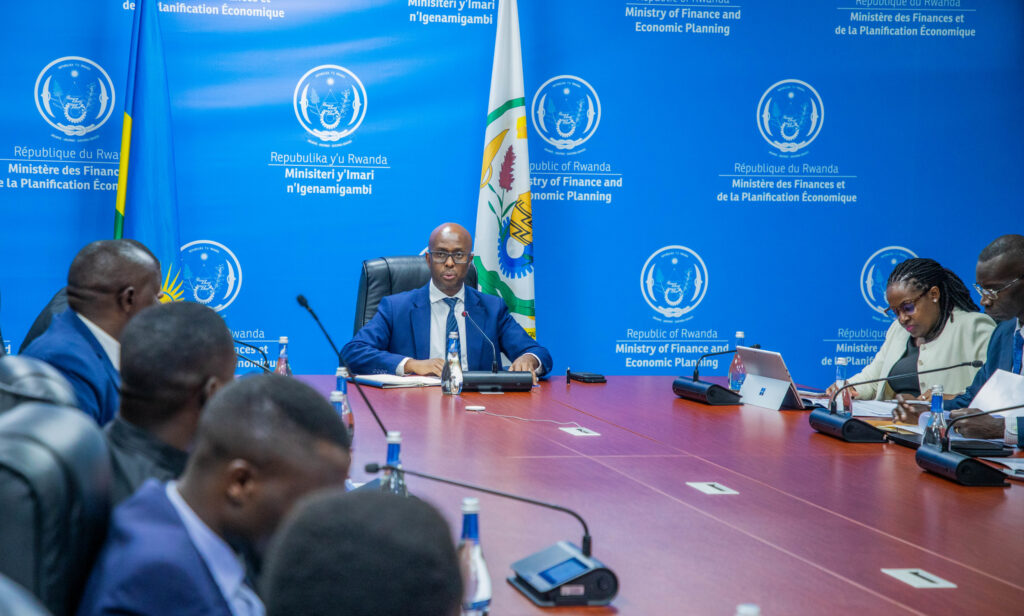
Finance and Economic Planning Minister Yusuf Murangwa addressing the press.
Agriculture grew by only 4%, despite accounting for 21% of GDP. Murangwa said this pace is not enough to deliver the stability Rwanda needs but it does not mean that agricultural production has reduced.
“Four percent increase in agriculture is not enough. In order to get stability, we need like 10%, and we are aiming at increasing it even more,” he said.
Food-crop production increased 5%, while export crops declined 20%, largely because coffee production fell 33%. Tea production increased 18%, partly offsetting the decline.
The slower agricultural growth also matters because it is feeding into the price pressures households are experiencing.
NISR Deputy Director General Jean Claude Mwizerwa said some of the increases were caused by specific shocks, including livestock disease.
“We can highlight some products like meat, where we had a very high increase in prices, not necessarily linked to production, but to issues of Rift Valley fever. Those products pushed the price very high,” Mwizerwa said.
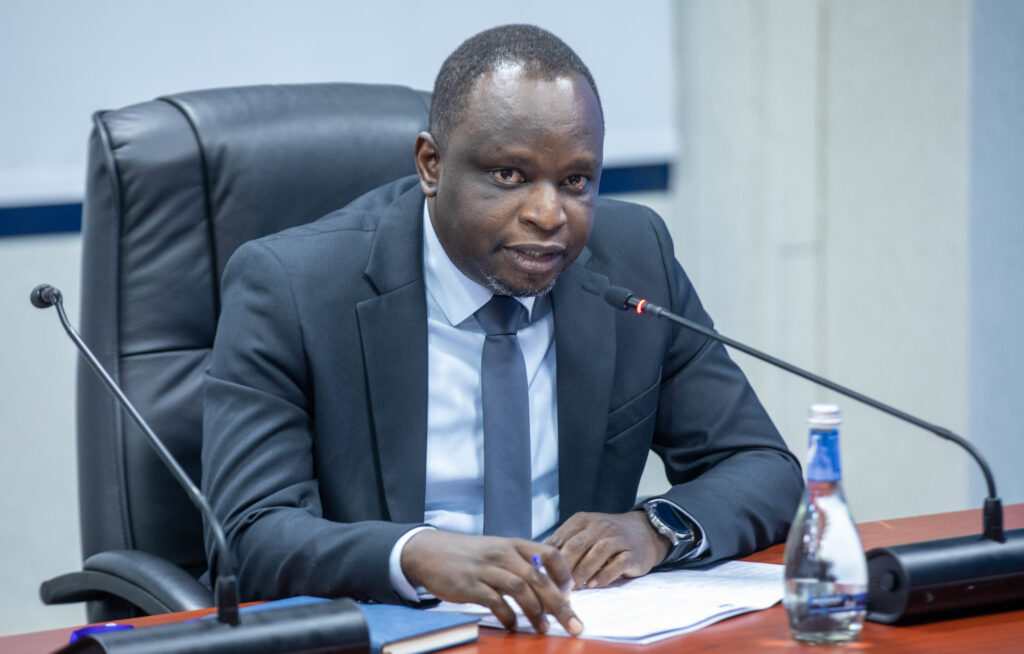
NISR Deputy Director General Jean Claude Mwizerwa.
Transport costs were also affected by higher fuel prices linked to tensions in the Middle East.
“We saw also some other products like transport, where due to challenges coming from the Middle East, the fuel cost increased and this pushed the local transport cost very high,” Mwizerwa said.
The second-quarter figures show an economy expanding strongly, but also underline the importance of ensuring that growth in factories, construction and trade is matched by stronger food production to ease pressure on consumers.