



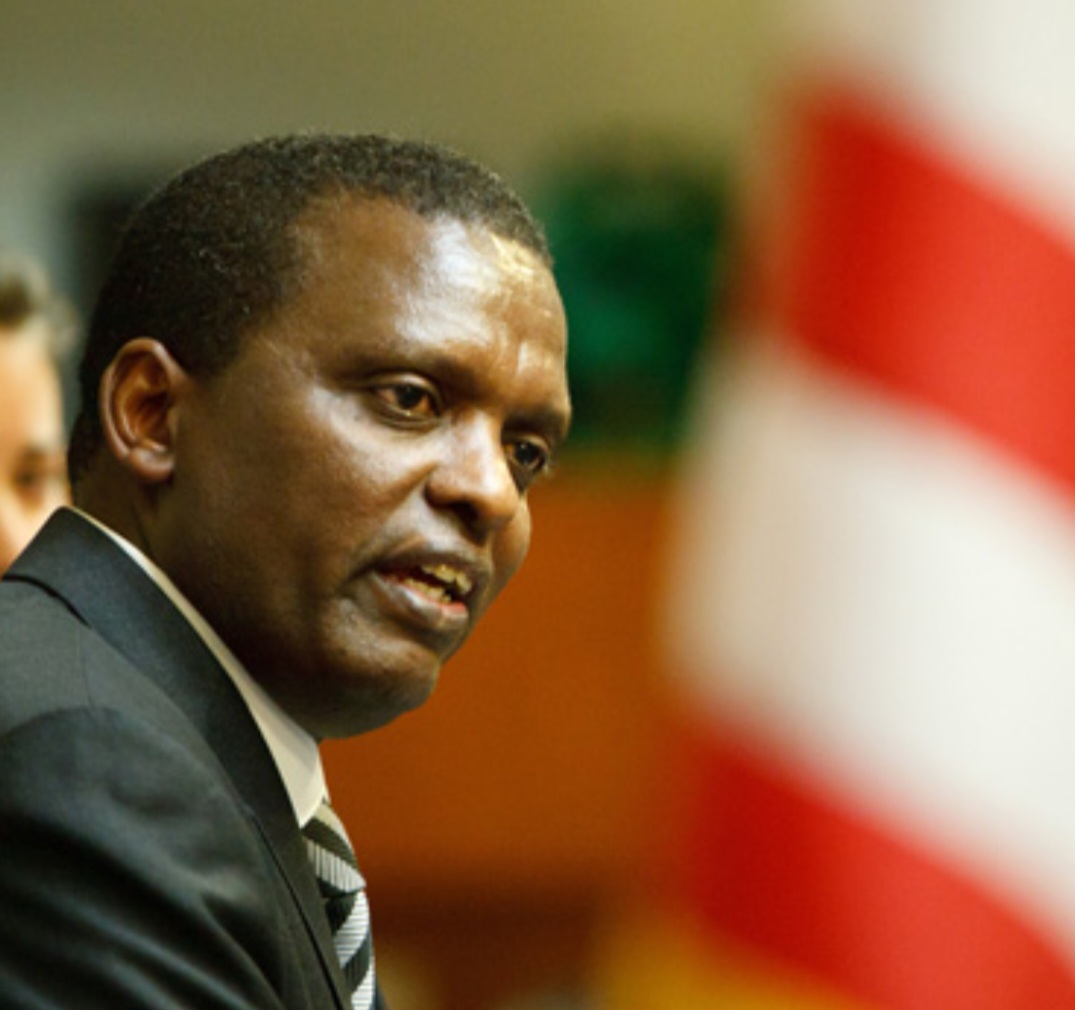
Former Democratic Republic of Congo Vice President Azarias Ruberwa has contrasted the response of former President Joseph Kabila with that of President Félix Tshisekedi to violence against the Banyamulenge community in eastern Congo.
Speaking at a Congolese diaspora prayer gathering in Indianapolis, Indiana, on October 3, Ruberwa said Kabila took action early in the conflict to stop what he described as an attempt to exterminate Banyamulenge people on the Hauts Plateaux of South Kivu.
Ruberwa, a prominent Banyamulenge political figure and former senior government official, said the situation changed after Tshisekedi came to power in 2019.
He said he personally met the president 15 times to ask him to intervene and stop attacks against the community, but claimed that his appeals did not produce the action he had sought.
The remarks were made during a gathering focused on prayer for peace and the suffering of communities in eastern Congo, particularly in Minembwe and other parts of South Kivu.
Ruberwa did not present his comparison as a general assessment of the two presidents’ records.
Instead, he was speaking specifically about the security and political situation facing the Banyamulenge, a Congolese community concentrated in the highlands of South Kivu.
Ruberwa said the problem had persisted for decades and could not be resolved quickly.
He recalled that he had been involved in the issue since 1996, when he was 32, and said he had worked both outside and inside government institutions to seek political solutions.
He said successive generations had contributed to the struggle and that younger Banyamulenge leaders were now taking up the work.
“One day it will arrive,” he said, referring to a future in which people would no longer suffer discrimination because of their identity.
He specifically spoke of a time when Swahili speakers would no longer feel marginalised for speaking one of Congo’s four national languages, and when communities including the Banyamulenge and Mbembe would again live together peacefully.
Army collaboration
Ruberwa also accused elements of the Congolese security establishment of working with armed groups that he said had targeted the Banyamulenge.
He claimed that an armed group whose stated objective was to eliminate the Banyamulenge was now working alongside the national army.
Ruberwa’s comments are consistent with concerns he has expressed publicly in recent months about the security situation in Minembwe.
In July, he raised another alarm that Banyamulenge civilians were facing killings, displacement and other abuses and called for an international and independent investigation into alleged crimes in the area.
He has also recently argued that the conflict in eastern Congo cannot be resolved through military means alone and has called for a broader political dialogue.
The former vice president said the suffering of Banyamulenge families should not lead to hatred of other Congolese communities.
He urged those affected to remain united, maintain relations with other communities and continue believing that justice would eventually prevail.
A long political history
Ruberwa’s comparison comes against the background of his own long relationship with Kabila’s political establishment.
He served as one of four vice presidents in Congo’s transitional government from 2003 to 2006, during the period following the Second Congo War.
He was also secretary-general of the Rally for Congolese Democracy, a rebel movement that controlled large areas of eastern Congo during the war.
His relationship with Kabila was later described as close, while Ruberwa served in government. He subsequently served as minister of decentralisation under Tshisekedi.
The relationship with Tshisekedi became particularly contentious over Minembwe.
In 2020, Tshisekedi revoked the status of Minembwe as a rural commune after intense opposition from political and community leaders who argued that its creation threatened existing territorial arrangements. Ruberwa, who was then decentralisation minister, said at the time that the decision had followed the president’s instructions.
Ruberwa has remained outspoken about the treatment of Banyamulenge and Tutsi Congolese.
In a July interview, he said Congolese of Banyamulenge and Tutsi background should enjoy the same constitutional rights as other citizens and should not face discrimination, hate speech or arrest based on their physical appearance.
At the Indianapolis gathering, Ruberwa placed the current crisis within a much longer historical struggle.
He said the problems facing the community were not capable of being solved spontaneously and would require patience and work across generations.
The religious gathering was organised around prayer for peace and relief from suffering in eastern Congo. Ruberwa said his participation was his contribution to finding solutions and thanked the organisers for inviting him.
The former vice president also invoked the biblical Book of Nehemiah, which he described as one of his favourite books of the Bible and a model of leadership.
