



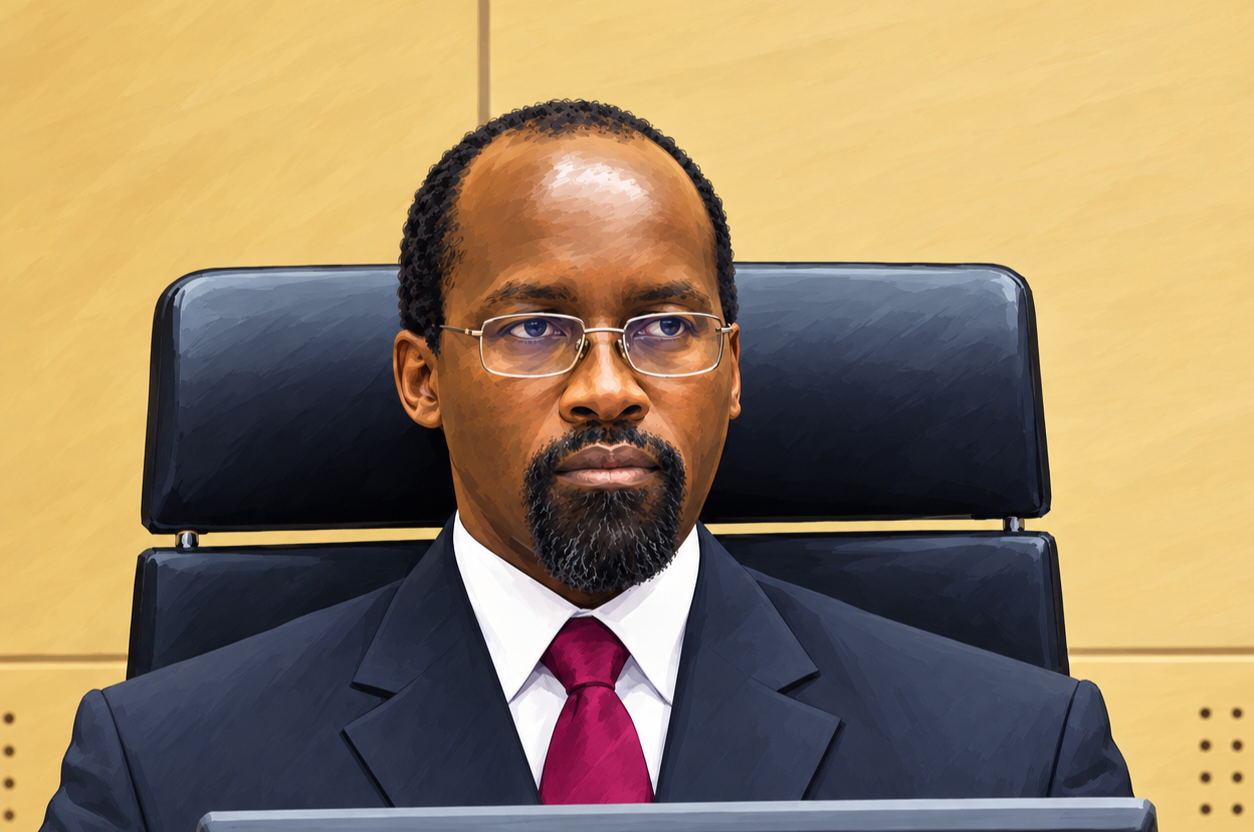
Callixte Mbarushimana, a former senior political leader of the Democratic Forces for the Liberation of Rwanda (FDLR), has reportedly died in France.
Reports of his death began circulating on social media on October 5, 2026 evening.
Mbarushimana spent much of his later life in France. He was never convicted of the crimes alleged against him.
His death comes as a French investigation into allegations dating back to the 1994 Genocide against the Tutsi remains unresolved.
Mbarushimana was born on July 24, 1963, in Ndusu, in what is now Musanze District.
He trained as an information technology specialist.
Around 1992, he joined the United Nations Development Programme (UNDP) in Kigali.
He remained in Rwanda after expatriate UN staff were evacuated when the genocide began in April 1994.
His conduct during the genocide later became the subject of investigations.
Witnesses accused him of using his position against Tutsi colleagues and other civilians.
The allegations were serious.
They included handing UNDP vehicles and supplies to the former Rwandan army and Interahamwe militia.
He was also accused of helping compile lists of people to be killed.
Investigators linked him to the deaths of about 32 people.
Among them was Florence Ngirumpatse, then UNDP’s personnel chief in Kigali. President Paul Kagame revealed in speech on April 7, 2024 that Florence was his cousin and they had actually been in contact.
She was killed along with people she had sheltered.
A UN war-crimes investigator, Tony Greig, reported that Mbarushimana was implicated in Ngirumpatse’s killing.
Greig also reported that Mbarushimana personally shot two other victims.
His investigation drew on about 20 to 25 witnesses who alleged that Mbarushimana was directly involved in killings or helped identify UN staff.
The witnesses also accused him of supporting the Interahamwe.
The International Criminal Tribunal for Rwanda examined the file.
It did not indict him.
He was dismissed by the United Nations in 2001.
He later worked for the UN in Angola and Kosovo.
He obtained political-refugee status in France around 2002 or 2003.
He then worked in information technology in the Paris area.
The killing of Florence Ngirumpatse
Ngirumpatse had worked for the United Nations for more than 15 years.
She had also been jailed by Rwanda’s former government in 1990 during a crackdown on suspected opponents.
Former colleagues said Hutu extremists disliked her.
When the genocide began, Ngirumpatse was trapped at her home near Camp Kigali.
She was with a niece, other children and neighbours.
Many of the children were schoolgirls she had taken in.
Some accounts put their ages between eight and 18.
She believed her UN status would protect them.
Kagame later said he spoke to her several times by satellite telephone.
She told him that militia members were coming to the house.
She also reported that women there had been repeatedly raped.
She described the situation as being like death.
Rwandan Patriotic Front (RPF) forces could not reach the area.
A rescue operation was eventually planned.
But on May 16, 1994, militia members entered the house.
They killed Ngirumpatse and most of the people there.
One niece escaped with help from a neighbour.
Former UN officials later said the attack happened shortly before a planned rescue.
They said a UN armoured vehicle was supposed to evacuate the group.
The rescue had reportedly received authorisation.
The attackers struck before the operation could take place.
The circumstances raised questions about whether information about the rescue had been leaked.
Mbarushimana was a UNDP computer specialist and colleague of Ngirumpatse.
Former UN officials said she had distrusted him before the genocide.
She reportedly suspected that he had links to the Interahamwe.
One account says Mbarushimana insisted on knowing her address after the killings began.
A witness later told former UN official Charles Petrie that Mbarushimana was seen celebrating the deaths in a bar.
He was never convicted over Ngirumpatse’s death.
Rise within the FDLR
Mbarushimana later became involved in the FDLR.
The group is an armed organisation based mainly in eastern Democratic Republic of Congo.
It was formed largely from remnants of the former Rwandan army and Interahamwe.
Mbarushimana held senior political positions in the group from about 2004.
In July 2007, he became its executive secretary.
He was based largely in France.
He issued FDLR communiqués and represented the group’s political positions.
His role grew after Germany arrested FDLR president Ignace Murwanashyaka in 2009.
Mbarushimana was then said to have taken part of the leadership’s decision-making.
The United Nations Security Council sanctions committee listed him in March 2009.
It identified him as an FDLR political-military leader.
He was accused of obstructing the group’s disarmament and the repatriation of its members.
He was later re-elected as executive secretary in November 2014, according to UN sanctions records.
The ICC case
Mbarushimana’s FDLR role eventually brought him before the International Criminal Court.
On September 28, 2010, the court issued a sealed arrest warrant.
French police arrested him in Paris on October 11, 2010.
He was transferred to The Hague on January 25, 2011.
Prosecutors accused him of contributing to an FDLR plan to attack civilians in North and South Kivu in 2009.
They said the attacks were intended to create a “humanitarian catastrophe”.
The aim, prosecutors said, was to extract political concessions.
Mbarushimana faced five crimes-against-humanity charges.
They were murder, torture, rape, other inhumane acts and persecution.
He also faced six war-crimes charges.
They included attacks against civilians, destruction of property, murder, torture, rape and inhumane treatment.
The prosecution relied on Article 25(3)(d) of the Rome Statute.
It argued that Mbarushimana had contributed to crimes committed by FDLR forces.
But the case did not go to trial.
In December 2011, International Criminal Court judges voted 2–1 against confirming the charges.
The majority accepted that FDLR forces had committed war crimes.
But they found that prosecutors had not established substantial grounds to believe that Mbarushimana’s own contribution was sufficient to send him to trial.
He was released on December 23, 2011.
The Appeals Chamber rejected the prosecutor’s appeal in May 2012.
Mbarushimana returned to France.
French genocide investigation
A separate legal case had also been opened in France.
A complaint filed in 2008 by the Collectif des parties civiles pour le Rwanda led to a French investigation.
Mbarushimana was placed under judicial examination in 2010.
The case concerned alleged crimes against humanity and complicity linked to the 1994 genocide.
Investigators examined many of the allegations that had appeared in earlier UN inquiries.
They included claims concerning UNDP employees.
They also examined the killing of Ngirumpatse and the people sheltering with her.
On October 1, 2024, a French investigating judge dismissed the case.
The judge cited problems with witness evidence.
The testimony was described as fluctuating, imprecise and inconsistent.
Mbarushimana’s lawyer said no evidence established his client’s guilt.
The civil parties appealed.
On May 21, 2025, the Paris Court of Appeal ordered the investigation reopened.
The court found that the evidence had not been fully examined.
It also ordered further work with witnesses.
That meant the case remained unresolved.
Mbarushimana’s legal history spans more than three decades.
