



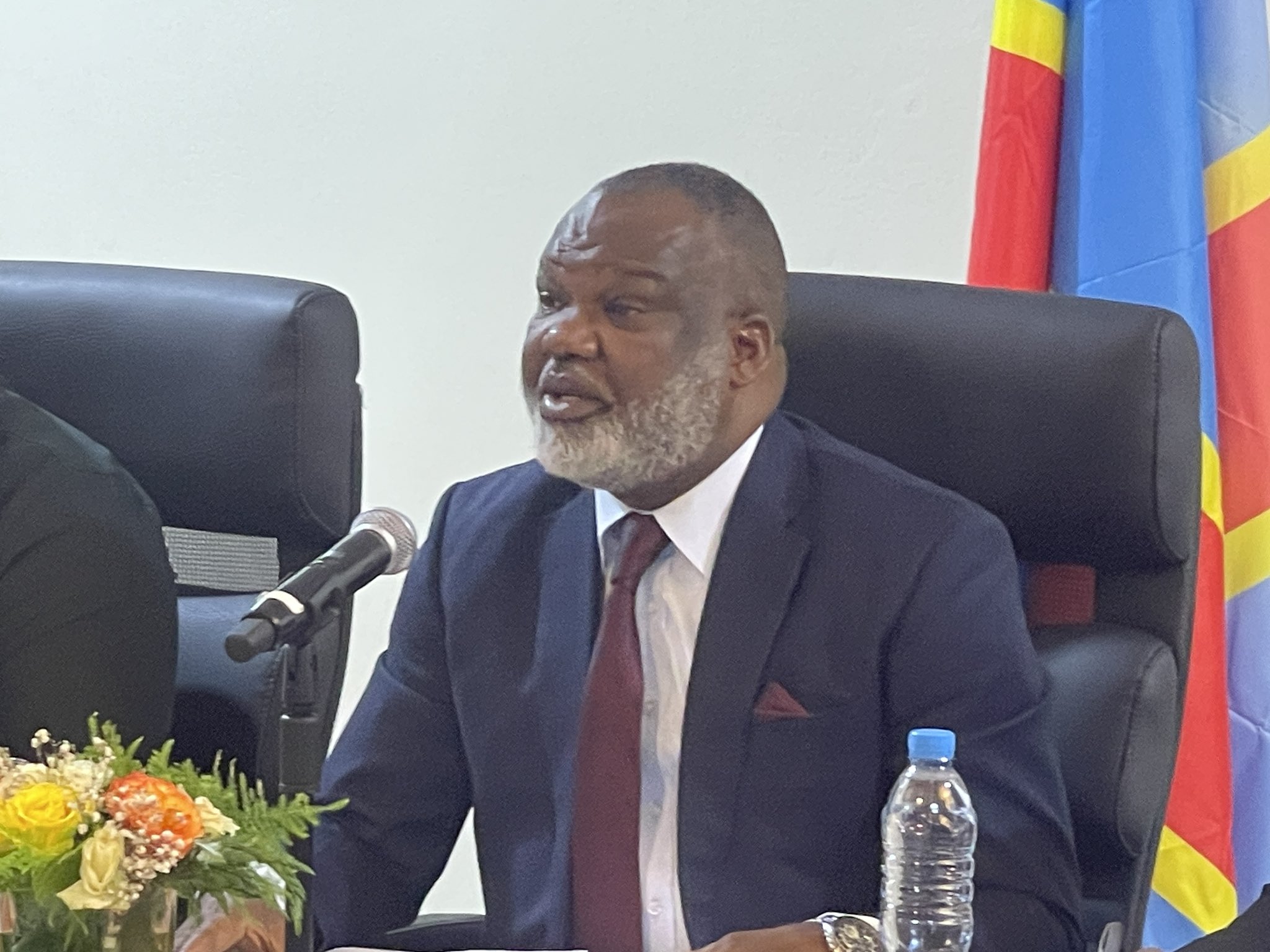
Corneille Nangaa, the movement’s coordinator
GOMA— AFC-M23’s political leadership says its decision to halt further territorial expansion in eastern Congo is a political choice linked to the peace process, rather than a sign that its forces have lost the ability to advance.
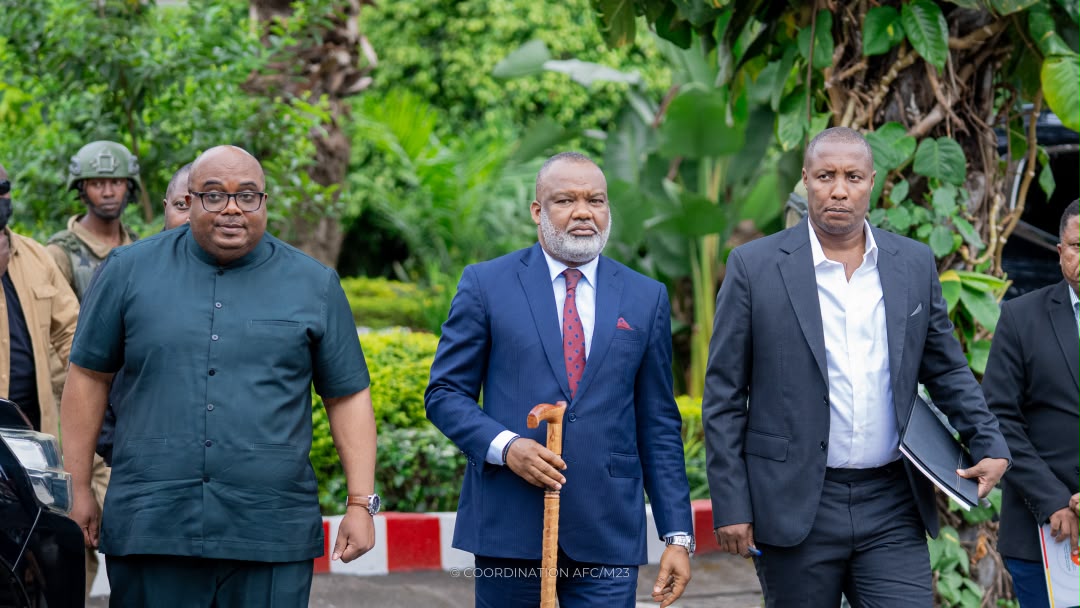
At a press conference in Goma on Wednesday, Oct. 7, political coordinator Corneille Nangaa, accompanied by deputies Bertrand Bisimwa and Freddy Kaniki, addressed the security and humanitarian situation in eastern Congo, with particular attention to Minembwe in South Kivu.
Asked what was preventing AFC-M23 from advancing, Nangaa said nothing on the ground was stopping its forces.
He pointed to earlier gains from the Sabinyo-Bunagana area through Rutshuru and into South Kivu, saying the movement still had the capacity to continue its military campaign.
But he said the decision to stop taking new territory was political.
Nangaa said earlier calls for negotiations had been rejected and fighting had resumed. He said AFC-M23 was now giving Congolese society and mediators room to pursue a diplomatic solution while respecting ceasefire commitments under the Doha peace process.
He said the movement had “given a chance to the return of peace by making room for dialogue,” while accusing the government in Kinshasa of not wanting peace.
“We have a solution and we are going to advance towards where they are,” he said.
A pause, not a withdrawal
The restraint is conditional.
Nangaa warned that continued attacks around Minembwe could trigger a renewed military response. He accused the Congolese army, the Democratic Forces for the Liberation of Rwanda (FDLR), Wazalendo fighters and Burundian forces of attacking Banyamulenge civilians.
He described the situation as a “tragedy” and a “genocide”, and alleged that a blockade was causing shortages of food and medicine.
Those allegations were made by AFC-M23 and could not be independently established.
Front lines remain fluid
Recent fighting illustrates why the announcement does not mean the battlefield has become static.
Remeka in Masisi Territory, North Kivu, has changed hands during recent fighting. AFC-M23 captured the area, but government-allied forces later reported retaking it. The competing claims illustrate the difficulty of establishing stable territorial control.
In South Kivu, Numbi, a mineral-rich area in Kalehe Territory, has also been contested, with government-allied forces claiming to have retaken the area while AFC-M23 has disputed battlefield developments.
Minembwe has similarly seen repeated fighting and changes in control.
The government coalition has also claimed gains in strategic areas including Kayoyi, although such battlefield claims are difficult to independently verify.
AFC-M23 still controls large areas of North and South Kivu, including key cities Goma and Bukavu. Both of just these two big cities have up to 5 million people.
There is, however, no reliable current percentage for the share of either province under its control because the front lines remain fluid and some areas are contested or held by allied forces.
Building institutions
AFC-M23 has also moved beyond military control to establish administrative and economic structures in areas it holds.
The movement has appointed local administrators, organised revenue collection and held large public rallies.
It has also sought to maintain financial services after Kinshasa ordered banks in areas under AFC-M23 control to close.
The rebels have attempted to establish a parallel banking and financial regulatory system, while also developing road infrastructure and border and immigration arrangements linking areas under their control with neighbouring countries.
The moves reinforce AFC-M23’s effort to present itself as an authority capable of governing territory, rather than simply a rebel movement.
Peace process under pressure
The Goma briefing came two days after an African Union facilitation panel comprising former presidents Uhuru Kenyatta of Kenya, Sahle-Work Zewde of Ethiopia and Mokgweetsi Masisi of Botswana met Nangaa, Bisimwa and Kaniki.
The African Union has urged the parties to respect the Doha ceasefire, cooperate with verification mechanisms and continue political dialogue.
Fighting has nonetheless continued in parts of North and South Kivu.
Congolese army statements have reported the surrender of fighters identified as AFC-M23 or allied elements, claims disputed by the rebels.
For AFC-M23, the message from Goma was that the military option remains available but diplomacy is being given space.
The battlefield, however, remains active.
