



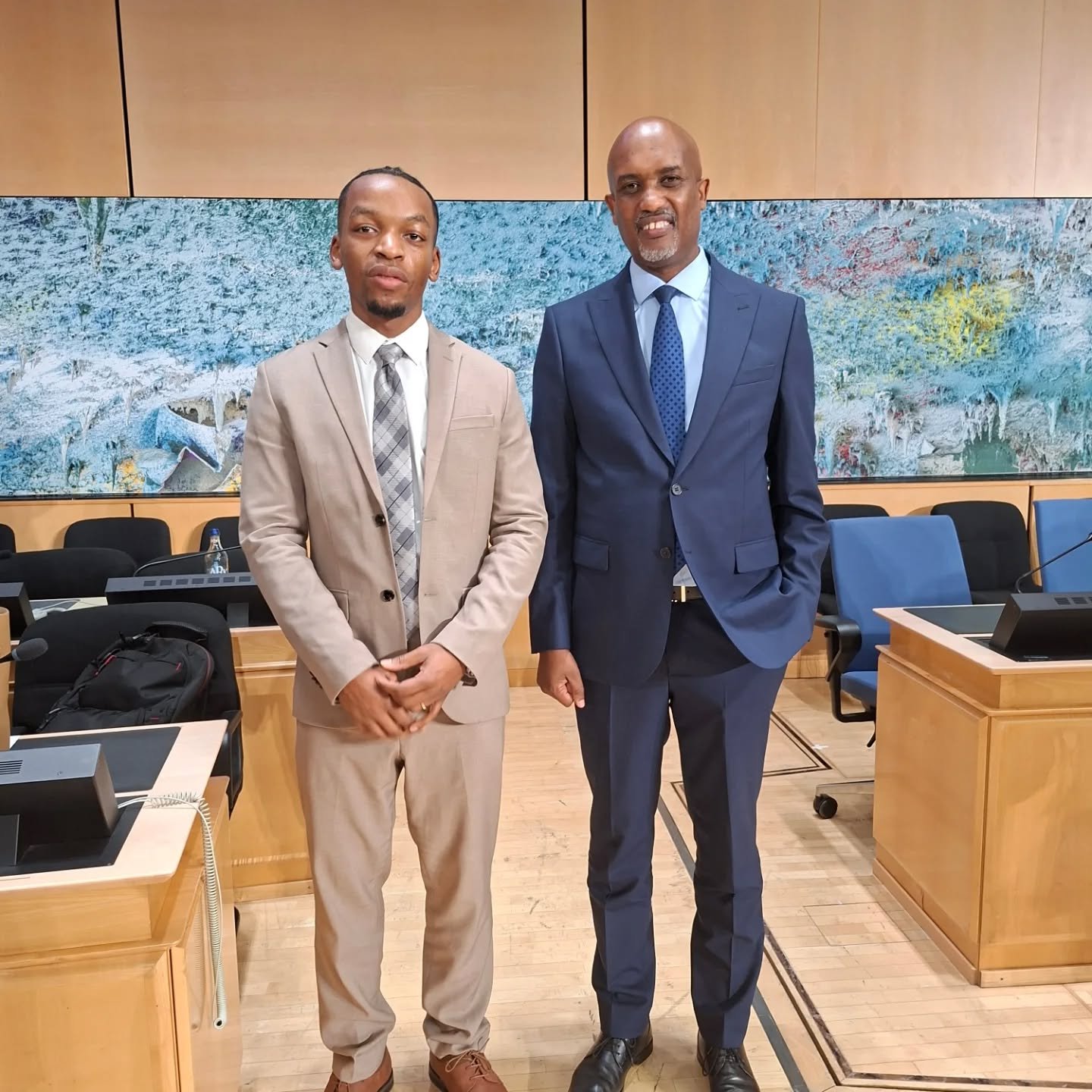
Rwanda’s Justice Minister and AttorneyGeneral, Dr Emmanuel Ugirashebuja, Rémy Amahirwa, during brief encounter with son of Victoire Ingabire Umuhoza
Geneva — Rwanda’s Justice Minister, Dr Emmanuel Ugirashebuja, has reaffirmed the country’s commitment to due process and fair trial standards during Rwanda’s fourth-cycle Universal Periodic Review (UPR) at the United Nations in Geneva.
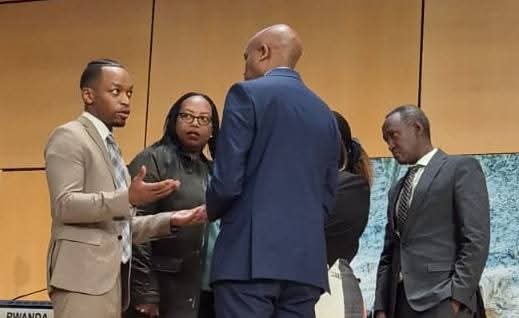
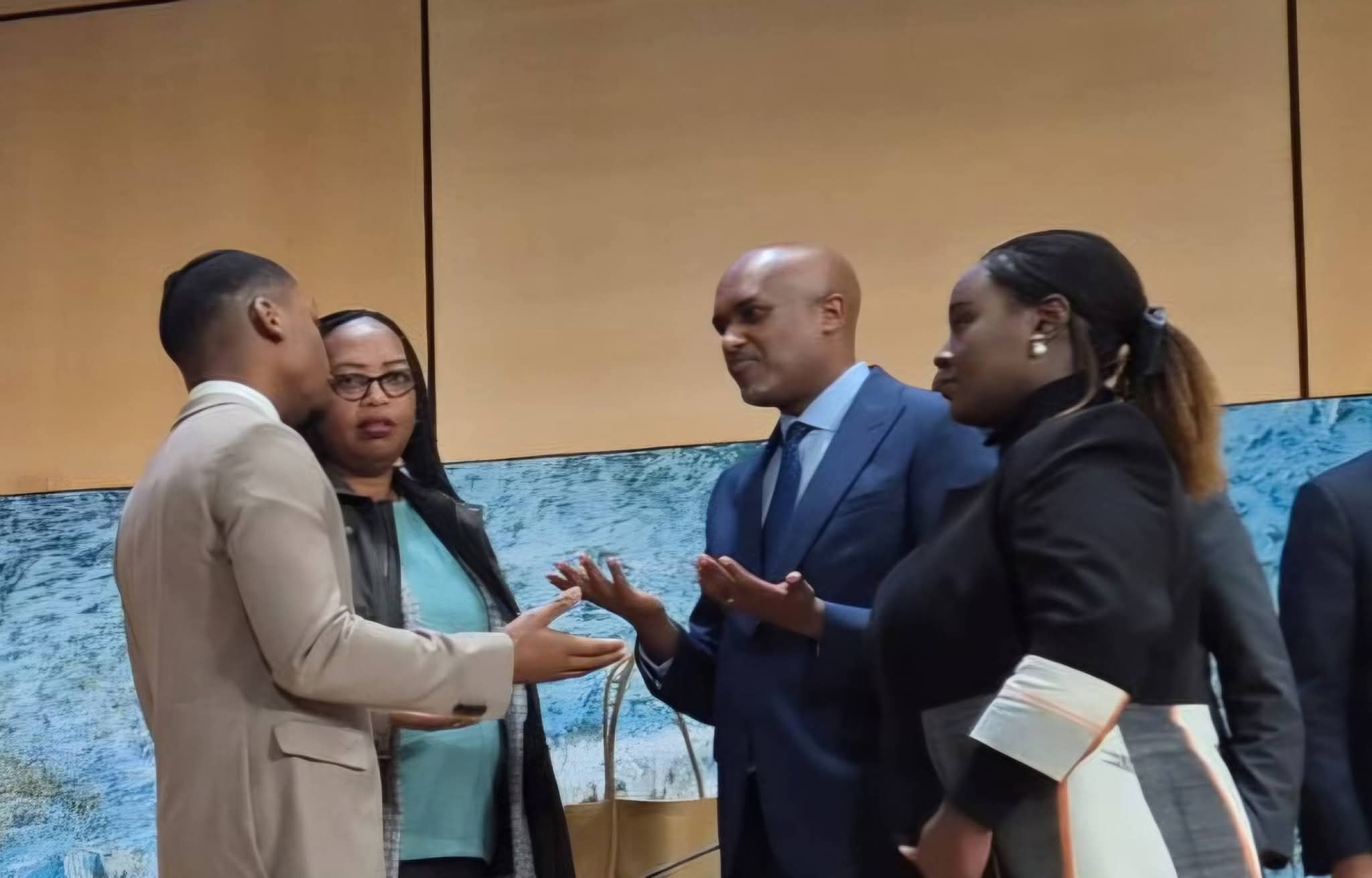
The assurance came at same time as the Minister, also the Attorney General, had an unexpected brief interaction on the margins of the UPR session, with Rémy Amahirwa, son of Victoire Ingabire Umuhoza. He approached members of the Rwandan delegation to raise concerns regarding his mother’s legal situation.
Perhaps hoping they would dismiss him, the Minister and delegation warmly interacted with Amahirwa.
Minister Ugirashebuja reportedly told Amahirwa that his mother “will receive a fair trial,” pointing to ongoing judicial proceedings, including a recent hearing before Rwanda’s Supreme Court.
The response underscored Rwanda’s position that all legal cases are handled within the framework of independent judicial institutions, in line with national law and international obligations.
Victoire Ingabire Umuhoza was detained in June 2025 and is currently facing legal proceedings in Rwanda on charges related to subversion and participation in an unlawful organization. The prosecution maintains that the charges reflect actions considered illegal under national law and asserts that her case is being processed through the country’s independent judiciary.
Rwandan authorities have emphasized that Ingabire, like all defendants, is entitled to legal representation, due process, and fair hearings before competent courts, consistent with domestic legal standards.
The exchange between Minister Dr Ugirashebuja and Ingabire’s son occurred as Rwanda engaged with UN member states reviewing its human rights record, a process the government has consistently welcomed as part of its commitment to transparency, dialogue, and continuous improvement.
During the session, Rwanda reiterated its adherence to international human rights standards and emphasized reforms undertaken to strengthen the justice sector and safeguard detainees’ rights.
Officials from Rwanda’s National Commission for Human Rights also noted that mechanisms exist within national institutions to address concerns related to detention conditions and the application of international standards, including the UN Mandela Rules.
Rwanda’s delegation responded to questions from multiple countries during the review, highlighting progress made in access to justice, legal aid, and judicial accountability.
The government reaffirmed that no one is above the law and that all defendants are entitled to legal representation and fair hearings before competent courts.
The UPR session forms part of Rwanda’s broader engagement with the international community, through which it has regularly accepted recommendations and implemented reforms aimed at strengthening governance, the rule of law, and human rights protections.
Rwanda’s government has consistently maintained that its judiciary operates independently and that legal proceedings are not influenced by political considerations.
Officials have stressed that respect for due process remains a cornerstone of the country’s justice system as it continues to modernize its institutions and deepen international cooperation.
In a prior legal matter, Ingabire was arrested in 2010 and subsequently convicted by Rwandan courts on charges that included collaboration with armed groups and genocide ideology. After serving several years in prison, she was granted clemency in 2018 by President Paul Kagame, who commuted her sentence as part of a national policy to rehabilitate prisoners, not punish them forever.
The decision was presented by the government as an opportunity for Ingabire’s peaceful participation in the country’s development agenda, and was welcomed by some observers as a gesture toward national unity.
