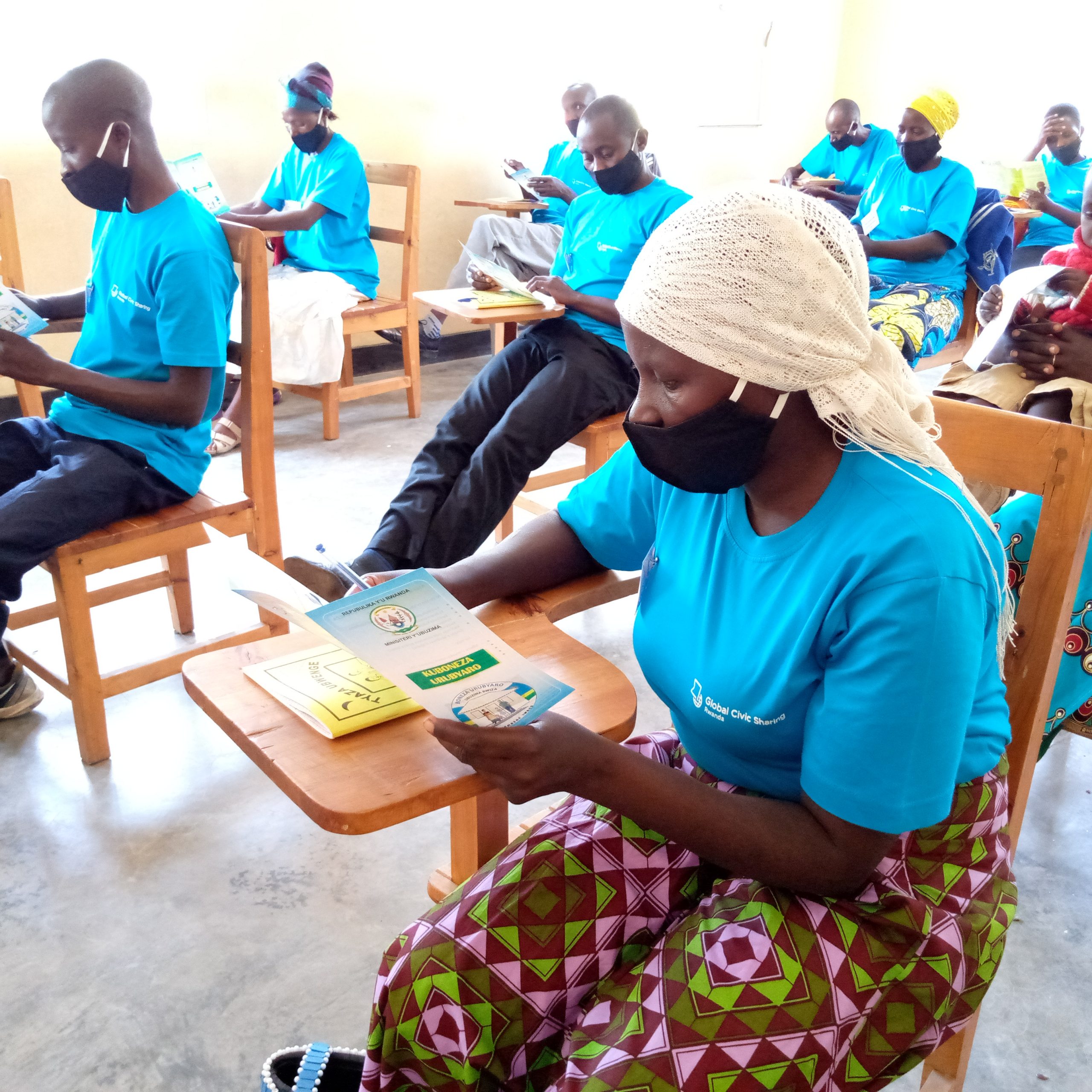
A total of 160 elders including 112 females and 48 males completed a month-long Civil Leadership Training on family planning and gender equality offered by GCS.
Kigali — Rwanda has made notable strides in expanding access to education, but persistent integrity risks—particularly those affecting girls and young women—continue to undermine fairness and trust in the system, according to a new regional policy brief released today by Transparency International.
The brief, “Leaving No Learner Behind: Tackling Corruption and Discrimination in Education Across Africa,” assesses corruption risks in five countries under the Inclusive Service Delivery in Africa (ISDA) project and highlights Rwanda as a case where progress in service delivery is constrained by gendered and discriminatory corruption at critical points in the education system.
Integrity risks at key education touchpoints:
Findings from Rwanda’s Corruption Risk Assessment reveal vulnerabilities in exam grading, access to internships, and school feeding programmes—areas where learners interact directly with education authorities and service providers. These risks are most pronounced for female students, who face heightened exposure to sextortion, a form of corruption involving the abuse of power for sexual gain.
Despite Rwanda’s relatively strong administrative systems, the brief notes that weak reporting mechanisms, fear of retaliation, and social stigma continue to discourage victims from coming forward, allowing abuses to persist largely unchecked.
Gendered corruption undermines inclusion:
Transparency International’s analysis underscores that gendered corruption in Rwanda’s education sector is often hidden and underreported. Female learners may be pressured to exchange sexual favors for grades, exam outcomes, or access to internships—practices that violate human rights and erode confidence in public institutions.
Learners from poor households and those in rural areas also face barriers linked to informal fees and favoritism, while students with disabilities encounter compounded challenges due to gaps in accessibility and accountability.
Oversight gaps remain a concern:
The policy brief identifies limited oversight capacity as a key driver of ongoing risks. While community structures such as Parent–Teacher Associations and school boards exist, they often lack sufficient authority, resources, and protection to effectively challenge misconduct or hold duty bearers accountable.
“Rwanda has invested heavily in education systems, but integrity gaps—especially those affecting girls—must be addressed with the same urgency,” said.
Albert Rwego Kavatiri, ISDA Project Regional Education Expert and Program Manager at Transparency International Rwanda. “Without gender-sensitive accountability and safe reporting channels, corruption will continue to undermine inclusive education outcomes.”
Call for targeted reforms in Rwanda:
To strengthen education integrity, the brief calls on Rwandan authorities to intensify reforms by:
* Explicitly recognizing and sanctioning sextortion as a form of corruption;
* Establishing safe, confidential, and survivor-centered reporting mechanisms;
* Enhancing transparency in grading, internship placement, and school feeding programmes;
* Empowering community oversight bodies with legal authority and protection;
* Strengthening coordination with regional institutions to monitor compliance and share best practices.
According to Transparency International, addressing these risks is essential for Rwanda to sustain progress toward SDG 4 (Quality Education), SDG 5 (Gender Equality), and SDG 16 (Peace, Justice and Strong Institutions).
The brief concludes that while Rwanda has demonstrated political will to improve education outcomes, closing integrity gaps—particularly those driven by gendered corruption—will be decisive in ensuring that no learner is left behind.