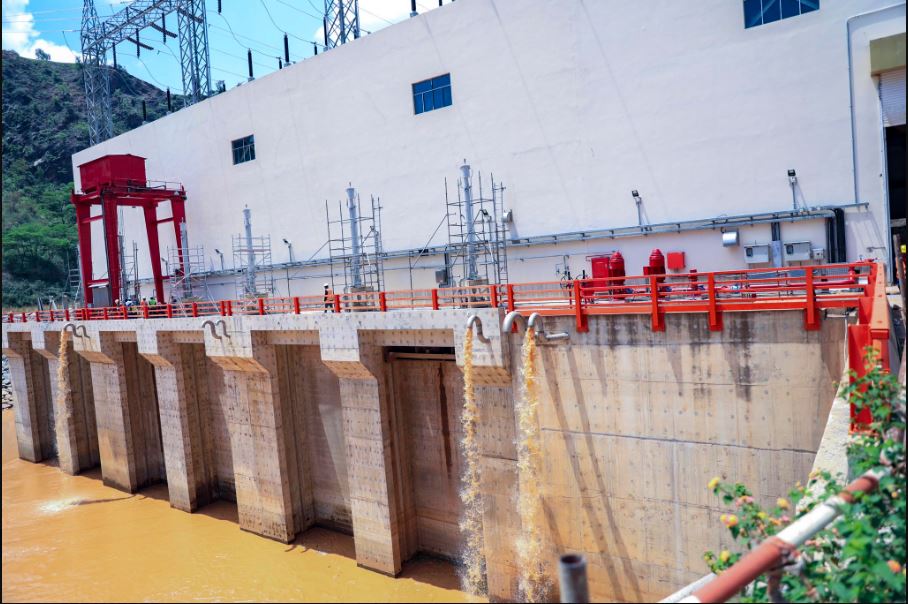
 Rwanda and its neighbours could soon see more reliable electricity as the Nile Basin Initiative (NBI) and Rusumo Power Company Ltd signed a Memorandum of Understanding (MoU) to boost operations at the Rusumo Falls Hydroelectric Project. The move comes amid recent power shortages in the country and aims to strengthen regional power supply through better river monitoring, forecasting, and coordinated management.
The agreement focuses on improving hydrological data sharing, forecasting, and coordinated river management to optimise power generation at the regional hydropower plant.
For Rwanda, the project is critical to strengthening national energy security, stabilising electricity supply, and supporting industrial growth and broader economic transformation through reliable and clean power. The country currently has an installed electricity capacity of around 400–450 MW, with hydropower providing about 50–60% of total electricity. The Rusumo Falls project contributes 26 MW of the 80 MW regional output for Rwanda, helping to reduce intermittent load shedding and support energy access targets, which aim for 100% electrification by 2035.
“We have taken a fundamental step today on behalf of Burundi, Rwanda and Tanzania — the countries that jointly own and operate Rusumo Power Company Ltd — to revitalise a project that was established through the joint efforts of our 10 Member States to promote cooperative socio-economic investments on the Nile River for shared prosperity,” said Dr Eng. Nestor Niyonzima, the NBI Executive Director.
The MoU is expected to address gaps in hydrological data that have constrained optimal planning, forecasting, and management of power generation. It will also tackle heavy sediment loads caused by soil erosion and the growing spread of invasive water hyacinth, an estimated 15 tonnes of which reach the power plant daily.
In addition, the agreement provides for the operation and maintenance of six regional hydrological monitoring stations established by NBI in collaboration with the three countries and Rusumo Power Company, along the Ruvubu River in Burundi, the Ruvuvu River in Tanzania, and the Akagera River in Rwanda and the Kagera River in Tanzania.
The Rusumo Falls Hydroelectric Project is part of regional cooperation efforts between Rwanda, Burundi, and Tanzania to provide clean energy, improve reliability, and support socio-economic development. Reliable electricity from projects like Rusumo Falls also underpins Rwanda’s industrial growth, ICT hubs, hospitals, schools, and water supply systems, highlighting its broader socio-economic importance.
NBI signed the MoU on behalf of national hydrological and water management institutions, including Burundi’s Geographic Institute (IGEBU), the Rwanda Water Resources Board, and Tanzania’s Lake Victoria Basin Water Board.