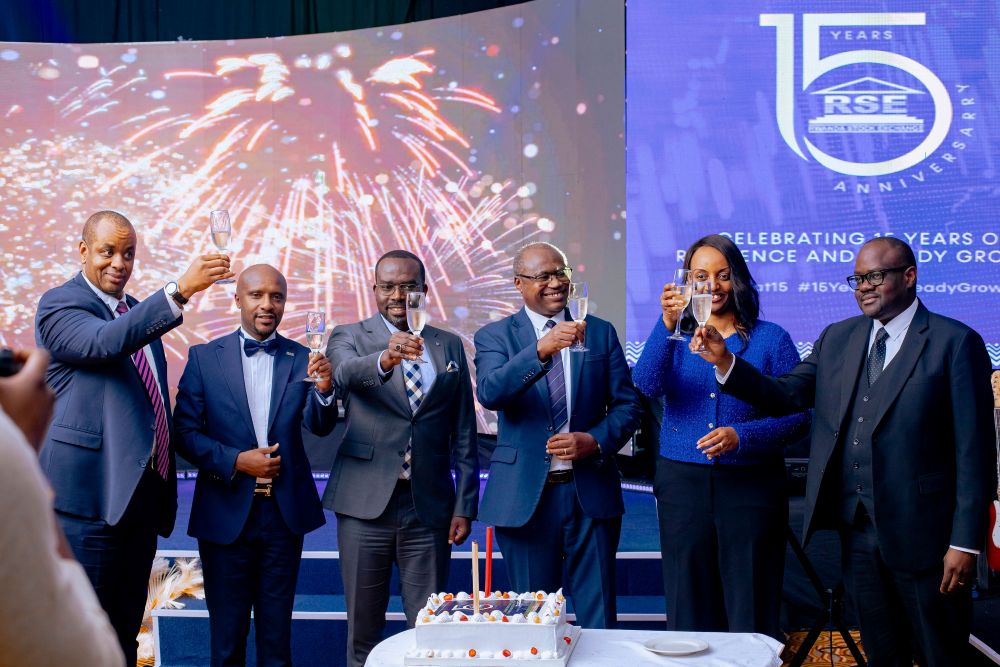
The Rwanda Stock Exchange (RSE) celebrated 15 years on February 20,2026.
KIGALI – Fifteen years after its establishment, the Rwanda Stock Exchange (RSE) stands at a defining moment of not only a celebration of endurance and growth but also a strategic checkpoint for evaluating the structural reforms required to strengthen Rwanda’s capital market.
Since its launch in 2011, RSE has facilitated approximately Frw 2.71 trillion in capital raising, while total trading activity has surpassed Frw 28 trillion.
Market capitalization has grown to Frw 6.6 trillion, up from Frw 1.5 trillion in 2015. More than 270,000 investors now participate, with Rwandans accounting for 95 percent of the investor base.
Despite these gains, officials acknowledge that the market remains relatively young and must overcome challenges including limited liquidity, a small investor base compared to the population, and low financial literacy.
“When the bourse started, the capital market was little more than an over-the-counter platform. Today, the Exchange handles trillions and this growth has been about creating a credible platform that allows businesses to raise capital,” said Chief Executive Officer Pierre-Célestin Rwabukumba.
He explains that the government’s ability to finance infrastructure and citizens to participate in national development through investment is the credibility that now forms the foundation for the next reform phase.
Strengthening liquidity, innovation and regulatory confidence
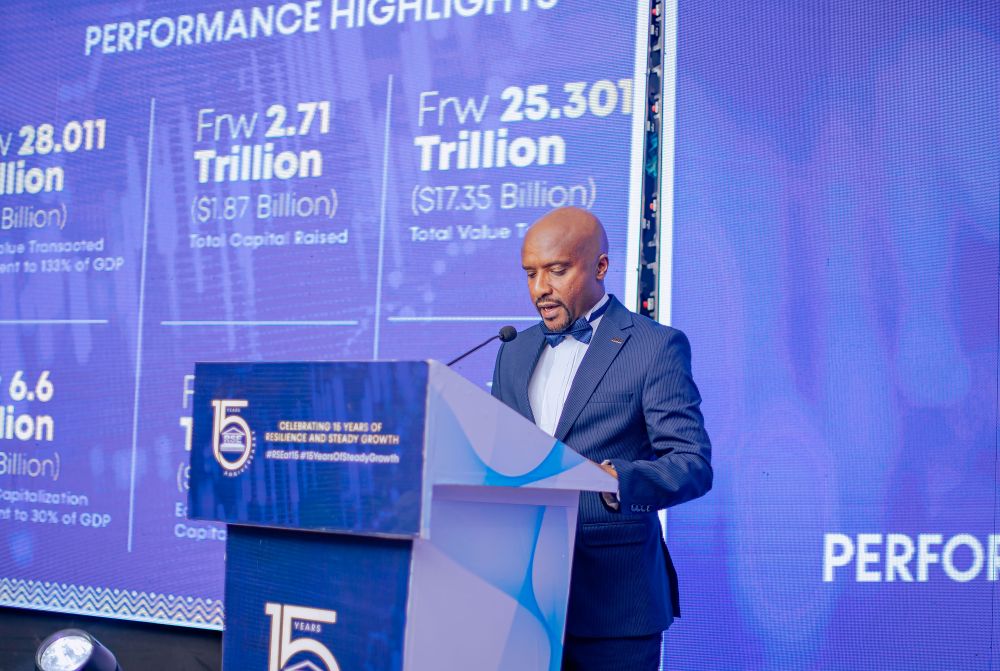
The Chief Executive Officer Pierre-Célestin Rwabukumba says that that the market remains relatively young and must overcome challenges.
One of the Exchange’s primary constraints is liquidity. While trading volumes have expanded significantly, sustaining deeper market activity requires continuous product diversification and broader participation.
To address this, the Exchange is preparing to introduce new instruments such as real estate investment trusts, exchange-traded funds, green and sustainability-linked bonds, multicurrency securities, and Sharia-compliant products.
These additions are designed to widen investment options, attract international investors, and encourage domestic savings.
During celebrations to mark the 15th anniversary on February 20, 2026, Rwabukumba noted that these innovations aim to attract more international investors, encourage domestic savings, and diversify investment options.
He explained that by working closely with the Capital Market Authority (CMA) and the National Bank of Rwanda (BNR), the Exchange continues to strengthen transparency, compliance, and investor protection standards.
“Companies and government institutions also rely on the Exchange, demonstrating confidence in the governance and regulatory framework we have built. This trust enables deeper participation, larger investments, and a healthier financial ecosystem overall,” Rwabukumba said.
Officials emphasize that strong oversight, clear disclosure requirements, and consistent enforcement are essential for sustaining long-term stability.
Dr. Soraya Munyana Hakuziyaremye, the Governor BNR underscored the broader role of capital markets in economic development.
“Stock exchanges are not just about trading. They mobilize long-term savings and channel them into productive sectors, driving private sector growth, infrastructure development, and innovation.,” she observed.
Expanding financial literacy and preparing for the next phase
Beyond liquidity and regulation, financial literacy remains a structural challenge. Although the investor base has grown to over 270,000 participants, leadership recognizes the need for wider public awareness and engagement.
According to RSE, the key is continued investment in education, technology, and human capital, while fostering trust among all stakeholders. By doing so, an ensured market continues to mature, expand and become a driver of Rwanda’s economic transformation.
The Exchange’s journey has included milestone listings, increased market capitalization, and improved product diversity. The period from 2020 to 2024 marked a breakthrough phase, including dividend payments and the introduction of new bond categories.
Yet the institution’s long-term vision goes beyond expansion. The focus now is on building depth, strengthening resilience, enhancing inclusivity, and positioning the capital market as a central engine of innovation and enterprise financing.
Fifteen years later, the RSE is now defined by its reform roadmap that is anchored in liquidity enhancement, regulatory strength, product innovation, and investor education. The next chapter will depend on how effectively these measures translate structural challenges into sustainable growth.