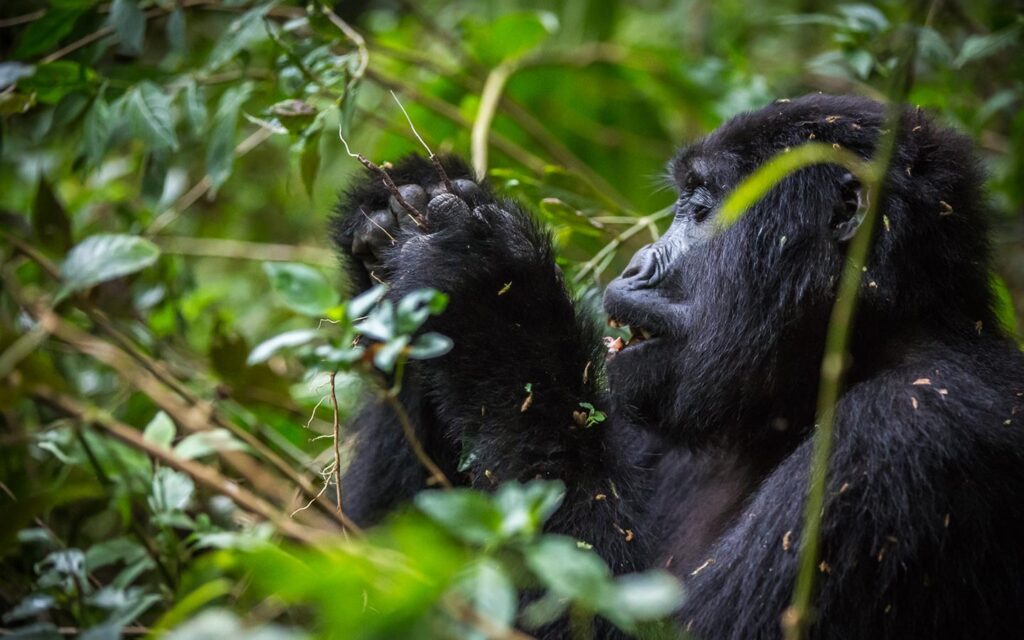
A mountain gorilla in Rwanda’s Volcanoes National Park — gorilla tourism remains the country’s top high-value attraction, generating over 70% of holiday travel revenue and reinforcing Rwanda’s premium, conservation-led tourism model.
Rwanda earned an estimated $161.5 million from exports of travel services in the fourth quarter of 2025, reinforcing the country’s growing position as a high-value tourism and services destination.
According to the Travel Expenditure Survey (November 2025–January 2026), non-residents arriving by air spent $136.7 million during their stay in Rwanda, with holiday travel alone contributing $65 million.
The performance reflects the impact of the Visit Rwanda global branding campaign and sustained public investment in tourism infrastructure. By positioning itself as a premium hub for both leisure and professional services, Rwanda continues to expand its services exports despite volatile global economic conditions. The strong fourth-quarter results also point to rising confidence among international travellers in the country’s safety, luxury offerings and hospitality standards.
Leisure tourism remains a key driver of foreign-exchange earnings, with gorilla tourism accounting for 71.4 per cent of holiday revenue, underscoring the economic strength of Rwanda’s high-value conservation model.
Analysts say the figures confirm the effectiveness of Rwanda’s premium positioning strategy.
“The dominance of gorilla tourism shows that Rwanda is not competing on volume, but on value. Visitors are staying longer and spending more,” analysts note.
Hub for long-stay, high-value visitors
Beyond traditional leisure travel, Rwanda is increasingly attracting what analysts describe as “purposeful travel”—visits linked to education, training and professional development.
Longer stays by visitors from Asia and other African countries for study and training suggest that Rwanda’s investment in its knowledge economy is generating measurable returns. This diversification is helping to stabilise the tourism sector by balancing seasonal leisure demand with more predictable, long-term inflows from students and professionals.
By region, North America recorded the highest expenditure at $40.8 million, reflecting Rwanda’s growing visibility in long-haul markets. Visitors from Europe and Asia also contributed significantly, though with different travel patterns depending on purpose.
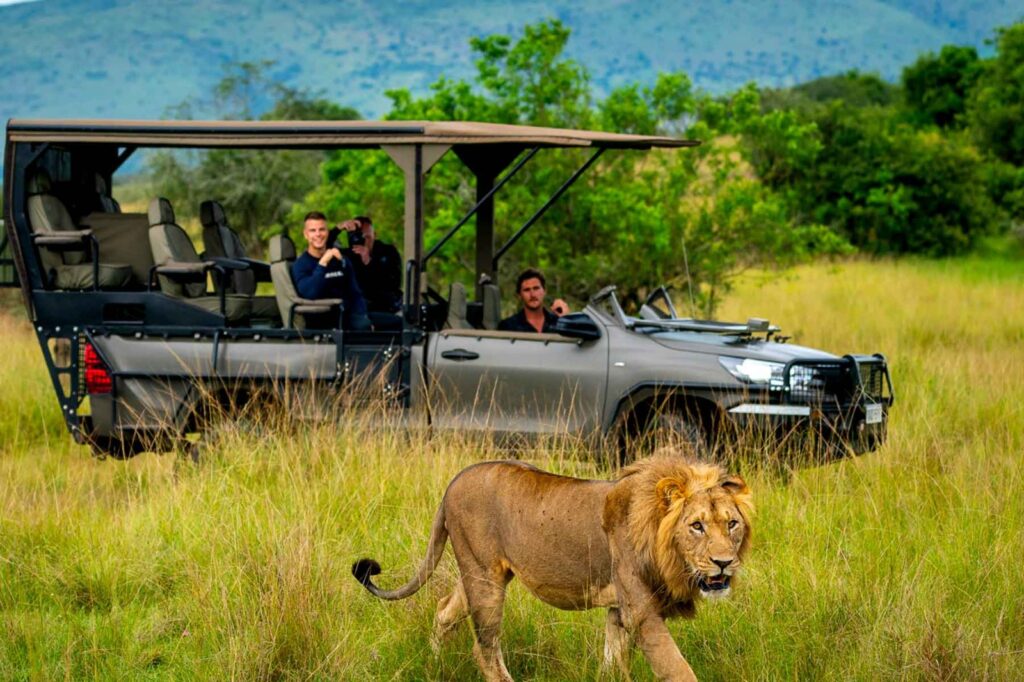
A lion spotted during a game drive at Akagera National Park, as tourists enjoy one of Rwanda’s flagship wildlife experiences—highlighting the growing role of savannah tourism in strengthening the country’s high-value, conservation-driven travel sector
The survey shows that European and North American leisure visitors stayed an average of 11 nights, while Asian holidaymakers stayed eight nights.
Education-related travel registered the longest average stays, particularly among visitors from Asia (193 nights) and the rest of Africa (187 nights), highlighting Rwanda’s emerging role as a regional academic and training hub.
Business travel remained relatively stable across regions, with average stays ranging from eight to 16 nights.
Land borders add $24.9 million
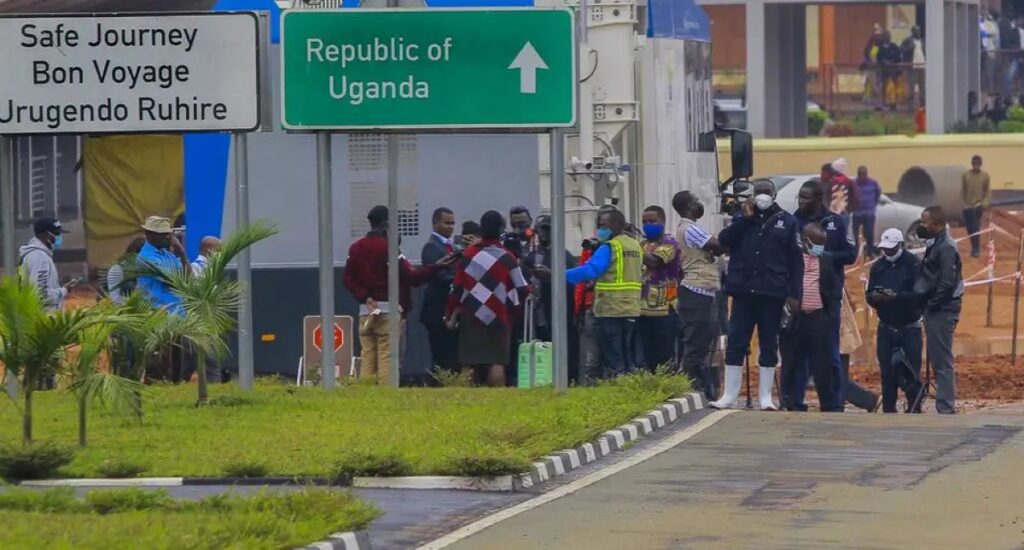
People cross at the Rwanda–Uganda border entry point, reflecting the strong flow of regional travel within the East African Community, which generated nearly $20 million in land-based visitor spending in the last quarter of 2025.
In addition to air arrivals, non-residents entering Rwanda by land spent an estimated $24.9 million over the same period. Visiting friends and relatives was the main purpose of travel, accounting for $11.3 million.
Regionally, the East African Community (EAC) accounted for the largest share of land-based spending, at $19.7 million, underscoring the importance of regional integration and cross-border mobility to Rwanda’s services exports.
“EAC mobility continues to underpin Rwanda’s travel receipts. Short-haul regional traffic may not match long-haul tourism in value per visitor, but it provides stable and recurring flows,” said Caleb Ninsiima, a Kigali-based economist who tracks regional trade trends.
Travel imports at $95.9 million
Rwanda’s imports of travel services were estimated at $95.9 million in the fourth quarter of 2025.
Rwandan residents travelling abroad by air spent $64.4 million, including $22.2 million on business travel. The EAC remained the leading destination, accounting for $53.9 million in outbound air-travel expenditure.
Residents travelling by land spent a further $31.5 million, largely for visits to friends and relatives, which totalled $12.4 million. All land-based outbound spending was within the EAC.
A growing services surplus
With exports of $161.5 million against imports of $95.9 million, Rwanda recorded a solid surplus in travel services during the period.
Industry observers say the figures point to a maturing, diversified services economy built around conservation, education and business travel. As Rwanda continues to invest in aviation and hospitality infrastructure, travel services are increasingly consolidating their role as a strategic pillar of foreign-exchange earnings and the country’s broader economic transformation.