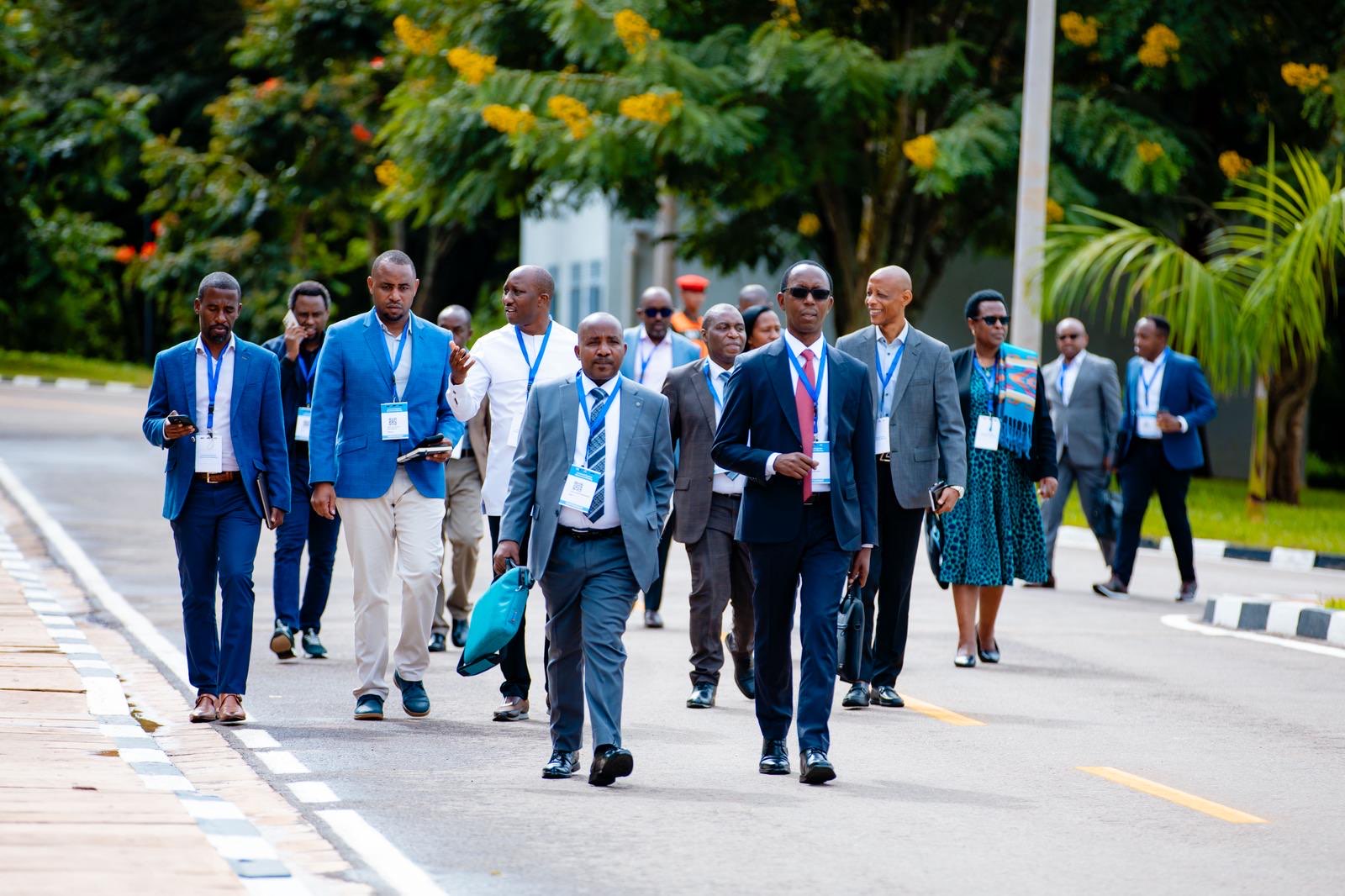
Local leaders heading into the high-level consultative meeting at Gako earlier today.
BUGESERA – Prime Minister Dr. Justin Nsengiyumva has issued a firm call for a shift in leadership culture, warning that Rwanda’s development ambitions risk being undermined if leaders fail to deliver tangible results for citizens.
Speaking on Monday, March 23, at the Rwanda Military Academy, Gako, where central and local government officials convened for a high-level consultative meeting, Nsengiyumva urged leaders to move beyond routine approaches and embrace accountability, responsiveness, and collaboration.
The meeting, bringing together leadership across all levels for the first time since the COVID-19 pandemic, aims to strengthen coordination, accelerate grassroots transformation, and reinforce a results-oriented approach to governance.
A Decline That Demands Action
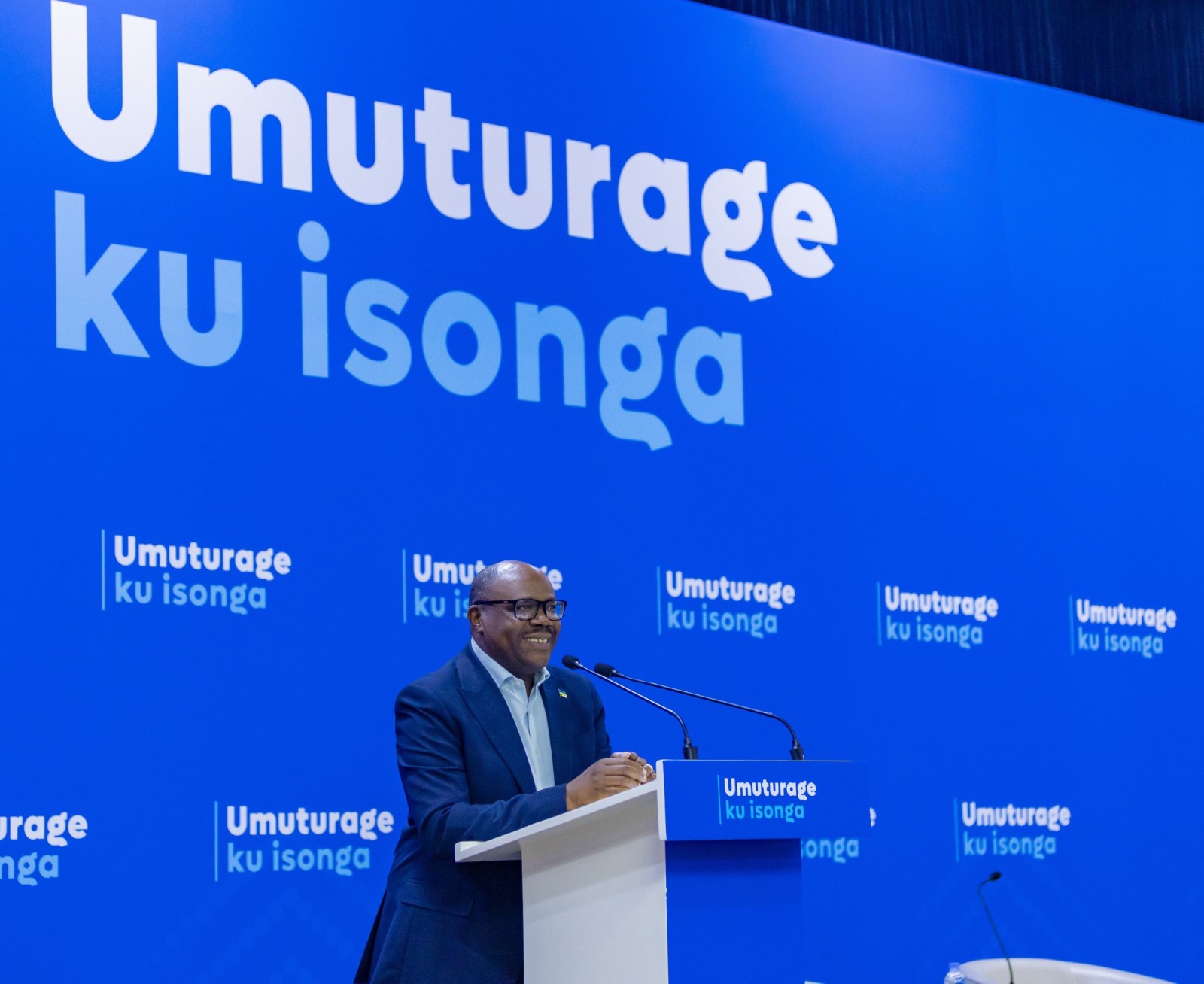
Prime Minister Dr. Justin Nsengiyumva addressing local leaders in Gako.
The Prime Minister’s raised a growing concern of the deteriorating quality of service delivery. Citing governance data, Nsengiyumva revealed a steady drop in citizen satisfaction, from 78.2 percent in 2023 to 71 percent in 2025, indicating a worrying trend that requires urgent correction.
“We cannot continue doing things the same way and expect different results. Services must translate into real impact in people’s daily lives.,” he said, warning that poor service delivery often creates room for corruption, erodes public trust, and ultimately weakens development outcomes.
Access to clean water, reliable roads, timely administrative services, healthcare, and quality education, he noted, are not privileges but basic rights that citizens should receive efficiently and consistently.
Leadership Must Be Closer to the People
Beyond service delivery, the Prime Minister stressed the importance of proactive problem-solving, urging leaders to remain closely connected to the communities they serve.
He pointed to ongoing agricultural challenges as a key example. Erratic weather patterns, including droughts and excessive rainfall, continue to affect crop yields, largely driven by climate change.
“These are issues we can better address when we are present and engaged with the people. If farmers lack seeds or fertilizers, it is our responsibility to follow up until the problem is resolved,” he said, calling for stronger communication and teamwork across institutions.
Nsengiyumva emphasized that many challenges persist not because they are complex, but because they are not followed up effectively. Leaders were encouraged to escalate issues promptly where necessary and ensure that solutions are pursued to completion.
Persistent Social Challenges Raise Concern
The Prime Minister also highlighted several long-standing social issues that, in his view, should no longer be present. Child stunting, poor hygiene, and the continued consumption of illicit alcohol were singled out as critical concerns requiring urgent and sustained intervention.
“It is unacceptable that such problems still exist,” he said, stressing that development cannot be achieved if fundamental issues affecting citizens’ well-being remain unresolved.
He urged leaders at all levels, from villages to districts, to take ownership of these challenges, raise awareness, and ensure that support meant for communities reaches its intended beneficiaries.
Projects Without Impact: A Leadership Failure
During his address, Nsengiyumva focused on the performance of development projects, many of which, the Prime Minister noted, fall short of expectations despite substantial investment.
He cited cases where completed infrastructure remains underutilized, pointing to a market in Nyagatare that reportedly remained idle for over two years before being fully occupied within a week once leadership intervened.
“This shows that the problem is not always resources, but follow-up,” he said. The Prime Minister challenged leaders to step out of their offices, regularly visit project sites, and ensure that initiatives deliver meaningful results.
He also called for stronger collaboration between ministries and local authorities, emphasizing that development efforts should not be treated as isolated responsibilities but as shared national priorities.
A Call for Accountability and Collective Action
The Prime Minister underscored the need for a mindset shift among leaders, one that prioritizes responsibility, initiative, and teamwork. “You have both the authority and the duty to make decisions that move the country forward,” he said.
Urging leaders to embrace accountability and decisive action, he reminded leaders that Rwanda’s progress depends on unity of purpose and coordinated action across all levels of government. “We cannot achieve our goals without working together as one team,” he said.
As discussions continue, Rwanda’s next phase of development will not be defined by plans alone, but by how effectively leaders translate them into results that improve people’s lives.
Ngoma district Tops Imihigo rankings
Meanwhile, Ngoma district has emerged as the top performer in the 2024/2025 Imihigo performance rankings, marking the return of the evaluation after a three-year pause. The results highlight progress in how districts are delivering on their annual development targets.
The rankings, compiled by the National Institute of Statistics Rwanda (NISR), show a strong performance by districts from the Eastern province, three of which featured among the top five. Ngoma led with 77.2 percent, followed closely by Gisagara and Nyagatare districts respectively.
Imihigo performance contracts serve as a key accountability tool, linking district leaders and government institutions to measurable targets aligned with Rwanda’s broader development strategy.
The latest results reflect varying levels of progress across the country, with some districts performing strongly while others lag behind, signaling areas that require greater focus and improvement.
Overall, the resumption of the rankings provides a clearer picture of service delivery and implementation on the ground, reinforcing the role of performance monitoring in driving effective governance and accelerating development outcomes.