



KIGALI — Every year in April, Rwanda commemorates the 1994 Genocide against the Tutsi. Yet, during this solemn period—particularly the official week of mourning from April 7 to 13—cases related to genocide ideology continue to surface, prompting consistent intervention from authorities.
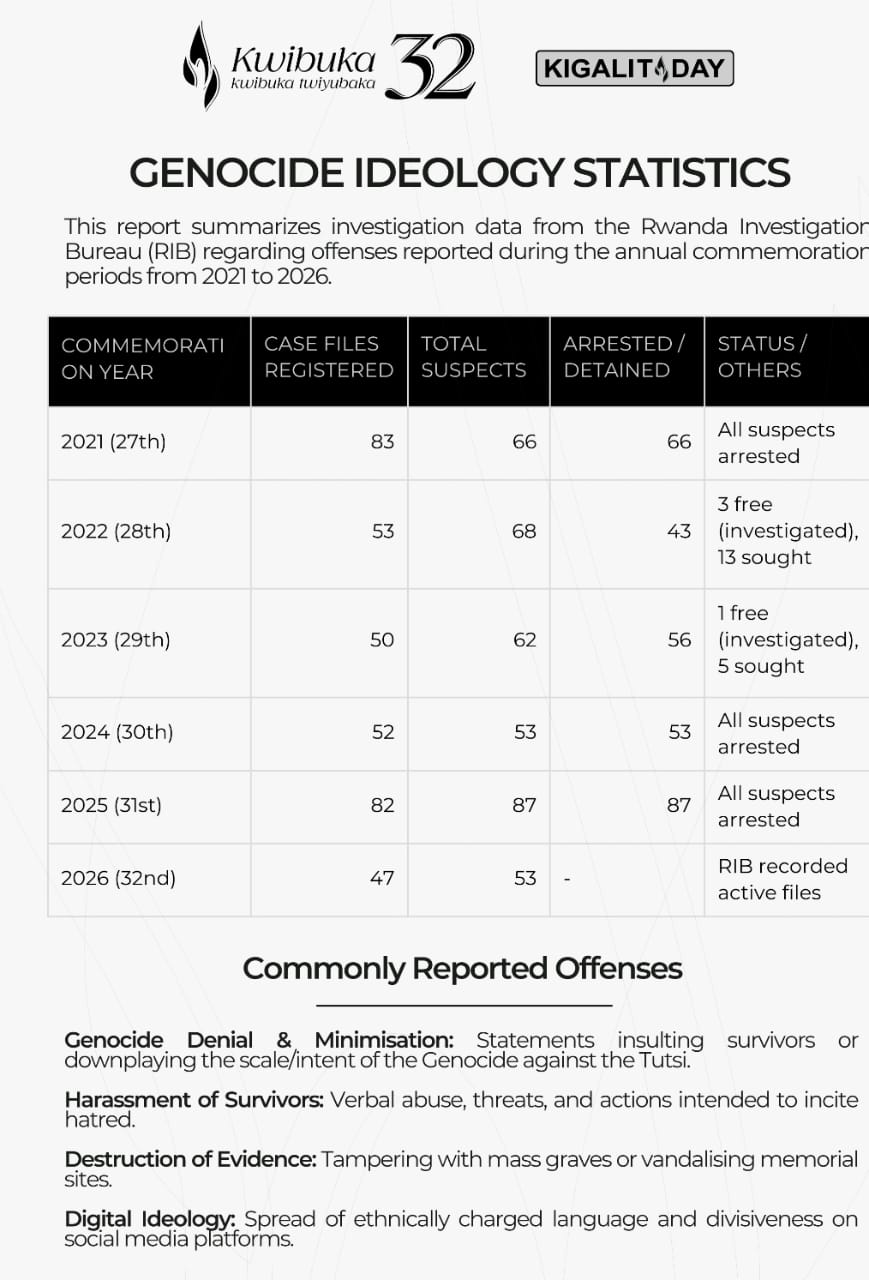
Data compiled from the Rwanda Investigation Bureau (RIB) over the past six years reveals a recurring pattern of offenses reported during the commemoration period, with suspects investigated, arrested, or placed under active search.
In 2021, RIB received 83 case files linked to genocide ideology during the mourning week. A total of 66 suspects were investigated, all of whom were arrested.
In 2022, 53 case files were recorded, involving 68 suspects. Of these, 43 were immediately arrested and detained, three were investigated while free, and 13 were still being sought at the time.
In 2023, RIB registered 50 case files. Authorities detained 56 suspects, one was investigated while free, and five others remained at large.
In 2024, 52 case files were reported, with 53 suspects arrested.
In 2025, during the 31st commemoration, the number rose to 82 case files involving 87 suspects—all of whom were arrested.
In 2026, during the 32nd commemoration, RIB recorded 47 case files involving 53 suspects during the mourning week.
Across these cases, the most common offenses include genocide denial and minimisation—often expressed through statements that insult survivors or attempt to downplay the scale and intent of the Genocide against the Tutsi.
Authorities also report incidents of harassment targeting survivors, including verbal abuse, threats, and actions intended to incite hatred against them.
Other violations include the destruction of evidence, such as tampering with mass graves or vandalising genocide memorial sites. The spread of genocide ideology through divisive and ethnically charged language—frequently amplified on social media platforms—also remains a persistent concern.
Despite sustained awareness campaigns and legal enforcement, these incidents highlight the continued need for vigilance, public education, and accountability to safeguard national unity and uphold the dignity of survivors.