



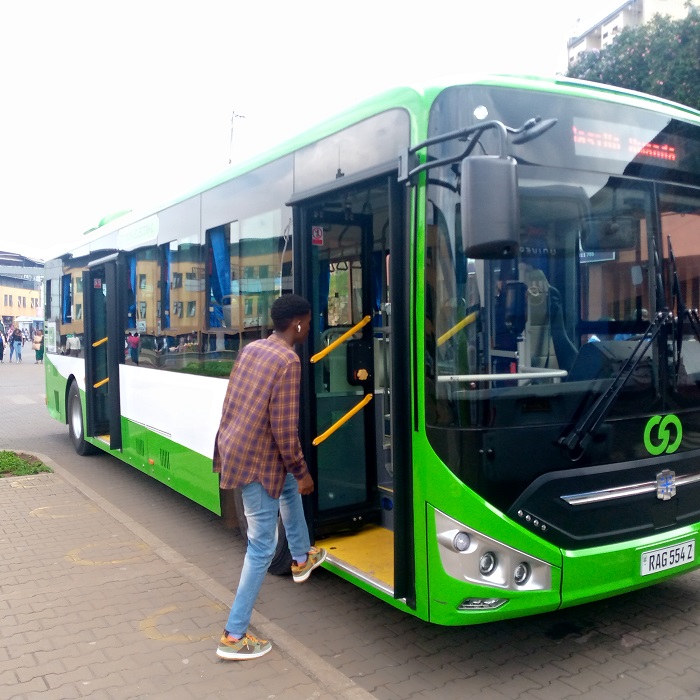
This is an electric bus, like thousands used across the city of Kigali and key urban centers. The buses doing long journeys are all diesel
KIGALI — The government has reassured commuters that public transport fares will remain unchanged, even as fuel prices rise sharply, citing both stable diesel prices and the growing role of electric buses in the country’s transport system.
Speaking on Friday, State Minister for Infrastructure Jean de Dieu Uwihanganye said the latest fuel price adjustments would not affect the cost of public transport, emphasizing that most buses either rely on diesel — whose price has been held steady — or are increasingly shifting to electric power.
That reassurance came as the Rwanda Utilities Regulatory Authority announced a significant increase in petrol prices, raising the cost to Rwf 2,938 per litre, effective April 17 at 6:00 a.m.
Petrol has climbed from Rwf 2,303 to Rwf 2,938, a rise of Rwf 635 per litre, representing a 27.6 percent increase in just two weeks.
It is the second adjustment within a fortnight, underscoring the speed at which global oil market pressures are feeding into domestic prices.
In contrast, diesel prices have been held steady at Rwf 2,205 per litre, a deliberate move aimed at protecting transport costs and limiting broader inflationary pressure across the economy.
Diesel Stability and Electrification
Officials say two factors are now helping shield commuters from fuel shocks.
The first is the decision to keep diesel prices unchanged. Because diesel powers a large share of buses and commercial transport, stabilizing its cost prevents immediate increases in fares and logistics expenses.
The second is structural. Rwanda has, in recent years, accelerated the introduction of electric buses, particularly in urban areas like Kigali.
As a result, a growing share of public transport is no longer directly exposed to fluctuations in global fuel prices.
Together, these shifts mean that even as petrol prices rise sharply, the core of the public transport system remains insulated.
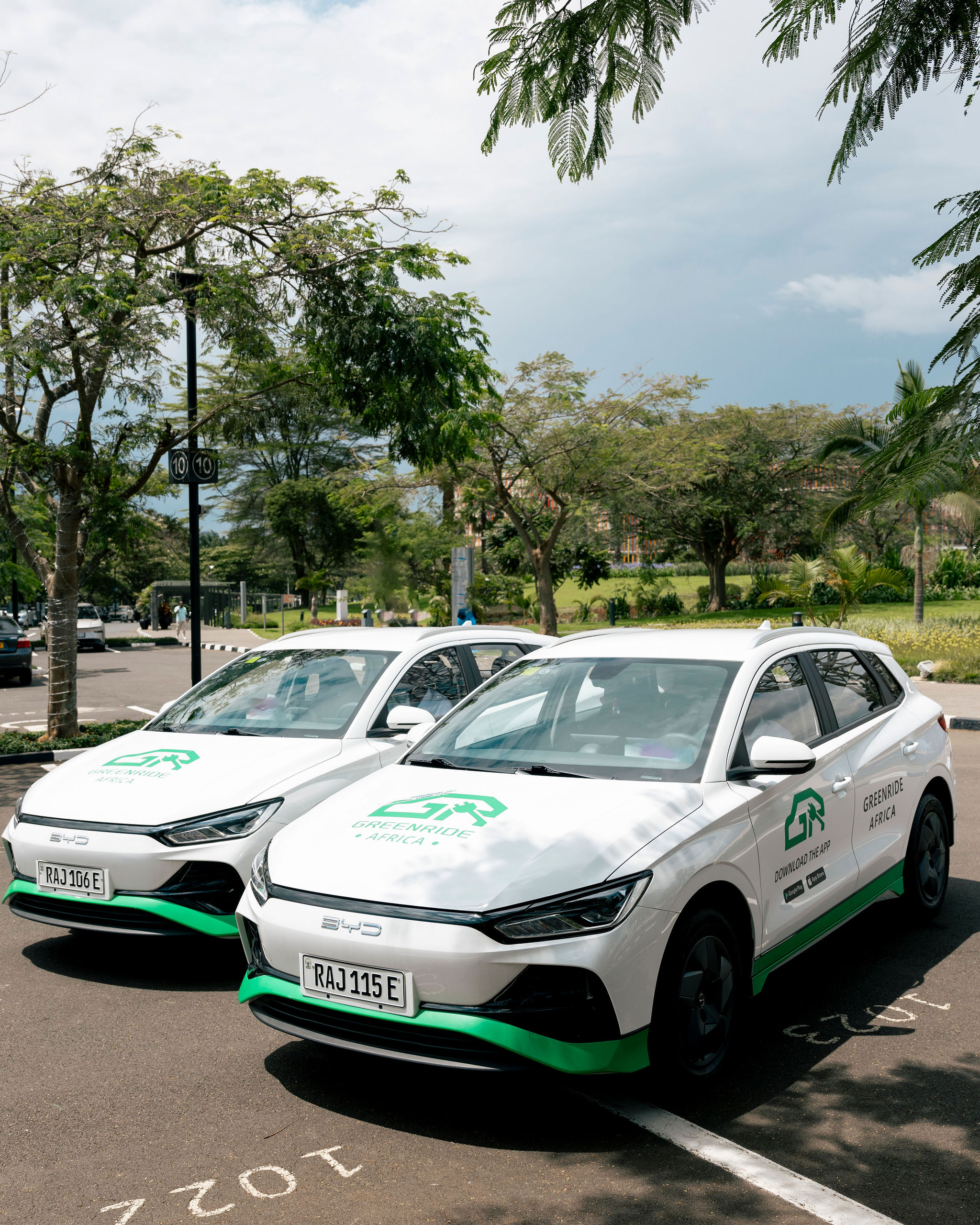
Besides buses, special hire taxis, commonly used for individual travel are also all electric mainly in Kigali. So meaning people who take personalized rides will also not see their rates hiked.
Global Forces at Play
The upward pressure on petrol prices is being driven largely by international developments.
Rising geopolitical tensions involving Iran, the United States, and Israel have disrupted oil supply expectations, contributing to volatility.
Particular attention is focused on the Strait of Hormuz, a key transit route through which more than 20 percent of global oil supply flows. Any instability there tends to ripple quickly through global energy markets.
For Rwanda, which depends entirely on imported fuel, such shifts translate directly into domestic pricing adjustments.
The result is a policy approach that attempts to balance exposure with control.
On one side is Rwanda’s vulnerability to global price movements, clearly reflected in the 27.6 percent increase in petrol prices. On the other is a strategy to limit how those increases affect everyday life, particularly through protecting transport costs.
Authorities have also encouraged greater use of public transport as a way to reduce household spending on fuel.
For commuters, the immediate message is straightforward: fares will not rise — not because prices are stable, but because the system has been partially redesigned to absorb the shock.
And that may be the more significant shift.
