



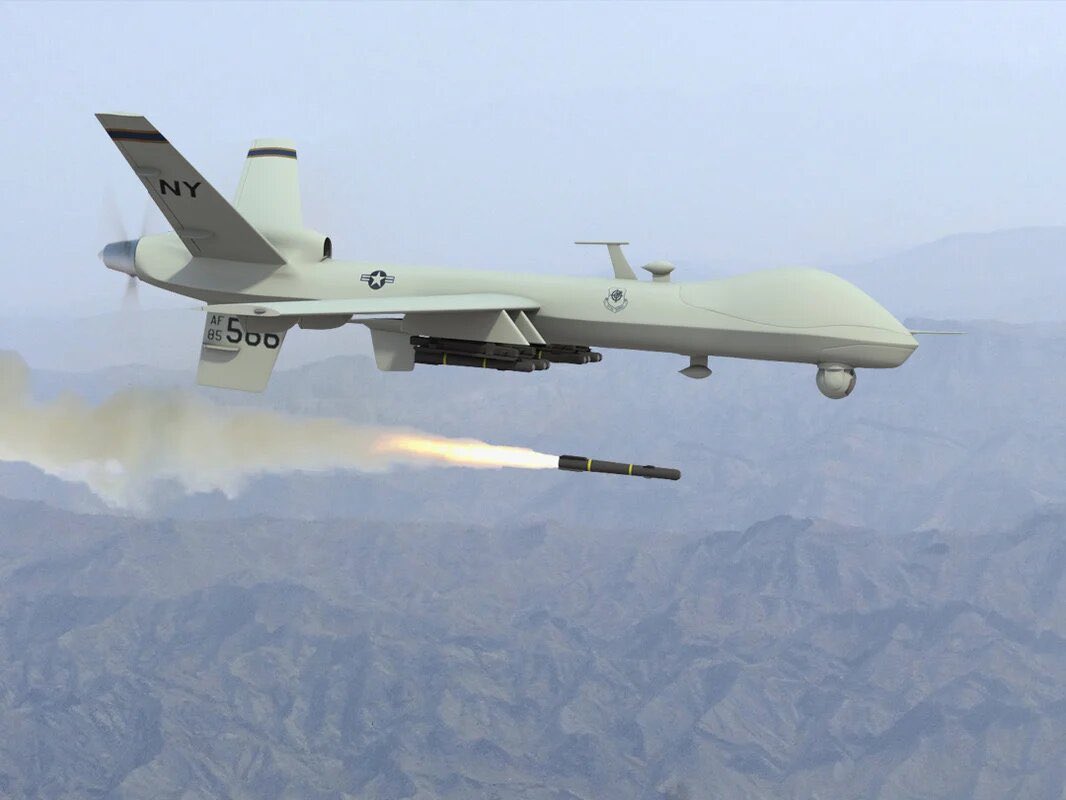
A DR Congo attack drone that has been used against the rebels in eastern Congo. Similarly, reported to mobilized for potential attack against Rwanda
KIGALI — Rwanda’s day closed with a dense mix of hard diplomacy, major continental events, and fast-moving regional security narratives tied to developments in eastern Democratic Republic of Congo.
In Kampala, Rwanda and Uganda formally concluded the 12th Joint Permanent Commission (JPC) with unusually concrete outcomes. Beyond the signing of four Memoranda of Understanding covering agriculture, health, education, and local government, the standout decision was the adoption of a joint “scorecard” system.
Both sides said this tool will track timelines, deliverables, and responsible institutions—an attempt to avoid the long-standing pattern where agreements are signed but implementation stalls.
The two sides also agreed to shorten the traditional two-year review cycle, signaling urgency in resolving bottlenecks, particularly at key trade points like the Gatuna/Katuna border, and in areas such as cross-border security coordination, migration management, and infrastructure connectivity.
Continental Volleyball Spotlight
While diplomacy unfolded in Kampala, Kigali hosted one of the continent’s largest sporting events. The 47th Men’s African Volleyball Club Championship officially opened at BK Arena, bringing together 24 clubs from roughly 15 countries.
Rwanda fielded four teams—APR, Police, REG, and Kepler—an unusually strong national presence. The opening fixture saw APR face Zimbabwe’s Black Rhinos in a primetime match following a cultural ceremony.
Beyond competition, the tournament carries strategic weight: it is a qualifier for the FIVB Club World Championship and reinforces Kigali’s positioning as a continental events hub, alongside recent investments in arenas, hospitality, and logistics capacity.
Kwibuka 32 Remains a National Anchor
Kwibuka 32 activities continued across the country with both national and international dimensions. In Rwanda, officials and communities sustained remembrance events, while abroad, diplomatic missions and partners echoed messages focused on combating genocide denial and preserving historical memory.
The tone remained consistent: remembrance as both a moral obligation and a political stance.
Security Narratives Surge Online
But the most rapidly evolving—and least structured—story of the day, which has been brewing for some time, is a purported imminent attack on by regional neighbors.
Eastern DRC Instability Shapes the Context
These claims have gained traction partly because they intersect with a real and volatile regional backdrop.
In eastern DRC, the security situation remains fragile despite ongoing diplomatic efforts.
The group continues to position itself within ceasefire and monitoring discussions linked to international mediation efforts, while at the same time asserting military readiness and highlighting threats from rival forces.
On the ground in eastern Congo, multiple dynamics continue to overlap: clashes involving FARDC and allied militias, the presence of Burundian troops, and the continued activity of armed groups like the FDLR. Humanitarian concerns remain acute, particularly in highland areas such as Minembwe, where access, displacement, and supply disruptions persist. These realities create fertile ground for information campaigns and competing narratives, where perception can escalate tensions as quickly as events themselves.
Domestic Agenda Continues Uninterrupted
Within Rwanda, however, the domestic agenda remained steady. Preparations intensified for the upcoming Africa CEO Forum in Kigali, expected to draw major investors and policymakers in May. Implementation of the government directive requiring at least 30% of newly procured public vehicles to be electric also began to take shape, aligning with broader environmental and energy strategies.
Additional governance updates—including institutional coordination, education sector adjustments, and regulatory enforcement messaging—reflected routine state activity continuing alongside regional uncertainty.
What stands out from April 22 is the contrast between structured, trackable progress on one hand—seen in the Rwanda-Uganda “scorecard” diplomacy—and the fluid, often unverifiable nature of regional security narratives on the other. Rwanda is simultaneously engaging in predictable, rules-based cooperation with neighbors while operating in a neighborhood where conflict dynamics and information flows remain highly unstable.
By the end of the day, no single storyline dominated. Instead, Rwanda’s position was defined by convergence: diplomacy advancing in Kampala, continental visibility rising in Kigali, remembrance continuing nationwide, and a regional security environment that remains tense, contested, and increasingly shaped by both facts and fast-moving narratives.
