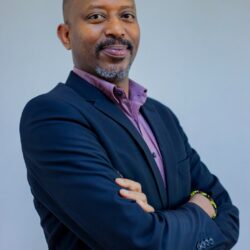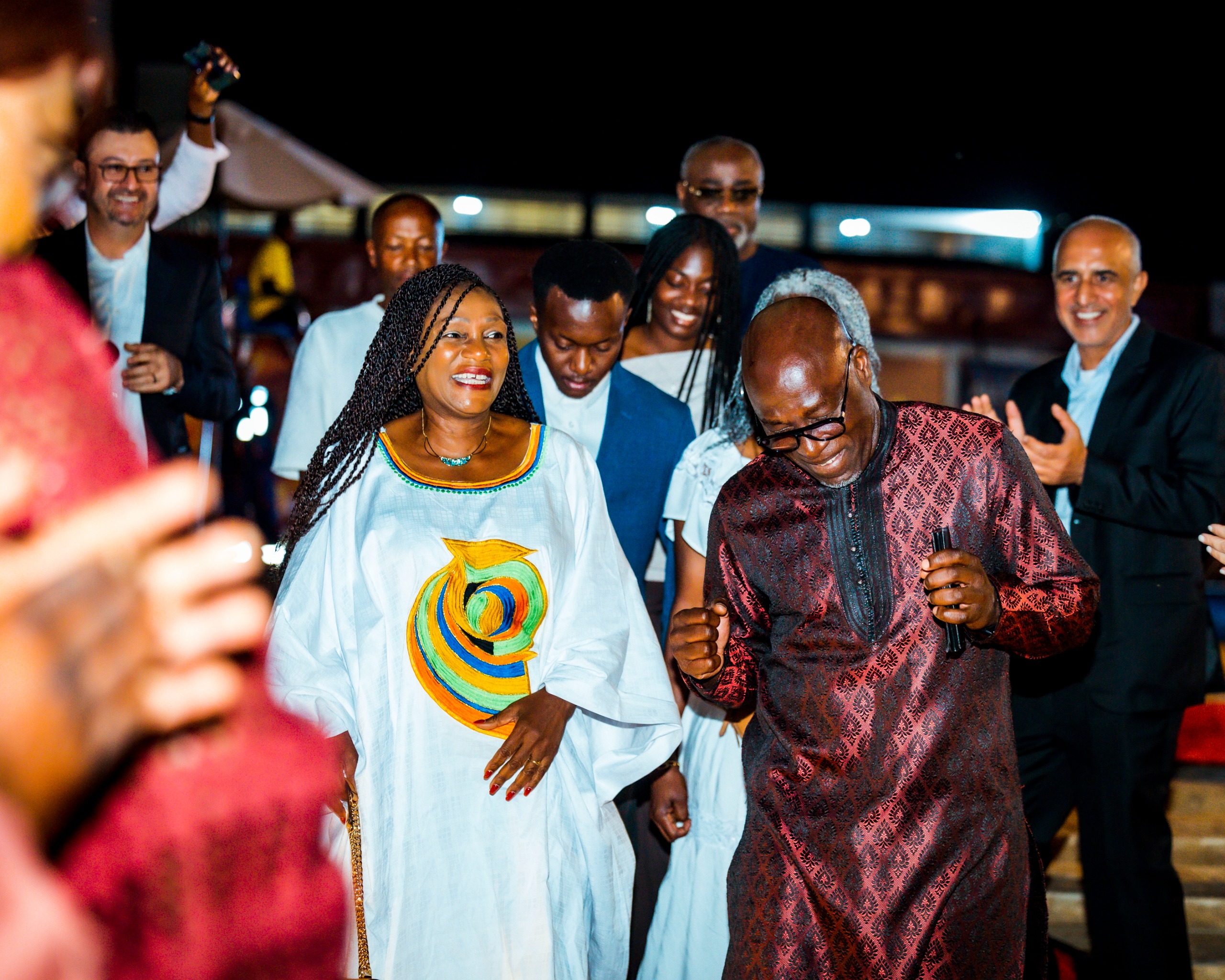
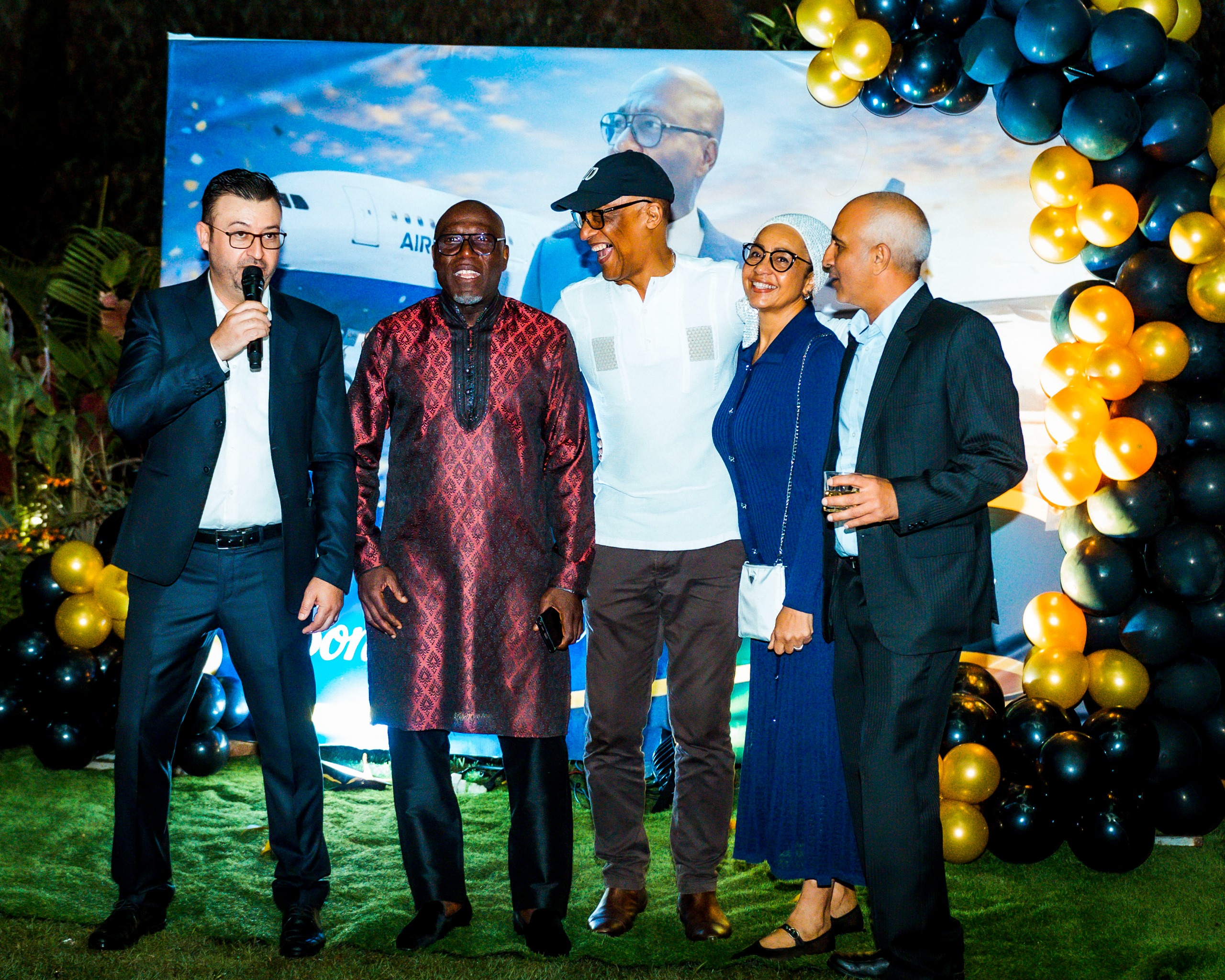
Captain Gabou Marcel celebrates at hi farewell party after 46 years as a pilot.
KIGALI – On his final descent into Kigali, after 46 years in aviation and more than 20,000 hours in the air, Captain Gabou Marcel was not just completing a routine landing. He was closing a chapter that had defined his entire adult life, built on discipline, precision, and an enduring commitment to safety.
Inside the cockpit, the procedures remained the same. The checklists were followed, the communication steady, the focus unwavering. But this time, there was something different.
“It was a lot of emotion. My family was on board. I had never had the chance to fly with them before,” Gabou says. For decades, aviation had demanded distance, from home, from family, from ordinary life. That final flight brought those worlds together, if only for a moment.
A Dream That Found Its Way
Gabou’s journey into aviation began far from runways and control towers. Born in 1961 in Ivory Coast, his first connection to flying came through imagination. “We used to fold paper into aircraft and try to fly them. That’s where the dream began,” he recalls.
That childhood curiosity took a more concrete form when he first saw a real aircraft during a visit to Abidjan. “I remembered the paper planes we used to make and suddenly, it felt real,” he recalls.
His path, however, was not guaranteed. In 1980, he joined the École de l’air in France through a military program, initially not on a pilot slot. “I was the fourth candidate. There were only two positions for pilot,” he says.
When the selected candidates were unable to continue due to medical reasons, Gabou was given the opportunity, a turning point that would define his entire life. “That is when the journey really started,” he says with a tinge of fulfillment in his voice.
Learning the Discipline of Flight
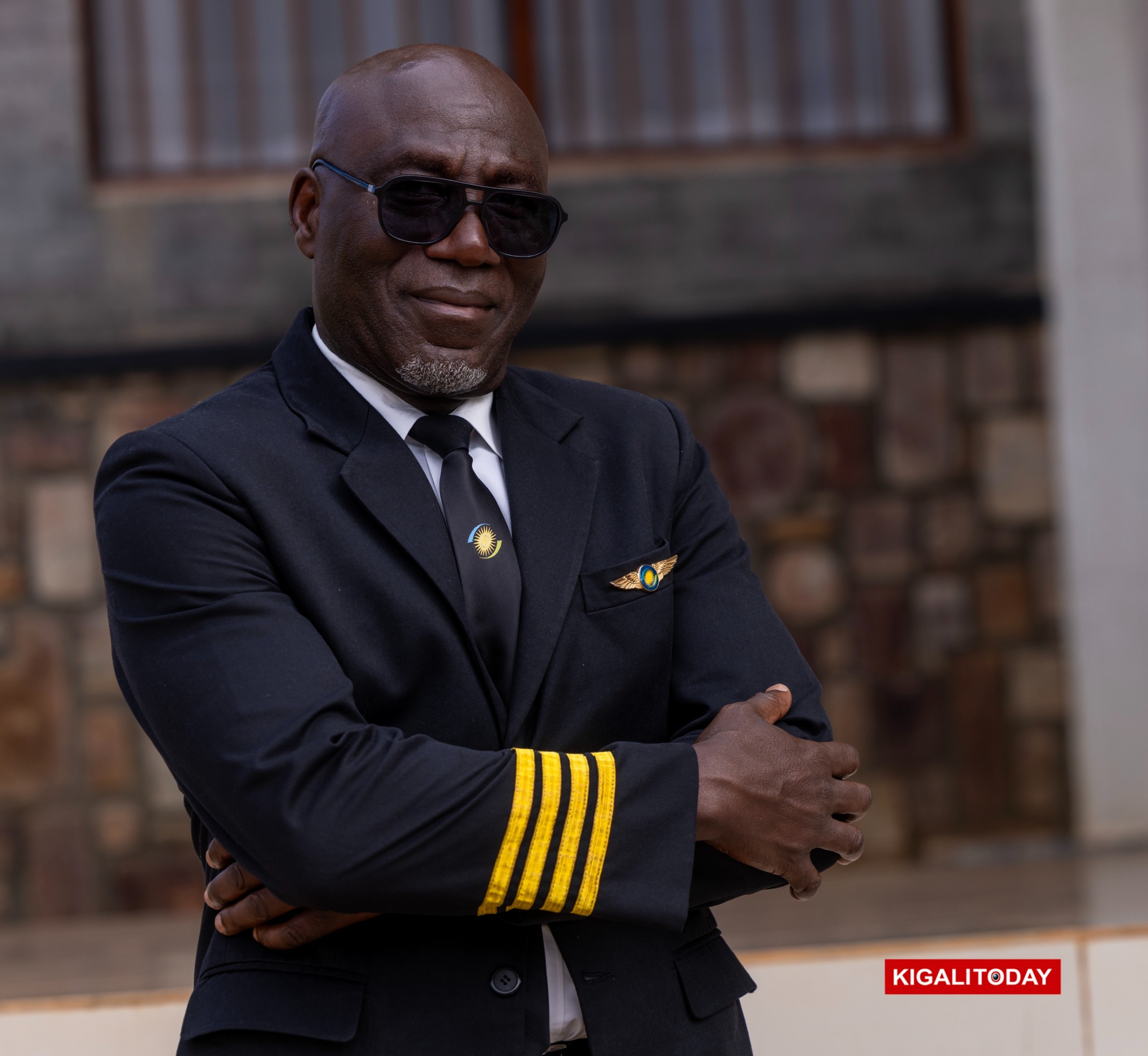
Gabou’s journey into aviation began far from runways and control towers.
Gabou entered aviation at a time when flying demanded intense mental discipline. Aircraft systems were far less automated, placing greater responsibility on the pilot’s training and judgment.
“In those days, we relied on what we learned. When something happened, you had to think and solve it,” he explains. His first experience in the cockpit captured both the excitement and the weight of the profession.
“You take off and suddenly you are in the sky, and you feel lost. It is exciting, but also a little frightening.” he says. That sense of uncertainty, he explains, is overcome through training and repetition, principles that define aviation at every level.
By the age of 29, Gabou had become a captain. The transition brought immediate awareness of responsibility. “I looked behind and saw all the passengers and thought, ‘I am responsible for all these lives,’” he says.
But the structure of aviation quickly takes over. “You focus on procedures. Everything becomes organized, and that allows you to perform.”
Moments That Shaped a Career
Beyond the cockpit, Gabou’s career intersected with moments that reflected broader global realities. One of the most defining came in 1987, during a mission to transport United Nations Secretary-General Javier Pérez de Cuéllar to South Africa under apartheid.
“The driver refused to pick us because we were Black. At the hotel, they refused to give us keys. Even in the restaurant, people would not sit near us,” he recalls.
It was a stark experience for a young African pilot, but it also carried a deeper meaning. When Gabou and his crew were introduced, people realized that Africans can do it. “Africans can be pilots,” he emphasizes.
Throughout his career, Gabou would go on to fly high-level missions and encounter global figures, but his approach remained consistent. “We are not politicians, we are technicians. We are drivers. We see, we hear, but we do not tell,” he says.
This clarity, he says, is essential in a profession built on trust and responsibility.
Rwanda, Legacy, and the Final Landing
If Gabou’s career spans continents, he describes his time in Rwanda as its most meaningful chapter. He joined RwandAir in 2012, at a time when the airline was still developing its capacity.
“When I arrived, there were trained Rwandan pilots who were not flying. That was something I could not comprehend,” he says.
When he became Chief Pilot in 2017, he focused on building local capacity, ensuring that trained pilots were integrated, mentored, and given room to grow. Today, many of them are captains, some in leadership positions. “That is my greatest achievement,” he joyfully says.
He also played a central role in expanding the airline’s fleet, leading the introduction of Airbus aircraft from initial discussions to operational deployment; work that helped shape the airline’s long-term trajectory.
After 14 years in Rwanda, leaving is not easy. Gabou says he has built relationships here and it is not easy to leave. But his final flight offered a moment of reflection. As the aircraft descended over Rwanda’s hills, the significance of the journey became clear.
“It was not only about flying. It was about being part of a bigger project,” he says with pride. Now in retirement, Gabou looks forward to time with his family, while remaining connected to aviation in a mentorship or consultancy role.
After 46 years without an accident incident, he describes his career with characteristic simplicity as being simply a “good pilot.”
Yet behind those words lies a lifetime of discipline, teamwork, and responsibility; qualities that shaped not only his journey, but also the people and systems he leaves behind. And even as he steps away from the cockpit, one reflection captures what he will miss most: “There is no more beautiful office than the cockpit at 36,000 feet,” he says.
FULL VIDEO BELOW: