
The Ministry of Education (MINEDUC) is urging heads of schools to provide accurate and timely data about their institutions, stressing that such information is critical for effective planning and improving the quality of education.
The call was made during the Edtech Monday discussion, a regular KT Radio programme supported by the Mastercard Foundation that brings together policymakers, educators and technology experts to explore how digital tools and data can strengthen education systems. The April 27, 2026 edition focused on the theme: “Advancing national education programmes through data.”
Jeannine Uwingabire, Director of Data Collection and Analysis at MINEDUC, explained that the ministry relies heavily on digital systems to gather comprehensive information about schools across the country.
“We collect data digitally, including student profiles, their origin, grade level and behaviour, among other details,” she said, outlining the scope of information captured.
She added that the system also integrates data on teachers and student performance, which is key to shaping policy decisions.

Jeannine Uwingabire (MINEDUC) emphasizes that accurate data is the backbone of national education planning, from annual budgeting to building new classrooms where they are needed most.
“This data gives us a clear picture of the education system. We analyse it and use it as a basis for making informed decisions and taking appropriate measures,” Uwingabire noted.
She emphasised that school heads play a central role in ensuring the system functions effectively, as they are responsible for entering the data.
“School leaders are the primary source of this information because they input it into the system,” she said, highlighting their frontline role.
Uwingabire further explained that national planning, including budgeting, depends directly on the accuracy of the data submitted by schools.
“Our annual budget is based on this data. It shows us enrolment numbers and class sizes, helping us plan for additional classrooms where needed,” she said.
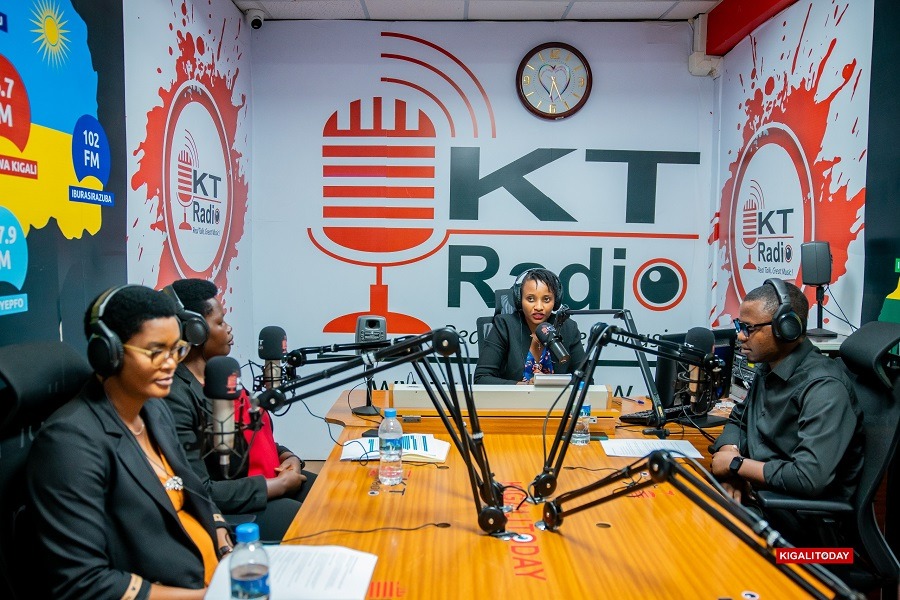
Edtech host Germaine Umukazana is joined by Jeannine Uwingabire (MINEDUC), Immaculée Uwimana (GS Butamwa), and Narcisse Niwenshuti (Edulingo Ltd) for a deep dive into the power of data in Rwanda’s classrooms.
“Without accurate data, planning would be flawed. For instance, if we are extending electricity to schools, we must know where to start and which schools have the greatest need,” she added.
At the school level, administrators say the data is not only useful for policymakers but also directly benefits teaching and learning.
Immaculée Uwimana, headteacher of Groupe Scolaire Butamwa, said access to digital information supports students in expanding their knowledge beyond the classroom.
“This data helps students in their learning because they can access digital platforms to find additional materials that complement what teachers provide,” she said.

Immaculée Uwimana, Headteacher of GS Butamwa, explains how digital data allows teachers and parents to track student progress in real-time, ensuring no child falls behind.
“It also supports continuous assessment. For example, tracking assignments and scores makes it easier for both school leaders and parents to follow a student’s progress,” Uwimana added.
However, she pointed out that several challenges continue to hinder effective data use in schools, particularly limited access to ICT equipment.
“Many schools do not yet have sufficient technological tools needed to manage and analyse this data,” she said.
She also noted that even where equipment exists, gaps in digital skills remain a concern among teachers.
“In some cases, teachers lack adequate skills to use these systems, and many platforms are in foreign languages, which makes them difficult to navigate,” Uwimana explained.
Stakeholders in the private sector say such challenges present an opportunity for innovation and collaboration.
Narcisse Niwenshuti, Director of Edulingo Ltd, said language barriers significantly affect the adoption of digital tools in education.
“Even where training exists, if the language used is not well understood by teachers, it becomes difficult for them to fully benefit,” he said.
He explained that Edulingo works to bridge this gap by translating educational content into familiar languages.
“We support both teachers and students by making learning materials available in languages they understand, and we are already working with both public and private schools,” he said.
“We are also looking to partner with the Ministry of Education to expand this approach and make learning more accessible,” Niwenshuti added.

Narcisse Niwenshuti, Director of Edulingo Ltd, highlights the need to break language barriers in EdTech to ensure digital tools are accessible to every Rwandan teacher and student.
Despite these efforts, he acknowledged that the company faces constraints, including limited partnerships with government institutions and insufficient funding.
“We also face challenges related to data security and the lack of sufficient investment to scale our work across more institutions,” he noted.
In response, MINEDUC says efforts are ongoing to address the gaps, including expanding ICT infrastructure in schools and scaling up digital skills training for both teachers and school leaders.