



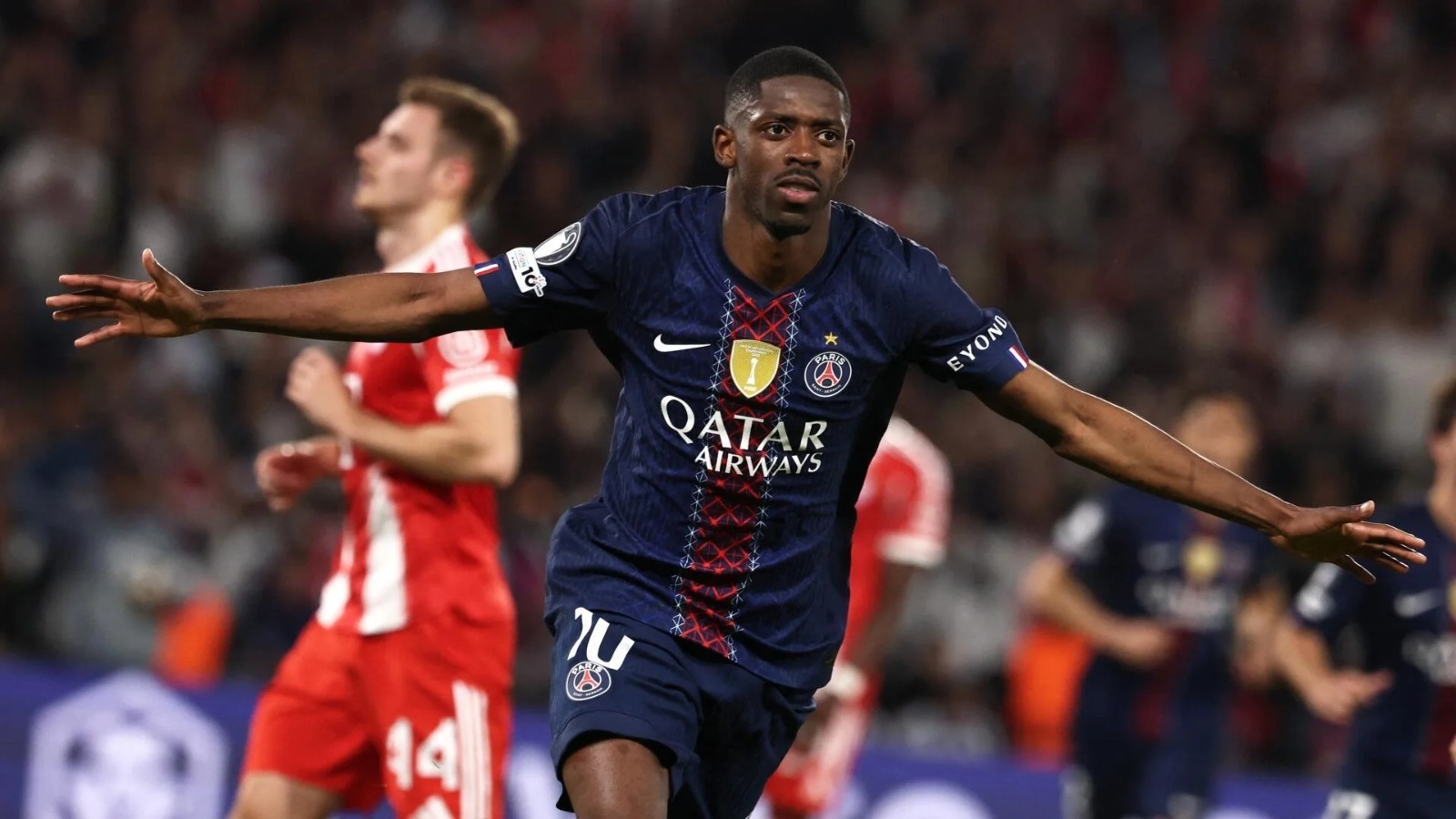
PSG’s Ousmane Dembele celebrates a goal during the 5-4 victory over Bayern Munich in the Champions League semifinal on April 28, 2026. Attended by President Paul Kagame, the match underscores a historic “Visit Rwanda” milestone, with the nation now a strategic partner to all four semifinalists.
The lights of the Parc des Princes in Paris always shine bright. But on Tuesday night, April 28, 2026, they seemed to reflect a very specific vision for Rwanda.
As the referee blew the whistle on a staggering 5-4 victory for Paris Saint-Germain (PSG) over Bayern Munich in the first leg of the UEFA Champions League semi-finals, the cameras panned to a familiar face in the VIP stands: President Paul Kagame.
Seated alongside figures like former French President Nicolas Sarkozy and PSG Chairman Nasser Al-Khelaïfi, Kagame was not just there as a football enthusiast. He was there as the architect of a branding revolution.
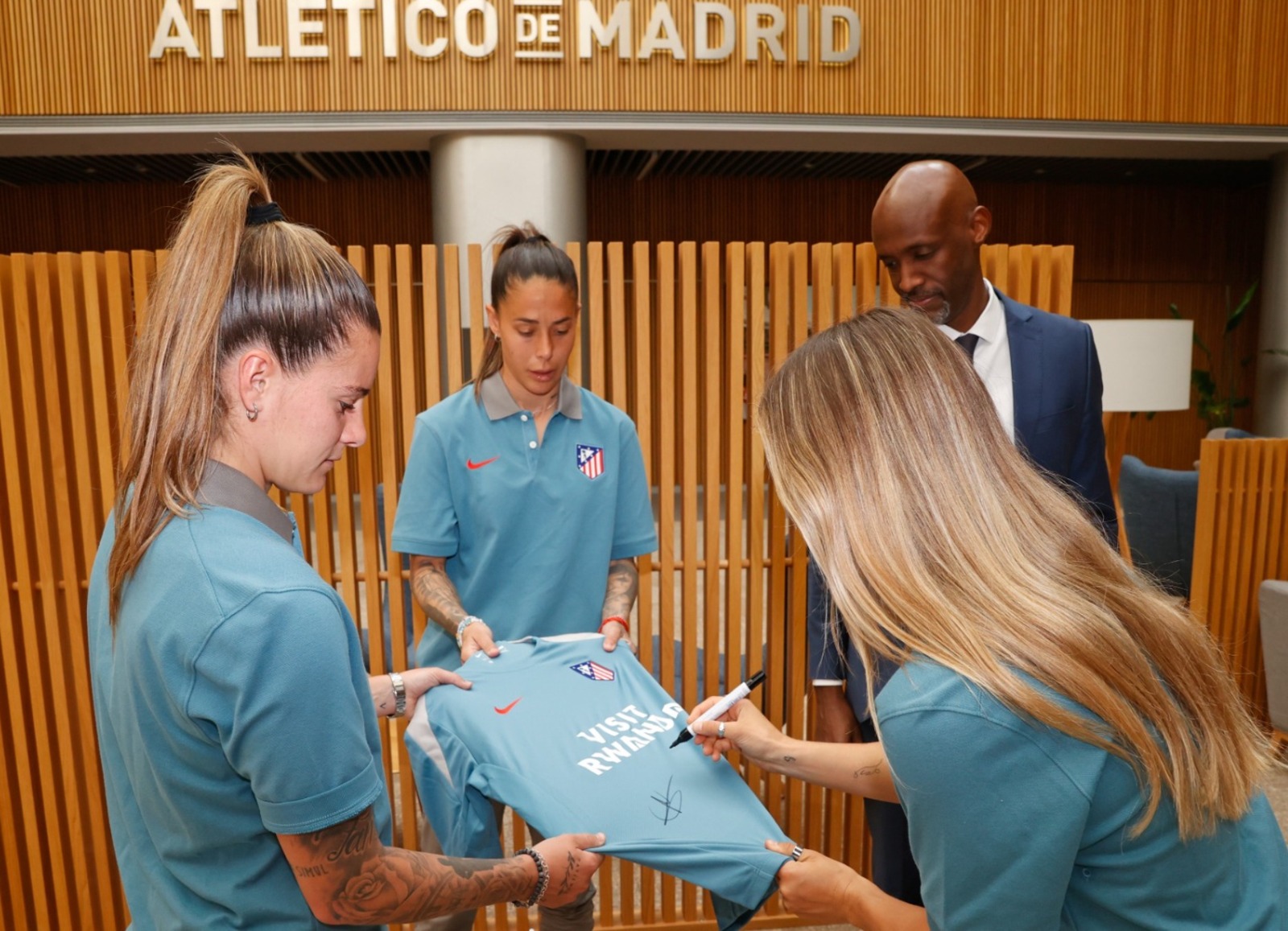
For the first time in history, a single nation—Rwanda—found itself as a strategic partner to every single team in the Champions League semi-finals: Paris Saint-Germain, Arsenal, Bayern Munich, and Atletico de Madrid.
The power of the partnership
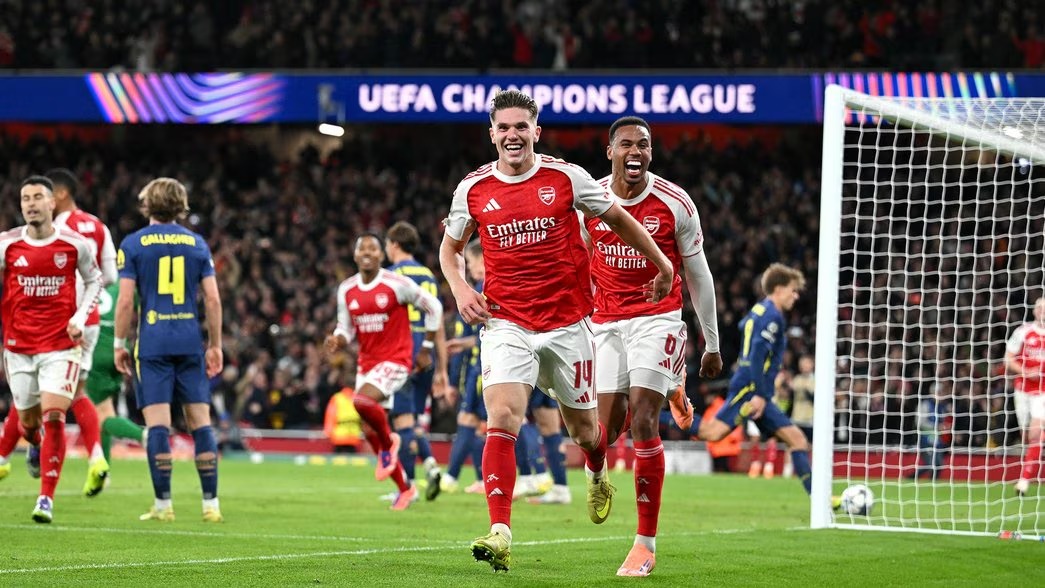
Arsenal celebrate another clinical performance on the European stage. Through the Visit Rwanda partnership, the country continues to command the global spotlight, reaching millions of fans with every victory.
When Rwanda first inked a deal with Arsenal in 2018, critics scoffed. They asked how a developing nation could justify spending millions on a “sleeve patch”. Today, those critics are met with hard data.
According to the latest figures released by the Rwanda Development Board (RDB), Rwanda’s tourism revenue soared to $685 million (around Rwf 1 trillion) in 2025. This represents a 6% increase from 2024’s $647 million.
To understand the scale, consider these numbers from the 2025 report:
Total visitor arrivals: 1.49 million people.
MICE revenue (Meetings, Incentives, Conferences, and Exhibitions): $94.7 million.
Events hosted: 165 international and regional gatherings.
By partnering with clubs that have global fanbases exceeding 100 million people each, “Visit Rwanda” is not just a slogan; it is a constant whisper in the ears of travelers from London to Munich, Paris to Madrid, and now, across the Atlantic in the United States.
From darkness to global stage
To an ordinary reader, Kagame’s presence at the Parc des Princes might look like high-level leisure. But for Rwandans, it carries a weight that transcends sport. Exactly 32 years ago, Rwanda was a name synonymous with the darkest chapter of the 20th century—the 1994 Genocide against the Tutsi. For decades, the global narrative was one of tragedy and “brokenness”.
Today, the Visit Rwanda brand has successfully flipped that script. By associating with clubs like PSG and Bayern Munich, Rwanda is telling the world: “We are no longer defined by our past; we are defined by our excellence, our hospitality, and our future”.
Kagame’s personal involvement signals that Rwanda is a safe, stable, and “prime-time” player. It is a diplomatic masterstroke where a football jersey becomes a more effective tool than a traditional embassy brochure.
What this means beyond the cash
While the $685 million in tourism revenue is vital for building schools, hospitals, and roads, the Visit Rwanda” effect offers something money cannot easily buy; soft power.
Dignity and perception: It changes how a Rwandan youth feels when they travel abroad. Instead of being met with pity, they are met with questions about gorillas, the clean streets of Kigali, or the latest PSG kit.
Investment magnet: High-visibility partnerships act as a “seal of approval”. If global giants like Bayern Munich or the NBA trust Rwanda, private investors feel secure putting capital into Rwandan tech, agriculture, and infrastructure.
The American frontier: As the brand expands into the American market, Rwanda is diversifying its source of tourists beyond Europe, targeting the world’s largest economy.
A glimpse into 2027 and beyond
If the current 6% growth rate continues uninterrupted, Rwanda is on track to break the $725 million mark in tourism revenue by 2027.
With this, the future is moving toward a total brand ecosystem:
Increased sports tourism: Fans are traveling to Rwanda for world-class cycling like the 2025 UCI Road World Championships and global football tournaments such as the FIFA Series recently hosted in the capital Kigali.
Tech-driven tourism: Using AI and virtual reality to give fans at the Emirates or the Allianz Arena a virtual trek with gorillas converts viewers into visitors.
Talent development: These partnerships include football academies established by European giants to help young Rwandan talents realize their dreams.
Meanwhile, the 5-4 scoreline in Paris was a thriller for fans, but for Rwanda, the real win happened every time the “Visit Rwanda” logo flashed on the LED boards to a global audience of hundreds of millions.
Through the vision, the country has proven that even the smallest nations can play—and win—in the biggest leagues.
The journey from the darkness of 1994 to the bright lights of the Champions League is a meticulously coached victory.
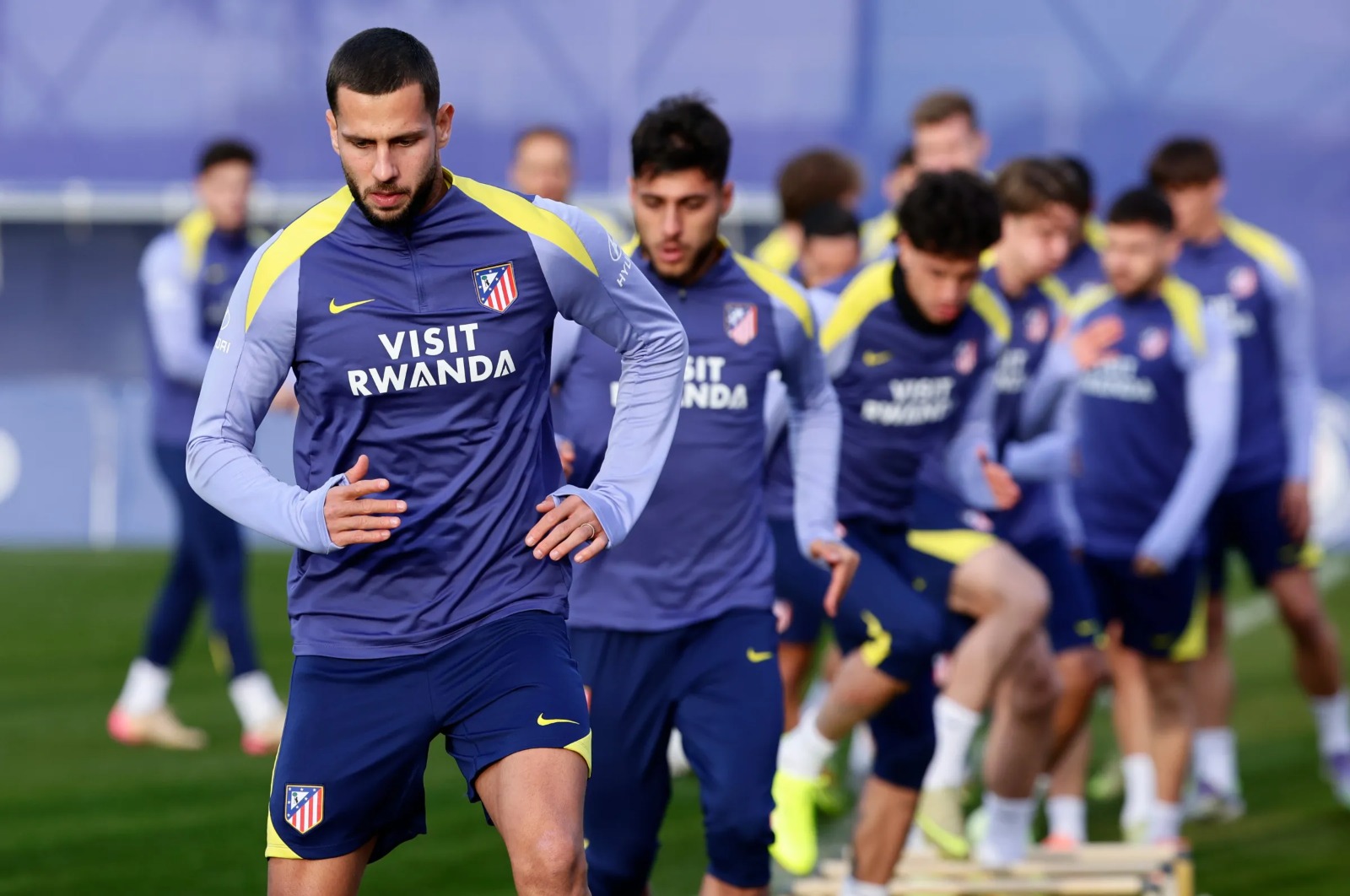
While the players fight for their place in the Final tonight, Visit Rwanda has already secured its spot. No matter the result on the pitch, the partnership is guaranteed a seat at the finish line.
The Writer, Dan Ngabonziza, is the Managing Director, Kigali Today Ltd, the parent company of KT Press, KT Radio 96.7FM, KigaliToday.com (Kinyarwanda) and Kigali Today TV channel.

1 comment
Interesting!
Comments are closed.