


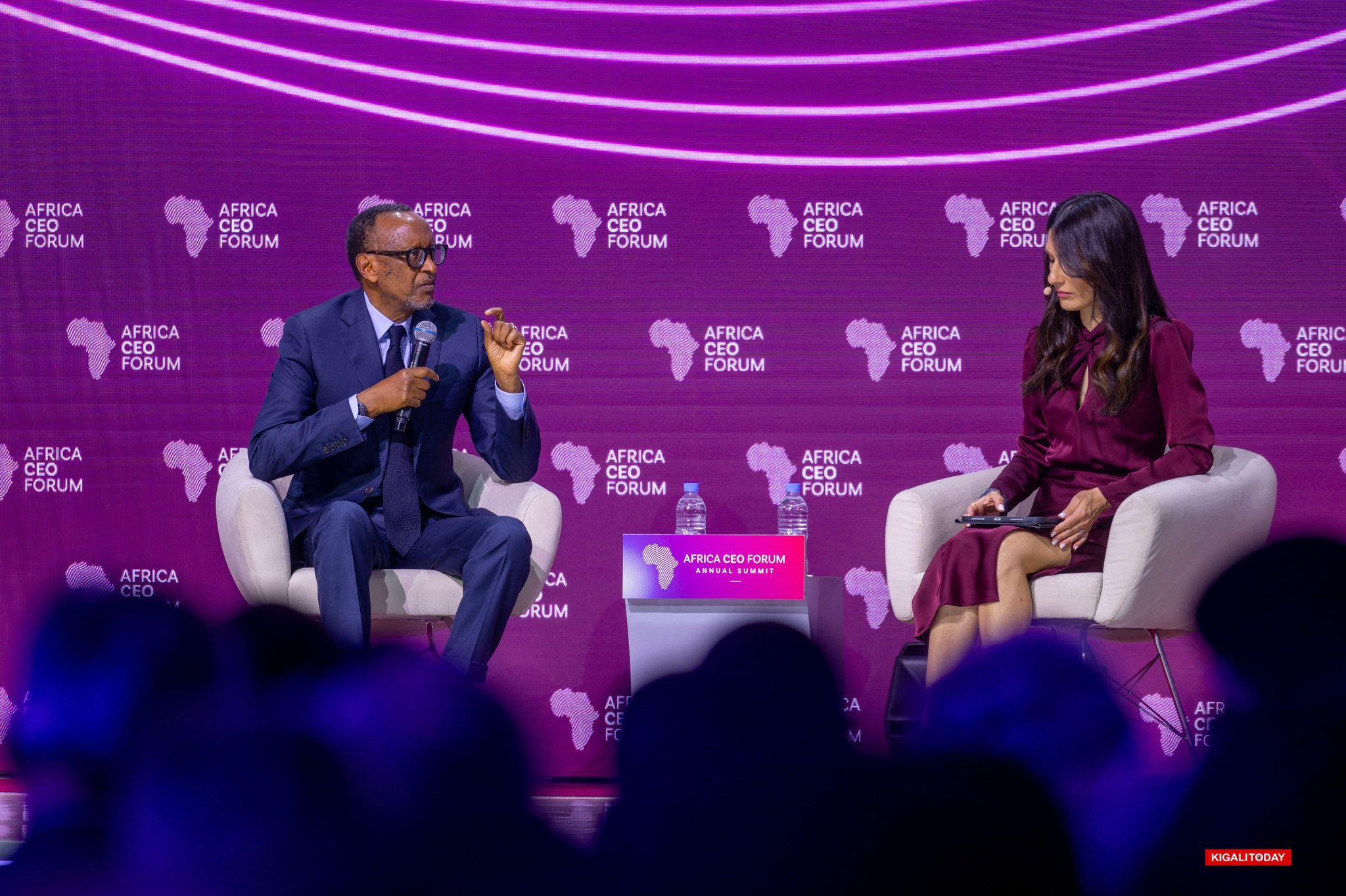
At the opening of the Africa CEO Forum 2026 in Kigali, President Paul Kagame sat before an audience of presidents, financiers, investors and chief executives and delivered a blunt diagnosis of Africa’s place in the world: the continent, he argued, is rich in everything except leverage.
The annual forum — regarded as Africa’s largest gathering of private-sector leaders — arrived this year at a moment of global uncertainty.
Organizers framed the 2026 summit around a stark theme: “Scale or Fail: Why Africa Must Embrace Shared Ownership,” reflecting growing anxiety over fractured global trade, declining aid flows, geopolitical rivalry and intensifying competition for Africa’s minerals, markets and strategic position.
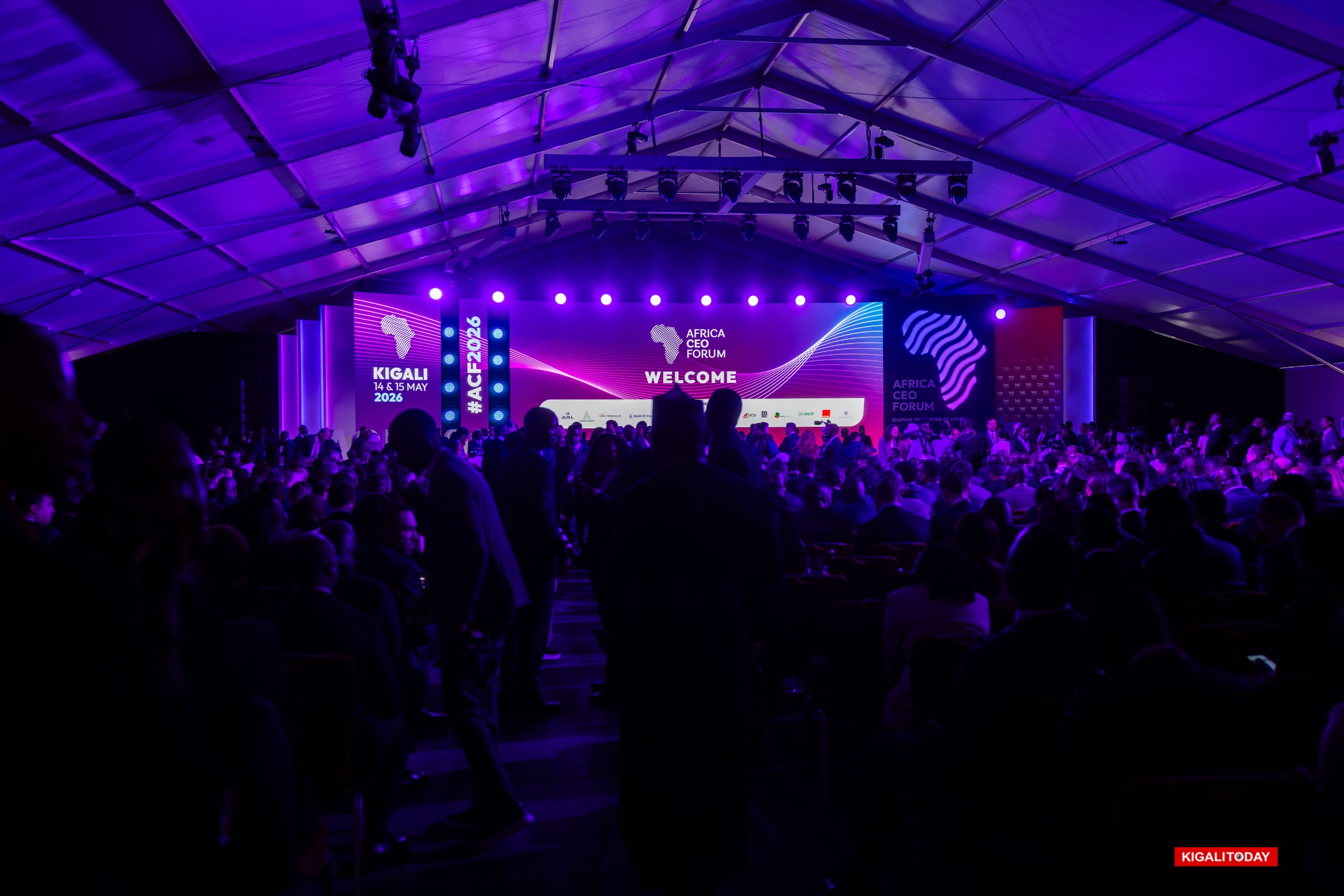
More than 2,000 business leaders, policymakers and investors from over 75 countries gathered in Kigali for two days of discussions about capital, industrialization, integration and Africa’s economic future.
But Kagame used his fireside conversation to push the discussion beyond economics.
Instead, he spoke about power.
“We are in a different cycle now that is driven geopolitically,” Kagame said, describing the current global environment as merely the latest chapter in a long history of external domination that has shaped Africa for centuries.
“I mean, you have had centuries of different things happening,” he said. “You had slave trade. We had colonial times, then there are wars, then there are pandemics.”
The crises change, he suggested, but Africa’s structural vulnerability remains.
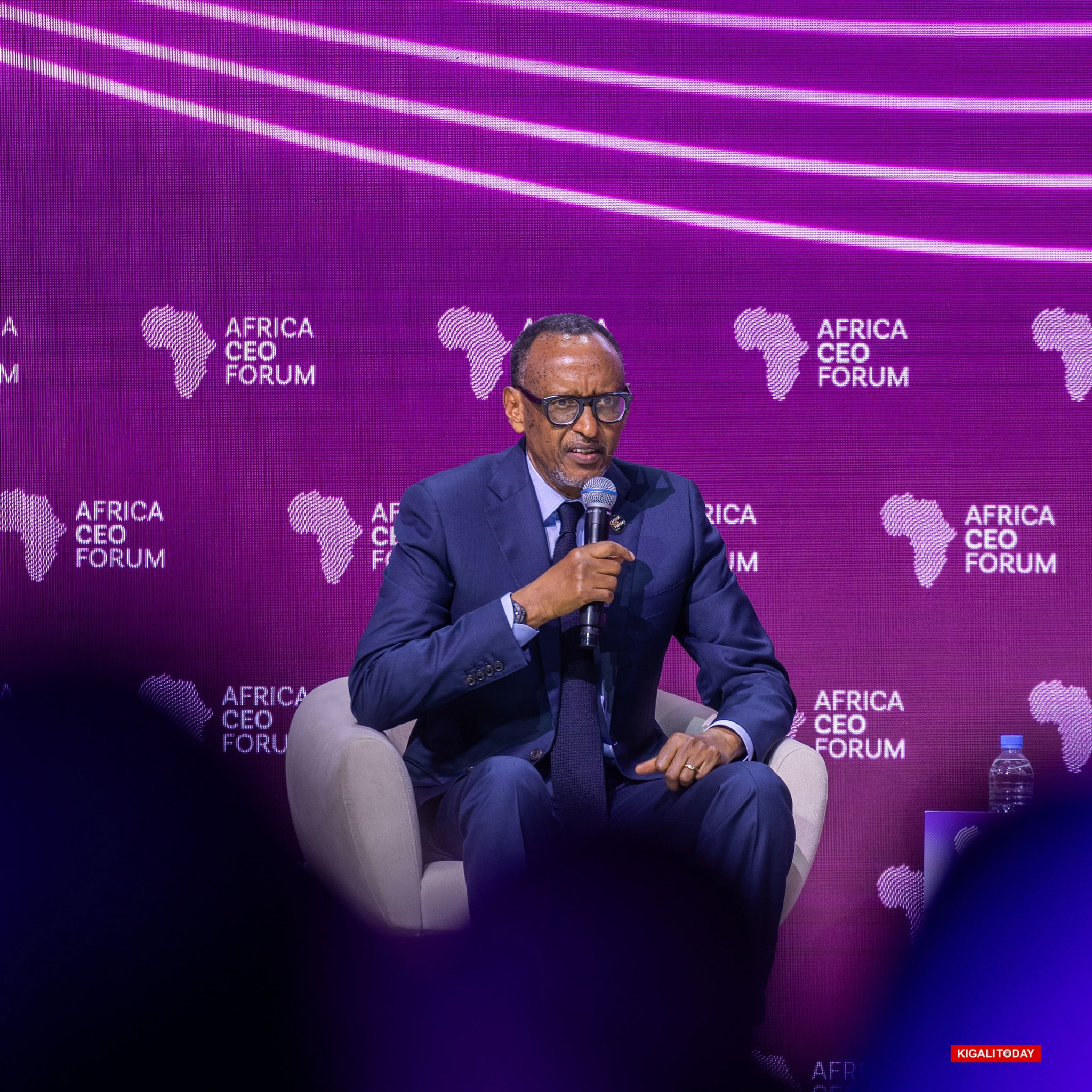
For Kagame, the most important question was not what the world is doing to Africa, but why Africa still finds itself unable to fully defend its own interests despite possessing enormous strategic advantages.
“Why is Africa always at a disadvantage?” he asked.
Then he began listing the continent’s assets almost like evidence in a case file.
Africa, he noted, holds roughly 60 percent of the world’s solar potential. The continent possesses many of the critical minerals needed for batteries and green technologies. It has vast human capital and a rapidly expanding middle class that could soon become among the world’s largest.
Yet, Kagame said, Africa continues to watch more powerful nations dictate terms around resources that largely come from African soil.
“Different powers are fighting over that,” he said of critical minerals, “but Africa that has a lot of that is silent or losing most of it cheaply.”
The critique fit squarely into the larger mood surrounding the forum itself.
This year’s Africa CEO Forum was built around the argument that African countries and companies can no longer survive as fragmented, small-scale actors in a world increasingly dominated by geopolitical blocs, industrial policy and strategic competition.
Organizers repeatedly emphasized the need for “shared ownership,” regional integration and African-controlled capital pools capable of competing globally.
In the fireside session, Kagame pushed the idea further: Africa’s problem, he argued, is not a lack of resources or ideas. It is a failure to act collectively and decisively.
“We need to come together and do something about it,” he said.
Throughout the conversation, Kagame returned repeatedly to the idea that Africa already understands its problems. What is missing, he argued, is implementation.
“There is a lot we know and there is a lot we talk about,” he said later in the discussion. “But we need to do a lot more.”
The comments reflected a broader frustration increasingly voiced by African leaders and executives who believe the continent remains trapped in extractive economic relationships even as global dependence on African minerals grows.
Kagame described a world where stronger countries continue to treat Africa primarily as a source of strategic commodities rather than an equal geopolitical actor.
In one of his sharper moments, he compared modern geopolitical behavior to older imperial systems.
“In the old days, the kings and so on used to give their in-laws, their children, powers — say, go and control something somewhere,” Kagame said. “And this is happening today.”
Without naming countries directly, he accused powerful nations of preaching democracy and human rights while simultaneously extracting Africa’s wealth.
“These powers you see that come here lecturing people democracy, human rights,” he said, “and they are doing it in one arm and the other, they are just taking away everything that people own.”
Yet Kagame’s speech was not entirely pessimistic.
In fact, he suggested that mounting geopolitical pressure may ultimately benefit Africa by forcing the continent into strategic self-awareness.
“My view is that these pressures that we get from the rest of the world,” he said, “Africa, I think, is being reminded to wake up.”
The line captured perhaps the central argument of his remarks: that the unraveling global order — with its sanctions, trade rivalries and shifting alliances — may finally leave Africa with no choice but to build economic and political strength on its own terms.
At several points, Kagame urged African leaders, business executives and investors in the room to stop viewing themselves primarily as victims of global systems and instead begin exercising collective power.
“We must be able to say no,” he said.
It was both a political statement and an economic one.
The message resonated strongly within a forum that this year repeatedly emphasized African industrial champions, cross-border investment and continental ownership as necessary defenses against global instability.
By the end of the conversation, Kagame’s argument had become clear: Africa’s future will not be determined merely by the rise or decline of global powers, but by whether Africans themselves decide to convert the continent’s enormous natural and demographic advantages into political and economic leverage.
“The continent has a lot that is not being put to good use,” he said in his closing remarks.
“And it is up to us.”
