



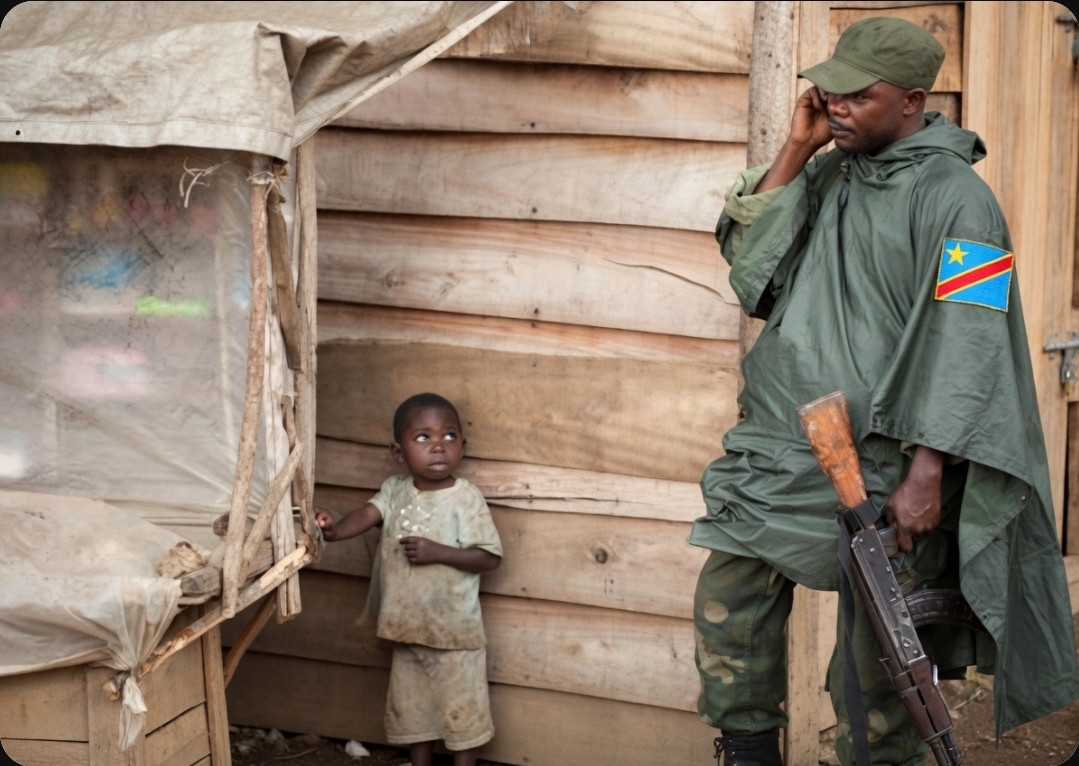
Conventional wisdom is that a weapon of war is for national safe. In DR Congo, guns are for terrorizing those without one. Guns ar sold for as low as $100, in some cases exchanged for food
The Democratic Republic of the Congo has endured decades of armed conflict that have severely undermined national stability, economic development, and human security.
Despite repeated peace agreements and international interventions, violence persists, particularly in the country’s eastern provinces.
A major factor sustaining this instability is the proliferation of small arms and light weapons among militias and armed groups. The widespread availability of firearms has strengthened non-state actors, weakened government authority, and prolonged cycles of violence.
As a result, disarmament remains central to discussions on achieving lasting peace in the DRC.
The current security crisis in the DRC cannot be understood without examining the regional events that followed the 1994 genocide in Rwanda.
After the genocide against the Tutsi, members of the former Rwandan Army and the Interahamwe militias fled into eastern Congo.
Rather than being effectively disarmed upon arrival, they remained armed and reorganised within Congolese territory.
Their continued presence contributed to regional tensions and eventually played a major role in triggering the Congo wars.
The absence of effective state control in eastern Congo created opportunities for armed groups to expand their influence.
Local militias, such as the Mai-Mai groups, also emerged, initially claiming to protect local communities and resources.
Over time, many of these groups became heavily armed and increasingly involved in violent conflict, illegal mining, and other criminal activities. The ready availability of small arms enabled these militias to survive, recruit fighters, and challenge state authority.
The continued circulation of small arms and light weapons has become one of the most significant drivers of conflict in the DRC.
Weapons enter the country through several channels, including illegal cross-border trafficking, diversion from government stockpiles, and arms exchanges linked to mineral exploitation.
Porous borders with neighbouring countries such as the Central African Republic, South Sudan and Angola have facilitated the circulation of firearms across the region.
At the same time, corruption and weak institutional oversight within the Congolese security sector have contributed to arms leakage. Some militias obtain weapons directly from government forces via black-market transactions, battlefield captures, or corrupt military networks.
Consequently, the distinction between state and non-state control of weapons has often blurred.
The abundance of natural resources in eastern Congo has further intensified the problem. Armed groups compete for control of gold, coltan, tin, and diamond-mining areas because these resources provide funds to purchase additional weapons.
This relationship between natural resource exploitation and arms acquisition has sustained conflict for many years and undermined peacebuilding efforts.
The proliferation of firearms in the DRC is closely linked to weak governance and the state’s limited presence in many rural areas.
In several territories, government institutions lack the capacity to provide security, uphold the rule of law, or deliver essential services. This governance vacuum has enabled militias to establish parallel systems of authority and exert control over local populations.
In parts of eastern Congo, armed groups have become more powerful than local government authorities. They impose illegal taxes, control trade routes, and influence political and economic activity.
Communities living under militia control often face insecurity, forced recruitment, and human rights abuses. Under such conditions, civilians may form or support local self-defence groups, further fuelling the spread of small arms and the militarisation of society.
The state’s inability to effectively regulate possession of weapons has therefore created an environment in which violence becomes self-sustaining. As more groups acquire firearms for protection or economic gain, insecurity continues to spread across the region.
Unfortunately, the Washington Accord, the US’s widely celebrated instrument, neither addresses the proliferation of arms nor the governance issues that create favourable conditions for the ongoing crisis in DRC. It is economically biased and may benefit one party, apparently the mediator, guarantor, and enforcer of the agreement.
Achieving sustainable peace in the DRC requires a comprehensive approach that addresses both security and governance challenges.
First, there must be a serious, enforceable disarmament process targeting all militias and illegal armed groups operating in the country. Effective weapons collection and destruction programmes are essential to reducing the means of violence.
Second, strengthening state institutions is critical to restoring public confidence and extending government authority in conflict-affected areas. This includes improving military professionalism, combating corruption, and enhancing border security to prevent illegal arms trafficking.
Third, regional cooperation among neighbouring countries is necessary to control the movement of weapons and armed groups across borders. Given the conflict’s regional dimensions, sustainable peace cannot be achieved through isolated national efforts alone.
Finally, long-term peacebuilding must address the root causes of conflict, including poverty, political exclusion, unemployment, and competition for natural resources. Without addressing these structural issues, armed groups are likely to continue to emerge even if temporary ceasefires are achieved.
The proliferation of small arms and light weapons remains one of the greatest obstacles to lasting peace in the Democratic Republic of the Congo.
Since the aftermath of the 1994 Genocide against the Tutsi in Rwanda, the continued availability of firearms has empowered militias, weakened governance, and prolonged instability in eastern Congo.
Weak institutions, porous borders, corruption, and competition over natural resources have all contributed to the uncontrolled flow of weapons.
