



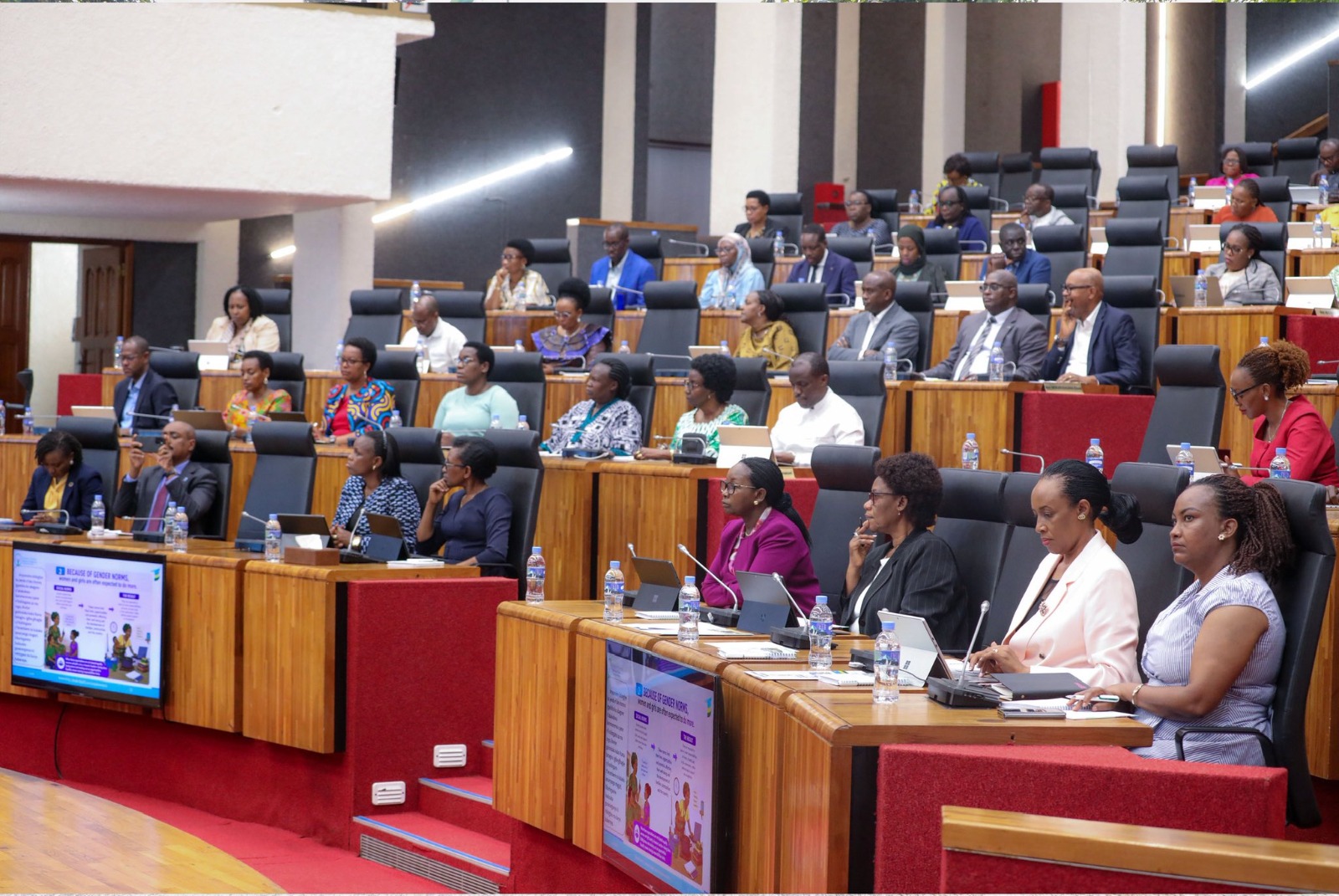
KIGALI, Rwanda — Rwanda’s global reputation as a leader in gender equality is frequently quantified by striking statistics: women hold a historic 64 percent of seats in the Chamber of Deputies and more than half of the Senate, making the nation the world’s first female-majority parliament.
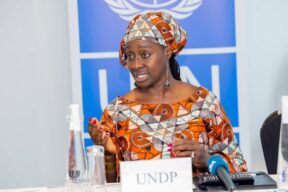
During a high-level dialogue organized by the Forum for Women Parliamentarians (FFRP) this Thursday, Dr. Fatmata Lovetta Sesay, the UNDP Resident Representative in Rwanda, challenged lawmakers to look past these data points and focus on the deeper, systemic transformation occurring within governance itself.
Speaking to an audience of senators, MPs, government officials, and international development partners, Dr. Sesay argued that Rwanda’s crowning achievement is not merely the presence of women in legislative seats, but how their leadership has fundamentally reshaped how state institutions respond to the needs of ordinary citizens.
“Rwanda’s achievement is not merely about numbers,” Dr. Sesay emphasized. “The real success lies in how it transforms governance itself. We are not just talking about having women in Parliament; we are talking about the substance of the debates happening here today and the tangible impact they have on the world.”
A Story of Rapid Transformation
The dialogue focused on anchoring gender equality principles within the three core responsibilities of parliamentary leadership, gender-responsive budgeting, and the implementation of the Second National Strategy for Transformation (NST2).
Praising Rwanda’s trajectory over the last three decades, Dr. Sesay noted that female representation in Parliament stood at just 23 percent during the transitional period following the 1994 Genocide against the Tutsi.
“To be the Parliament with the highest representation in the world is no small feat,” she told lawmakers. “That is a very big deal.”
Yet, she maintained that the true value of this representation is felt outside the halls of Parliament. The influx of women into leadership has broadened national dialogue, elevated social protection initiatives, and steered the country toward more citizen-centered governance.
Demystifying Gender-Responsive Budgeting
A central theme of Dr. Sesay’s address was the critical role of gender-responsive budgeting—a tool she insists is vital for ensuring public resources equitably serve all segments of society.
“Gender-responsive budgeting is not about creating separate budgets for women,” she explained. “It is about asking fundamental questions: Who benefits? Who is left behind? Whose needs are prioritized?”
She cautioned lawmakers against viewing national budgets as static financial documents, urging them instead to treat them as blueprints for public accountability.
“Budgets are only an aspirational statement of what a government wishes to do in a year,” Dr. Sesay noted. “What makes budget execution work is the follow-through, ensuring that implementation makes a real difference to every citizen living in Rwanda.”
In this regard, she commended the oversight functions of parliamentary commissions and the FFRP, noting that “Parliament ultimately determines whether public resources serve citizens effectively.”
The ‘Prescription Glasses’ of Governance
To illustrate how gender analysis sharpens public policy, Dr. Sesay offered a vivid analogy of a child struggling to see the blackboard in a classroom.
“Before the lenses, all they see is a blurry vision,” she said. “But once they have the right prescription glasses, the classroom comes into sharp focus, revealing details that were always there but had never been noticed.”
In the same vein, she argued, a gender-responsive framework acts as regulatory lenses for governance, helping institutions identify and address deep-seated inequalities that otherwise remain invisible to policymakers. “The problems and the needs were always there. People simply could not see them clearly enough to respond.”
The high-level dialogue concluded with a renewed roadmap for lawmakers and stakeholders to better integrate gender principles into legislative oversight and development planning under NST2.
Reaffirming the United Nations’ stance, Dr. Sesay assured Parliament that the UNDP remains a committed partner in Rwanda’s journey toward inclusive public finance reforms.
“Our role is not merely to support technical reforms,” she concluded. “True equality is achieved when institutions themselves deliver equitable results for everyone—women, men, girls, and boys alike.”
