


When a young Rwandan boy won the Kigali Public Library’s National Writing Competition for the third time, his victory became more than a personal achievement. It transformed an entire school community.
Teachers began encouraging more students to write. Participation at his school surged. Last year, the school recorded one of the highest submission rates in the country, inspired largely by one student’s repeated success.
For Kigali Public Library Director Tessy Rusera, that story captures exactly what the competition was designed to achieve: not simply producing winners, but building a generation of young Rwandans confident enough to express themselves through writing.
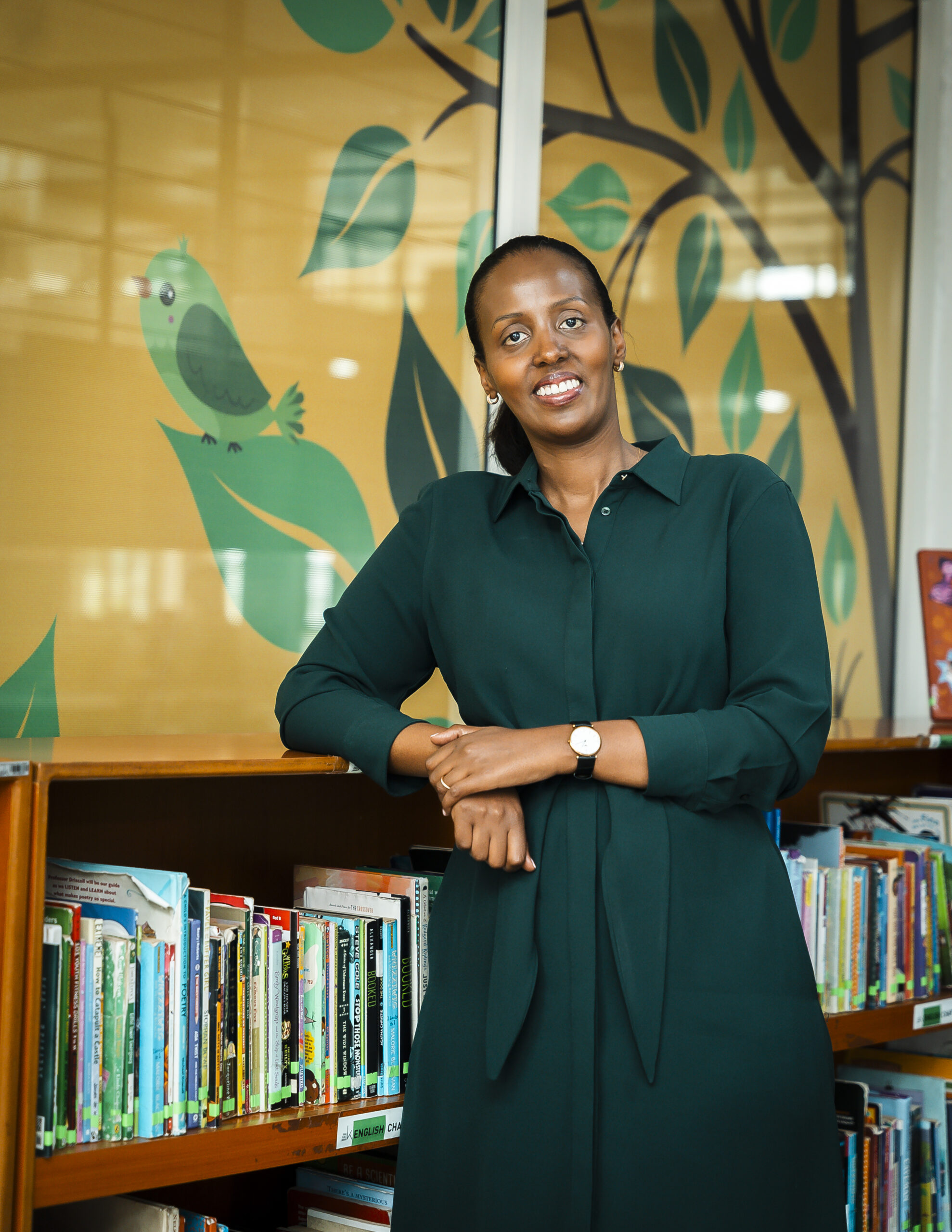
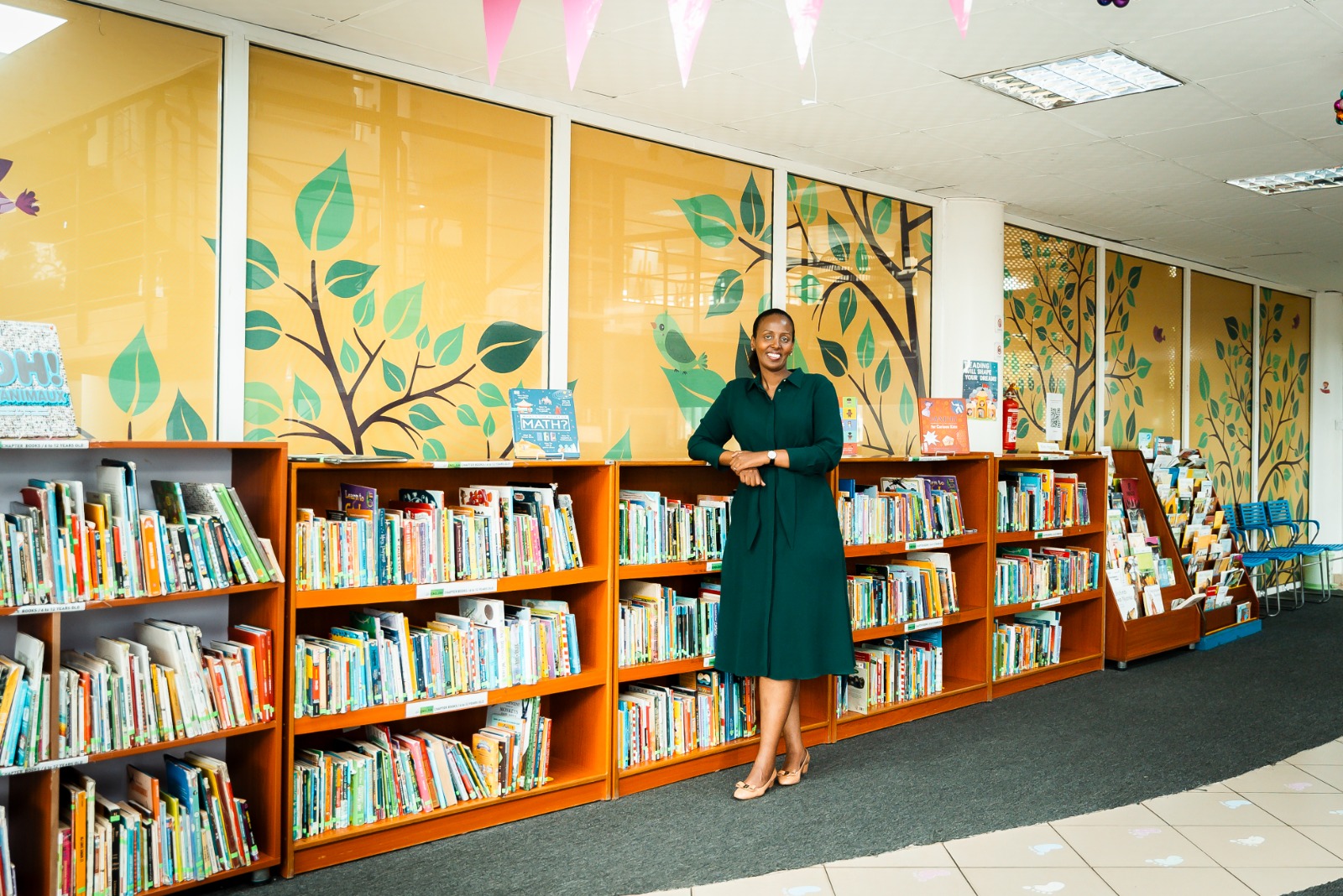
Kigali Public Library Director Tessy Rusera
“What that has done is that it has pushed the school to encourage more of their students to join,” Rusera said during a media interview held Tuesday at Kigali Public Library premises. “That, to us, is a huge success story.”
The boy’s identity remains undisclosed because the judging process is anonymized, with participants assigned codes rather than names to ensure fairness. Yet his impact is visible far beyond the awards he collected. His writings have now been published three times through local publishing partnerships, giving other children stories they can recognize as their own.
A Growing Competition:
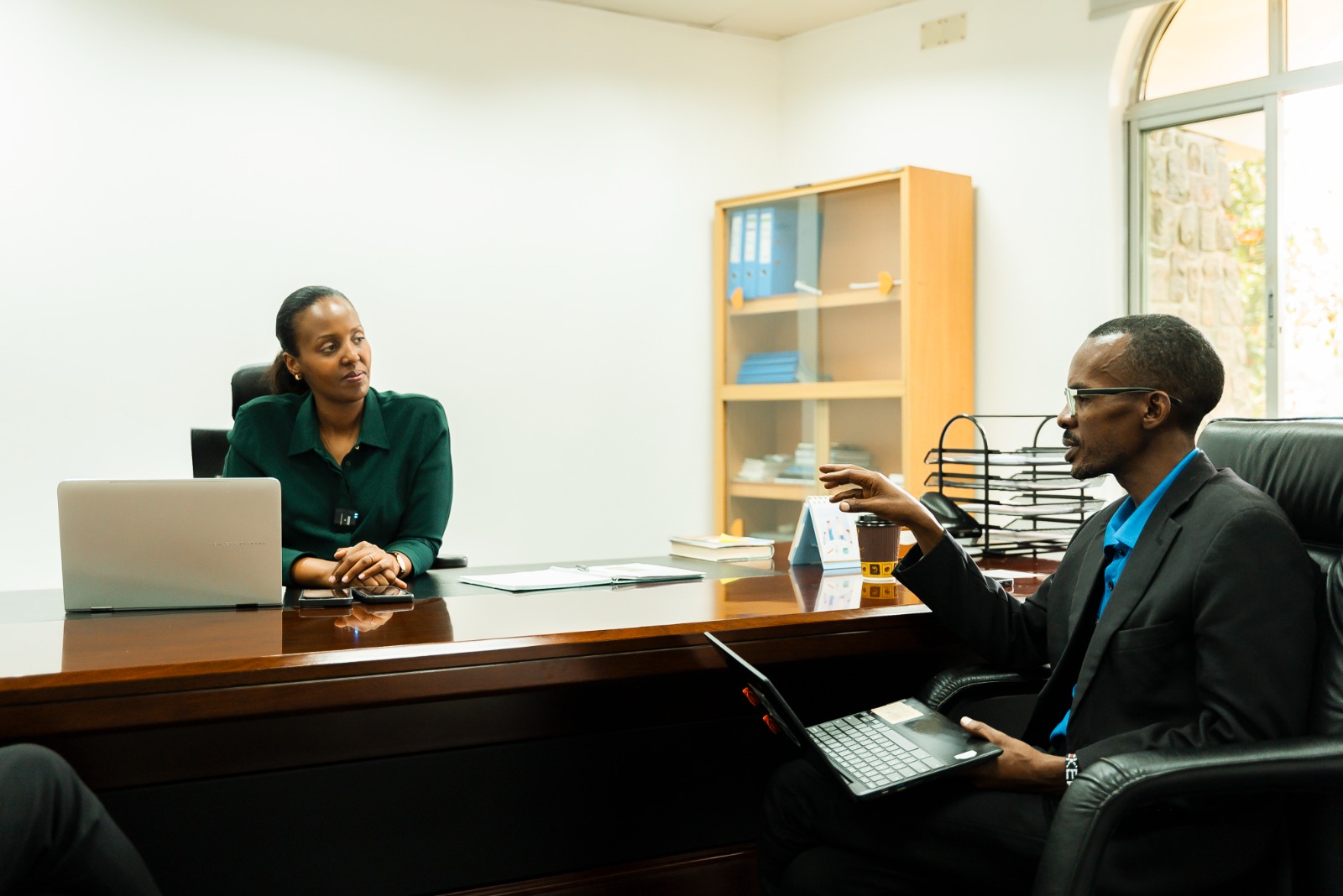
Director Tessy Rusera (left) during a one-on-one interview with the writer
Now in its fifth edition, the National Writing Competition has evolved from a small literacy initiative into one of Rwanda’s largest youth creative platforms.
According to Rusera, the competition began in 2020 with about 200 submissions from only three districts. This year, organizers received more than 5,000 entries from all 30 districts of Rwanda.
“So for us, it’s a huge milestone,” she said. “That’s what has been so special about season five.”
The competition is open to all learners from Primary One to Senior Six in both public and private schools. Entries are accepted in multiple languages, reflecting Rwanda’s multilingual education environment.
This year’s theme, “Money Matters,” invited children and youth to reflect on savings, financial responsibility, and their relationship with money.
“Money is something that children hear from a young age, but they don’t have access to,” Rusera explained. “So they grow up thinking, ‘I’m going to have money, I’m going to find a way to have money.’”
The topic generated unexpected creativity. Some children arrived during interview phases carrying piggy banks, while others shared stories about raising rabbits and small entrepreneurial activities.
“We received very exciting and surprising stories,” she said.
The theme was selected after consultations with teachers, parents, students, and other stakeholders. Internally, the library team also voted on possible themes.
“The topic of money is something that has been recurring over the years,” Rusera noted. “This year, it was the winning theme.”
Beyond Writing:
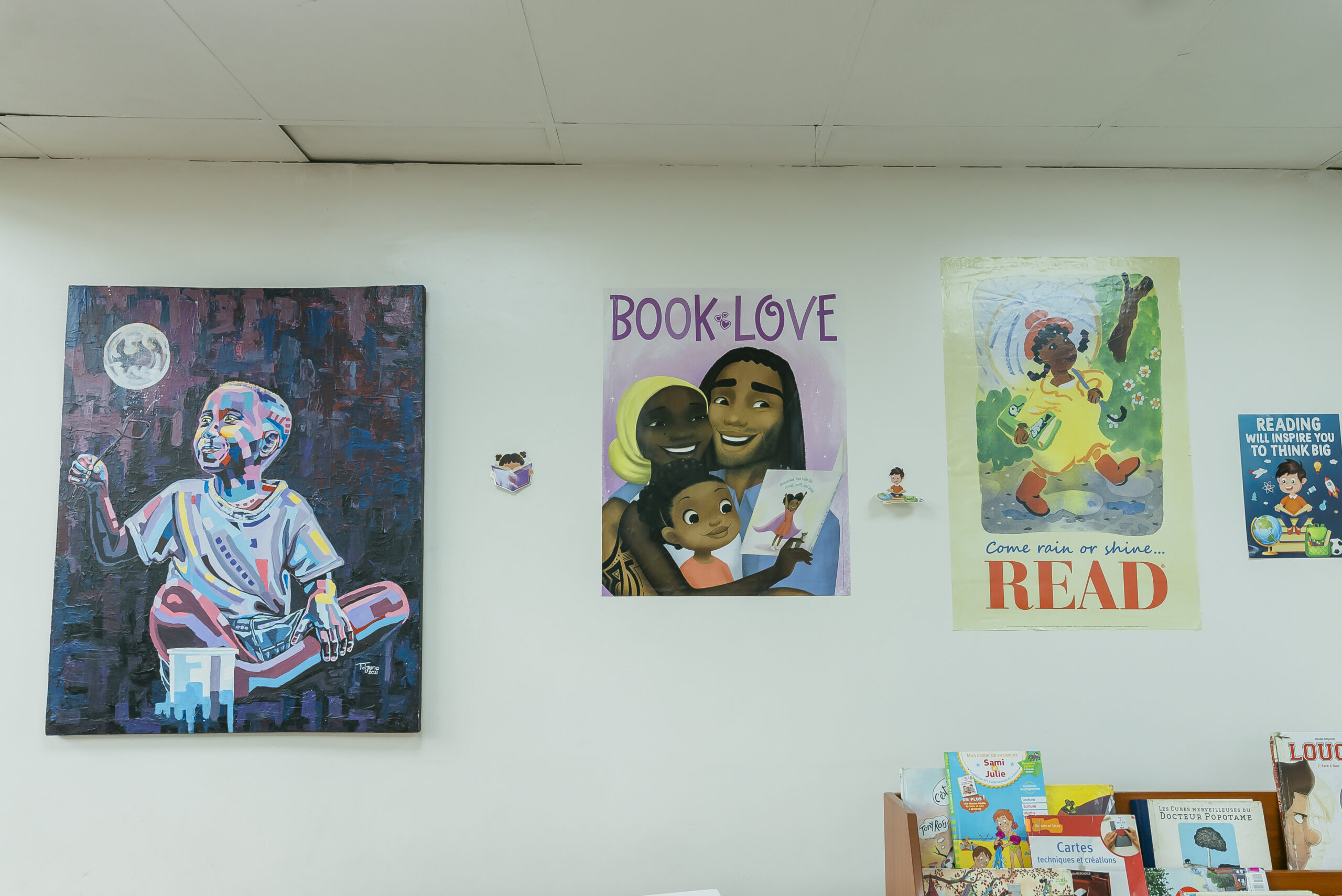
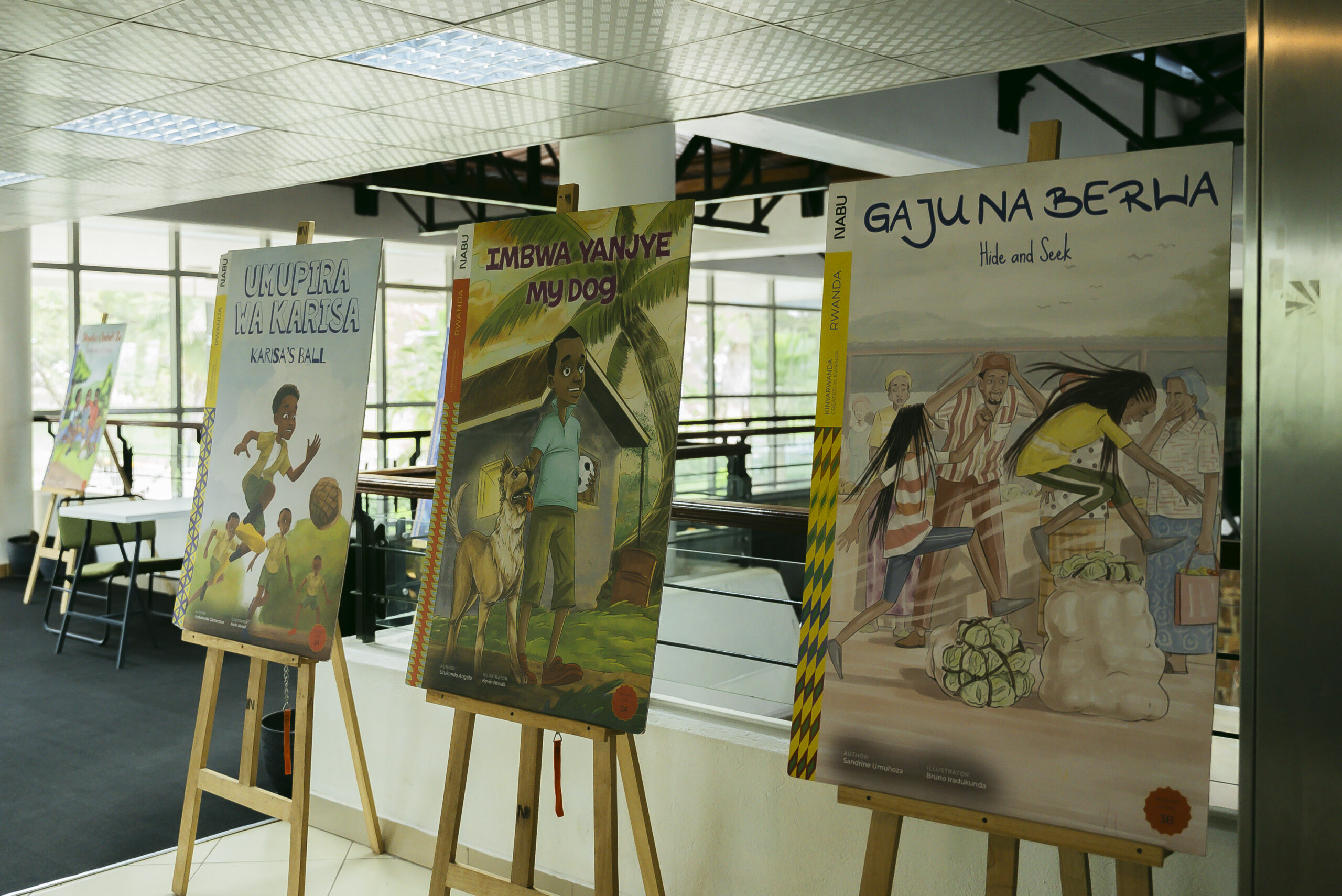
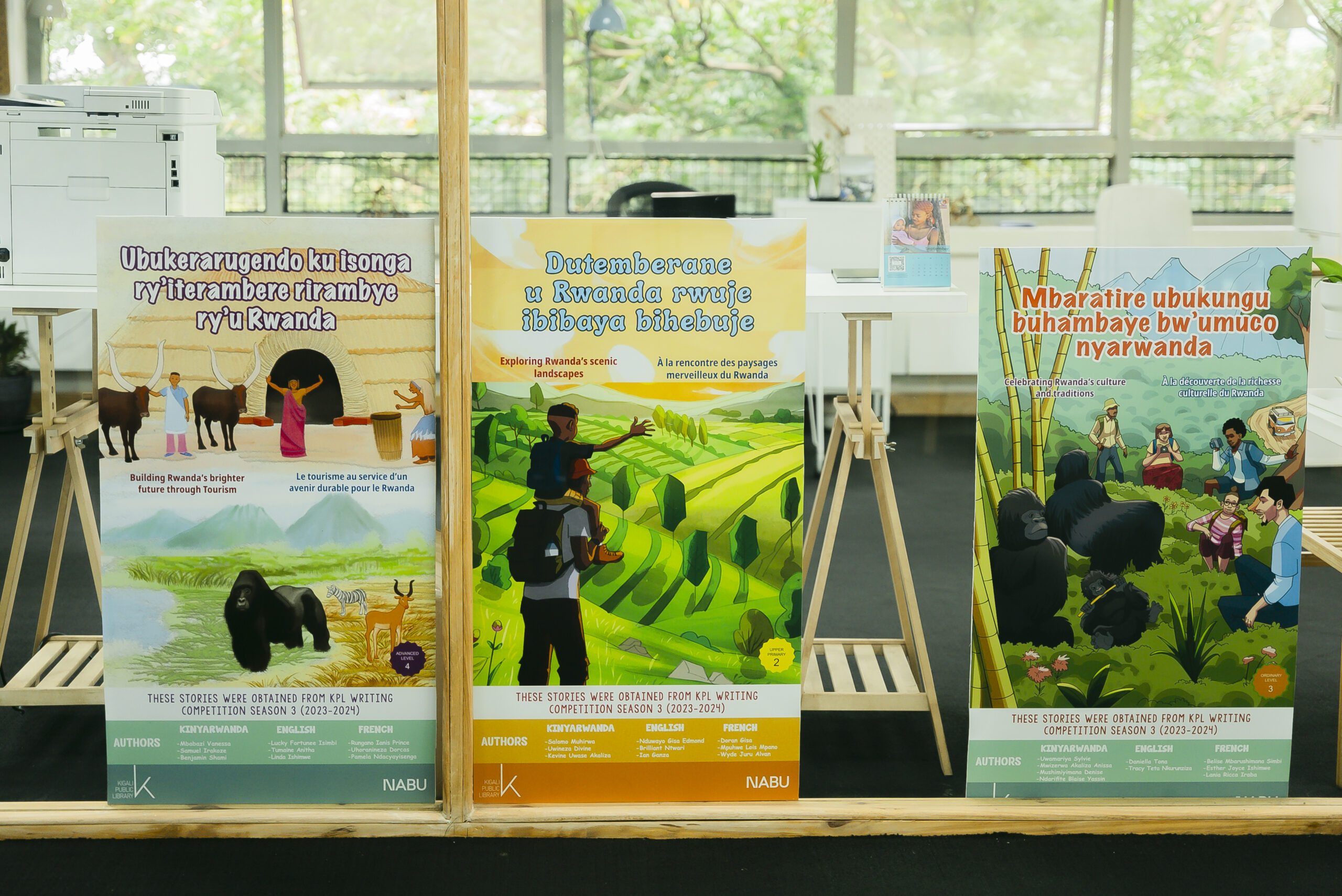
Some books written by children for children on display at Kigali Public Library
While the theme focused on finances, Rusera said the broader intention was inclusion.
“The intention is to have children and youth being part of the conversation,” she said. “They are not necessarily a group that are consulted.”
She believes exposing children early to discussions about savings and financial planning could help future generations avoid mistakes older generations made.
“If we start training them from a young age, if it’s a conversation that we are having from a young age, it’s something that I think the next generation will do better than ours in terms of saving,” she said.
Still, she emphasized that literacy remains the library’s primary mission.
“Our biggest win is that we have a generation of children that are capable of fully expressing themselves, that gain knowledge through reading, and can fully write on their own without any assistance.”
Winners receive a range of rewards, including laptops, tablets, bicycles, books, library memberships and educational trips tied to the annual theme. Past partnerships have included visits to national parks supported by tourism stakeholders.
“We have special prizes that go according to the theme,” Rusera said. “Hopefully it’s memorable.”
Building a Reading and Writing Culture:
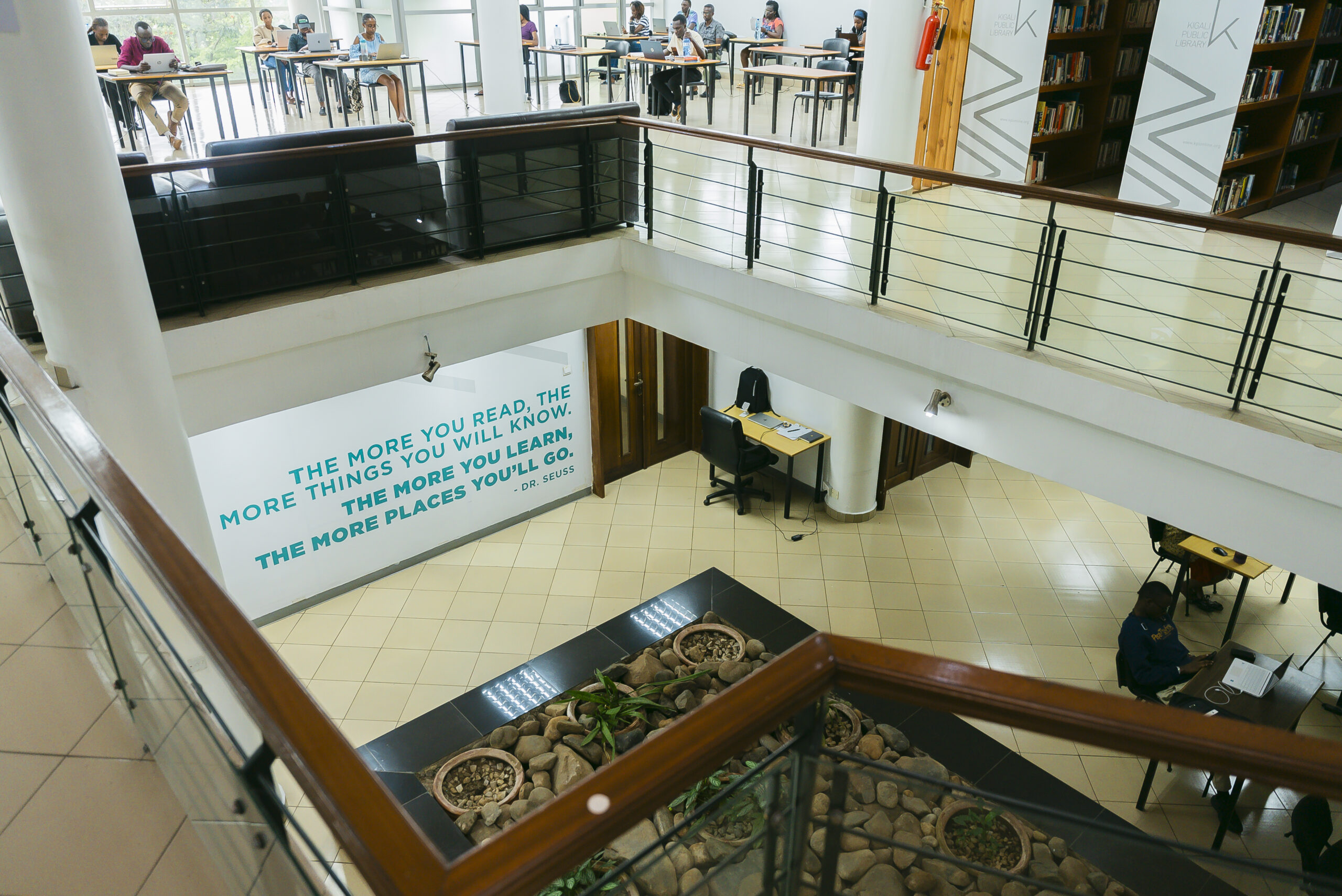
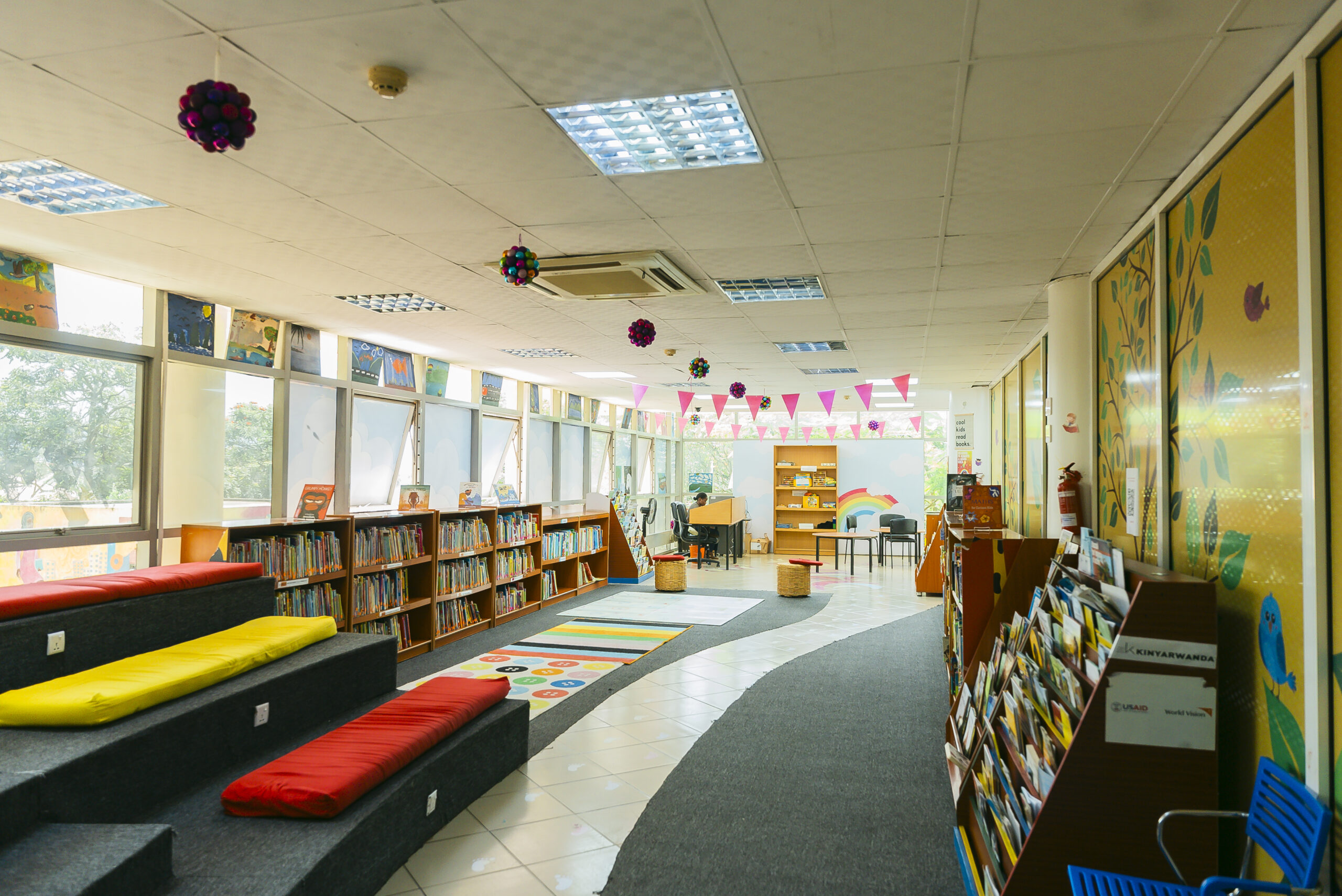
Arial view of the inside of Kigali Public Library reading spaces
Rusera says the competition is helping schools integrate creative writing into everyday learning.
“A lot of schools have taken it on and they make it an activity,” she explained, noting that some schools now incorporate the competition into English, French, and Kinyarwanda writing courses.
But beyond participation numbers lies a deeper mission: creating stories Rwandan children can genuinely relate to.
“You have books for a six-year-old talking about snow,” she said. “No one in Rwanda can understand what snow is.”
She argued that many imported children’s books fail to reflect local realities, cultures, and experiences.
“Why are we talking to Rwandan kids about apricots? They cannot relate to it,” she added.
For Rusera, encouraging young people to write about their own lives helps preserve national identity and strengthens Rwanda’s ability to tell its own story internationally.
“The more we have Rwandan children able to even speak up for themselves, to write down their history, so that future generations understand what our history is, and they’re able to defend it on international platforms, that is the most important thing,” she said.
The library works with local publishing houses including ‘Imagine We’ and ‘NABU’ to publish selected works from competition participants and distribute them back into communities.
Beyond Kigali: A National Literacy Mission:
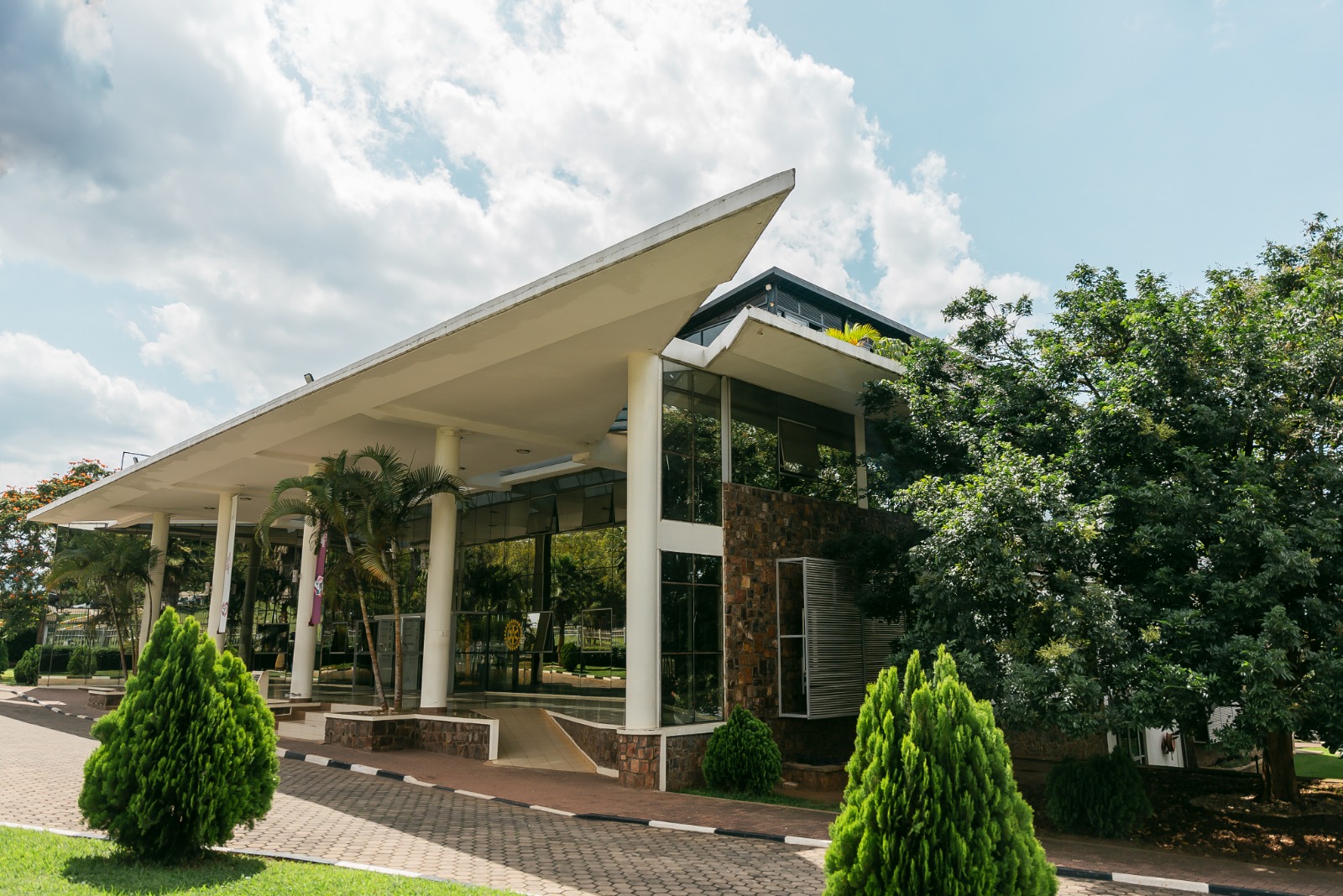
View of Kigali Public Library in Kacyiru opposite the American Embassy in Kigali
Despite its name, Kigali Public Library says its work extends across the country.
“We don’t belong only to Kigali,” Rusera said. “We are the biggest library in the country and also the first of its kind.”
The institution currently supports more than 100 community libraries nationwide by supplying books, training librarians, and promoting literacy programs.
Among its flagship initiatives is the “Dusome” programme, launched in some of Kigali’s least-performing schools to improve foundational literacy skills through daily leisure reading.
The programme introduces 15 minutes of reading time each day, encouraging children to read storybooks beyond classroom textbooks.
“We want children to want to read,” Rusera said. “We don’t want them to have to read.”
The initiative has also increased parental involvement, as children practice reading aloud at home before presenting to classmates.
“That has brought the love for reading,” she said. “That has sparked curiosity.”
From National Platform to Regional Ambition:
As participation continues to grow, Kigali Public Library hopes the competition could eventually expand into a regional East African platform.
“If in Rwanda we have a broad and strong base of writers that have been participating, it makes them even better candidates to join this East African competition,” Rusera said.
She also hopes Rwanda can one day host such a regional literary event.
At the national level, the library wants stronger support for community libraries and broader access to leisure reading materials in schools, especially for children in underserved communities.
Rusera further believes introducing structured leisure reading periods in all schools could improve academic performance, reduce dropouts, and strengthen literacy foundations nationwide.
“If we are capable of influencing a policy where there’s 15 minutes of leisure reading introduced in all schools, private and public schools, we think it would make a very big difference,” she said. “It Is Our Duty to Tell Our Story”
Rusera delivered a message directed at young people who may have stories to share but have never attempted writing.
“Writing and telling our story is the responsibility of every Rwandan child,” she said.
“I think it becomes more than a joy. To some extent, as Rwandan citizens, it’s our duty to write. It’s our duty to tell our story.”
For Kigali Public Library, the growing competition is no longer simply about essays and prizes. It has become a national effort to ensure future generations of Rwandans can confidently tell their own stories — in their own voices.