On any ordinary school day in Rwanda’s Western Province, hundreds of thousands of children line up for lunch plates filled with the country’s most familiar staple: beans.
For generations, beans have anchored the Rwandan diet, served across homes, restaurants, and schools. In fact, the average Rwandan consumes about 38 kilograms of beans annually, making the country one of the world’s largest consumers of the crop. Yet, this high consumption masks a stark paradox: why are so many children iron-deficient in a country where beans are eaten daily?
Despite the crop’s ubiquity—appearing on 97 percent of school menus up to five times a week—western Rwanda continues to struggle with severe childhood malnutrition. In this region, anemia affects nearly 40 percent of children aged six to 59 months, one in three under five is stunted, and over 20 percent of households face food insecurity, driven by poverty and a reliance on low-micronutrient staples.
A new Swiss-backed initiative believes the solution lies not in changing eating habits, but in changing the seed itself.
Scaling a Nutritional Transformation
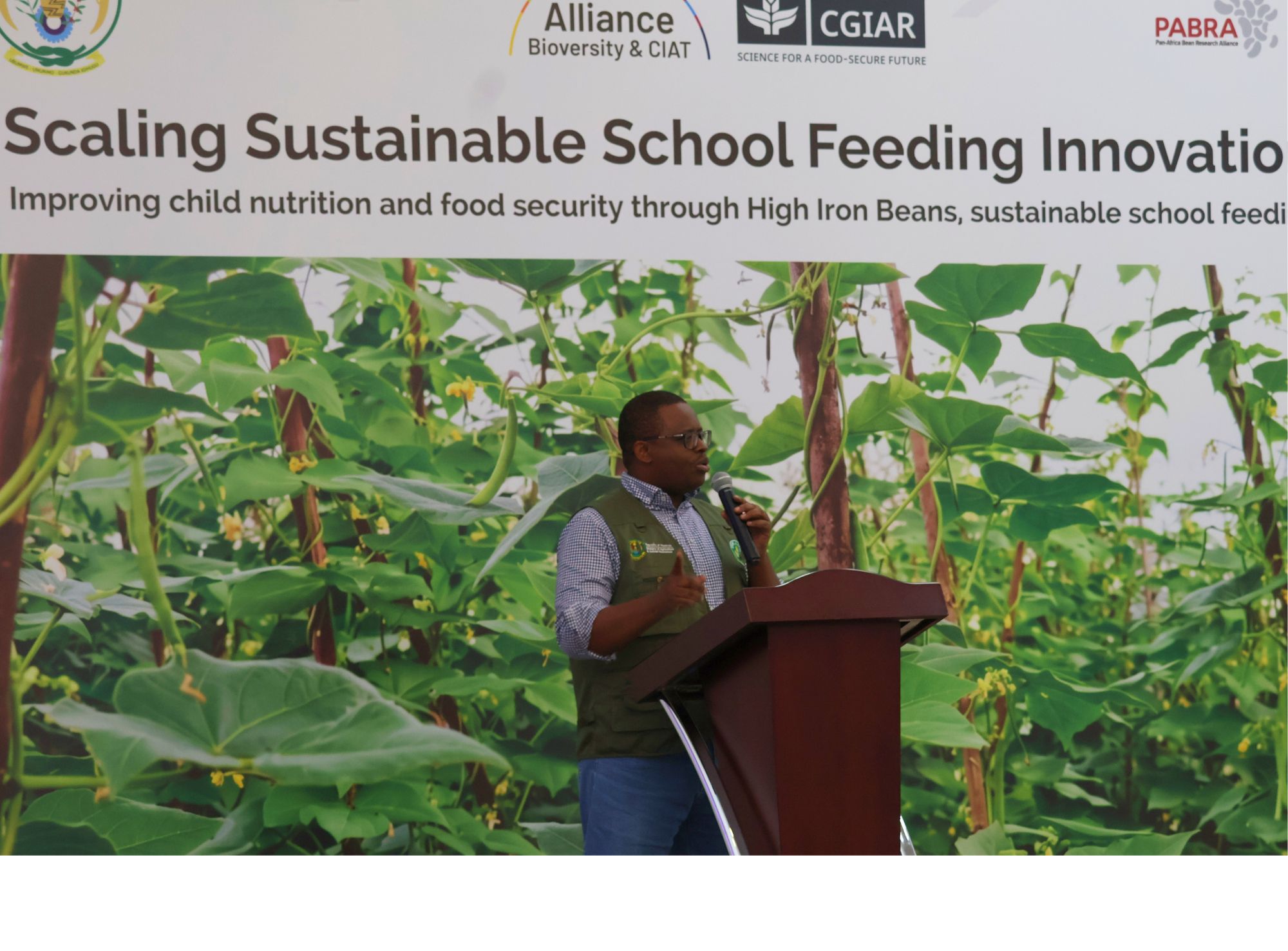
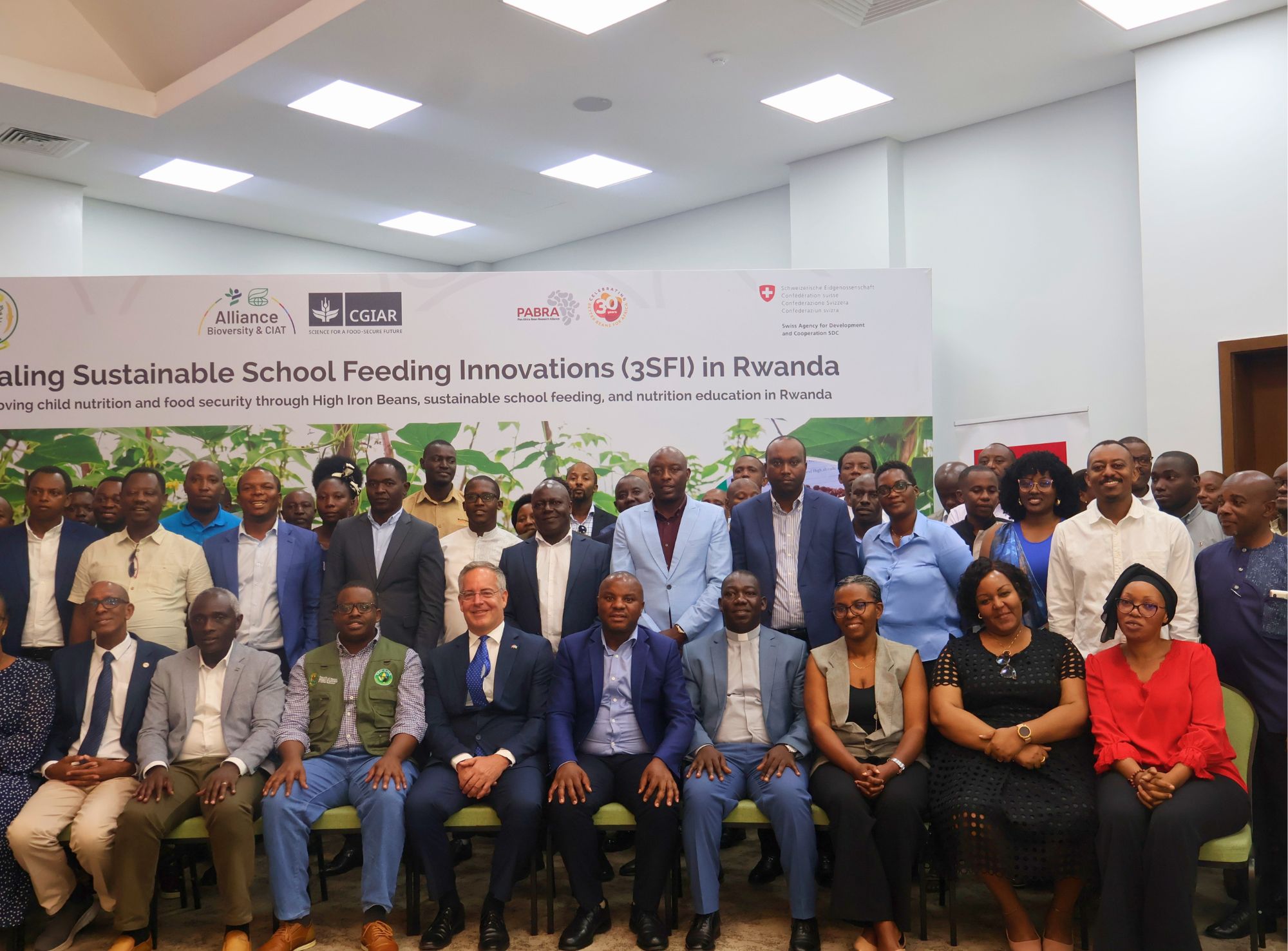
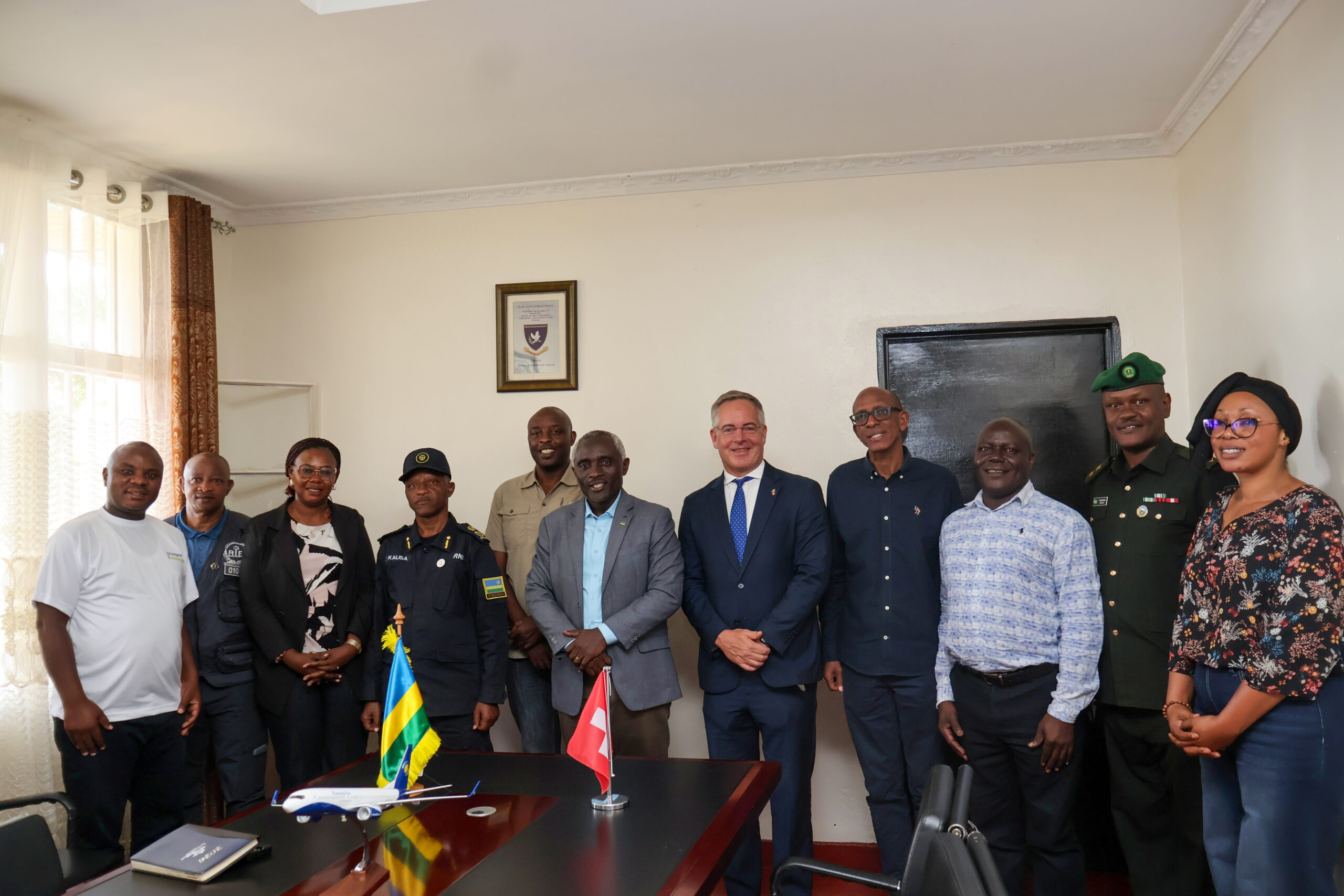
The Scaling Sustainable School Feeding Innovations (3SFI) project is introducing iron-rich bio-fortified beans to schools across the Western Province to tackle anemia, stunting, and food insecurity. Officially launched on Tuesday, May 26 in Rusizi District, the initiative has quietly operated for six months and has already surged past its initial targets.
Funded by the Swiss Agency for Development and Cooperation (SDC), the program is implemented by the Alliance of Bioversity International and CIAT through the Pan-Africa Bean Research Alliance (PABRA).
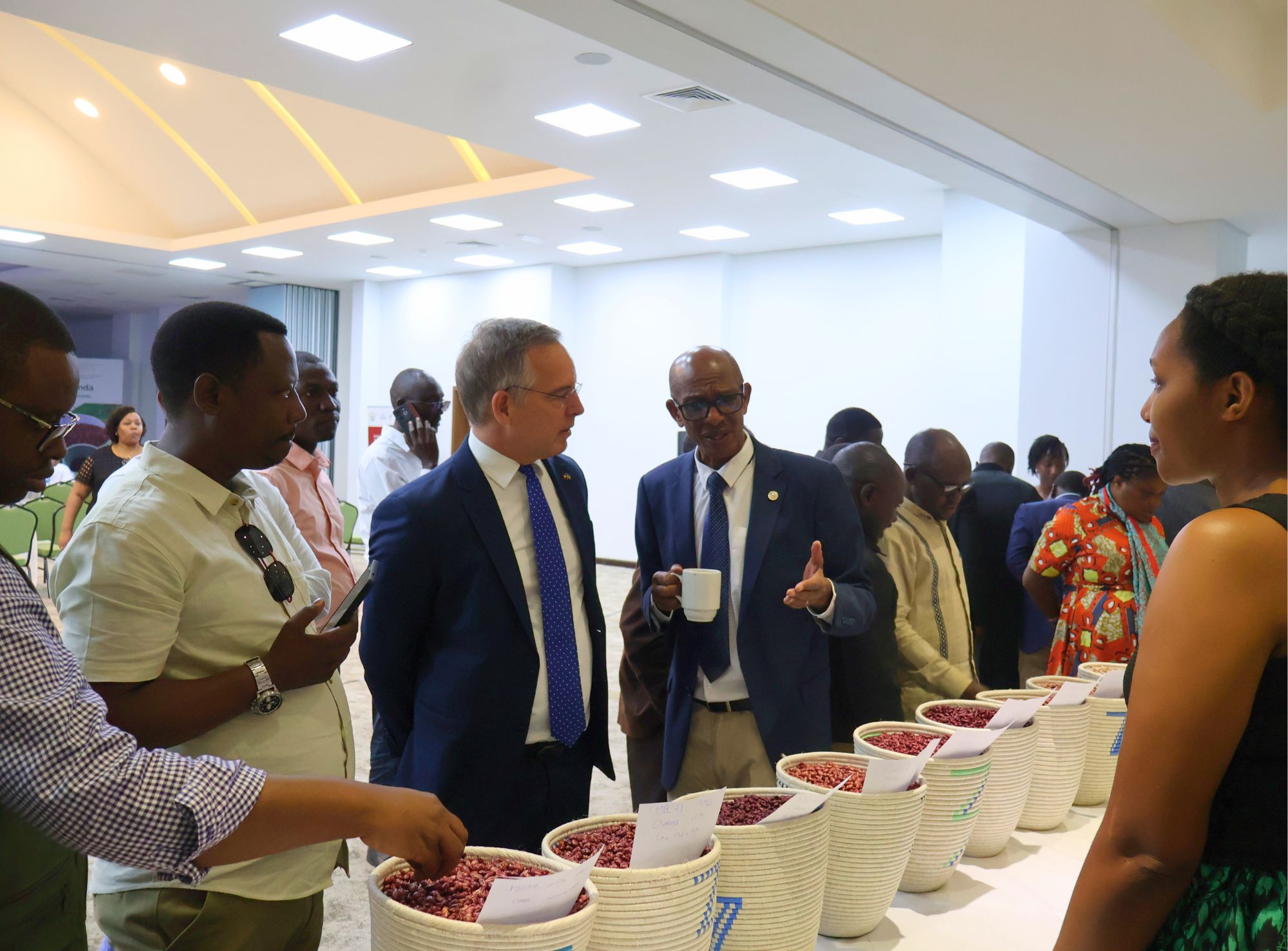
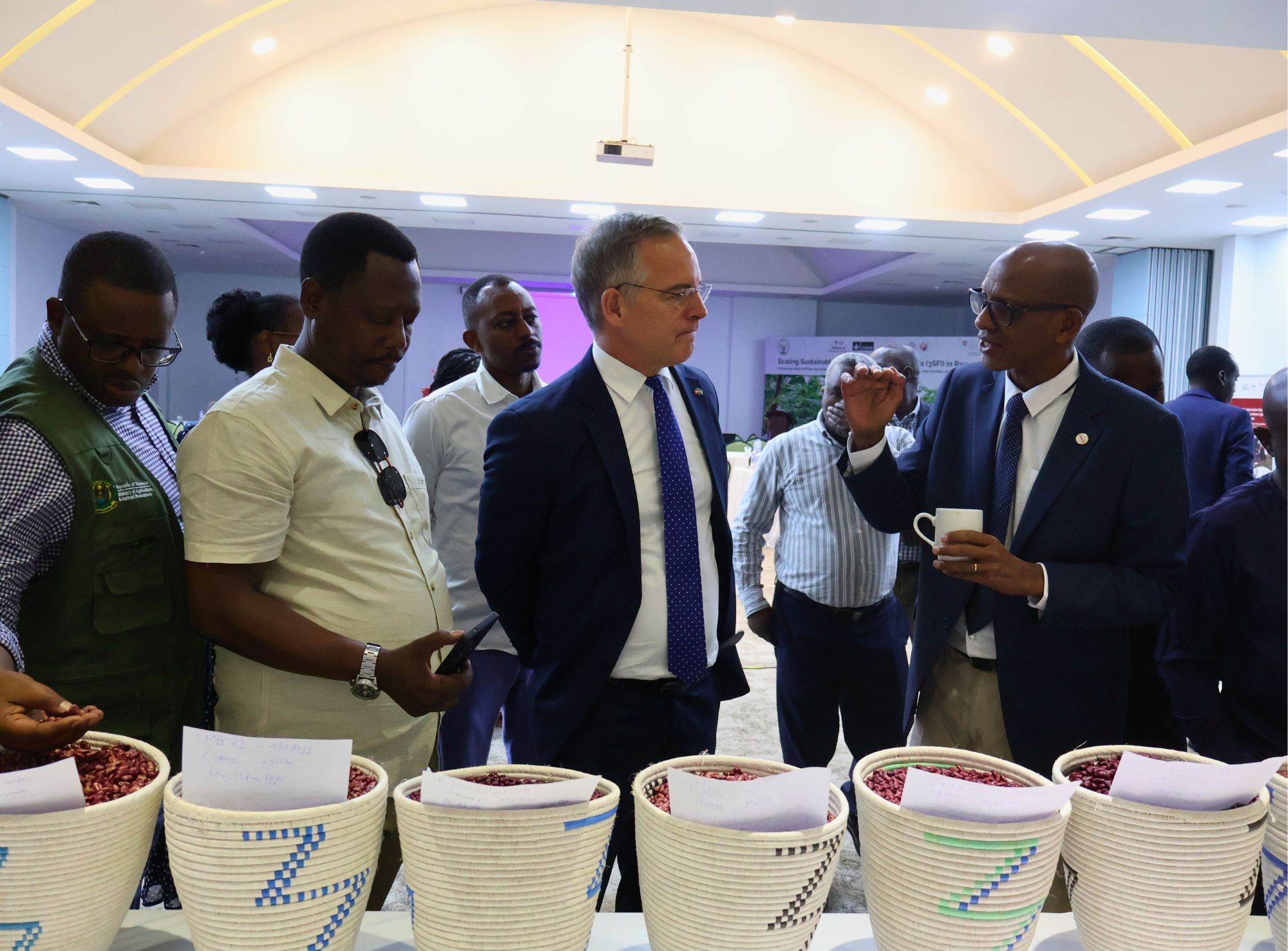
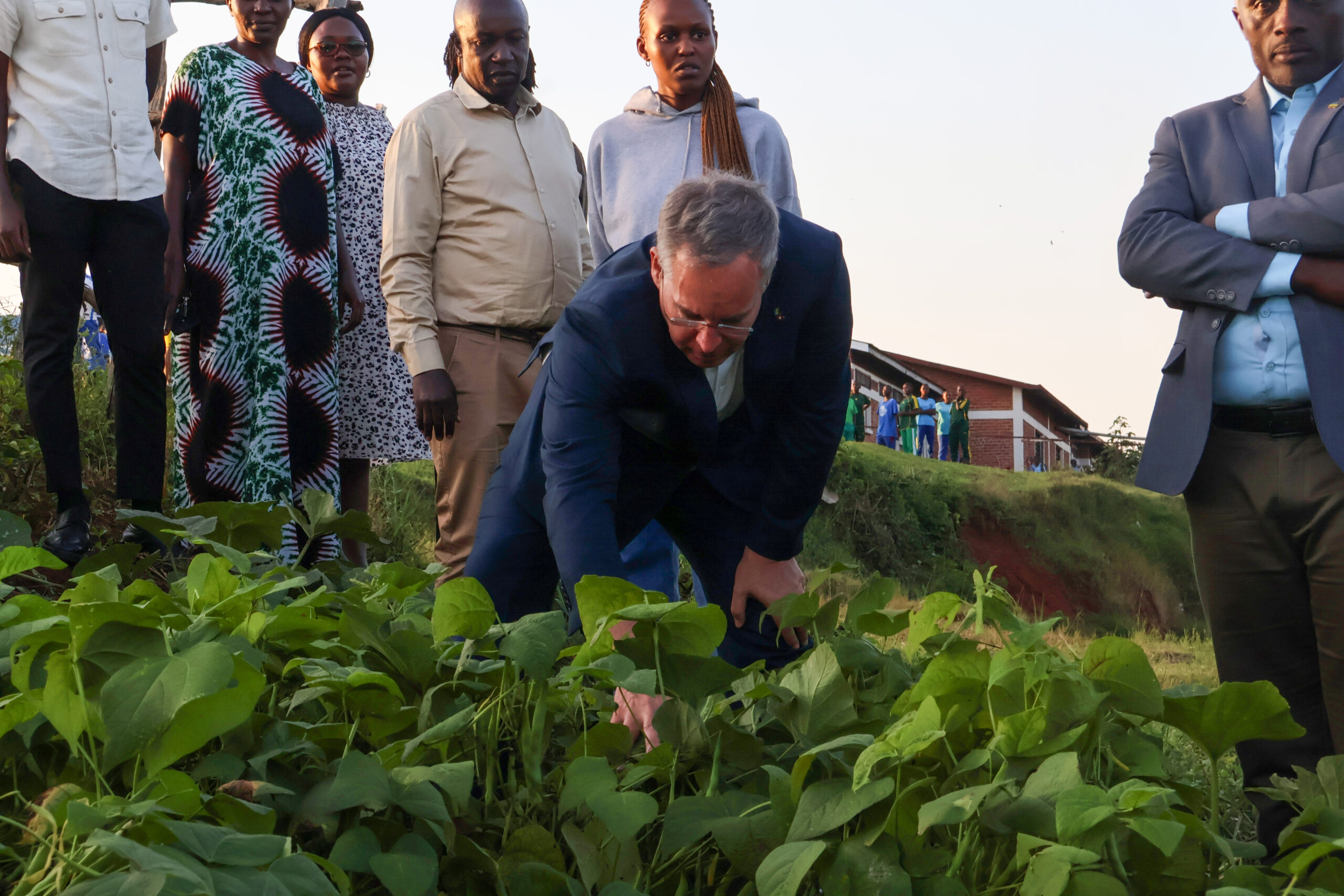
Unlike conventional market varieties, these new bio-fortified beans contain significantly higher iron concentrations while maintaining the exact same taste, appearance, and cooking methods families are used to.
“These iron-rich beans are very productive and highly visible on shelves,” said Jean Claude Rubyogo, Head of the Global Bean Program and Director of PABRA. “They grow well, and we are confident they will provide sufficient production.”
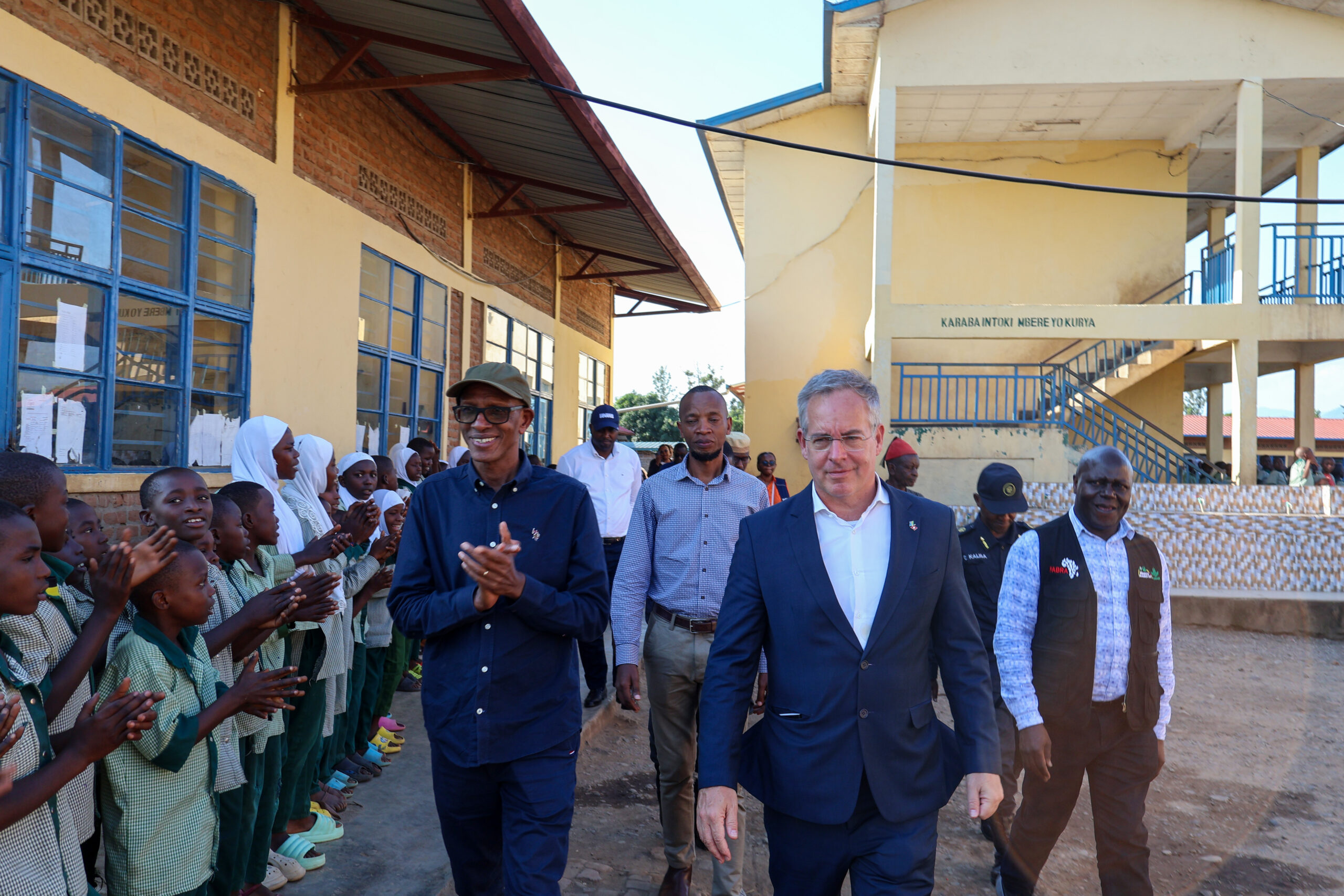
By its official launch, the project had already expanded from its original target of 300 schools to reach 509 schools across Karongi, Nyamasheke, and Rusizi districts, supporting daily meals for 445,115 students.
Rapid Progress and Community Integration
The project’s six-month milestone report highlights a massive operational rollout. The initiative has distributed 18.5 metric tons of high-iron bean seeds, conducted soil testing in 283 schools, and established 1,901 demonstration plots across 48 sectors. Furthermore, more than 1,110 school staff members have been trained in advanced agronomic practices, while 629 community behavior-change agents have been deployed to educate families on nutrition and sustainable farming. A substantial harvest of approximately 427 metric tons of beans is expected within weeks.
Dr. Olivier Kamana, Permanent Secretary in the Ministry of Agriculture and Animal Resources, praised the rapid progress as a true institutional transformation for primary schools. She noted that the government hopes to use lessons from this first year to expand the pilot to other districts nationwide.
Linking Classrooms to Local Farms
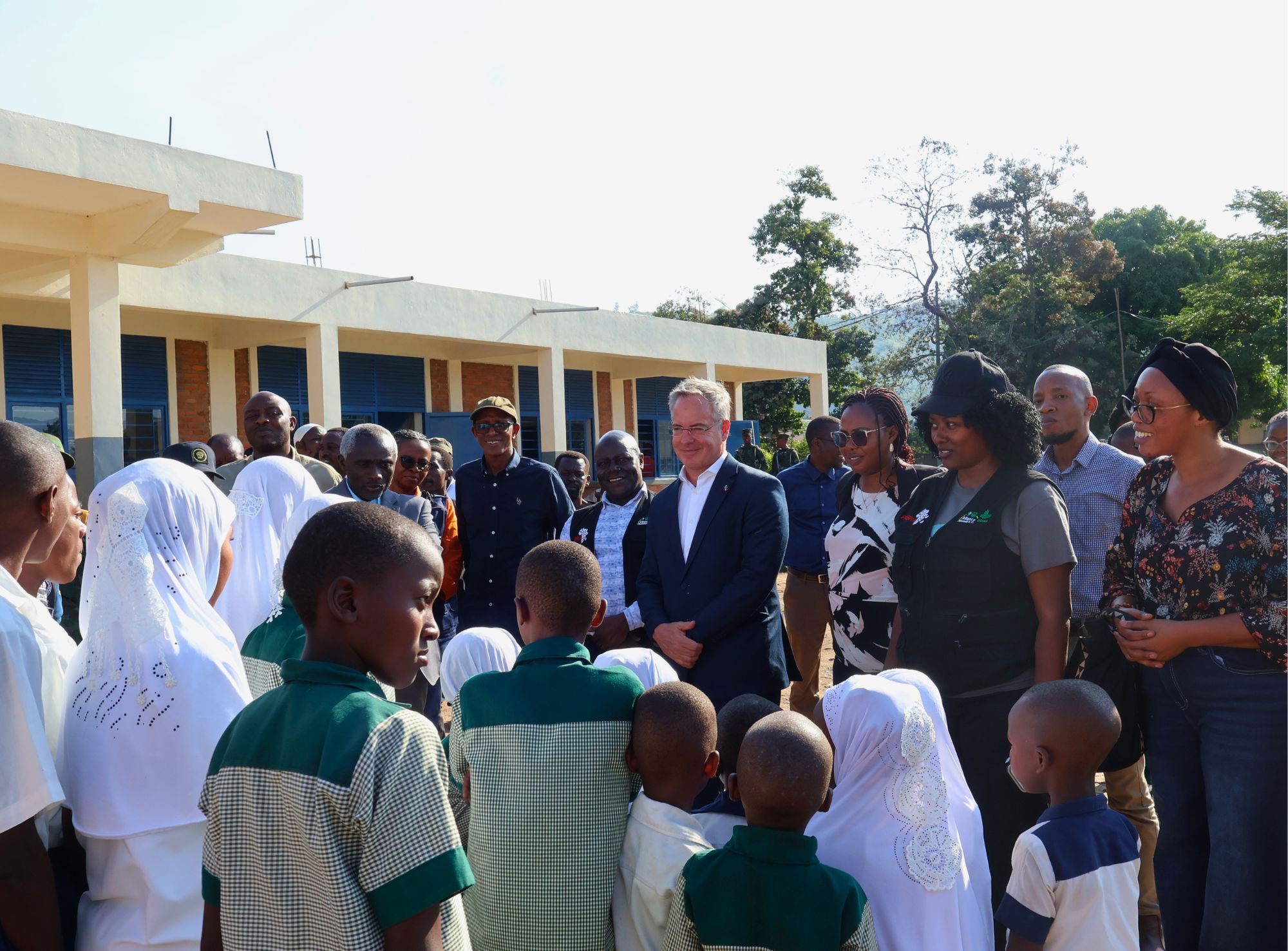
Because Rwanda’s schools require an estimated 22,000 tons of beans annually, long-term success hinges on boosting local production beyond small school gardens. To bridge this gap, the 3SFI model explicitly links schools with surrounding communities.
While schools receive high-iron seeds, fertilizer, lime, soil testing, and training, neighboring households are invited to community demonstration farms to learn the same modern cultivation techniques. The project also integrates nutrition education and post-harvest storage training to reduce crop losses and improve household diets.
Swiss officials view the initiative as both a nutrition intervention and a climate-resilience strategy. Ueli Mauderli, Deputy Head of Mission at the Swiss Embassy in Rwanda, emphasized that the program uses drought-resistant bean varieties and improved soil management to help schools weather climate-related shocks.
Mauderli added that the initiative directly aligns with Rwanda’s Second National Strategy for Transformation (NST2), as well as global Sustainable Development Goals (SDGs) for health (SDG 3) and responsible production (SDG 12).
A Stronger Tool Against Hidden Hunger
Rwanda’s national school feeding program already serves over 1.26 million primary school children. Extensive research across Africa shows that regular, nutritious school meals directly improve student attendance, concentration, and academic performance.
By upgrading an existing staple rather than forcing a dietary overhaul, the 3SFI initiative aims to turn standard school lunches into a powerful weapon against hidden hunger.
For the children in western Rwanda, the change on their plates may seem invisible. It is the same comforting meal, prepared the same way, in the same dining halls. Yet, nutrition experts believe that the extra boost of iron hidden within those beans will make a life-changing difference for their growth, learning, and long-term health.