



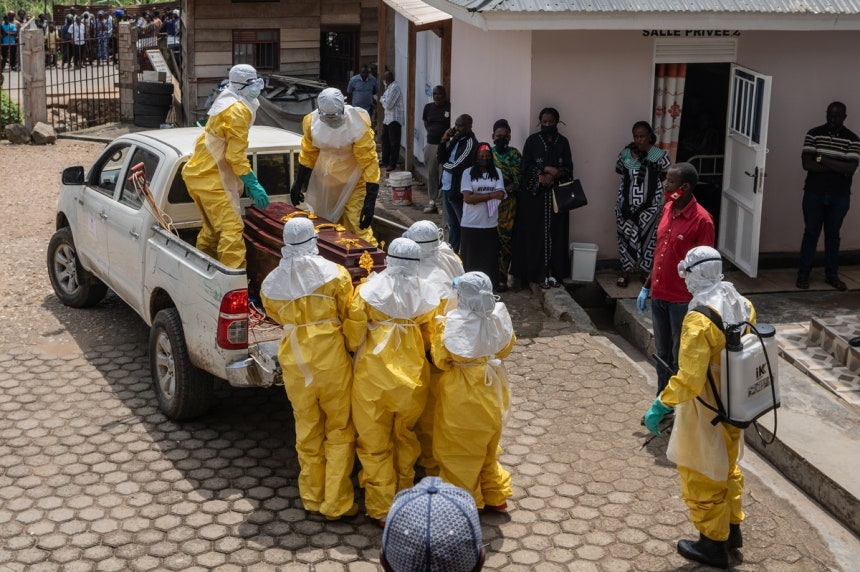
The Government of the Democratic Republic of Congo (DRC) has criticized the World Health Organization (WHO), accusing it of publishing information regarding the Ebola outbreak in a manner that could cause confusion and spread fear among the population.
In a statement released by Patrick Muyaya, the DRC Government Spokesperson and Minister of Communication and Media, he stated that the information published by the WHO regarding Ebola infections does not align with the official figures verified by Congolese health authorities.
He stated that his country already possesses the capacity and experience to combat the Ebola epidemic; therefore, such information should first be harmonized with relevant authorities before being made public. He added that publishing information without adequate clarification could impact the economy, international travel, and the country’s image.
This comes after the WHO expressed concern over new Ebola infections detected in some parts of the DRC, a situation that has prompted some countries to begin tightening screening measures for travelers coming from the region.
The DRC is one of the countries most frequently hit by the Ebola epidemic in recent years, but local authorities state that they have established robust systems to monitor and prevent its spread.
This friction between the DRC Government and the WHO highlights how data regarding epidemic diseases remains a significant communication challenge between international agencies and the affected countries.
Currently, health authorities in the DRC state that there are over 1,000 suspected Ebola cases, including an estimated 220 suspected deaths.
Meanwhile, the World Health Organization (WHO) announced that 1,077 suspected Ebola cases have been recorded in the country (DRC), including 238 suspected deaths.
However, the WHO further notes that 121 people have been laboratory-confirmed to have contracted Ebola, with 17 of them having passed away.
This Ebola outbreak is being caused by the strain known as the Bundibugyo virus, and it continues to spread rapidly, particularly in the provinces of Ituri, North Kivu, and South Kivu.
Fight Against Ebola Virus Could Take Six Months
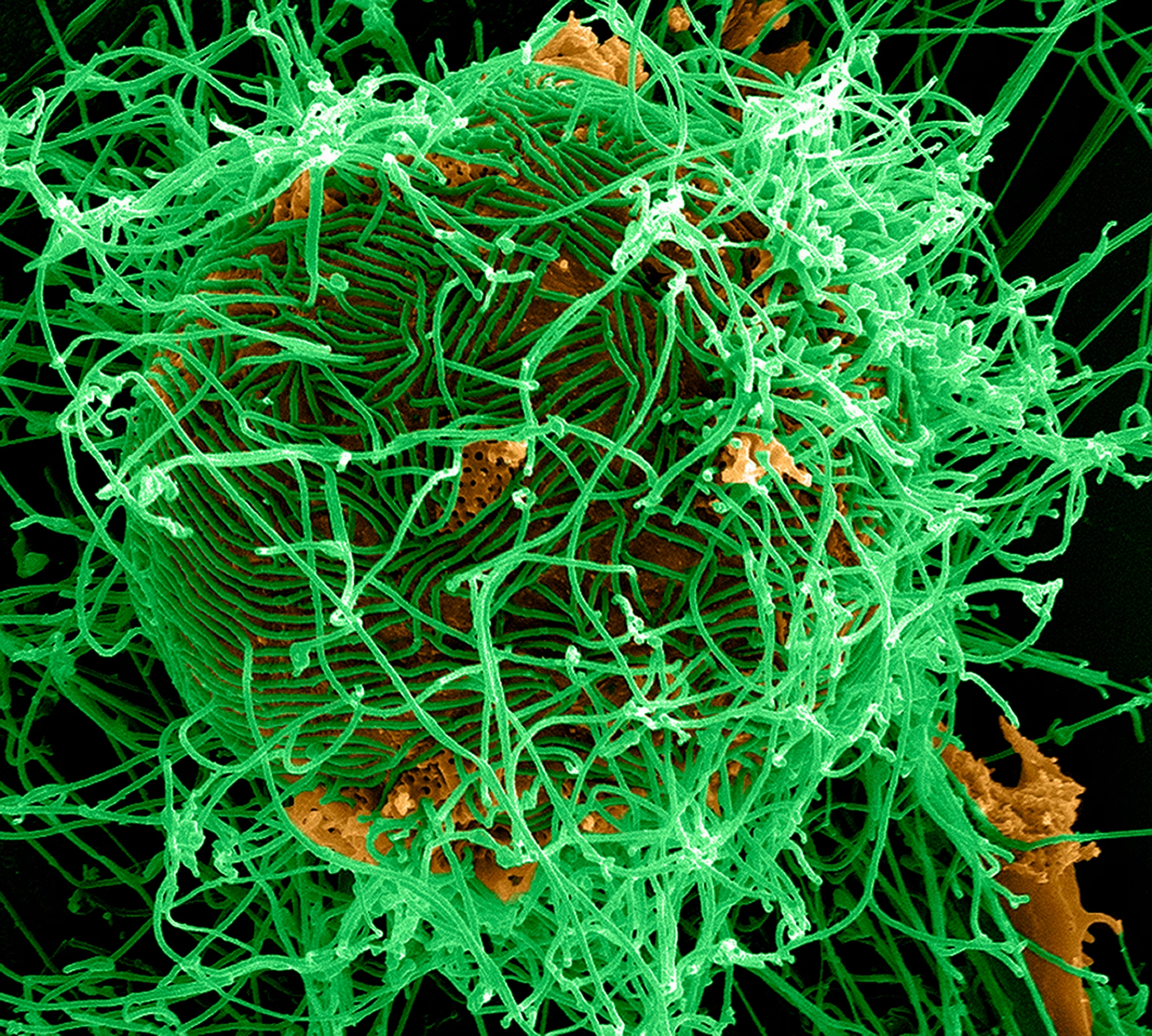
Health authorities in the Democratic Republic of Congo state that around 1,000 people have shown symptoms of the Ebola disease, but so far, only 105 individuals have been laboratory-confirmed.
The epidemic continues to cause concern in the country, while the death toll is currently reported to stand at 223 people. Health officials are heavily focused on contact tracing to identify and monitor individuals who came into close contact with Ebola patients so they can receive proper care.
Presently, the Ebola outbreak has been reported in the regions of Ituri, South Kivu, and North Kivu.
The outbreak is still in its early stages, as it was announced on May 15, 2026, that it had re-emerged in the DRC. The Minister of Health of the Democratic Republic of Congo, Roger Kamba, confirmed that it could take up to six months for his country to bring the epidemic under control.
Minister Kamba announced that currently, about 3,600 contacts of infected individuals are being monitored by medical professionals.
However, he stated that these numbers are still provisional, explaining that the government chose to report the highest possible number of suspected cases while investigations and laboratory tests are still underway.
Minister Kamba stated: “We are still in the early stages of the epidemic… because it is a severe outbreak, we might need six months to bring it to an end.”
The Ebola virus strain named Bundibugyo is the 17th outbreak recorded in the country since 1976. Minister Kamba explained that it is stealthy in its initial stages, meaning it does not manifest immediately like the Zaire virus strains that caused previous Ebola outbreaks in the DRC.
He explained that its initial symptoms can mimic those of malaria, including fever, vomiting, and diarrhea, while bleeding may occur late or sometimes not at all.
He added that there is no approved vaccine or specific treatment authorized to treat the Bundibugyo virus, meaning that supportive care—such as hydration, managing respiratory issues, and addressing anemia (blood deficiency)—is the only available option.
Furthermore, the government plans to employ 60,000 community health workers nationwide starting in July 2026 to boost surveillance capacity for the epidemic and to educate the public on health matters.
No vaccine for this Bundibugyo virus is available yet, as existing vaccines approved by the UN Health Agency, such as ‘Ervebo’, are designed specifically for the ‘Zaire’ strain of Ebola.
However, several vaccines are reportedly in clinical trials and research phases, though none have yet reached the stage of being deployed to combat the Bundibugyo strain. Nevertheless, the World Health Organization (WHO) announced that it is working with various researchers, including those from Russia, who have indicated that new vaccines are being developed and tested specifically to counter the Bundibugyo virus.
