



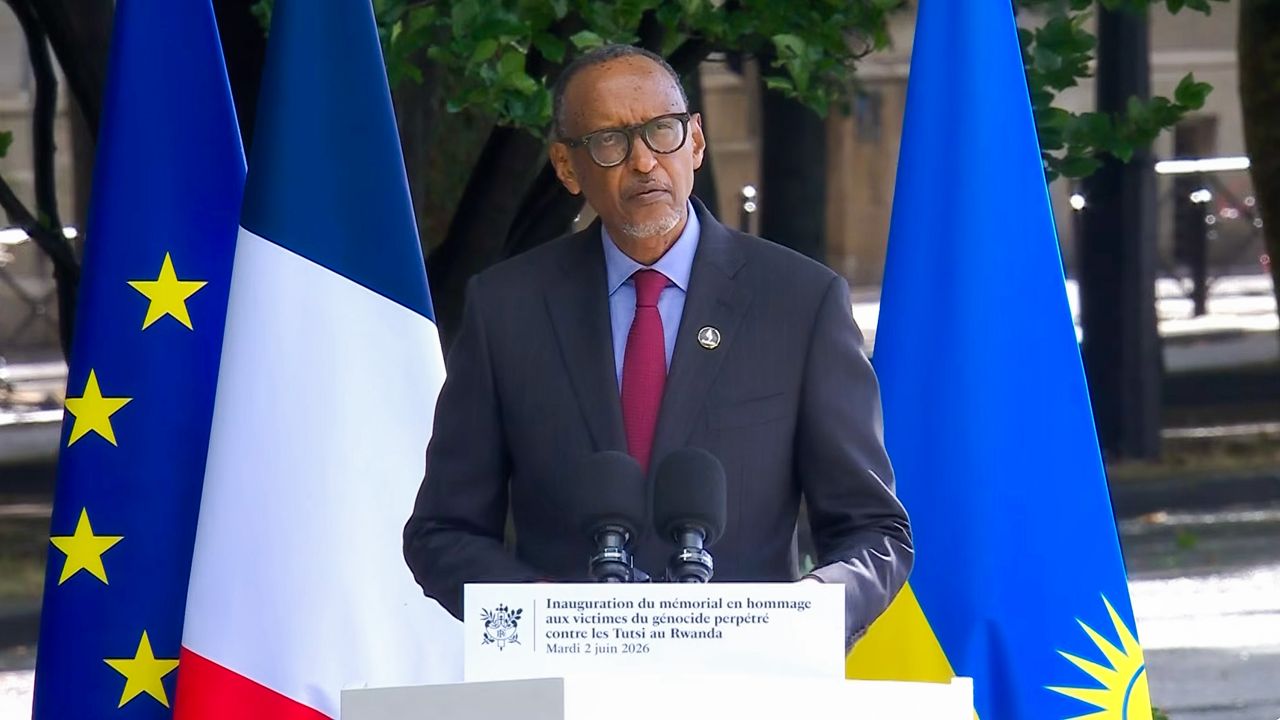
PARIS — President Paul Kagame on Tuesday delivered one of his most politically significant speeches on Rwanda-France relations yet, declaring that truth about the 1994 Genocide against the Tutsi was “more valuable than an apology,” as he joined French President Emmanuel Macron to inaugurate a permanent genocide memorial in Paris.
Speaking at the unveiling of “L’Archive,” a new memorial site along the Seine River dedicated to victims of the genocide, Kagame used the occasion not only to honor survivors but also to frame the evolving relationship between Rwanda and France as one built on difficult truths rather than diplomatic convenience.
The speech marked another important step in the long and often painful process through which France has gradually confronted its role during the genocide.
“Confronting historical responsibilities requires real courage,” Kagame said, directly praising Macron for showing both “courage and humanity.”
Kagame recalled Macron’s 2021 visit to Kigali, when the French president acknowledged that France could have stopped the genocide but failed to do so.
Kagame said that moment fundamentally changed relations between the two countries because it was rooted in honesty.
“In response, I described those words as something more valuable than an apology, namely the truth,” Kagame said.
The line immediately stood out as the defining political message of the ceremony.
For years, debates surrounding France’s role in Rwanda centered around whether Paris should formally apologize for its actions before and during the genocide.
Kagame’s remarks suggest that for Rwanda, acknowledgment of facts and historical responsibility may ultimately carry greater significance than symbolic language alone.
Macron appeared to reinforce that direction in his own speech, strongly defending France’s continuing reckoning with the genocide period while pledging that France would never become a refuge for genocide fugitives.
“And to those who believed they had found on our soil a refuge in time or shelter in oblivion, French justice has found the means to respond,” Macron said later in own address. “No crime against humanity can benefit from statutes of limitation or impunity.”
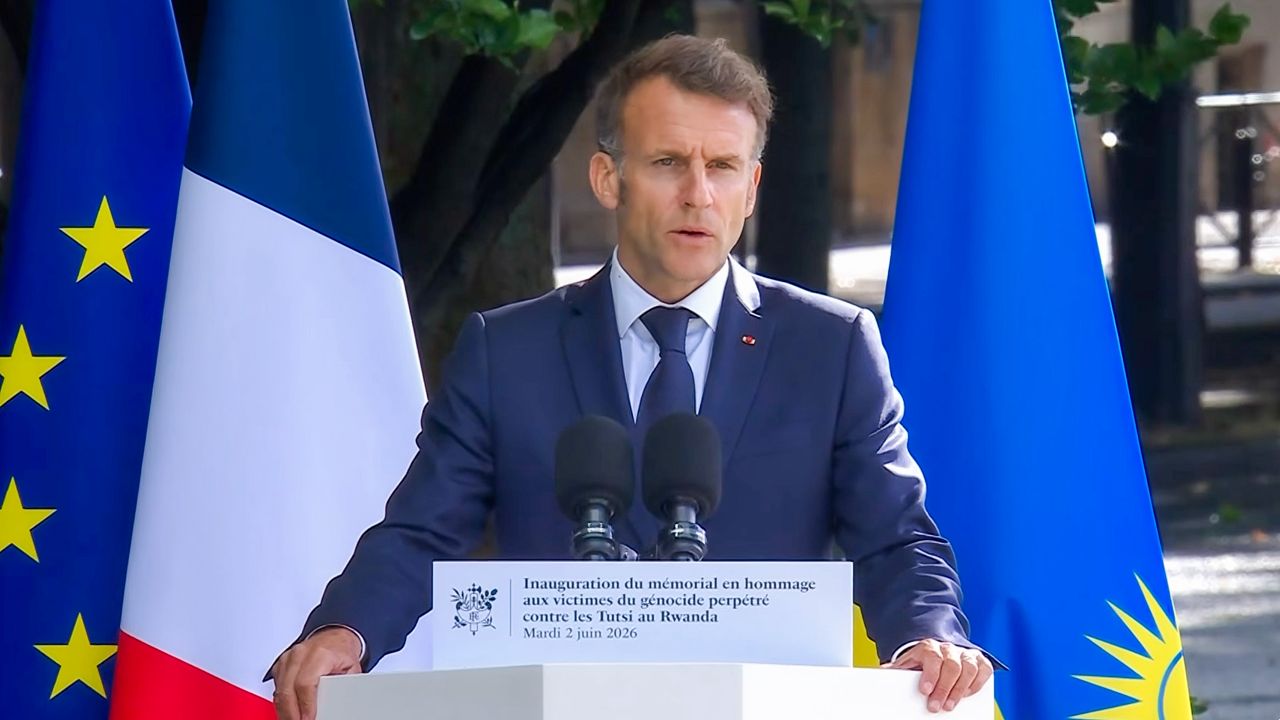
The French president said he stood firmly by the historic words he delivered in Kigali in 2021, when he acknowledged France’s responsibilities in “a chain of events that led to the genocide against the Tutsi.”
“I do not intend to retract any of those words,” Macron said Tuesday. “I have forgotten none of them.”
Together, the speeches by Kagame and Macron reflected how remembrance of the genocide has increasingly become the foundation upon which a new Rwanda-France relationship is being built.
The memorial itself reflects that same philosophy.
Designed by Portuguese artist Grada Kilomba, “L’Archive” was installed on the Esplanade Habib-Bourguiba along the banks of the Seine and is intended as a permanent public space preserving the voices, memories and experiences of genocide victims and survivors.
Kagame described the memorial as powerful because it “sets the truth in stone and protects it from the helplessness of time.”
The significance of such a memorial in the French capital was not lost on the Rwandan leader.
“To witness the installation of such a memorial in a place of honor in this city of Paris is anything but routine,” Kagame said.
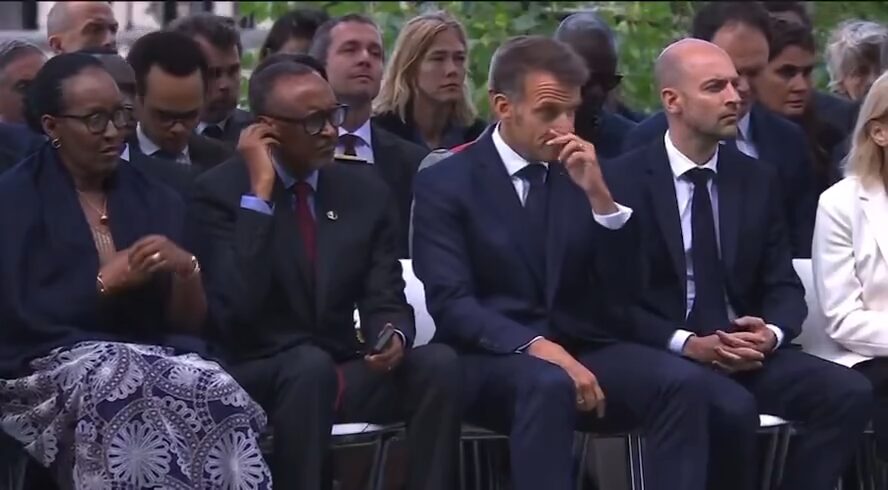
The ceremony brought together senior French political, diplomatic and military officials, genocide survivors, representatives of survivor organizations including Ibuka France, members of parliament and diplomats from several countries.
President Kagame was accompanied by First Lady Jeannette Kagame and senior Rwandan government officials.
The event also featured emotional testimony from genocide survivor Jeanne Uwimbabazi, while Franco-Rwandan musician and writer Gaël Faye participated through a reading of a poem written by genocide survivor and author Beata Umubyeyi Mairesse.
Kagame’s speech also offered rare public recognition of French political figures and civil society actors who pushed for greater transparency about France’s actions in Rwanda.
He paid tribute not only to Macron, but also former President Nicolas Sarkozy, whose 2010 Kigali visit first opened the door to France publicly acknowledging “serious mistakes” during the genocide period.
He also praised French journalists, activists and researchers “who never wavered in exposing the truth,” saying their efforts helped preserve dignity for victims and survivors.
Yet Kagame’s speech was not framed as complete closure.
He acknowledged that many genocide survivors and advocates remain dissatisfied with the official historical record and admitted that “at some points we still have not found consensus.”
At the same time, he argued that the process underway between France and Rwanda had become irreversible.
“I believe that our common work has initiated a journey towards the truth, which is irreversible,” Kagame said.
In one of the speech’s most notable moments, Kagame broadened responsibility beyond France, arguing that many countries failed Rwanda in 1994. But he singled out France as having gone further than others in confronting its past.
“France was not alone in falling short, far from it,” he said. “Many other countries did so as well, but none has gone as far as France in setting the record straight and accepting its part in the tragedy.”
Macron meanwhile warned against modern forms of hatred and genocide denial, drawing parallels between the propaganda that fueled the genocide and contemporary digital extremism.
“Behind our screens there are other Radio Mille Collines,” Macron warned. “Let us open our eyes.”
The remarks reflected the remarkable transformation in Rwanda-France relations over the past decade.
Once defined by accusations, diplomatic breakdowns and mutual distrust, ties between Kigali and Paris have steadily improved following the release of two major historical reports in 2021 — one commissioned by France and another by Rwanda — both concluding that France bore heavy responsibilities during the genocide era.
Tuesday’s memorial inauguration now places remembrance itself at the center of the new relationship.
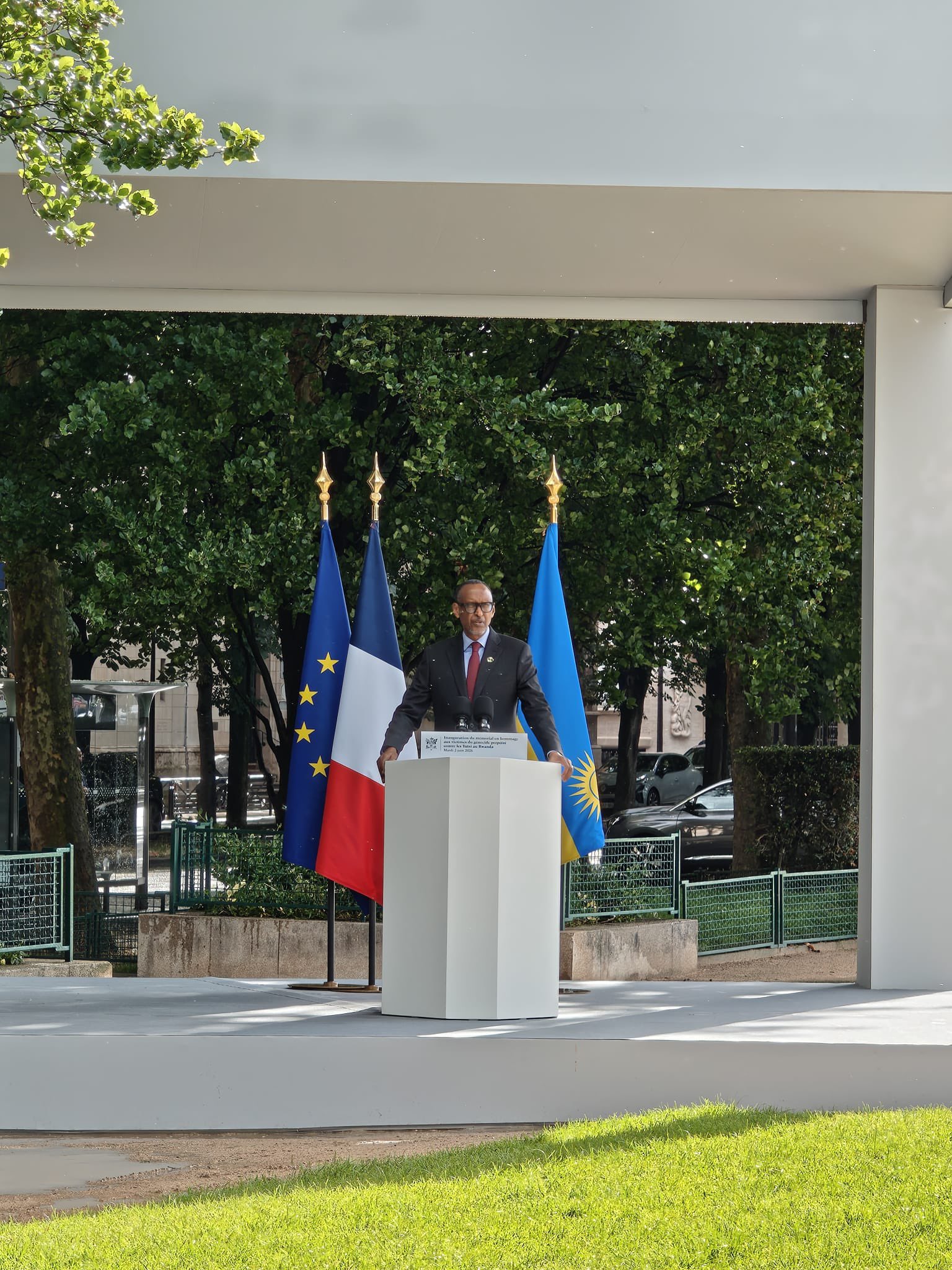
Kagame used the ceremony to make a broader point about leadership and political will, arguing that confronting painful history is rare in global politics.
“Overcoming history requires political will on our sides, and in today’s world, that is uncommon,” he said.
For Rwanda, the opening of the memorial during the Kwibuka32 commemoration period carries symbolism extending beyond bilateral diplomacy.
It represents recognition — in one of Europe’s most influential capitals — that the memory of the Genocide against the Tutsi belongs not only to Rwanda, but to global history itself.
