A former intelligence chief of the Rwandan FDLR militia in the Democratic Republic of Congo has revealed chilling details about how the group has sustained its deadly presence in the forests of eastern Congo for more than three decades.
He alleges that the militia finances its operations through a vast criminal economy that includes gold mining, timber, charcoal and a thriving cannabis trade, claiming that personnel serving with the United Nations peacekeeping mission, MONUSCO, were its biggest cannabis customers.
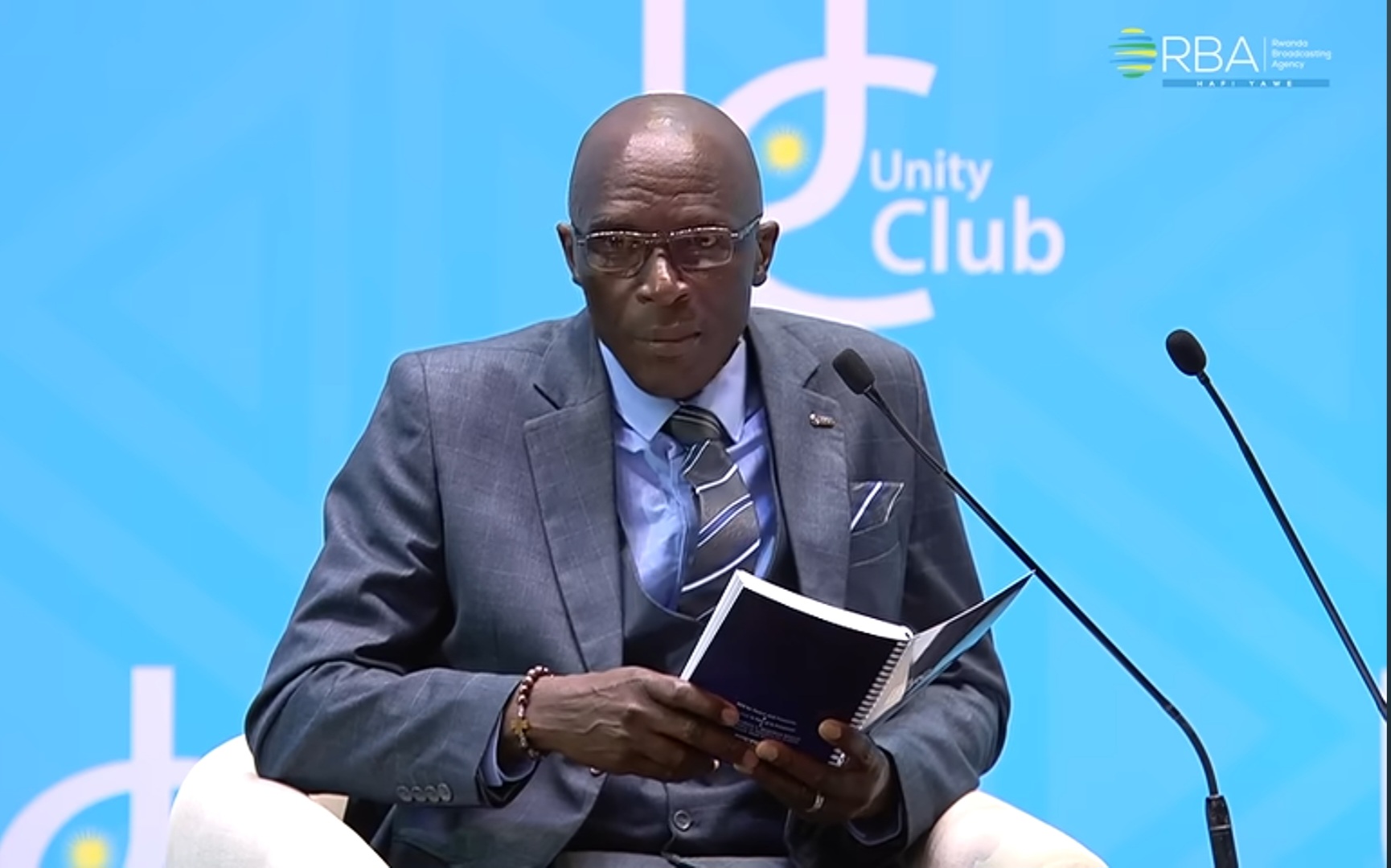
Colonel Augustin (Rtd) Nshimiyimana, alias Bora Manasseh, made the revelations during a public dialogue on the legacy of the 1994 Genocide against the Tutsi and the military campaign that ended it. The event was organized by Unity Club Intwararumuri on June 27, 2026.
Bora is among the highest-ranking former FDLR officials to publicly discuss the inner workings of the militia. Before leaving the group, he served as its Deputy Chief of External Intelligence since 2012, overseeing intelligence operations outside the movement.
His public appearance came five years after his capture in eastern Democratic Republic of Congo.
In June 2021, he was arrested by other local rival militias while attending a children’s baptism ceremony at a church in Ngungu, Masisi Territory, where he lived with his wife.
Bora was later transferred to Rwanda, where he has since publicly shared details about the FDLR’s command structure, financing and external support networks.
According to Bora, the FDLR has survived not only through military backing from the governments of the Democratic Republic of Congo and Burundi, but also by building an extensive criminal business empire across eastern Congo.
“The largest share of our income came from mineral extraction,” he said.
One of the group’s most lucrative operations, Bora explained, was centered in Oninga, a historically significant but highly isolated mining and agricultural enclave within the Usala Groupment in northern Walikale Territory, North Kivu Province.
Rich in gold deposits and largely beyond effective government control, the area has for years served as a strategic stronghold for armed groups, including the FDLR.
According to Bora, more than 30,000 artisanal miners operated in Oninga under FDLR control.
“Every miner was required to pay half a dollar every month,” he said.
“They also had to buy food from FDLR positions, and instead of paying in cash, they settled their dues with minerals.”
“Any gold they found had to be sold exclusively to the FDLR—they were not allowed to sell it to anyone else.”
Bora said the militia also generated substantial income from logging.
“There are valuable tree species such as bois rouge and African mahogany,” he said.
“We cut them down and loaded them onto trucks. Some were transported to Uganda, while others went to Goma and Bukavu.”
He said charcoal production was another profitable business.
“Goma is a very large city, and much of the charcoal sold there originated from areas controlled by the FDLR.”
“Truck owners transporting the charcoal were required to pay taxes to the group.”
Cannabis Business
Bora said cannabis cultivation had become one of the FDLR’s best-organized commercial enterprises.
“The FDLR knows very well how to cultivate cannabis,” he said.
“In a place called Kobo, virtually nothing else is grown apart from cannabis.”
“Some of the harvest was transported to Goma, some continued to Kisangani, while another portion was sold to MONUSCO personnel, who concealed it among their luggage before loading it onto aircraft.”
He further alleged that MONUSCO personnel supplied the FDLR with equipment because of their commercial dealings involving cannabis and minerals.
“MONUSCO was among those who supplied us with equipment because we were connected through the cannabis and mineral trade that we conducted with them,” Bora said.
United Nations investigations have previously identified cannabis cultivation as one of several revenue streams used by the FDLR alongside gold mining, timber and charcoal.
Although there is no verified estimate of the group’s direct earnings from cannabis alone, UN experts have estimated that the cannabis trade in areas under FDLR influence has generated millions of dollars in annual trade value, making it one of the militia’s significant sources of financing.
Colonial-Era Border Markers
Bora also alleged that the FDLR cooperated with MONUSCO teams involved in recovering colonial-era border markers buried by Belgian and German authorities.
“Whenever they came to excavate those markers in areas under our control, they had to arrive with food, medicine, money they were required to give us and ammunition,” he claimed.
“They would spend two or three days carrying out the work before flying out without any confrontation.”
Beyond its commercial activities, Bora alleged that the FDLR continues to receive logistical support from the Government of the Democratic Republic of Congo.
He claimed that FDLR fighters receive salaries, food and medical supplies from the administration of President Félix Tshisekedi, similar to the support provided to members of the Congolese armed forces (FARDC).
He also alleged that the militia receives financial support from European sources.
The FDLR was formed in 2000 by remnants of the former Rwandan army (ex-FAR) and Interahamwe militia responsible for the 1994 Genocide against the Tutsi.
Despite repeated military offensives over the past three decades, the group continues to operate in parts of North and South Kivu, financing its activities through mineral exploitation, illegal taxation, timber, charcoal, cannabis and other illicit commercial enterprises.