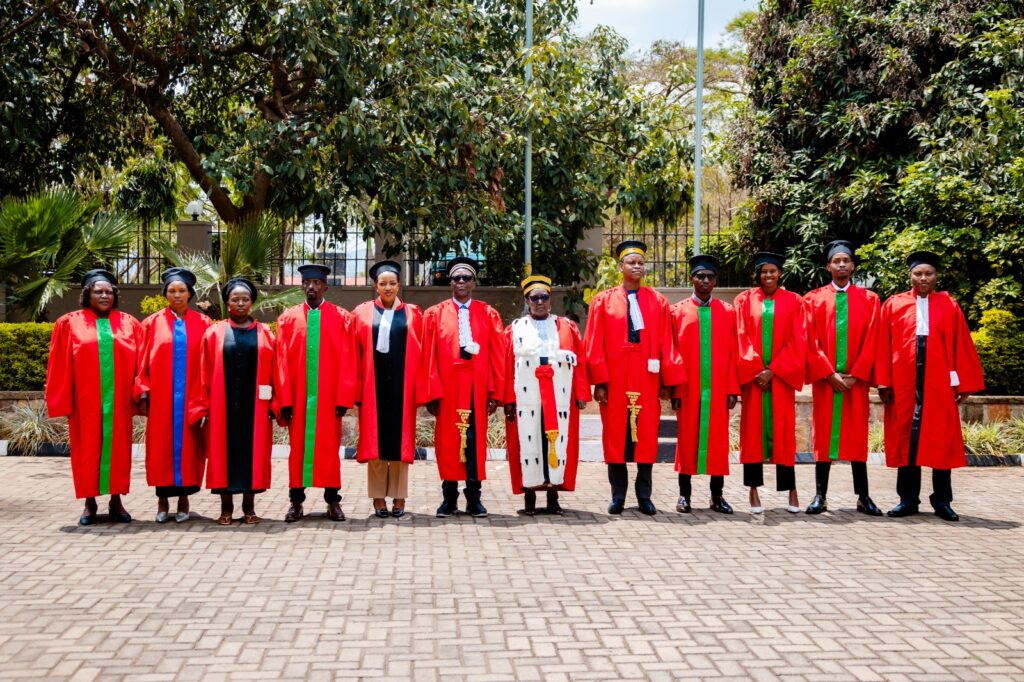



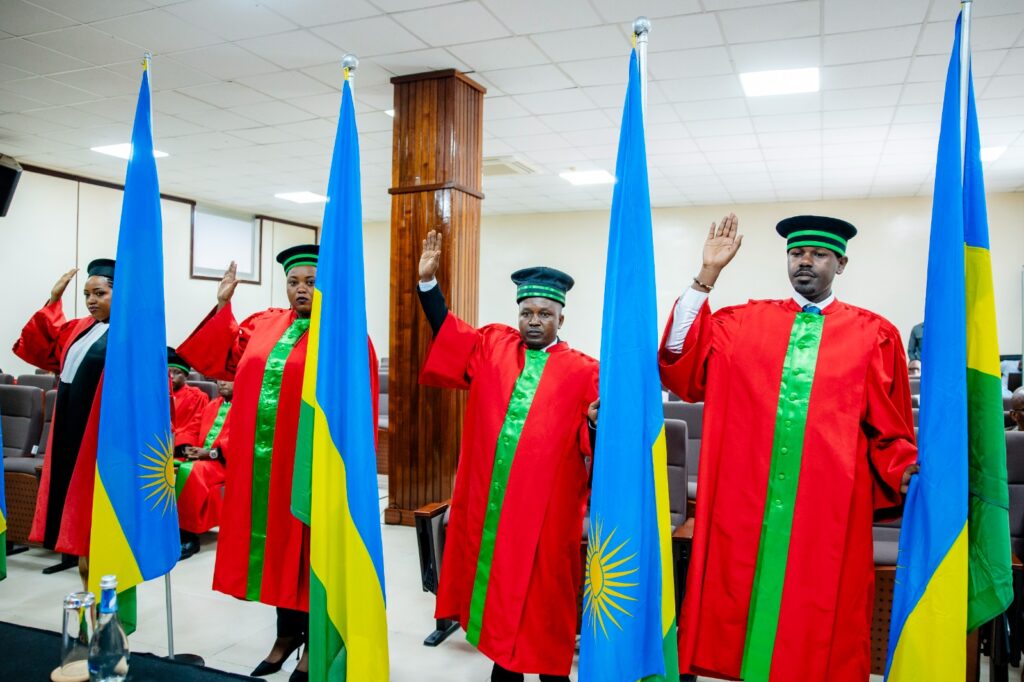
Some of Rwanda’s newly sworn-in judicial officials taking their oaths.
KIGALI – When a judge gets a case wrong, it does not simply fail the people before the court. The decision can send the dispute into another round of litigation, adding to an already existing backlog.
That was the warning from Rwanda’s Supreme Court President Domitilla Mukantaganzwa as she challenged newly sworn-in judicial officials to take their responsibilities seriously.
Mukantaganzwa delivered the message on Thursday, October 15, after presiding over the swearing-in of seven judges and eight court registrars, telling them that poor decisions can deepen the very problems the judiciary is expected to resolve.
“Whenever you take wrong decisions, instead of solving problems, you increase them,” she said, pointing to appeals as one consequence of misjudgments that add to the burden facing the courts.
Her warning was accompanied by a pointed reminder that professional misconduct has consequences. She cited cases where officials have previously been dismissed from the judiciary for reasons including ethical failures, poor performance and ignorance.
She urged the incoming officials to uphold the standards expected of people entrusted with administering justice, cautioning them against corruption and nepotism.
“In order to give true justice, we are expected to desist from all forms of corruption, nepotism,” she said.
Citizens Must Receive Timely, Professional Service
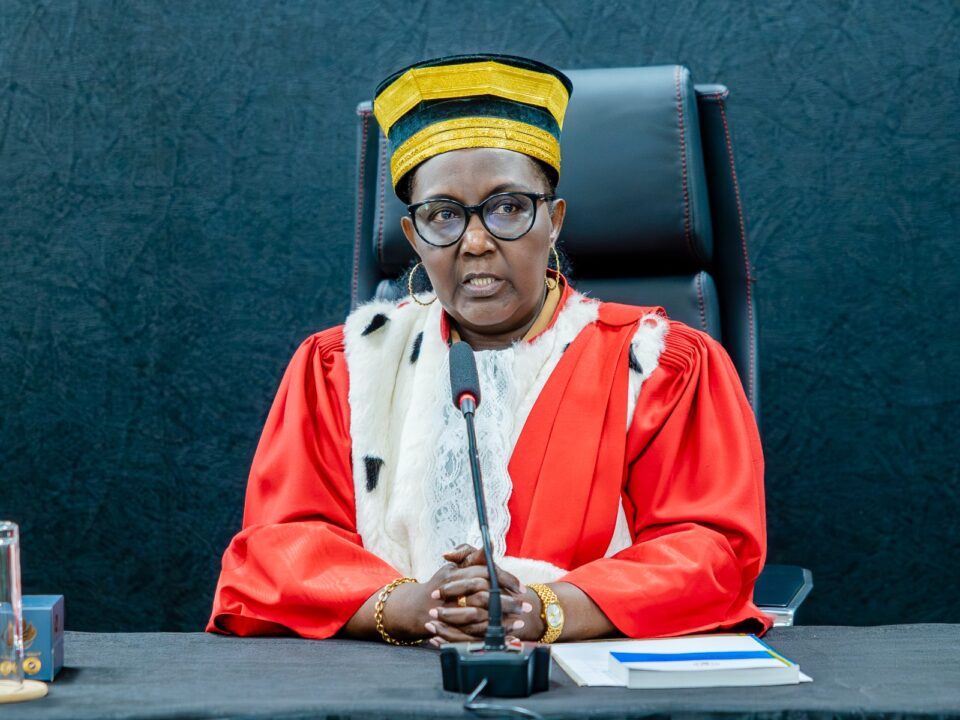
Supreme Court President Domitilla Mukantaganzwa.
Beyond the quality of judicial decisions, Mukantaganzwa challenged the officials to improve the way courts serve members of the public.
She called on them to receive people with humility and professionalism, warning against situations in which citizens arrive at court early in the morning but leave in the evening without receiving assistance.
“No one should come to your office very early in the morning and leave in the evening without being attended to. You should plan your schedules around their ability to handle cases, rather than summoning people to court and leaving them waiting without being heard,” she said.
In her view, access to justice involves more than the formal right to bring a case before a court. It also requires timely attention, professional treatment and decisions that address disputes rather than prolong them.
Mukantaganzwa described primary courts as the foundation of the justice system, noting that the other levels of the judiciary stem from them. She consequently stressed the importance of delivering good service in the courts where most of the newly sworn-in officials will work.
Teamwork in Delivering Justice
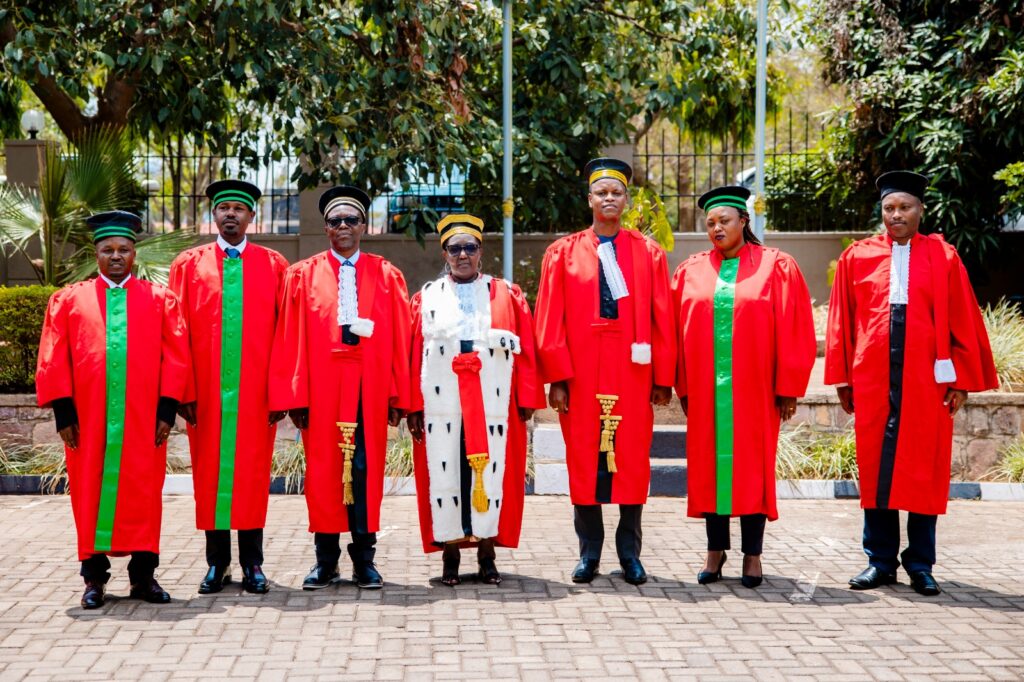
The Supreme Court President also called for cooperation between newly appointed officials and experienced colleagues, urging them to consult one another and remain open to guidance.
She said judicial work requires collective responsibility, particularly when officials are deployed to institutions where other staff members are already serving.
The 15 officials comprise three primary court presidents, four primary court judges and eight court registrars. Of the registrars, one is assigned to the High Court and seven to primary courts.
Mukantaganzwa urged all of them to remain faithful to the oaths they had taken, stressing that judicial responsibility must be exercised genuinely and wholeheartedly.
For the new officials, she said, the central obligation is to ensure that justice is not only administered but is also seen to be administered in the decisions they make and the service they provide to the public.