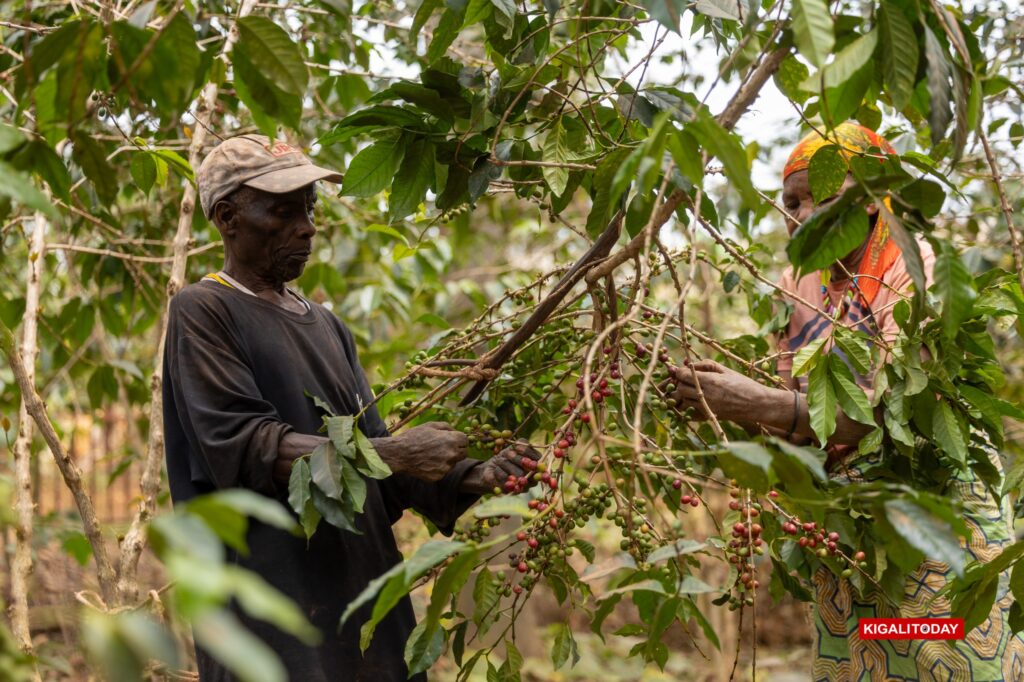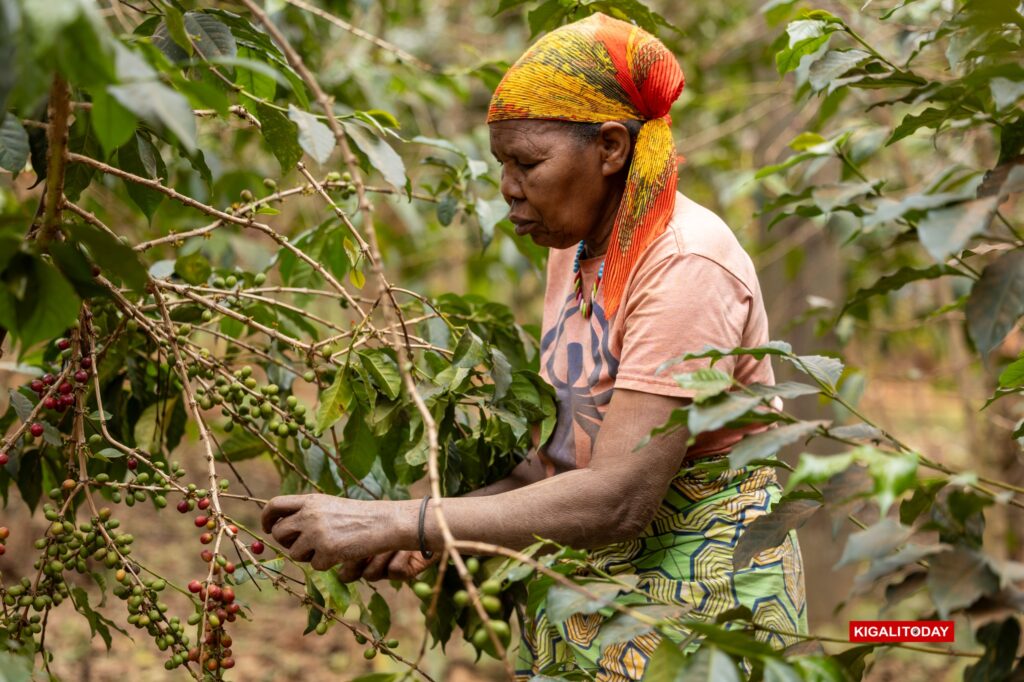

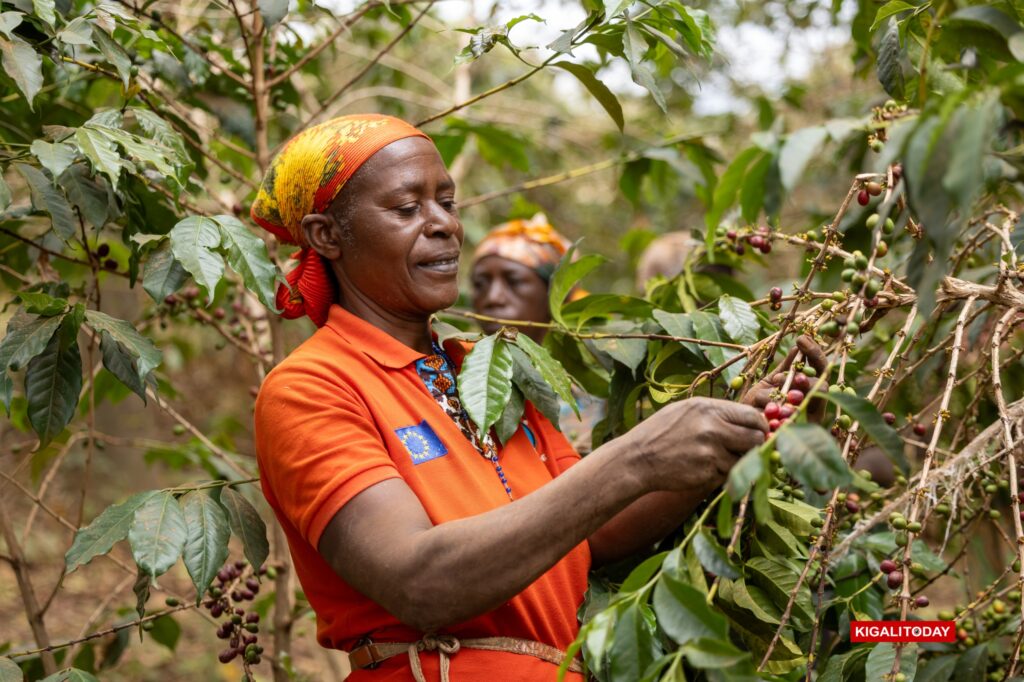
Lawrence Mukakabera, a coffee farmer in Gakenke district.
KIGALI – For Lawrence Mukakabera, a coffee harvest is a source of income, a reward for months of tending her crop and, increasingly, a connection to markets thousands of kilometers beyond the hills of Gakenke district.
A member of Kunda Kawa Musasa Cooperative, Mukakabera sells her harvested coffee to the cooperative, earning an income that depends on the quantity she delivers. She knows that the quality of what she grows matters far beyond her plantation.
“Knowing that the coffee I work hard to cultivate and harvest can reach distant markets, including China, gives me additional motivation to improve my work and contribute to Rwanda’s foreign exchange earnings,” she says.
For farmers like Mukakabera, the opening of new export opportunities raises an important question of how growing international demand can translate into more reliable incomes at home.
China’s zero-tariff policy for eligible Rwandan exports offers a new possibility.
According to KT Press wide ranging reporting, Rwanda’s access to China’s zero-tariff policy began on December 1, 2024, following an announcement by Chinese President Xi Jinping at the September 2024 Forum on China-Africa Cooperation summit in Beijing.
The policy removed import duties on 100% of tariff lines for Rwanda and other eligible African least-developed countries with diplomatic relations with China.
It was intended to expand African exports, strengthen trade ties and support economic development by making African products more competitive in the Chinese market.
In June 2025, China announced plans to extend the zero-tariff treatment to all 53 African countries with which it has diplomatic relations.
Back to the farmers, between the coffee cherries on Mukakabera’s plantation and a cup served to a consumer in China lays a demanding chain of production, processing, quality control and logistics that will determine how much Rwanda can gain.
The Journey Begins in The Hills
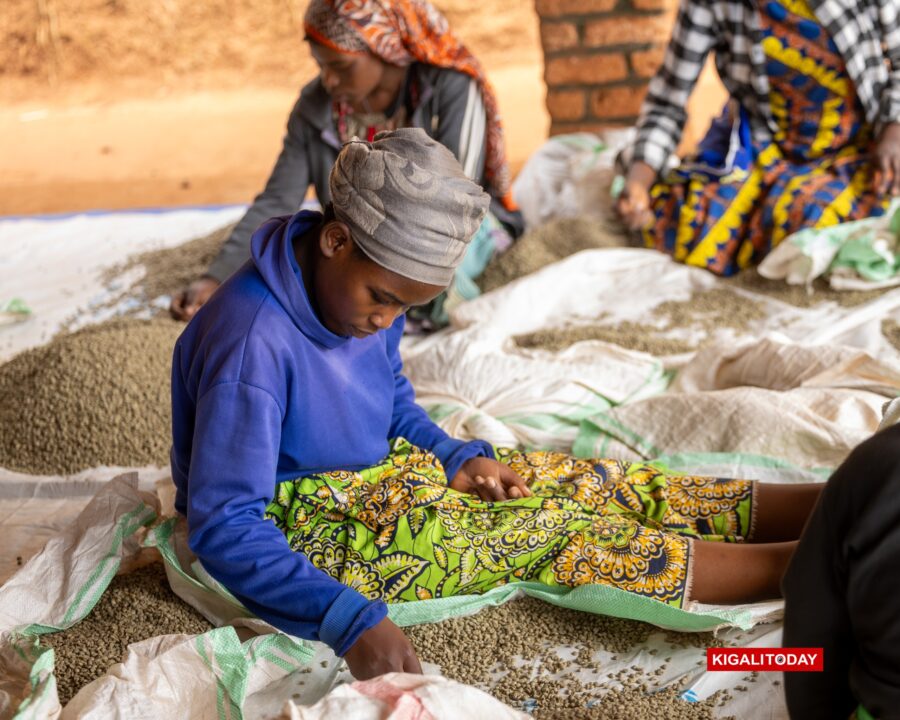
Ernest Nshimimana, Director of Kunda Kawa Musasa Cooperative, says the country has established its position in international markets by focusing on premium coffee rather than competing on production volumes.
“Rwandan coffee is having a strong market and a good reputation in the world coffee market. We are one of the leading coffee producers in terms of quality, not in terms of the volume,” he says.
The cooperative also heavily relies on the traceability of its coffee and the stories behind each cup, attributes that help distinguish Rwandan beans in a competitive international market.
Nshimimana sees China’s opening as an opportunity to build on that reputation and diversify the cooperative’s customer base beyond established markets in Europe and North America.
“We take it as another additional opportunity to grab so that we can expand our market portfolio,” he says, adding that producers must also increase the volumes they can supply while maintaining quality.
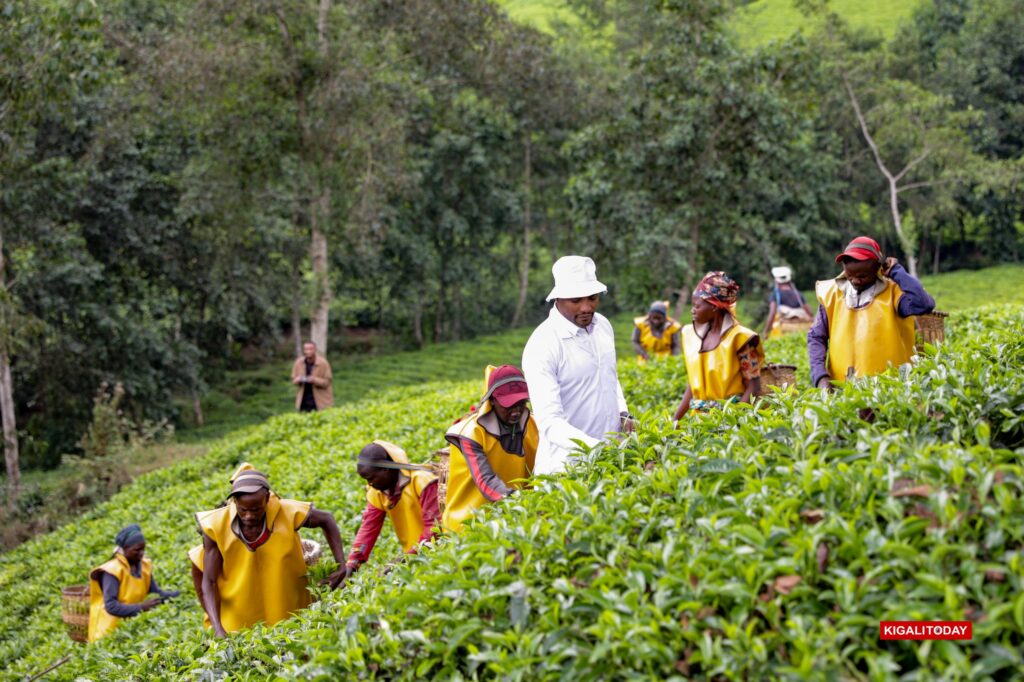
The same equation applies to Rwanda’s tea industry, where international competitiveness is determined long before a shipment leaves the factory.
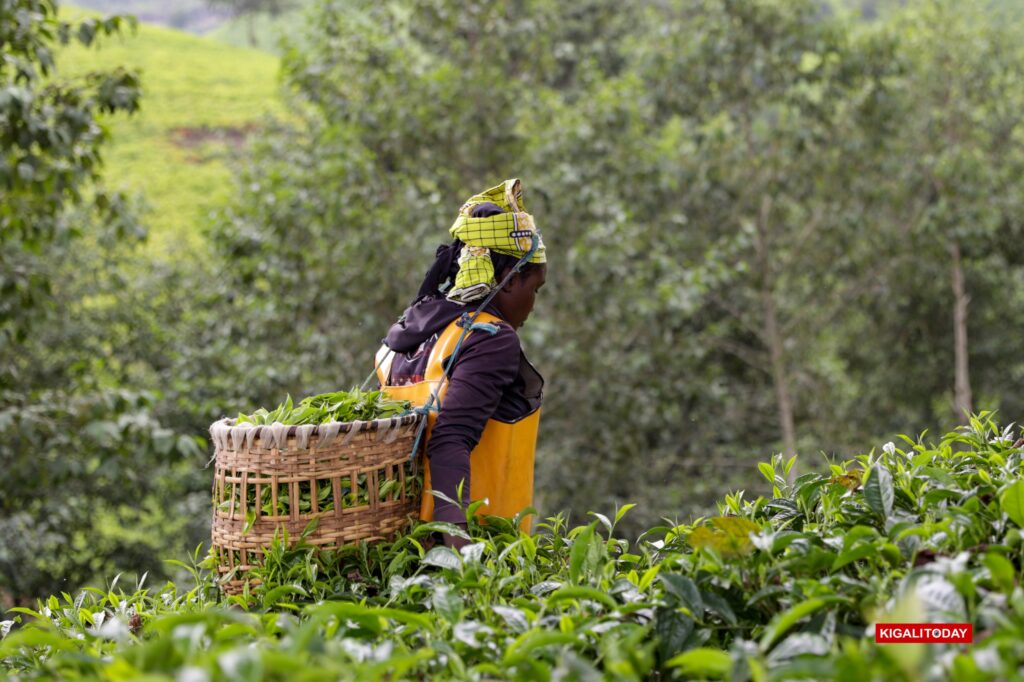
At Rubaya Tea Factory, workers hand-pluck tea leaves, selecting a bud and two leaves before the harvest passes through collection centers for sorting and onward processing. Emile Mukiza, the factory’s director, says production is organized around maintaining both quality and quantity.
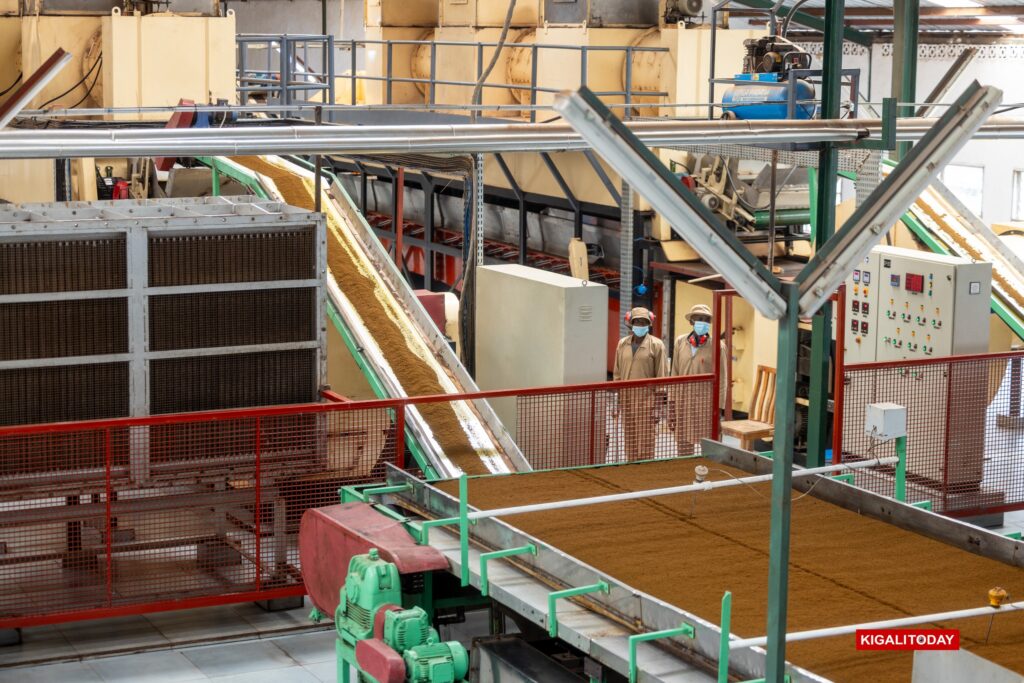
At the factory, the leaves undergo withering to remove moisture and prepare them for the development of their body and aroma before drying, cooling, grading and packaging.
The drying process reduces moisture content to about three per cent before the tea is prepared for dispatch, he explains.
These stages are essential to maintaining the consistency buyers demand, but the opportunity to reach new consumers also depends on whether Rwandan tea can compete commercially in their markets.
Dr Martin Luther Mawo, Director of sales and marketing at Rwanda Mountain Tea, says the company began exporting tea to China after identifying market opportunities and receiving interest from Chinese buyers.
Mawo expects the removal of tariffs to strengthen the company’s ability to expand sales in China, where it sees room for greater business.
“And we know that with this zero tax, we can export more than we were expecting before. Because, you know, when you remove the barrier, you increase the flow of businesses,” he says.
Yet, increased market access does not automatically translate into successful exports. Products must reach buyers on time, comply with regulations and arrive with the documentation required to clear international markets.
Julie Mutoni, Deputy Group CEO of logistics and transport company Multilines Rwanda, says China is already one of the company’s busiest trade routes, with cargo moving in both directions. Since implementation of the zero-tariff policy, she has observed an increase of approximately 10 per cent in the number of shippers sending cargo to China.

Julie Mutoni, Deputy Group CEO of logistics and transport company Multilines Rwanda.
She notes that perishable products require careful management of their shelf life, while incomplete paperwork or failure to meet market requirements can prevent shipments from reaching their destinations.
For producers and exporters, logistics and compliance are therefore integral to turning a promising market into a profitable one.
At the policy level, Rwanda is seeking to build trade relationships that support its wider ambitions for export growth and industrial development.
Chantal Tuyishimire, the Permanent Secretary at the Ministry of Trade and Industry, says the country has pursued trade and investment arrangements with partners where stronger commercial relationships could expand existing flows.
“We just had to make sure we start agreeing with different countries that we know we have good trade flows, and increase even the bigger margins, which is where China comes in,” she says.

Chantal Tuyishimire, the Permanent Secretary at the Ministry of Trade and Industry.
She also points to Chinese investments in sectors including textiles and agro-processing as part of the broader economic relationship between the two countries.
China’s zero-tariff policy can remove one obstacle, but the benefits depend on demand, production capacity, quality and the ability of businesses to deliver competitively.
For Rwanda, the opportunity is to turn improved market access into lasting export growth. For the farmers at the beginning of the supply chain, the real promise lies in making sure that growth reaches the hills where the journey begins.
Watch full video below: