

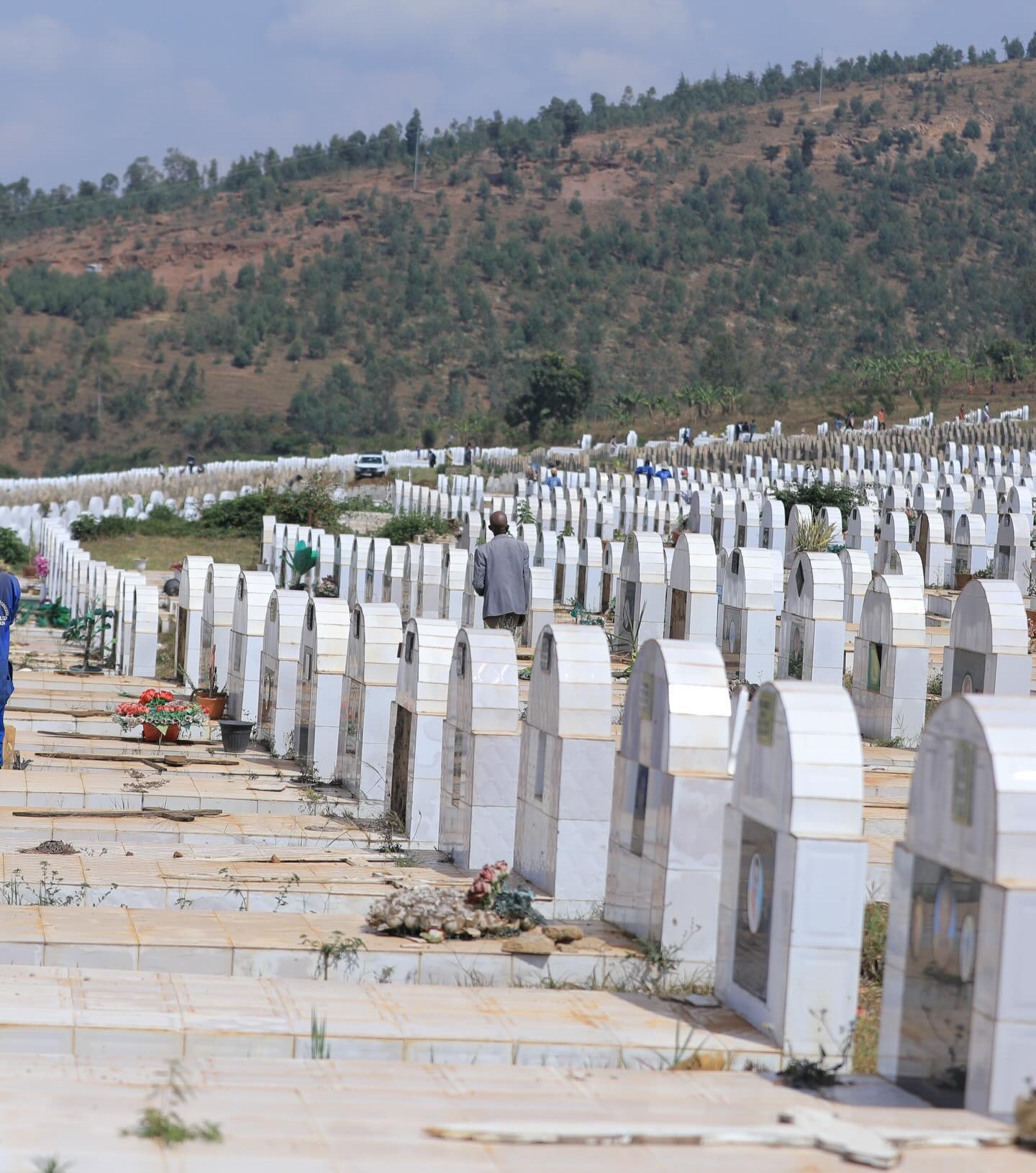
Rusororo Cemetery, which was originally expected to operate until 2029, is now projected to reach capacity sooner.
KIGALI – Rwandans may no longer be allowed to build concrete graves or use tiles to finish burial structures under new land-use regulations issued by the National Land Authority (NLA).
The rules prohibit concrete structures and tiled finishes in designated cemetery and crematoria zones, whether below or above ground. They also state that permanent structures are not allowed in these areas.
The restriction is contained in the second edition of the Land Use Master Plans’ Zoning Regulations, a document published in September 2026. It sets out what can be built, where development is allowed and which activities require special approval or are prohibited.
The cemetery provisions are among several changes affecting how Rwandans use their land, from building homes and commercial properties to establishing schools, hospitals, factories and agricultural facilities.
In Rwanda, burials generally take place in designated cemeteries rather than in family compounds or backyards, as is customary in some societies. Families typically pay for a plot or burial space, with fees varying from one location to another.
The cemeteries contain a wide range of grave designs. Some graves are elaborate structures resembling monuments, while others are modest: a raised patch of soil, sometimes marked with a simple cross to identify the burial place.
The differences in size and design often reflect the financial means of the bereaved family, with some able to afford elaborate structures while others opt for simpler graves.
The new rules do not, however, explain whether concrete graves already in existence must be removed or whether the restriction applies only to new construction.
What exactly is prohibited in cemeteries?
Under the regulations, cemeteries and crematoria are classified as Public Facilities Zone PF6.
The permitted activities include cemeteries, crematoria, facilities such as pavilions and service rooms, and green spaces. However, the document adds that permanent structures are not allowed.
It specifically lists concrete structures and tiled finishes, both underground and above ground, among prohibited uses.
In practical terms, this could affect families who traditionally construct concrete tombs, build raised concrete structures over graves or use tiles to finish burial places.
The rules also prohibit industrial, commercial and residential activities within land designated for cemeteries and crematoria.
Some supporting facilities may be allowed after assessment. These include accommodation for cemetery caretakers, public facilities such as toilets and prayer halls at crematoria.
The regulations also address the location of cemeteries near wetlands. They require an environmental impact assessment where a cemetery is near a wetland and prescribe a buffer distance of 200 to 300 metres.
The document does not explain the environmental or public-health reasoning behind the specific prohibition on concrete graves. That is an issue the NLA may need to clarify, particularly because the rule touches on burial practices and family traditions.
Why has Rwanda introduced the new regulations?
The new document is not a separate national land-use master plan. It is an updated set of rules intended to guide the implementation of existing plans, including the Kigali City Master Plan and District Land Use Plans.
The country has a National Land Use and Development Master Plan covering the period 2020 to 2050. It sets out how land should be allocated for housing, agriculture, industry, infrastructure, environmental protection and other activities.
The zoning regulations translate that broad plan into practical requirements for individual plots.
For example, a person may own land but cannot automatically decide to build a factory, shopping centre or apartment block on it. The type of development allowed depends on the zone in which the plot is located.
The rules divide land uses into three categories: permitted, conditional and prohibited.
Permitted activities can proceed subject to applicable requirements. Conditional activities require assessment and approval by the City of Kigali or the relevant District One Stop Centre. Prohibited activities are not allowed in the designated zone.
The second edition updates and consolidates the earlier regulations. NLA officials have said the changes are intended to harmonise the implementation of Kigali’s master plan with district land-use plans, refine land-use categories and strengthen control over development.
The changes were announced during Rwanda Architecture Week in October.
Schools and health centres can be built in residential areas

One of the changes with a direct impact on residents concerns access to schools and health facilities.
Under the revised rules, education and research facilities (PF1) and health facilities (PF2) are permitted uses in all residential zones.
This means that schools, research institutions and health facilities can be accommodated in areas designated for housing, subject to the other applicable development requirements.
The change follows concerns that some residents have difficulty accessing essential services because nearby areas were not designated for schools and health centres.
Other public facilities have different requirements. Religious facilities, cultural and memorial sites, and sports and leisure facilities are conditional uses in residential areas. They must undergo assessment and receive approval before development.
The intention is to make essential services more accessible while ensuring that facilities are suitable for the neighbourhoods in which they are built.
New conditions for luxury homes

The regulations also introduce specific conditions for high-end luxury villas and mansions in residential areas.
Such properties are now treated as conditional uses. This means that owners and developers cannot assume that they can construct them simply because they own a residential plot.
The proposed development must first be assessed and approved by the relevant planning authority.
The assessment is intended to establish whether the project is compatible with the surrounding area and meets applicable planning requirements.
This is particularly relevant for large properties that may include extensive gardens, swimming pools, guest houses, gyms and other facilities.
What the rules mean for people building houses
The regulations also provide requirements governing building heights, plot coverage, density, parking and the distance buildings must maintain from roads and neighbouring properties.
For example, the rules distinguish between low-density residential areas, rural residential zones and areas planned for higher-density housing.
A plot in a low-density residential area may have different building-height and development requirements from one in an area planned for apartments and other multi-family housing.
The regulations also encourage mixed-use development, where residential buildings, shops, services and other compatible activities are located closer to one another.
They place emphasis on pedestrian access, public transport and the provision of green spaces.
For someone planning to build a house, this means that checking the zoning classification of a plot is important before purchasing land or preparing construction plans.
A person who buys land expecting to build a particular type of property may discover that the proposed development is not permitted under the zoning requirements.
Restrictions on factories and agricultural land
The revised regulations also affect industrial and agricultural activities.
In light industrial zones, factories with a pollution index above 20 per cent are not permitted. The distinction is intended to prevent activities that generate higher levels of pollution from operating in areas designated for lighter industrial use.
Agricultural land is also subject to controls intended to prevent its unnecessary conversion to other uses.
The regulations distinguish between agricultural and livestock zones and set conditions for activities that may be allowed alongside farming.
For example, facilities supporting agricultural activities, such as produce-drying facilities, stores, washing stations and agro-selling points, are subject to specific requirements.
This means that not every building or commercial activity can automatically be established on land designated for agriculture.
What property owners and developers should know
The new regulations make the zoning classification of a plot an important consideration for anyone planning to buy, develop or change the use of land.
Before investing in a property, buyers and developers need to establish what the land is designated for and whether their intended project is permitted, conditional or prohibited.
For conditional uses, approval must be obtained from the relevant planning authority. Meeting the conditions for one type of development does not automatically exempt a project from other requirements, including building standards, environmental assessments and parking provisions.
The regulations are intended to bring greater consistency to land-use planning across the country, but questions remain about how some provisions will be implemented.
In particular, the NLA needs to clarify how the prohibition on concrete grave structures will affect existing cemeteries, families planning new burials and projects that were already underway before the revised rules were published.
For many Rwandans, the cemetery provision may be the most immediately striking change. But the wider document has implications for anyone who owns land, intends to build a house, operates a business or plans to invest in property.
