



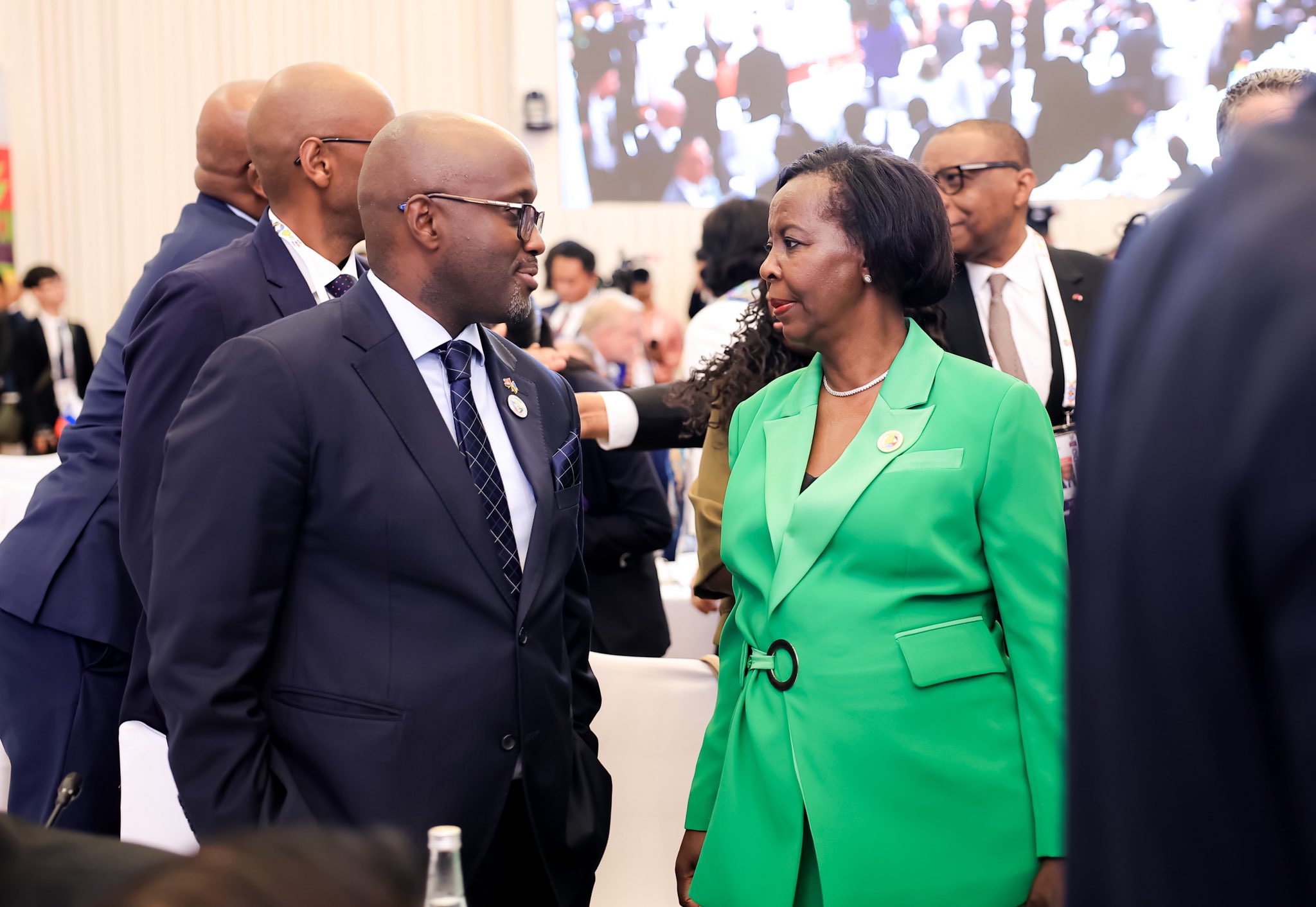
Foreign Minister Olivier Nduhungirehe with incumbent Francophonie Secretary-General Louise Mushikiwabo at the Ministerial Session this Saturday
The Democratic Republic of Congo (DRC) has withdrawn its candidate from the race for Secretary-General of the International Organisation of La Francophonie (OIF), but its decision to support a Romanian contender instead of another African candidate has drawn criticism from Rwanda.
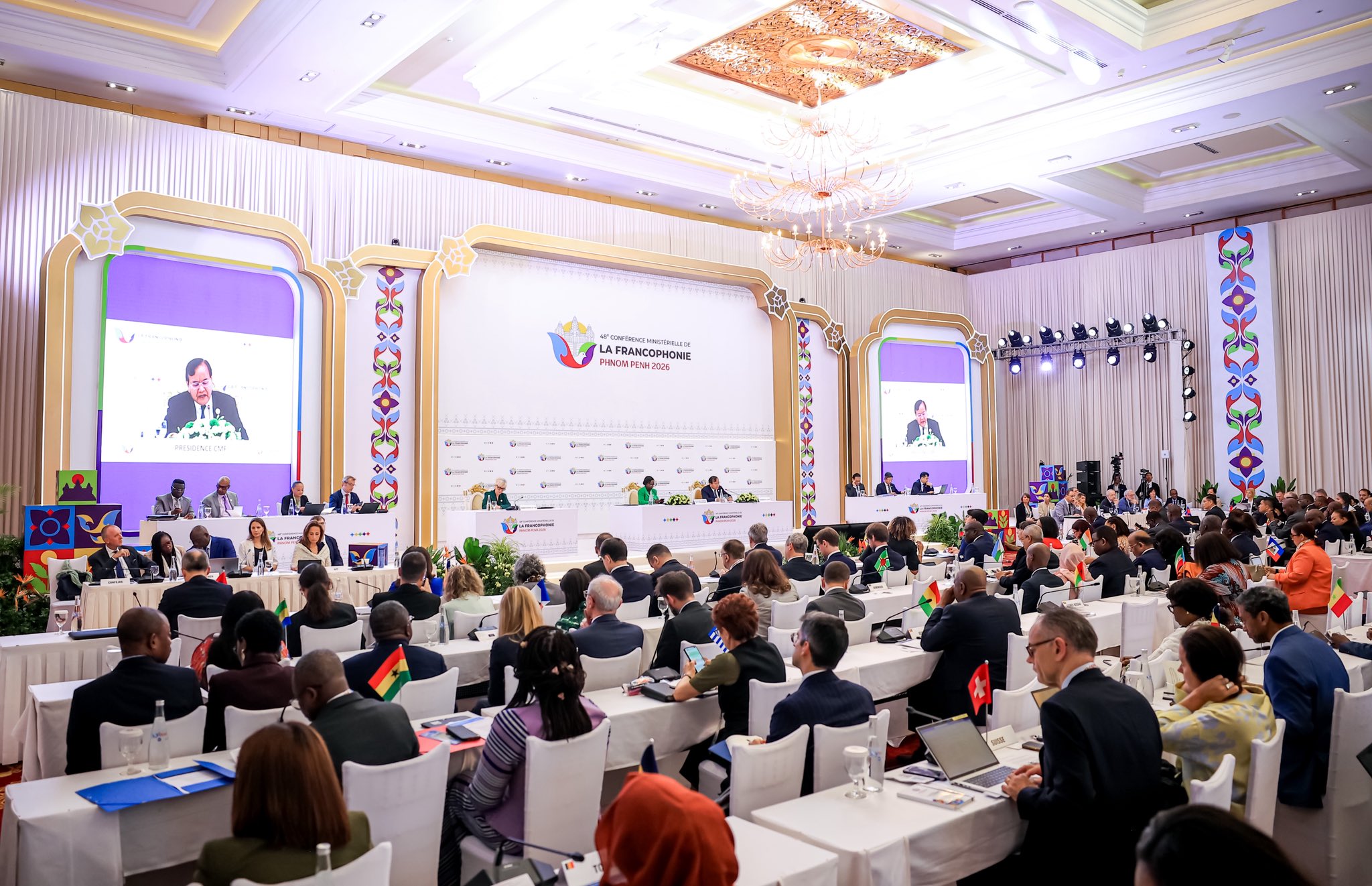
In a statement issued on November 14, following the 48th Francophonie Ministerial Conference in Phnom Penh, Cambodia, the Congolese government announced the withdrawal of Juliana Amato Lumumba, saying the move was intended to encourage consensus among member states.
Kinshasa said it wanted to help overcome divisions that had emerged during the selection process and preserve unity within the organisation. It also praised Lumumba’s commitment and qualifications, saying her withdrawal should not be interpreted as a reflection on her abilities.
However, the DRC announced that it would now support Romanian candidate Dacian Cioloș, following consultations with Romania. The two countries said their joint position was aimed at bringing member states together around a common candidate.
Reacting to the announcement, Rwanda’s Foreign Affairs Minister Olivier Nduhungirehe welcomed Lumumba’s withdrawal, saying it could help build consensus around Rwanda’s candidate, Louise Mushikiwabo, who is seeking another term as Secretary-General.
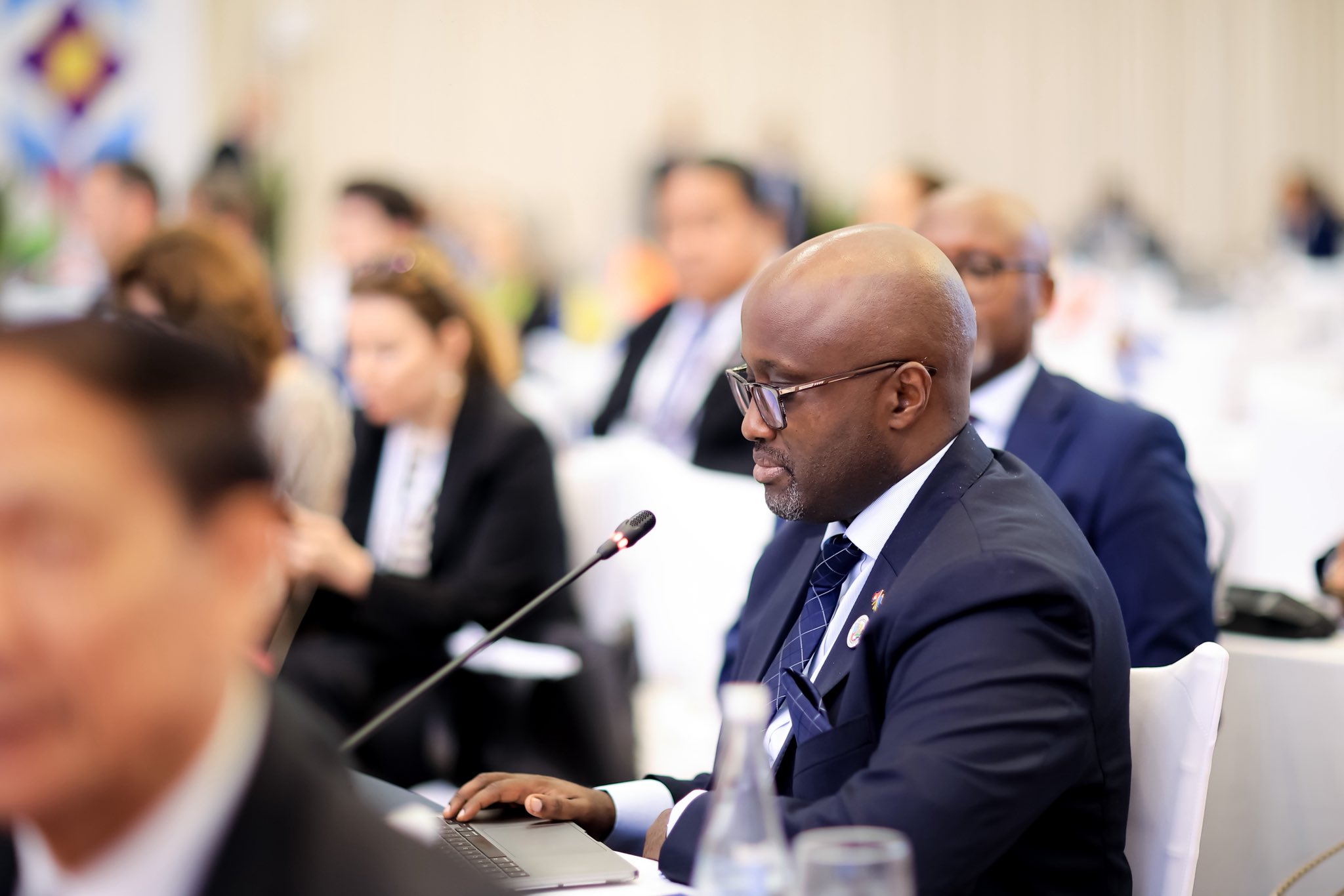
In a statement posted on X, Nduhungirehe said the withdrawal also weakened arguments that the Francophonie risked becoming caught in a political confrontation between Rwanda and the DRC through their respective candidates.
However, the minister questioned why Kinshasa had chosen to support a Romanian candidate rather than one of the remaining African contenders.
He said the decision went against an African Union resolution adopted in Addis Ababa on July 28–29, 2026, which endorsed three African candidates for the Francophonie leadership position.
The resolution, EX.CL/Dec.1361(XLIX), called on the 27 African countries that are members of the Francophonie to agree on one of the three candidates, with the aim of keeping the organisation’s top position in African hands.
The three African candidates endorsed by the AU were Mushikiwabo, Lumumba and Mauritania’s Coumba Bâ.
With Lumumba now out of the race, Nduhungirehe argued that the DRC’s decision to back Cioloș rather than either of the two remaining African candidates undermines the collective position adopted by African governments.
He called on African Union member states, under the chairmanship of Burundi, to take note of the development.
The Francophonie leadership contest has attracted particular attention because it involves both Africa’s representation in international institutions and diplomatic relations between Rwanda and the DRC.
