



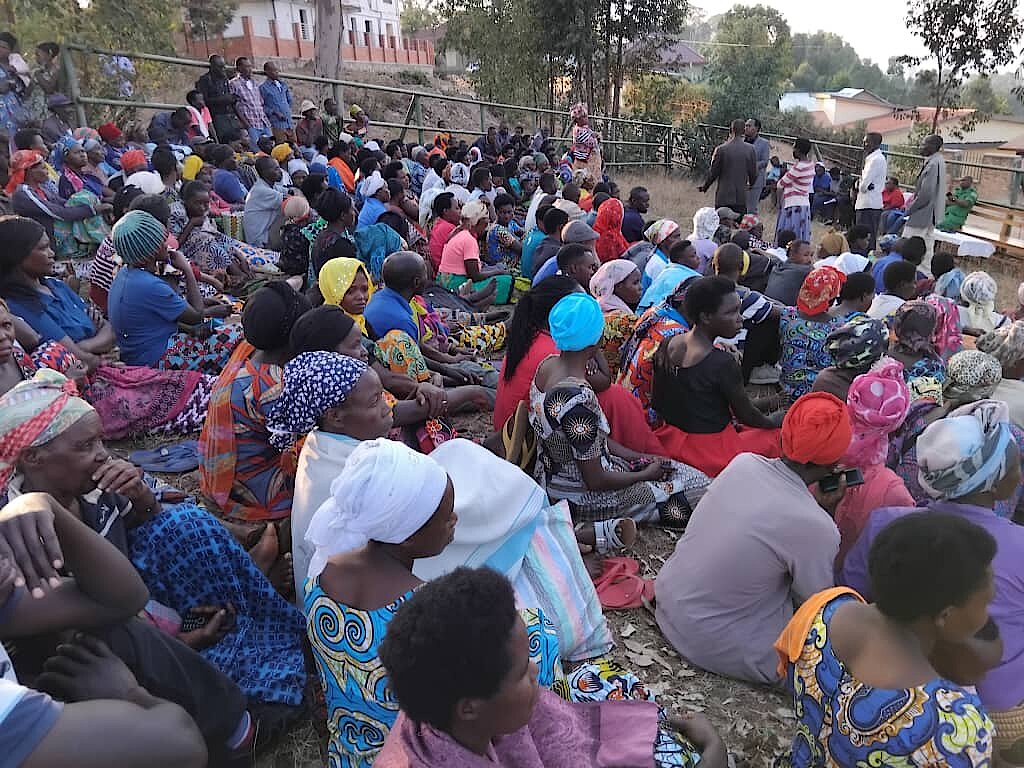
‘Inteko y’Abaturage’, or Community Meeting, is seen here in Kamonyi district, souther of Kigali. Such gatherings are held across the country on a regular basis.
Imagine a child living with parents who struggle to provide food, decent housing and other basic needs. Neighbours know the family is struggling.
Under a new government mechanism, the child’s name could be discussed at a village assembly as a possible candidate for State guardianship.
But does this mean the Government can take children away from parents who are considered irresponsible or unable to care for them?
A new Ministerial Order governing State guardianship of children gives village assemblies the first role in identifying children who should be placed under the guardianship of the State.
Published in the Official Gazette on November 13, the order establishes a process that begins with the Village General Assembly.
It identifies the children and submits their names to the Sector, which assesses the list before forwarding it to the national institution responsible for children.
That institution validates the list before the guardianship is formally registered.
But who qualifies?
This is where the new rules leave important questions.
The order does not provide detailed criteria for selecting children. It does not explain whether the system targets abandoned children, those without parents or guardians, children experiencing neglect, or those living in extremely difficult conditions.
Nor does it say that poverty alone is sufficient reason to place a child under State guardianship.
The distinction matters. A child whose parents are alive and willing to raise them is not necessarily a child without a guardian. Article 119 of the 2024 Family Law provides for State guardianship of a child who has no guardian.
The new order does not expressly give village assemblies the power to remove children from parents simply because they are poor or considered irresponsible.
Where would the children go?
State guardianship does not automatically mean sending a child to an institution. Under Article 5, the District and the national child-protection authority first consider placing the child with a family willing to care for them.
A children’s welfare centre is an option if no family is willing.
The Central Government is also required to support families and centres financially where necessary, while Districts must monitor the children’s welfare and health and report every three months.
Parents who wish to resume guardianship of a child previously placed under State guardianship can apply through the District. The national authority assesses the application and communicates its decision within 30 days.
The biggest unanswered question remains how a village decides that a particular child should enter this system. The order does not spell out the evidence required, whether parents must be heard or whether a family should first be offered support.
The mechanism could help identify children who genuinely need protection. But clear rules will be essential to ensure that protecting vulnerable children does not become a reason for separating families simply because they are poor.
