


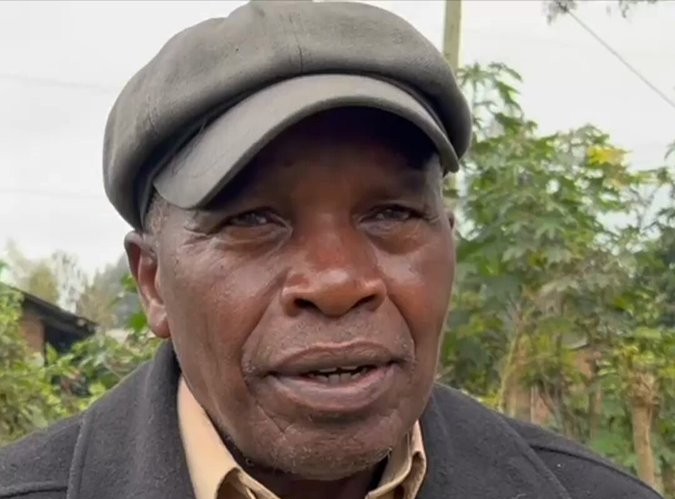
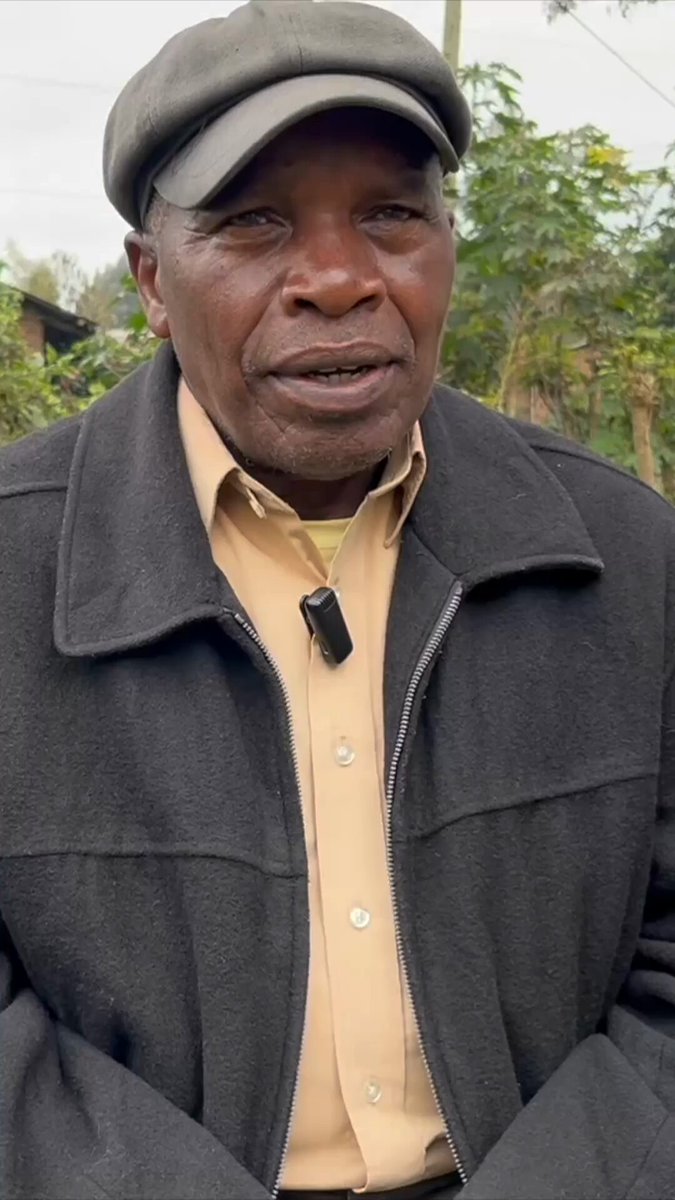
In the soft morning breeze of Mudende Sector in Rwanda’s Rubavu District, a 69-year-old man gently rocks in a wooden chair outside his home. His name is Corporal Senkeri Salathiel, and he carries a story that has haunted — and defined — much of Rwanda’s modern history.
It’s been 31 years since the plane of President Juvénal Habyarimana was shot down on the night of April 6, 1994, an event that triggered one of the most horrific genocides in human history.
The Falcon 50 aircraft went down near Kigali International Airport, killing not only Habyarimana but also President Cyprien Ntaryamira of Burundi, top Rwandan officials, and the French flight crew.
Senkeri, one of Habyarimana’s long-serving bodyguards, was supposed to be on that plane. But he wasn’t. He lived — and today, for the first time in years, he is telling the full story of how he survived.
“I Was Meant to Be On That Flight”
Corporal Senkeri Salathiel spent 15 years guarding President Habyarimana, starting long before the war with the Rwandan Patriotic Army (RPA) began.
As a trusted member of the presidential security team, his presence alongside the head of state was routine — until that final journey to Dar es Salaam in April 1994.
That day, the Falcon 50 presidential jet had flown Habyarimana to Tanzania for a regional summit. The return trip, however, took an unexpected turn.
“Normally, we would all board with him,” Senkeri explains. “But that evening, the President made a sudden change. He offered seats to Burundi’s President Ntaryamira and his two ministers because their plane had broken down. There was no space left for us — the security team.”
That decision, made in apparent generosity, saved Senkeri’s life.
He remembers watching the plane lift off from the tarmac in Dar es Salaam and never imagined it would be the last time he’d see the president alive.
“The Warning That Was Ignored”
In an interview last week with with BBC Gahuza, the Great lakes service of the British broadcaster BBC, Senkeri revealed another disturbing detail: he had received a credible warning that the Falcon jet might be targeted.
“When we were at the airport in Dar es Salaam, security officials from Zaire (now DRC), who were there guarding President Mobutu Sese Seko, told us they had heard intelligence suggesting the Falcon jet could be shot down after takeoff.”
Senkeri says he passed on the information to those responsible. The French pilots also became aware and requested to land at Goma Airport instead of Kigali. A message was sent via Mageza, a presidential protocol officer, to warn President Habyarimana.
“But the President dismissed the warning,” Senkeri says. “He wanted to go home.”
Behind the Scenes: Politics, Paranoia, and Power Struggles
At the time of the trip, the political climate in Rwanda was tense. Senkeri recounts how during a failed coup attempt led by Colonel Théoneste Lizinde and a senior officer named Biseruka, the Presidential Guard (GP) was purged of hardliners. Only quiet, obedient officers remained.
“Because I wasn’t someone who shouted ‘nduza’ or tried to be loud, I stayed,” Senkeri recalls. “But later, Colonel Nkundiye discovered who I was and demoted me.”
Despite the internal tensions, President Habyarimana trusted Senkeri. He once sent for him during a meeting that included Colonel Elie Sagatwa (Habyarimana’s brother-in-law and head of the presidential military household), the head of the Rwasir (Presidential Security Office), and other high-level officials. However, those around the president lied, saying Senkeri was in the hospital.
By that point, everyone knew the Rwandan Patriotic Army (RPA-Inkotanyi) — made up of long-time exiles — would eventually return home.
When Major General Déogratias Nsabimana, the Chief of Staff of Rwanda’s Armed Forces (FAR), showed up in Dar es Salaam, Habyarimana was surprised.
“Where are you going?” the president asked. Nsabimana replied by showing his official travel clearance. “We’re traveling together.”
“They’ve Tried to Kill Me Before”
As they prepared to leave Dar es Salaam, the French pilot of the Falcon 50 again expressed concerns about the flight and suggested landing in Goma as a safer option. But Habyarimana would not hear of it.
President Ntaryamira, whose own plane had failed, boarded the Falcon 50 with his ministers. Other officials hesitated.
“General Nsabimana delayed boarding. President Habyarimana stepped out and asked, ‘Why haven’t you boarded yet?’ He answered jokingly that he wanted to buy some cheap cement in Dar es Salaam.”
“Habyarimana told him: ‘Get on board!’”
Dr Emmanuel Akingeneye, the president’s personal doctor, also hesitated. Habyarimana reportedly asked him:
“Akingeneye, why aren’t you boarding? Who will debrief me if you don’t come?”
Then Habyarimana said something chilling: “They’ve tried to kill me many times before. If they want to do it again, so be it.”
“Radio Muhabura Was On In the President’s House”
Before the latest BBC interview, Senkeri has spoken widely to media in Rwanda. He recalls that inside Habyarimana’s own residence, they often listened to Radio Muhabura, the station run by the Rwandan Patriotic Front (RPF). It broadcast in Kinyarwanda from RPA territories.
“Sometimes, the President would ask, ‘What are they saying today?’”
It was a rare glimpse of how deeply information — and misinformation — shaped decisions at the top.
Aftermath: Survival, Surrender, and Repatriation
While the Falcon 50 exploded in the Kigali skies on April 6, Corporal Senkeri stayed behind in Dar es Salaam. He only left on July 4, 1994, when Kigali had fallen to the RPF and the genocide had come to a bloody end.
He traveled to Goma, in Zaire (now DRC). Eventually, it was the RPF-Inkotanyi who repatriated him back to Rwanda.
“When they found me,” he says, “they called me by name. They knew exactly who I was.”
He returned to civilian life, lived quietly, and kept his memories mostly to himself — until now.
A Life Saved, A History Witnessed
Senkeri Salathiel has lived through moments that defined Rwanda’s fate. The plane he didn’t board changed the course of the nation, setting off 100 days of genocide and a long path to rebuilding.
“I didn’t die that day,” he says, “but everything I had known disappeared.”
31 years later, Senkeri speaks not to justify, but to document. To leave a trail. To say: I was there.
And sometimes, survival is its own form of testimony.
