


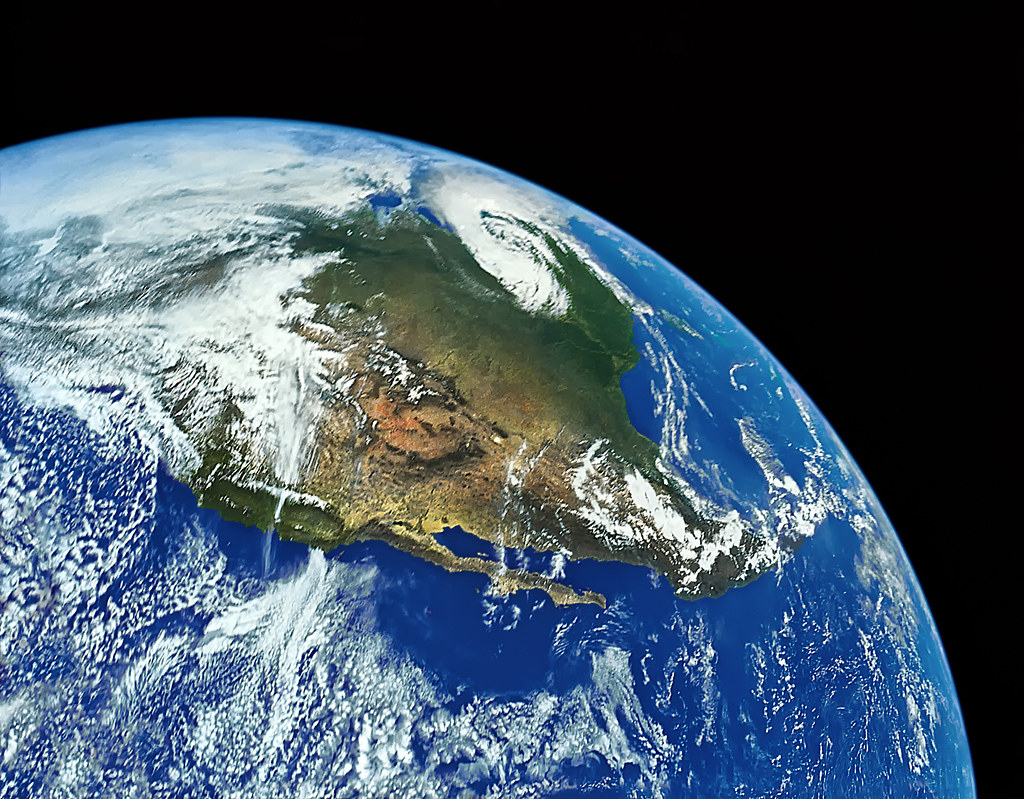
This is portion of planet earth as seen from space. It will be running faster than usual
From those in Rwanda and elsewhere across planet earth, your days this July and August are going to feel like they’re flying by faster than usual. You’re not imagining it, it’s happening in real life.
Scientists report that on July 9, July 22, and August 5, 2025, the Earth will spin slightly faster, making those days about 1.3 to 1.6 milliseconds shorter.
That fraction of time is imperceptible to us but is something experts can measure precisely.
Why Is This Happening?
Researchers at the International Earth Rotation and Reference Systems Service (IERS), supported by institutions like the Scripps Institution of Oceanography, have identified the Moon’s position as the key driver behind this temporary change.
As the Moon reaches its furthest point from Earth’s equator—its peak declination—it exerts slightly less drag on our planet, allowing it to spin a bit faster.
Duncan Agnew, a geophysicist at Scripps, described the phenomenon as “something notable” in a recent Time magazine interview.
He emphasised this hasn’t been seen since instrumental records began, marking it an “unprecedented situation” for mid-year acceleration in Earth’s rotation.
The Shortest Days on Record
These shorter days continue a remarkable trend. On July 5, 2024, Earth experienced its shortest day ever recorded in modern history, missing the full 24 hours by 1.66 milliseconds, according to timeanddate.com.
The IERS confirms that this will be the sixth such occurrence since 2020, and the three days in July and August 2025 join that list.
What Scientists Say
Renowned Earth rotation expert Leonid Zotov, from Moscow State University, remarked: “Nobody expected this … the cause of this acceleration is not explained,” adding that current oceanic and atmospheric models don’t fully account for the anomaly.
Meanwhile, Australian specialists from the National Measurement Institute point out that such tiny shifts still matter: they rely on atomic clocks for precision timekeeping—vital for technologies like GPS, telecommunications, and financial systems.
What This Means for Rwandans
For everyday life in Kigali or Nyagatare, this change won’t affect daily routines or how our clocks run. These small differences are only relevant to scientists and systems that depend on accurate time measurement.
However, for institutions tracking Earth’s rotation and timekeeping, it matters a great deal.
Normally, when Earth slows down, a leap second is added to Coordinated Universal Time (UTC) to align atomic time with Earth’s physical rotation.
Now, experts are discussing the possibility of a “negative leap second”—which would shorten UTC by a second, likely around 2029—to correct for this speeding up.
A Reminder that Earth Is Alive
This phenomenon reinforces our understanding that Earth is not a fixed timekeeper—its rotation waxes and wanes due to a mix of gravitational forces, core dynamics, ocean currents, and even climate changes such as melting ice and shifting water masses.
So as you go about your day—from Kigali’s busy streets to the rolling hills of Akagera—remember: July and August are the months when Earth gets its moment in the fast lane, even if only for a few milliseconds.
Feel free to let me know if you’d like a condensed summary or a version for social media!
