


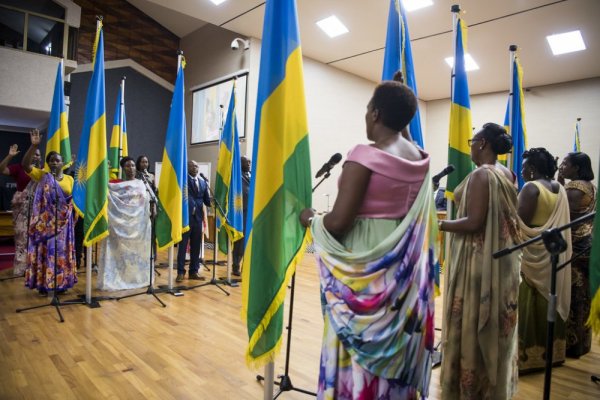
A parliamentary swearing ceremony – changing social, economy and political dynamics are helping women to get the support they need
Every evening, just after 7 p.m., Alice Musanabera watches the gate swing open. Her husband steps into their compound in Musanze District, carrying a bag of rice bought from Kigali. A few years ago, that would have been unlikely.
For over a decade, Musanabera was what many call a “married single mother.” Her husband worked in Kigali, nearly two hours away by public transport, and would often sleep in town to avoid the long journey home.
But now, with better roads and buses running until 8 p.m.—plus the option of late-night private taxis that run all night—he makes it home almost daily.
“It wasn’t like this five or ten years ago,” Alice says. “There were days I didn’t see him for a whole week. I handled the house, children, farming… everything. But now he’s home most nights. It makes a big difference.”
Musanabera’s story reflects a quiet shift happening across Rwanda—a change that recent government statistics are now beginning to confirm.
According to the latest 7th Integrated Household Living Conditions Survey (EICV7) Gender Thematic Report, published by the National Institute of Statistics of Rwanda, the number of households temporarily led by women—because their husbands or male partners were away—has dropped from 6.4% in 2016/17 to just 4% in 2023/24.
These are what researchers call “de facto” female-headed households.
At the same time, though, the share of permanently female-headed households—those where a woman is officially recognized as the head—rose slightly, from 25% to 26% during the same period.
So, how can women be leading fewer homes in one way, and more in another?
Fewer Absences, Stronger Presence
The answer lies in mobility, infrastructure, and family dynamics. As public transport systems have expanded and road networks improved, it has become easier—and cheaper—for men who work in towns or cities to commute daily from home, instead of staying away for days or weeks.
This is especially true in districts like Musanze, Kamonyi, Bugesera, and Rwamagana, which are close to Kigali and now served by regular transport, making daily return trips possible.
Men like Musanabera’s husband no longer have to sleep on shop floors or in overcrowded boarding houses during the week.
As a result, fewer women are forced into the role of temporary household head, and the data is starting to reflect that.
More Women Standing Alone
At the same time, more women are becoming permanent household heads—either by choice or due to life events like divorce, widowhood, or separation.
In Gatsibo District, 36-year-old Juliet Hanga runs a tailoring business while raising her two children alone.
“I never married, and I don’t regret it,” she says. “This is my home. I make the rules. I earn the money. I lead this family.”
She is one of thousands of Rwandan women who are officially listed as heads of their households—and they’re not just statistics.
According to the report, female-headed homes are more common in rural areas, and more likely to experience poverty, land access challenges, and limited income opportunities.
But these women are also pillars of resilience. Many of them run small businesses, cultivate land, and send their children to school, all while juggling unpaid care work.
Behind the Numbers
Women rights campaigners say the changes in household leadership are connected to broader social and economic shifts.
“Better transport, more local job opportunities, and infrastructure upgrades have kept more men at home,” says a gender officer in Musanze. “But we also see more women stepping up as full heads of families—sometimes because the man is gone for good, and other times because she’s simply the stronger one.”
Interestingly, the title of ‘household head’ doesn’t always reflect who’s doing the work.
In many homes, women take the lead in farming, budgeting, and parenting—but as long as the man is physically present, he’s listed as head.
This, the report warns, can hide the real picture of who carries family responsibilities.
What Can Be Done?
The EICV7 Gender Report calls for targeted support to female-headed households, especially those facing economic challenges. This includes access to land, credit, agricultural inputs, and social protection.
It also recommends more recognition of unpaid labor and better ways to reflect real leadership in households, not just legal definitions.
Back in Musanze, Musanabera says things have changed for the better. “Now that my husband comes home, the children are happier. We talk more. We make decisions together,” she says. “But I still remember those years I was doing it all alone. I was the head—even if the papers said otherwise.”
In Rwanda, as the data shifts, so do the stories. Female-headed households may be dropping, but the strength of women at the center of family life remains as strong as ever.
