


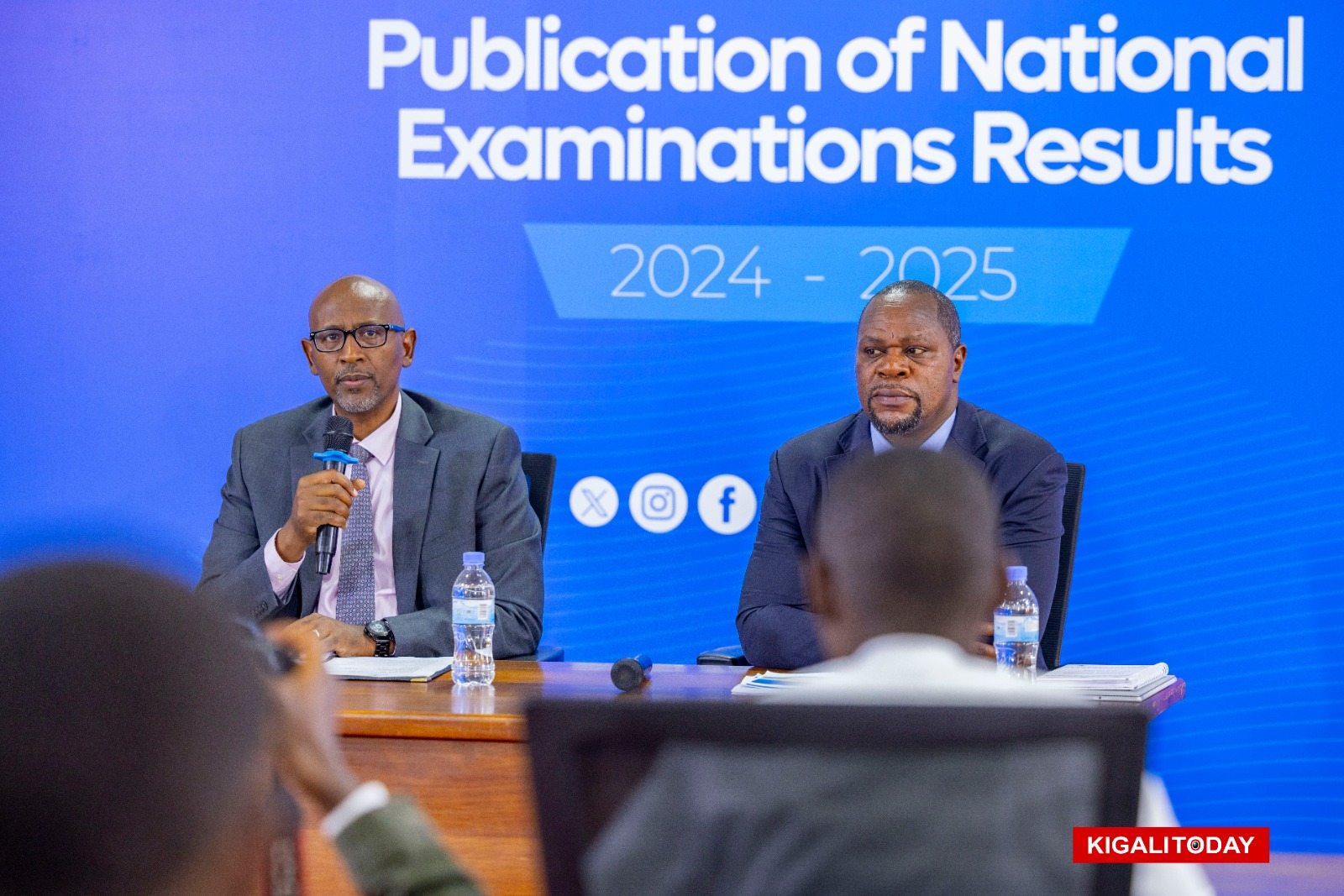
Education Minister Joseph Nsengimana and Dr Bernard Bahati, the Director General, National Examination and School Inspection Authority (NESA)
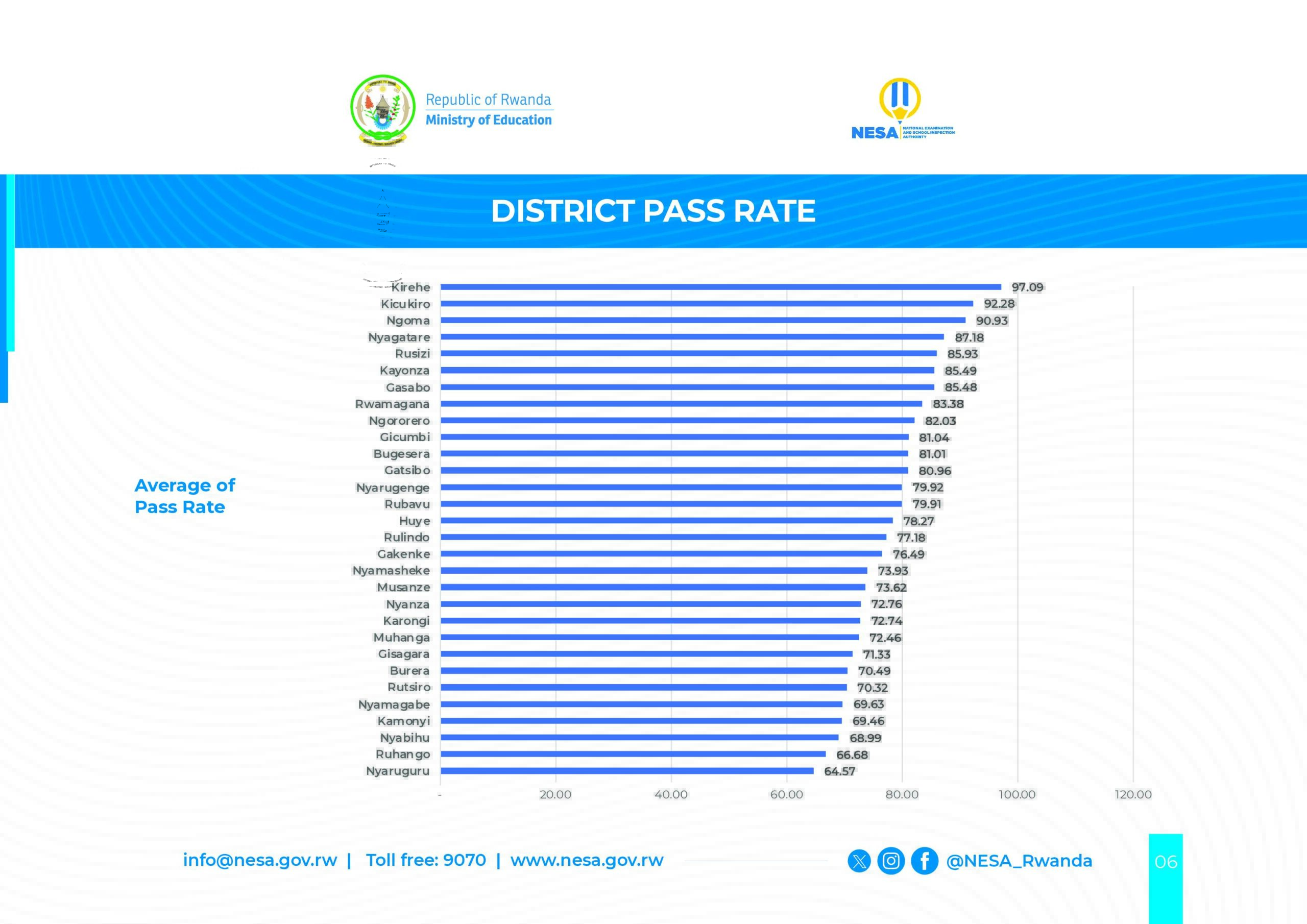
Kirehe District, on the border with Tanzania, has emerged as the top performer in Rwanda’s 2024/2025 national exams, achieving remarkable results at both the primary and lower secondary levels.
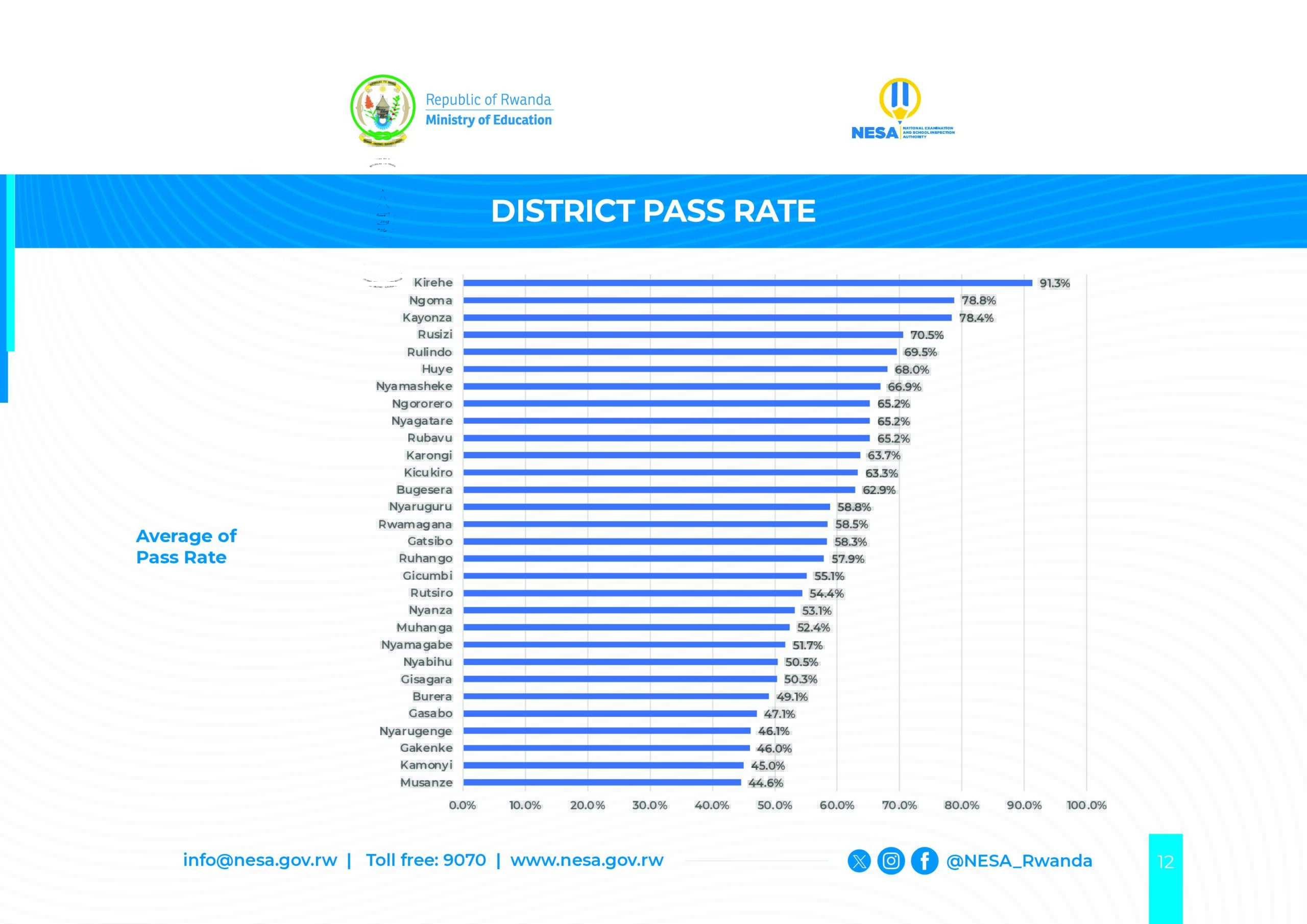
Out of all 30 districts, 93.01% of Kirehe’s P6 students passed the Primary Leaving Examinations, while 93.1% of S3 students scored 50% or higher in their O’Level exams. These results helped Eastern Province emerge as the best-performing province, with neighboring Ngoma District and Kayonza coming in close behind in O’Level.
The Ministry of Education is also stunned by this development. The education minister Joseph Nsengiyumva says they plan to go to Kirehe District to find out what is being done right.
The ministry also plans teacher exchange visits so educators from other districts can learn from Kirehe’s practices.
From the 2022 national census data, there are hints that help explain Kirehe’s success in the lower education sector.
The district has a strong foundation in primary education, with a high net attendance rate of 90% among children aged 6–11 years. In Mahama Sector, which hosts over 45,000 Burundian and Congolese refugees, attendance is even higher at 94.2%, showing that local practices encourage children to stay in school.
Early learning is also strong, with 85.3% of children aged 3–5 years attending nursery or kindergarten, helping them build reading, writing, and numeracy skills from an early age.
Teachers in Kirehe closely monitor students’ progress, ensuring that children who struggle are identified early and given extra support. This full implementation of learner monitoring is a key factor behind the high exam results.
The district also benefits from a young and balanced population: 64.8% of residents are aged 14–64 years, with 26.9% in the 16–30 age group, and females make up 51.9% of the population. Gender parity is high, with 92% of girls in Nyarubuye Sector attending primary school, which contributes to overall performance.
Certain sectors in Kirehe stand out for their high performance. Mahama Sector has 83.8% secondary school attendance, while Nyarubuye Sector has the highest university attendance at 3.2% of the population.
These areas create a culture of academic aspiration that lifts the district’s overall results. Kirehe also shows strength in core subjects.
In S3 exams, the district achieved a 46% pass rate in Mathematics, the highest among subjects, and 18.91% in English, indicating that bilingual education strategies are paying off.
DISTRCT RANKINGS FOR PLE 2024-25
The 2022/23 Education Statistical Yearbook provides further insights into factors that likely laid the foundation for this success.
Gender equity is a major factor. In Kirehe, there were 13,117 female secondary students compared to 11,985 males, giving a Gender Parity Index of 1.10, well above the national average.
Eastern Province had an even higher GPI of 1.21, reflecting strong female participation. Systems where girls are retained and perform well tend to have better teaching, lower dropout rates, and stronger community engagement. High female participation strengthens overall district and provincial results.
Access to schools and infrastructure has also improved significantly, creating conditions for better learning. Kirehe increased its primary classrooms from 1,632 to 1,724 and preprimary classrooms from 240 to 268 in a year, while TVET institutions doubled from 6 to 12. Eastern Province leads the nation with 1,034 primary schools, 13,276 classrooms, 5,373 secondary classrooms, and 105 TVET centers.
These expansions reduce overcrowding, improve student-teacher interactions, and support learning in core subjects like mathematics, science, and languages.
Community engagement and adult literacy are additional contributors. In Kirehe, 1,827 adults participated in literacy programs (1,240 women and 587 men), while in Eastern Province, 24,962 adults were enrolled across 1,081 literacy centers, the highest in the country. Literate communities tend to support children’s education, encourage regular attendance, and monitor school performance.
Combined with high primary enrollment — 108,806 pupils in Kirehe and 811,599 in Eastern Province — and improved transition rates from P6 to S1, students are more likely to reach S3 ready to succeed.
Teacher deployment and targeted interventions may also be playing a role. Kirehe had 936 primary teachers, giving a pupil-teacher ratio of roughly 116:1, while Eastern Province had 7,195 teachers in both primary and secondary schools. Although ratios remain high, the growing number of teachers shows a commitment to staffing.
Along with programs to reduce repetition rates, improve age-appropriate enrollment, and expand preprimary access (GER increased from 33% to 53%), these measures strengthened student readiness and helped explain why Kirehe, Ngoma, and the Eastern Province now lead national exam performance.
Another hint. Mahama refugee camp is a large, well-resourced educational hub, supported by the UN and multiple partner agencies. With over 50,000 Burundian and Congolese refugees with well established settlement, the camp runs structured primary and secondary schools, well-trained teachers, and strong learning programs, often with better resources and monitoring than local rural schools.
Because Kirehe District’s statistics include all children within its borders, it’s very likely that the high attendance rates, strong teaching practices, and structured learning environment in Mahama Camp are boosting overall district-level performance.
The students in the camp would contribute to the district’s net attendance, high exam scores, and strong early learning indicators, helping Kirehe achieve the 93%+ pass rates in P6 and S3 exams.
Even with these successes, challenges remain. Only 18.3% of youth aged 12–17 attend secondary school, below the national average of 22.3%. Monitoring of teachers and infrastructure is still limited, with 28.08% teacher monitoring and 11.90% infrastructure monitoring, suggesting areas for improvement.
Despite these gaps, the new data mining operations by the education Ministry that allowed to identify Kirehe, may be helpful for national planning perform at the top, likely due to motivated teachers, supportive parents, and engaged communities.
DISTRCT RANKINGS FOR O’LEVEL 2024-25

1 comment
Minisitiri w’Uburezi Joseph Nsengimana hamwe na Dr Bernard Bahati, Umuyobozi Mukuru w’Ikigo cy’Igihugu gishinzwe Ibizamini n’Igenzura ry’Amashuri (NESA).
Akarere ka Kirehe, kari ku rubibe na Tanzaniya, kagaragaye nk’aka mbere mu gihugu mu bizamini bya Leta by’umwaka wa 2024/2025, gatsinda ku rwego rwo hejuru haba mu mashuri abanza no mu mashuri yisumbuye (icyiciro rusange).
Mu turere 30 twose, 93.01% by’abanyeshuri ba P6 bo muri Kirehe batsinze ikizamini gisoza amashuri abanza, mu gihe 93.1% by’abanyeshuri ba S3 babonye amanota angana cyangwa arenga kuri 50% mu bizamini bisoza icyiciro rusange. Ibi byatumye Intara y’Iburasirazuba iza ku isonga mu gihugu hose, aho uturere twa Ngoma na Kayonza dukurikira hafi cyane mu bizamini bya S3.
Minisiteri y’Uburezi nayo yatangajwe n’iyi ntsinzi idasanzwe. Minisitiri Joseph Nsengimana yatangaje ko bateganya kujya mu Karere ka Kirehe kureba ibyo bakora neza.
Harateganywa kandi gusura no guhanahana ubumenyi hagati y’abarimu kugira ngo abaturuka mu tundi turere bigire ku byagezweho muri Kirehe.
—
Impamvu zishobora gusobanura iyi ntsinzi
Ibyavuye mu ibarura rusange rya 2022 bigaragaza ibisobanuro by’intsinzi ya Kirehe mu rwego rw’uburezi bw’ibanze.
Abana benshi mu mashuri abanza: Abana bari hagati y’imyaka 6–11 bafite igipimo cyo kwitabira ishuri cya 90%. Mu Murenge wa Mahama, ubarizwamo impunzi zisaga ibihumbi 45 z’Abarundi n’Abanyekongo, iki gipimo kiragera kuri 94.2%.
Uburezi bw’incuke bukomeye: 85.3% by’abana bafite imyaka 3–5 biga mu mashuri y’incuke, bikabafasha kwiga gusoma, kwandika no kubara hakiri kare.
Kugenzura imyigire y’abana: Abarimu bakurikirana abanyeshuri hafi, bagafasha abatagaragaza umusaruro hakiri kare, ari nacyo gituma ibizamini bigenda neza.
—
Imiterere y’abaturage n’uburinganire
Abaturage 64.8% ni urubyiruko ruri hagati y’imyaka 14–64; 26.9% bari hagati ya 16–30.
Abagore ni 51.9% by’abatuye Kirehe.
Uburenganzira bw’abakobwa burubahirizwa: 92% by’abakobwa bo mu Murenge wa Nyarubuye biga mu mashuri abanza.
—
Imirenge irusha indi mu musaruro
Mahama: 83.8% by’abanyeshuri biga mu mashuri yisumbuye.
Nyarubuye: Ifite 3.2% by’abatuye umurenge biga muri kaminuza – ariwo murenge uza imbere mu karere.
Ibi byose bikubaka umuco wo kwiga cyane no kurarikira ubumenyi, bigahesha akarere amanota meza.
—
Imyitwarire mu masomo
Mu bizamini bya S3, 46% by’abanyeshuri batsinze mu mibare, ari na cyo kiza ku isonga.
Mu Cyongereza batsinze ku gipimo cya 18.91%, bigaragaza ko gahunda yo kwigisha mu ndimi ebyiri iri gutanga umusaruro.
—
Uburyohe bw’uburinganire n’imibare y’abanyeshuri
Mu mashuri yisumbuye ya Kirehe: abakobwa 13,117 ugereranyije n’abahungu 11,985 (GPI 1.10), hejuru ya averiji y’igihugu.
Intara y’Iburasirazuba yose ifite GPI 1.21, igaragaza uruhare rukomeye rw’abakobwa.
—
Iterambere ry’ibikorwaremezo
Ibyumba by’amashuri abanza byiyongereye biva ku 1,632 bigera kuri 1,724 mu mwaka umwe.
Amashuri y’incuke yiyongereye kuva kuri 240 agera kuri 268.
Amashuri ya tekiniki na myuga (TVET) yikubye kabiri, ava kuri 6 agera kuri 12.
Intara y’Iburasirazuba ubu iza imbere mu gihugu mu mubare w’amashuri, ibyumba n’amashuri ya tekiniki, bigafasha kugabanya ubucucike no kongera ireme ry’uburezi.
—
Uruhare rw’abaturage n’uburezi bw’abantu bakuru
Abakuze 1,827 bigiye gusoma no kwandika muri Kirehe (abagore 1,240 n’abagabo 587).
Intara y’Iburasirazuba ifite abagera ku 24,962 biga gusoma no kwandika, ari byo byinshi mu gihugu.
Ibi bituma imiryango ishyigikira uburezi bw’abana, ikabakurikirana kugira ngo bataye ishuri.
—
Mahama nk’ihuriro ry’uburezi
Inkambi y’impunzi ya Mahama, ifite impunzi zisaga ibihumbi 50, ni ikigo gikomeye cy’uburezi gifite abarimu b’inzobere n’ibikoresho byinshi. Amashuri yaho ateguwe neza, bigatuma amanota y’abana b’impunzi yongera amanota rusange y’Akarere ka Kirehe.
—
Ibibazo bigihari
18.3% gusa by’urubyiruko rufite imyaka 12–17 biga mu mashuri yisumbuye, mu gihe impuzandengo y’igihugu ari 22.3%.
Ubugenzuzi ku barimu buri kuri 28.08% naho ku bikorwaremezo buri kuri 11.90%.
Igipimo cy’abanyeshuri ku mwarimu kiracyari hejuru (116:1 ku mashuri abanza).
—
Umwanzuro
Intsinzi ya Kirehe yatewe n’ubwitange bw’abarimu, ababyeyi bashyigikira uburezi, abaturage bitabira gahunda z’uburezi, ndetse n’uburinganire mu mashuri.
Gahunda za Minisiteri y’Uburezi zo gufata amasomo ku byagezweho muri Kirehe no kubyigisha mu tundi turere zishobora gufasha igihugu cyose kuzamura amanota y’ibizamini mu gihe kizaza.
Comments are closed.