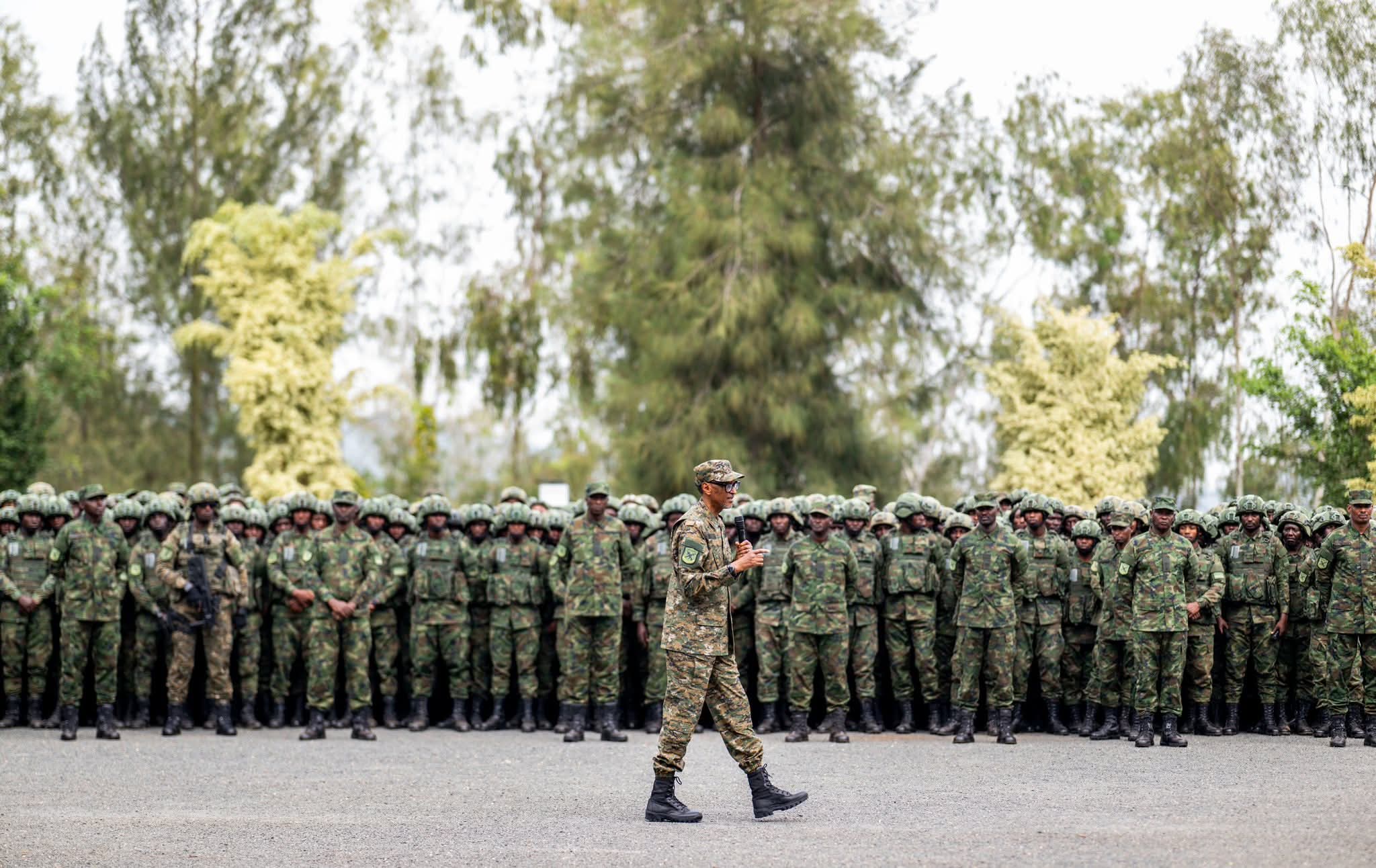




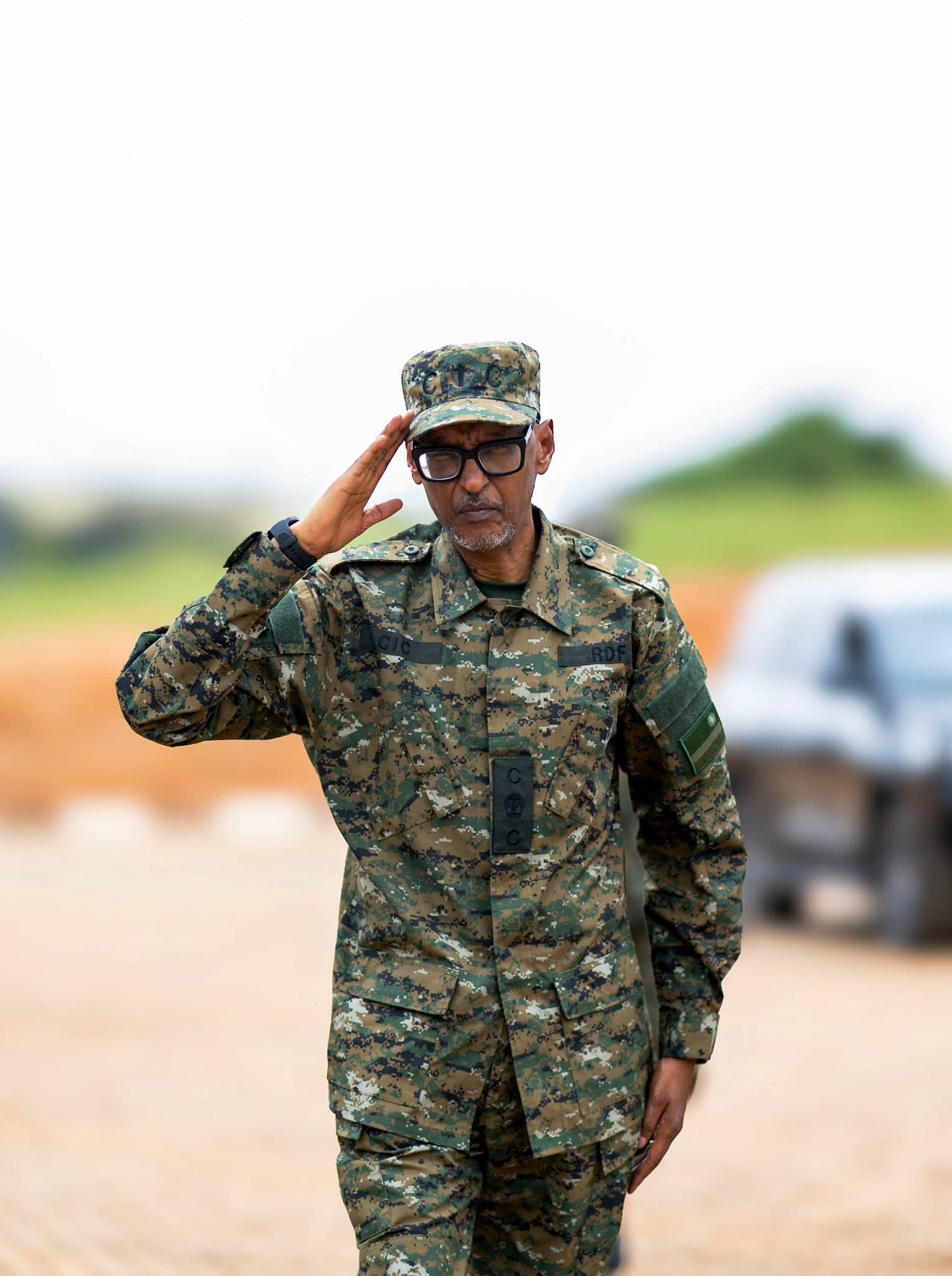
President Paul Kagame has firmly rejected claims that Rwanda thrives on conflict, stressing that the country has no desire to be a warmonger, nor does it serve as a mercenary state.
He emphasized that Rwanda’s defense posture is rooted in necessity and survival, not aggression, and that the nation only fights when provoked.
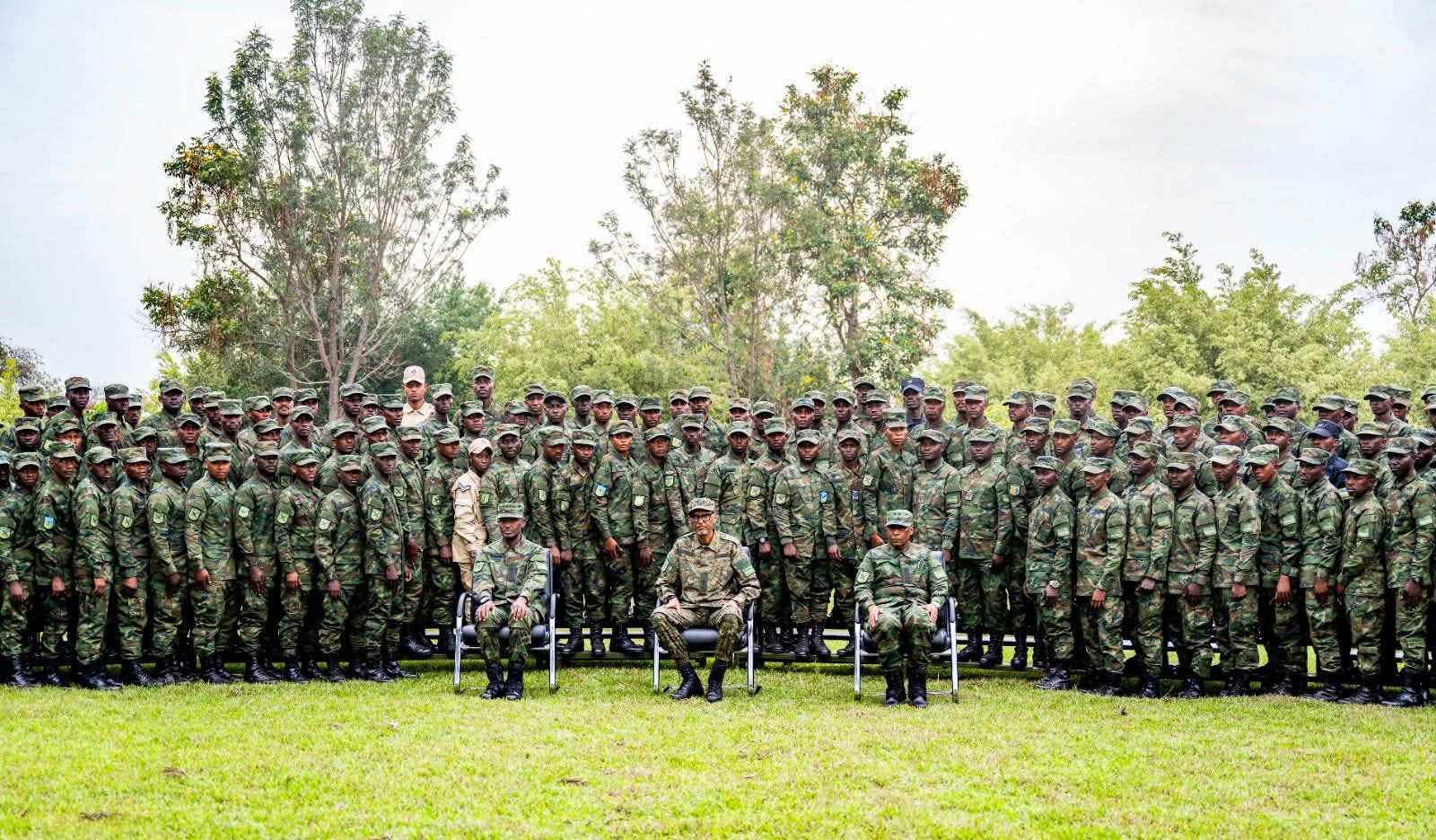
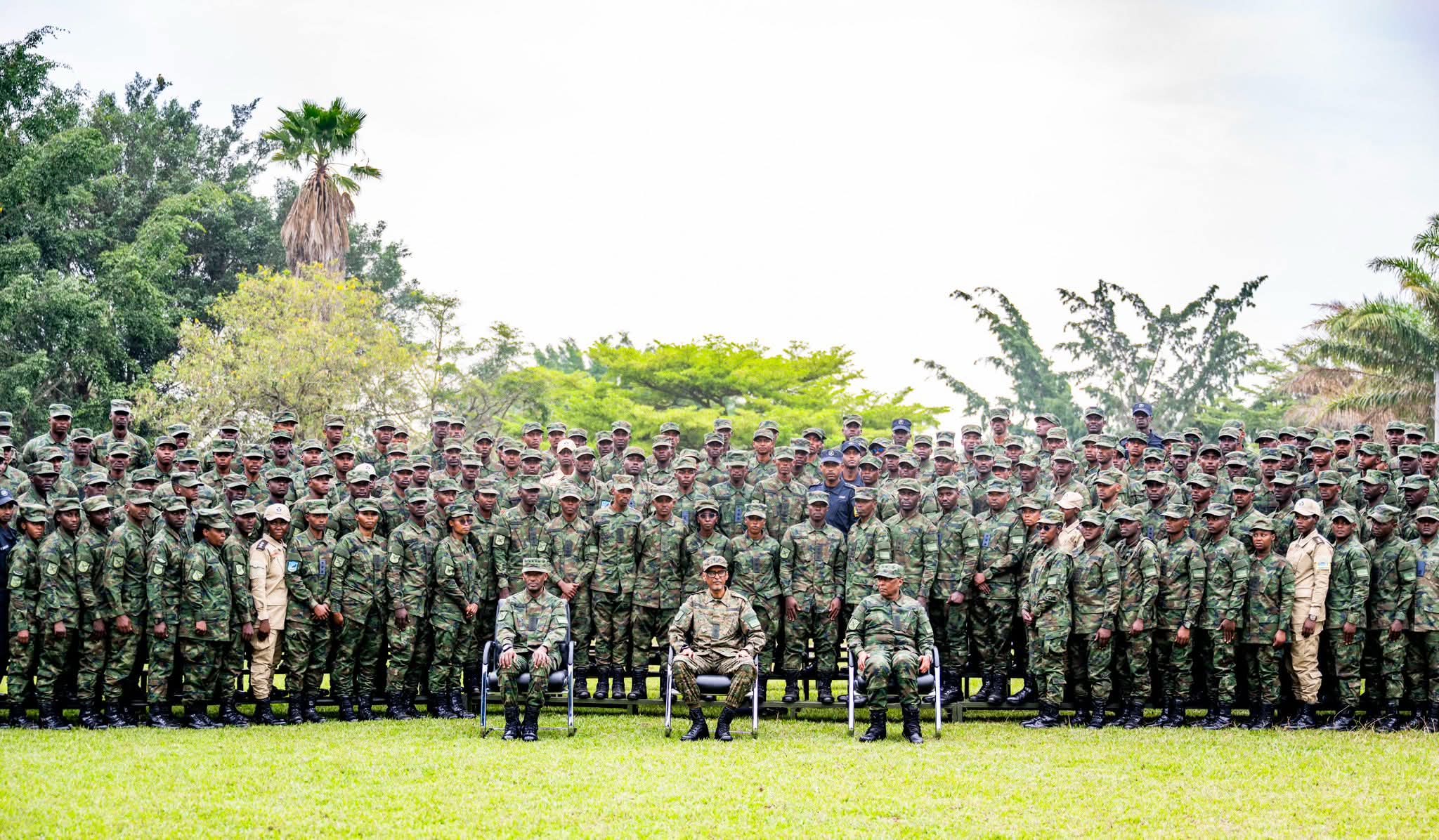
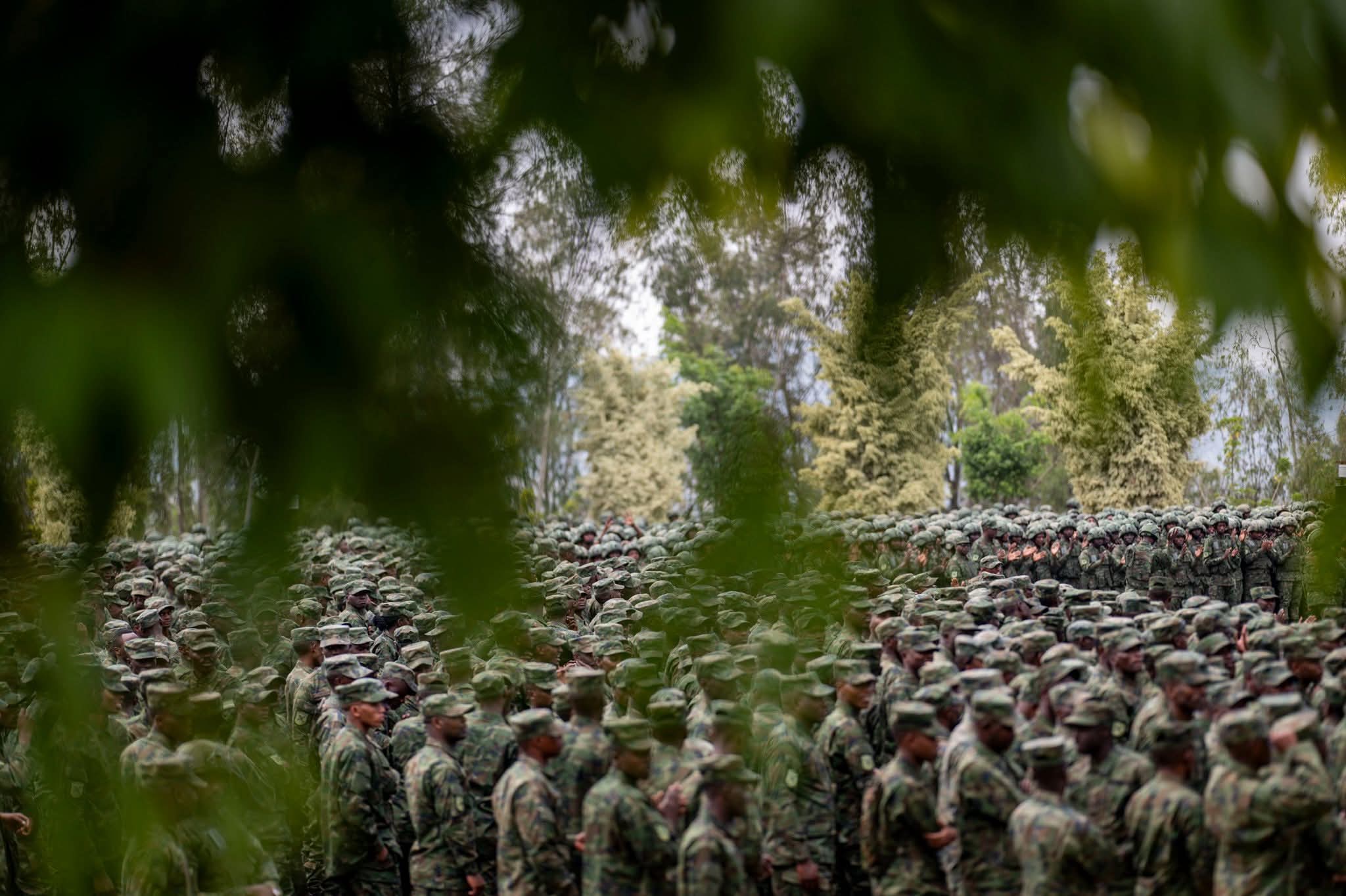
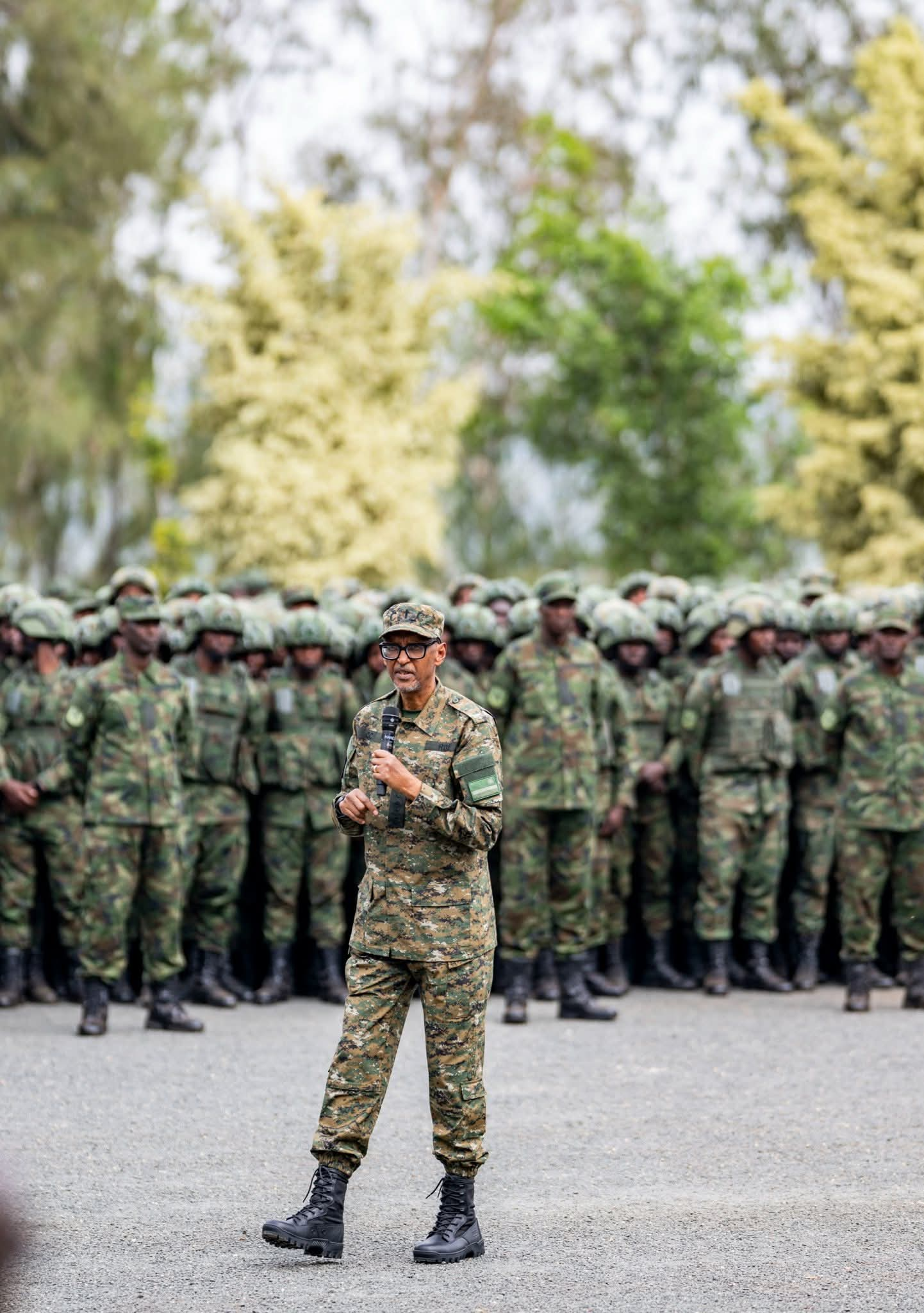
Speaking on Sunday at the Rwanda Defence Force (RDF) Combat Training Centre in Gabiro, Eastern Province, where he presided over the commissioning of 6,000 officers drown from Army, Police and Prisons, who had completed specialized military courses, the Commander-in-Chief used the occasion to underline the ethos that every Rwandan soldier must live by.
Kagame said the RDF’s foundation lies in discipline, patriotism, loyalty, and sacrifice, insisting that without these values, the army loses its meaning and purpose.
“We don’t look for conflict, and we don’t work for others as hired guns. But if anyone threatens our people or our country, we have no choice but to fight — and we fight to win,” Kagame declared.
The President reiterated that Rwanda’s army has been forged out of a history of resilience and necessity, and its mission has always been about protecting Rwandans and ensuring national survival.
He noted that attempts to label Rwanda as a destabilizing force ignore the fact that the RDF has been consistently called upon to restore peace in troubled regions across Africa, often under United Nations or African Union mandates.
Security as the Bedrock of Development
Kagame reminded the graduating officers that the safety and security they guarantee is the bedrock upon which Rwanda’s progress is built.
He said that while the country continues to invest heavily in economic growth, infrastructure, health, and education, none of these achievements would be possible without a secure environment.
“Our security is the guarantee of everything else. Without it, there is no development, no education, no health, no progress,” he said, adding that complacency in matters of security would undo years of sacrifice and resilience.
He told the officers that Rwanda’s unique history has made it clear that national defense is not just the work of soldiers but the responsibility of all citizens.
However, those entrusted with the uniform carry a heavier burden because they are the ultimate defenders of sovereignty.
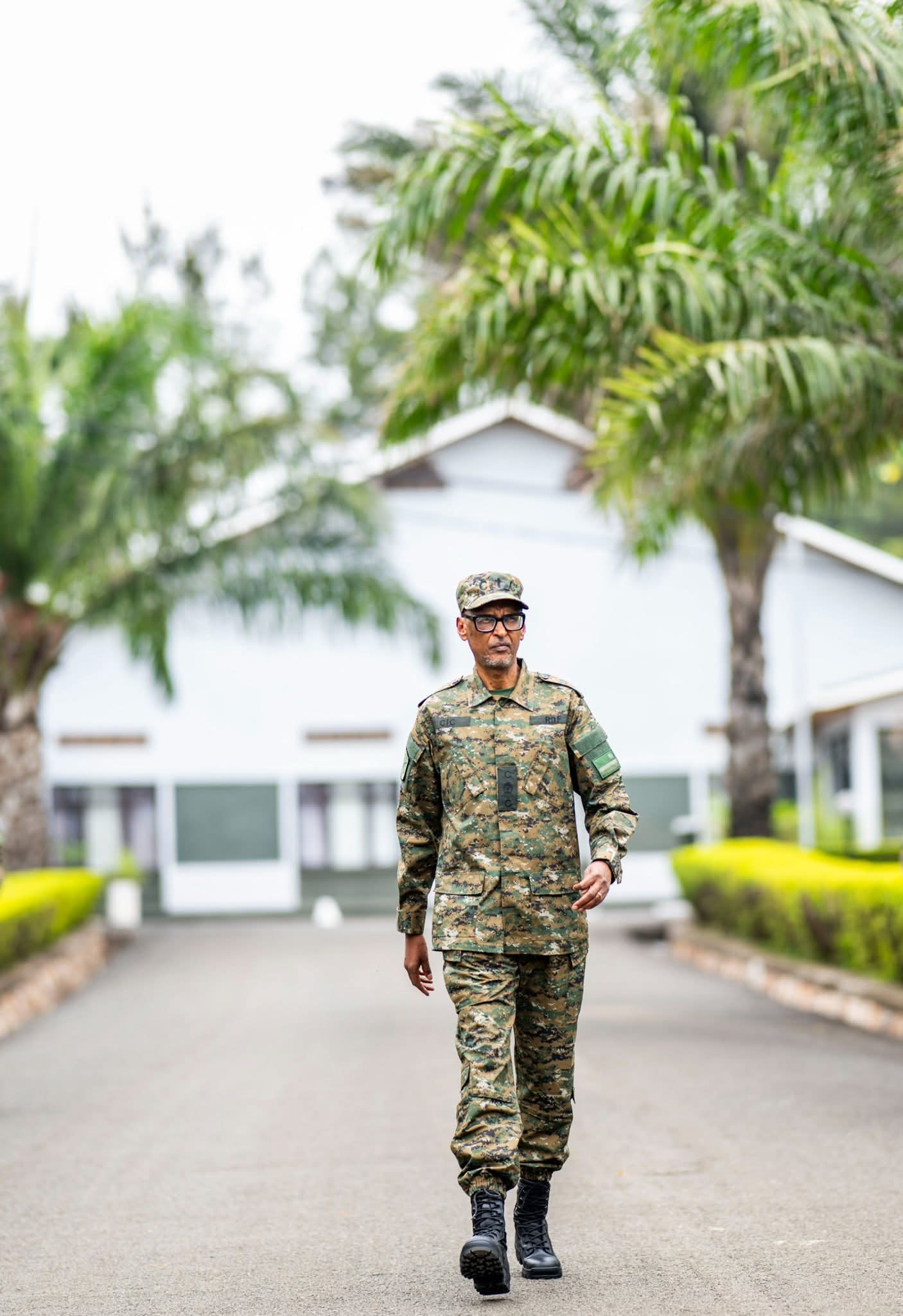
Rejecting False Narratives
The Head of State also pushed back strongly against international narratives that mischaracterize Rwanda’s security posture.
He noted that accusations of warmongering or mercenary behavior often come from actors who either misunderstand or deliberately distort Rwanda’s role in regional security.
Kagame pointed out that Rwanda has deployed peacekeepers in hotspots such as the Central African Republic, Mozambique, and Sudan, where RDF troops have been recognized internationally for professionalism and discipline.
These missions, he said, are evidence of Rwanda’s commitment to global peace and African solidarity rather than aggression.
“Those who accuse us fail to see the sacrifices our men and women make — not only to protect our people but also to stand with our African brothers and sisters in times of crisis,” Kagame said.
A Call to Responsibility
The President urged the newly trained officers to embrace humility and responsibility as they return to service.
He said being a member of the RDF is not merely about carrying weapons but about embodying the values of integrity, vigilance, and service.
“You must carry this mantle with pride, but also with humility. You are guardians of Rwanda’s future. The people of this country expect you to defend them, to act with discipline, and to live by the highest standards of service,” Kagame told the graduates.
He further reminded them that the RDF’s legacy is one of sacrifice, forged in the struggle for liberation and maintained through years of professionalism. Upholding this legacy, Kagame said, requires constant readiness, commitment, and refusal to be distracted by external noise.
FDLR and Interahamwe
Turning to the crisis in the Democratic Republic of Congo (DRC), Kagame dismissed accusations that Rwanda is the source of the conflict, calling them both false and politically motivated.
He explained that Rwanda has long endured the consequences of instability in eastern Congo, particularly the continued presence of the FDLR, a militia composed of elements responsible for the 1994 Genocide against the Tutsi.
Kagame argued that instead of addressing the FDLR and the governance challenges within Congo itself, Kinshasa has chosen to scapegoat Rwanda. He stressed that Rwanda does not seek conflict with its neighbor, but it will not sit idle if security threats cross the border.
“The problem is not Rwanda, the problem is their failure to deal with their own issues,” Kagame stated, underscoring that lasting peace requires honesty and responsibility from all parties.
Kagame went on to point out that countries like Mozambique and the Central African Republic had recognized the value of working with Rwanda in tackling their security challenges and had achieved tangible results from such cooperation.
He argued that the Democratic Republic of Congo could have pursued the same path—seeking positive engagement with Rwanda to jointly address the insecurity in the east and deal with the threat posed to Rwanda’s security by hostile groups based there.
Instead, Kagame said, Congo chose confrontation and blame, a path that has only deepened the crisis rather than resolving it.