


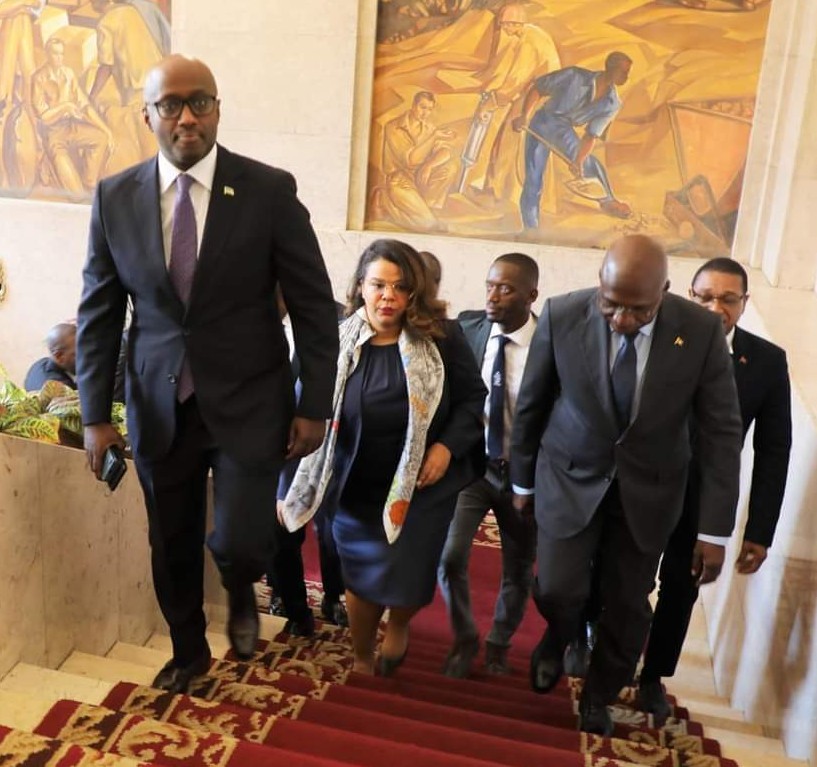
Foreign Minister Olivier Nduhungirehe with Angolan and DR Congo counterpart at one of their meetings in Angola. Government of Rwanda says it committed to a lasting solution to the crisis in the east of Congo.
KIGALI, Rwanda – The Government of Rwanda on Friday strongly refuted accusations of involvement in the mass killing of civilians in the Democratic Republic of Congo, labeling the claims made by human rights groups and UN bodies as “sensational” and entirely baseless.
In a statement Friday evening, the Ministry of Foreign Affairs and International Cooperation announced it “firmly rejects the findings of Human Rights Watch (HRW), Office of the UN High Commissioner for Human Rights (OHCHR) and the UN Joint Human Rights Office (UNJHRO).”
The allegations concern the killing of Hutu civilians in Binza, located in the Rutshuru Territory of the DRC, over a period of almost two weeks.
The reports alleged that the killings were carried out by the “M23 supported by the Rwanda Defence Force.”
The government counters that the accusations “have no basis in fact and lack any evidence.”
The statement pointedly noted that “Human Rights Watch itself admits that it did not independently verify the alleged killings.”
Rwanda criticized the release of the claims, suggesting they were part of a coordinated effort to undermine diplomatic progress.
“These salacious claims, which raise more questions than answers, are not the result of any credible investigation, rather they have been hastily released through leaks to media in an attempt to entrench a pre-determined narrative,” the statement read.
The government called for a truly “independent investigation” to shed light on the matter.
The ministry also questioned the timing of the allegations, framing them as a deliberate attempt to disrupt upcoming peace negotiations.
The statement noted that the claims surface as parties are preparing to implement decisions of the 27 June 2025 Peace Agreement, which includes the neutralization of the “DRC-backed FDLR genocidal militia, the main source of conflict, violence and abuses in eastern DRC.”
Despite what it termed the “lack of good faith and obstructionist attitude of these non-state actors,” the government concluded by reaffirming its commitment to regional peace initiatives, including the Washington DC Peace Agreement and the Doha process.
