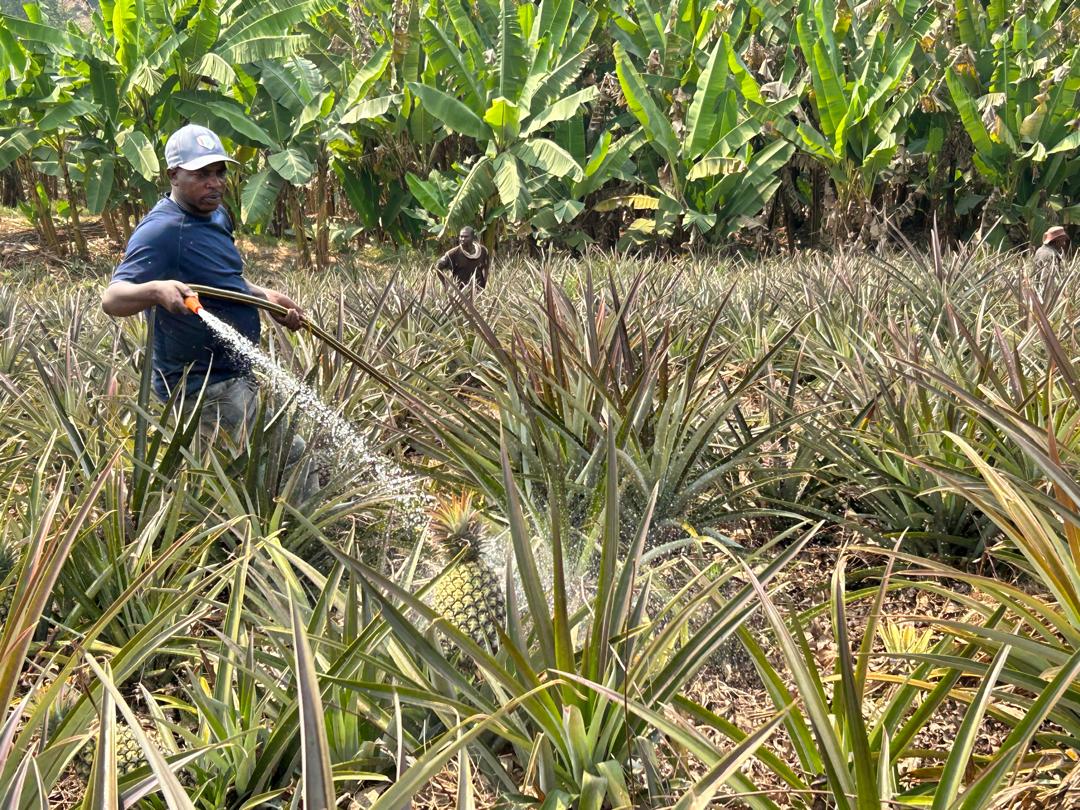
For decades, six long months of drought meant despair for farmers in Bugesera. Laurent Hakizamungu knows this struggle well. With five hectares of land lying idle, he would fetch water in jerricans, spend too much on pumping costs, and watch crops wither before harvest.
Today, in his retirement, things look different. Thanks to a government subsidy program, Hakizamungu now irrigates his entire farm.
“I used to engage in simple subsistence farming on two hectares, which was not profitable due to the high cost of water during drought seasons. With irrigation, I have put my land to proper use and now see drought as an opportunity, not a curse,” he says.
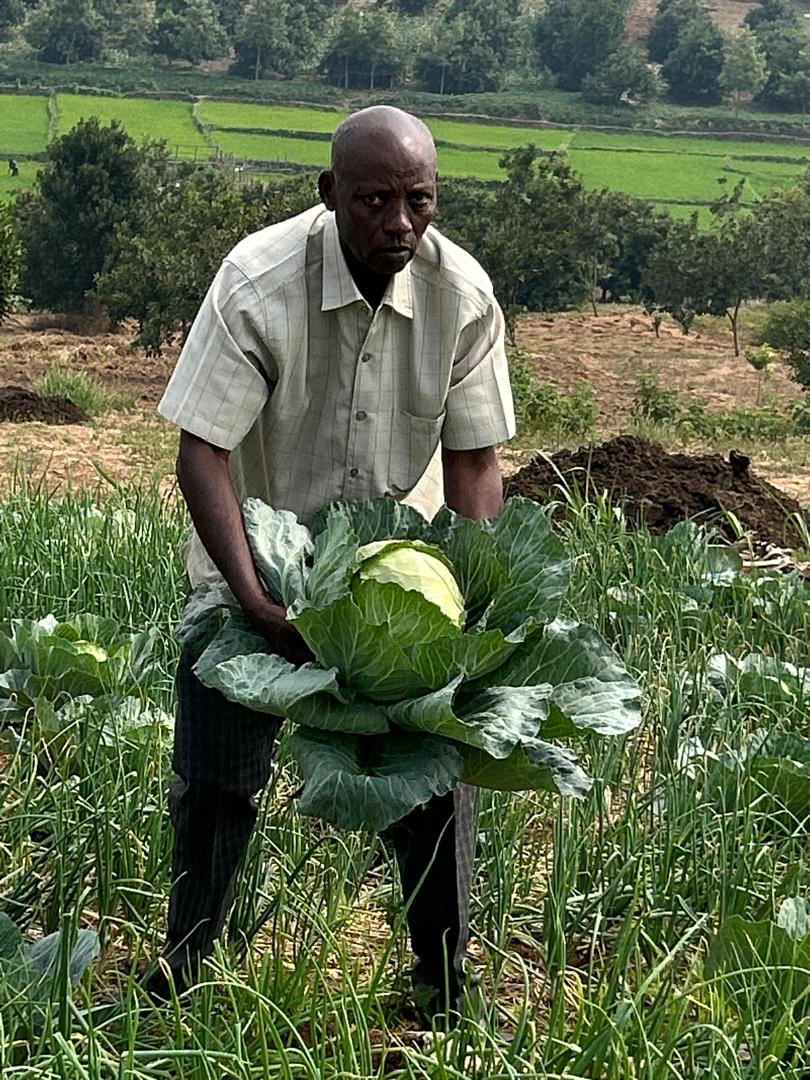
Laurent Hakizamungu harvesting his cabbage plantation
This season, he expects to harvest 30 tons of cabbages and 40 tons of onions—a bumper yield he had never imagined. Still, Hakizamungu worries about his neighbors who cannot afford irrigation tools and continue to rely on jerricans.
A Shared Demand:
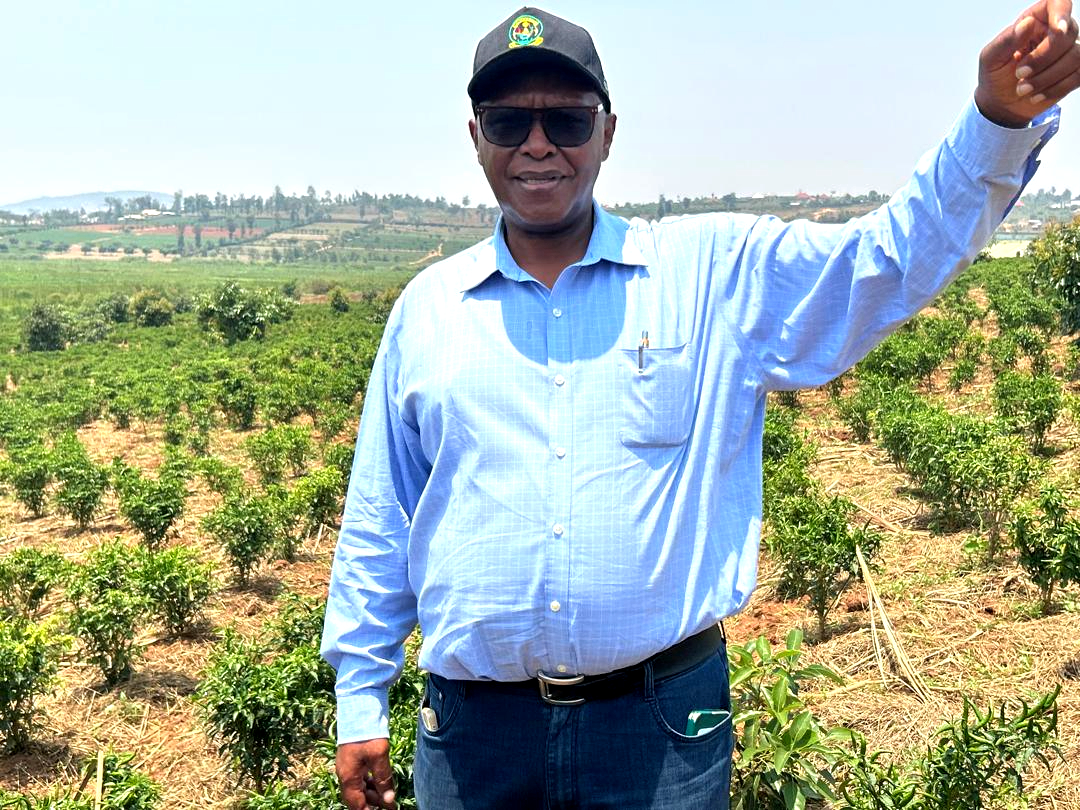
Raphael Rurangwa in his chilli farm is concerned about his neigbour’s demand for water
Like Hakizamungu, other farmers benefiting from irrigation say the program is a game changer, but they want the benefits spread more widely.
In Nyamata, chili grower Raphael Rurangwa secured support to irrigate his 8.6 hectares after years of struggling with water shortages. His fields are thriving, but he feels the pressure of neighbors asking him to share his water.
The government irrigation support “is a good solution but it also comes with challenges, said Rurangwa. “When other farmers see water, they want us to share, even though it was planned for eight hectares, making it difficult to help for a long time.”
For him, the solution lies in group farming models, such as Food Basket Sites (FABOS), which encourage farmers to consolidate land and share irrigation. “This is sustainable because it can help us harvest big and sell to the market as one,” he says.
Neighbors Pitching In:
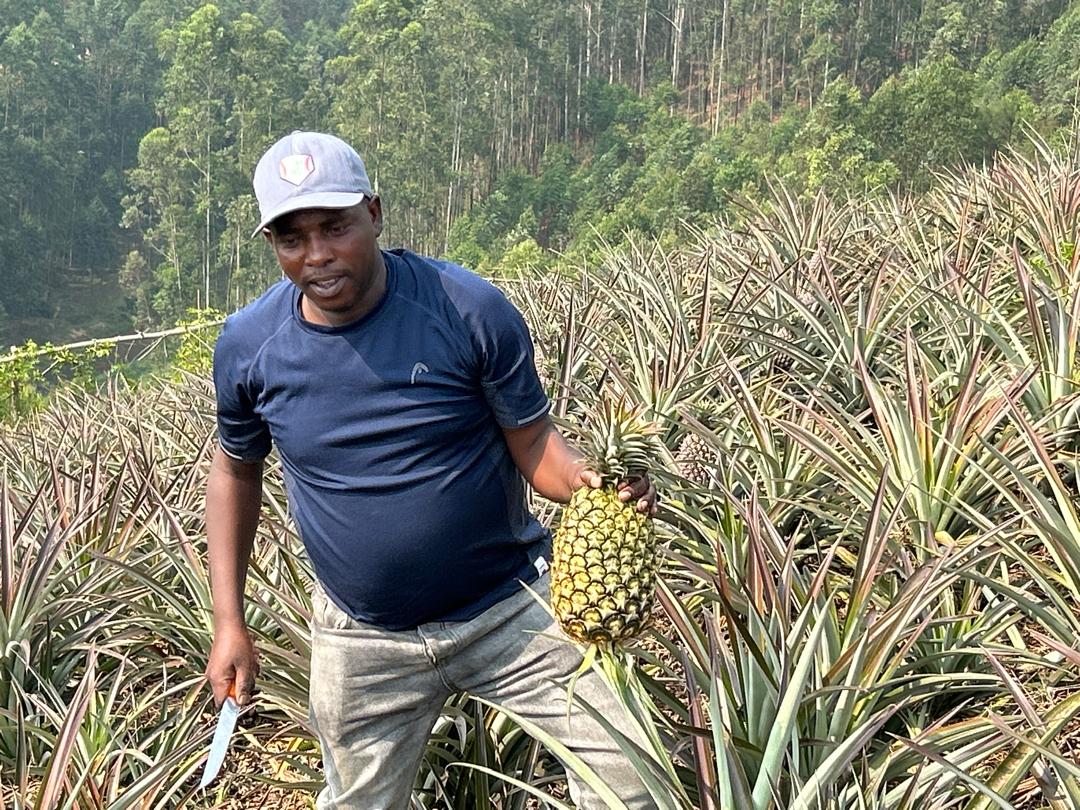
Vedaste Nteziryiman in his uphill pineapple plantation
In Nyamagabe, Vedaste Nteziryimana also tapped into the subsidies after buying 3.5 hectares of land. He invested in irrigation and now grows 65,000 pineapple trees, 400 avocado trees, and passion fruit.
A trained Community Agriculture Education Volunteer, he hopes to show others that water is the key to success. “Without access to water, I would have ended up farming just to survive,” he says.
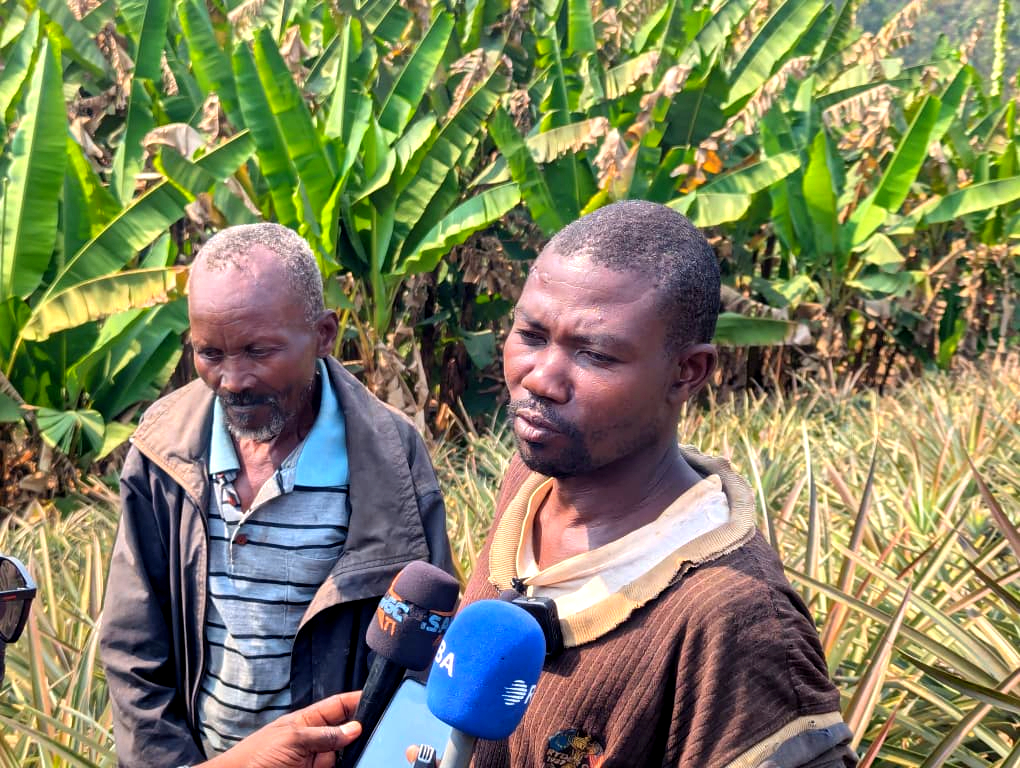
Joseph Sindikubwabo (right) and Fabien Nzamwita
His neighbors Joseph Sindikubwabo and Fabien Nzamwita help him with daily work in exchange for water. “We want the government to adjust this project so that low-income earning farmers, who lack financial resources, can also benefit, even if it means providing pumps for uphill irrigation because we have water streams but cannot access it on our farms,” Nzamwita says.
Not all journeys begin with big grants. In in Cyanika sector, Nyamagabe district, businessman Ignace Kubana decided to start small with just Rwf416,000.
He ventured into avocado farming in a drought-hit hillside where others had given up. His experiment is proving that irrigation can open doors, even with modest investment.
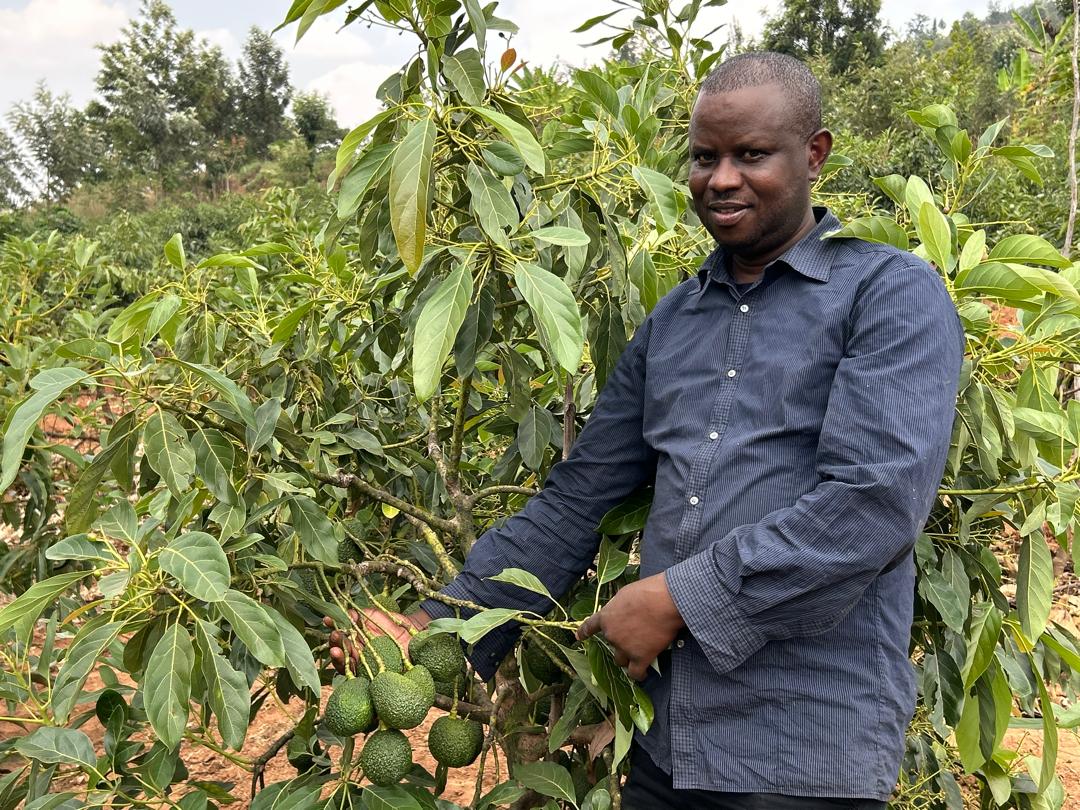
Ignace Kubana in his avocado plantation
The Bigger Picture:
Behind these success stories is the Sustainable Agricultural Intensification and Food Security Project (SAIP), which is now in its second phase running from 2024 to 2026. The \$20 million program is funded by the World Bank through the Global Agriculture and Food Security Program (GAFSP) and implemented by the Rwanda Agricultural and Animal Resources Board (RAB).
Through its Small Scale Irrigation Technology (SSIT) program, farmers receive subsidies covering most of the costs of irrigation tools—75% for solar-powered systems and 50% for horse pipe equipment. So far, $4.9 million has already been spent, helping farmers irrigate 1,074 hectares, above the target of 1,000 hectares.

Mayor Richard Mutabazi
In Bugesera, Mayor Richard Mutabazi says the district aims to expand irrigated land from 81 hectares today to 300 hectares per year, targeting 12,000 hectares by 2029.
“To achieve this target, we will need more funding by sourcing funds internally, working with more partners like SAIP-SSIT, and engaging the community for sustainability,” he says.
As Hakizamungu, Rurangwa, Nteziryimana, and Kubana show, irrigation is turning drought into opportunity. But their message is united: the subsidies must reach more farmers, not just a few, so that entire communities can thrive together.
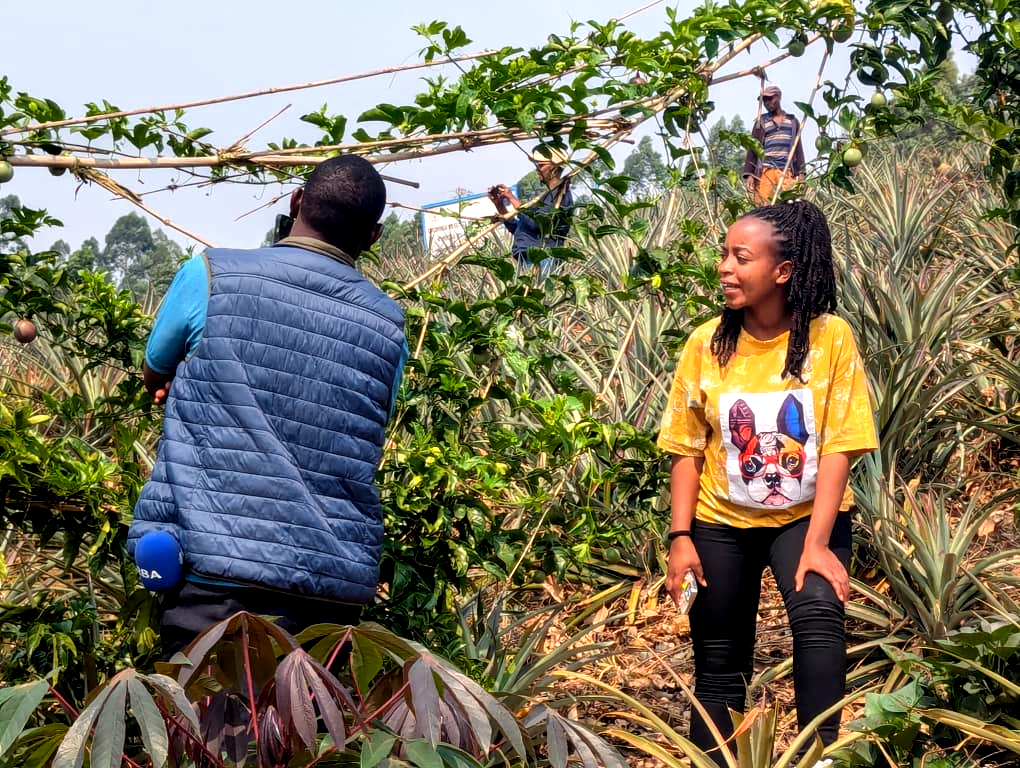
Local journalists enjoy passion fruits grown by Vedaste Nteziryimana