



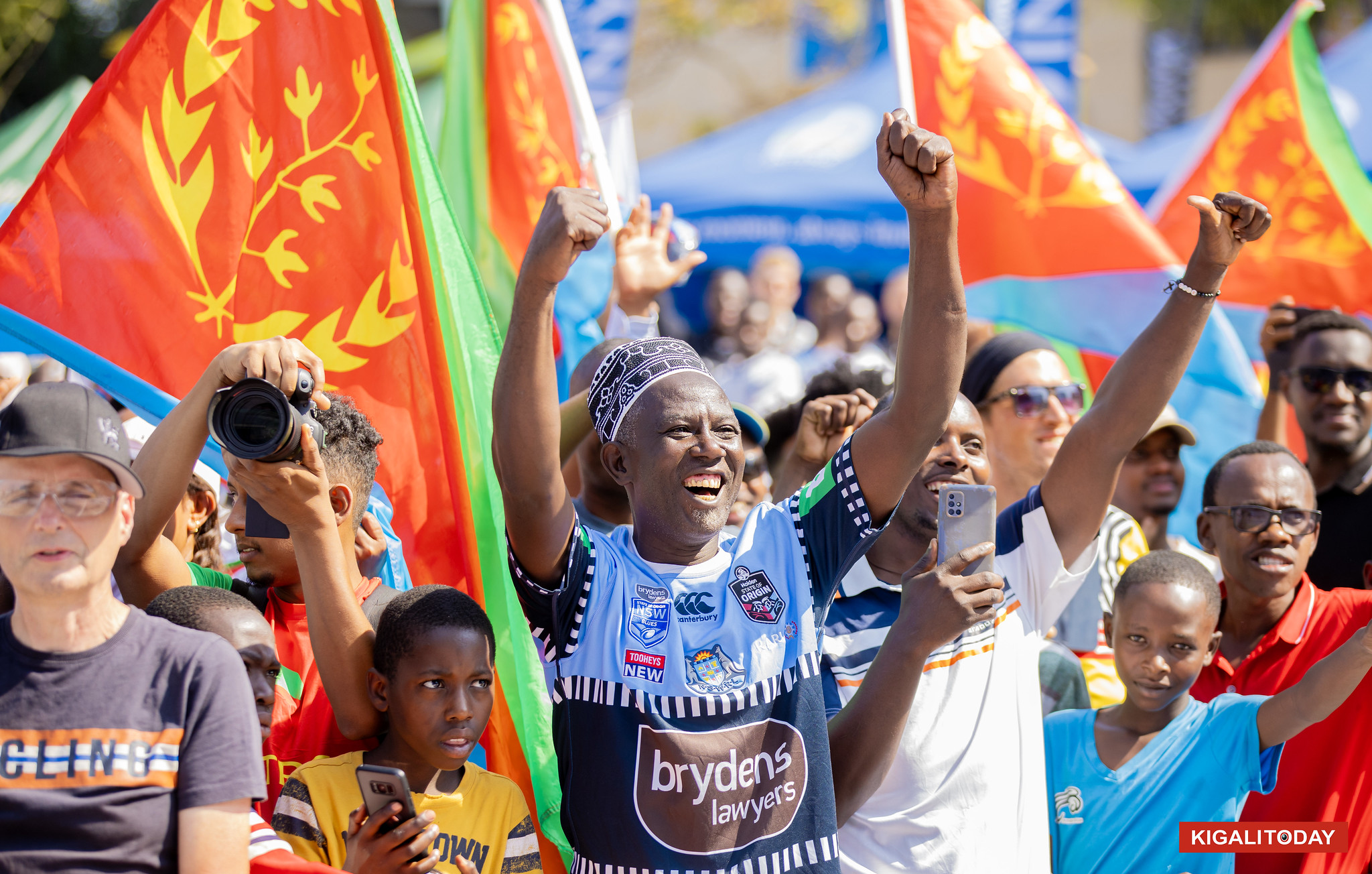
KIGALI TODAY HAS OVER 1,000 PHOTOS FROM THE RACE, ENJOY HERE
On the 26th of September, as the sun dipped over the hills of Rwanda’s capital Kigali, my son turned six.
He didn’t ask for balloons, cake, or toys. His wish was far simpler, yet deeply telling: “Dad, let’s have quality family time with you and watch cyclists.”
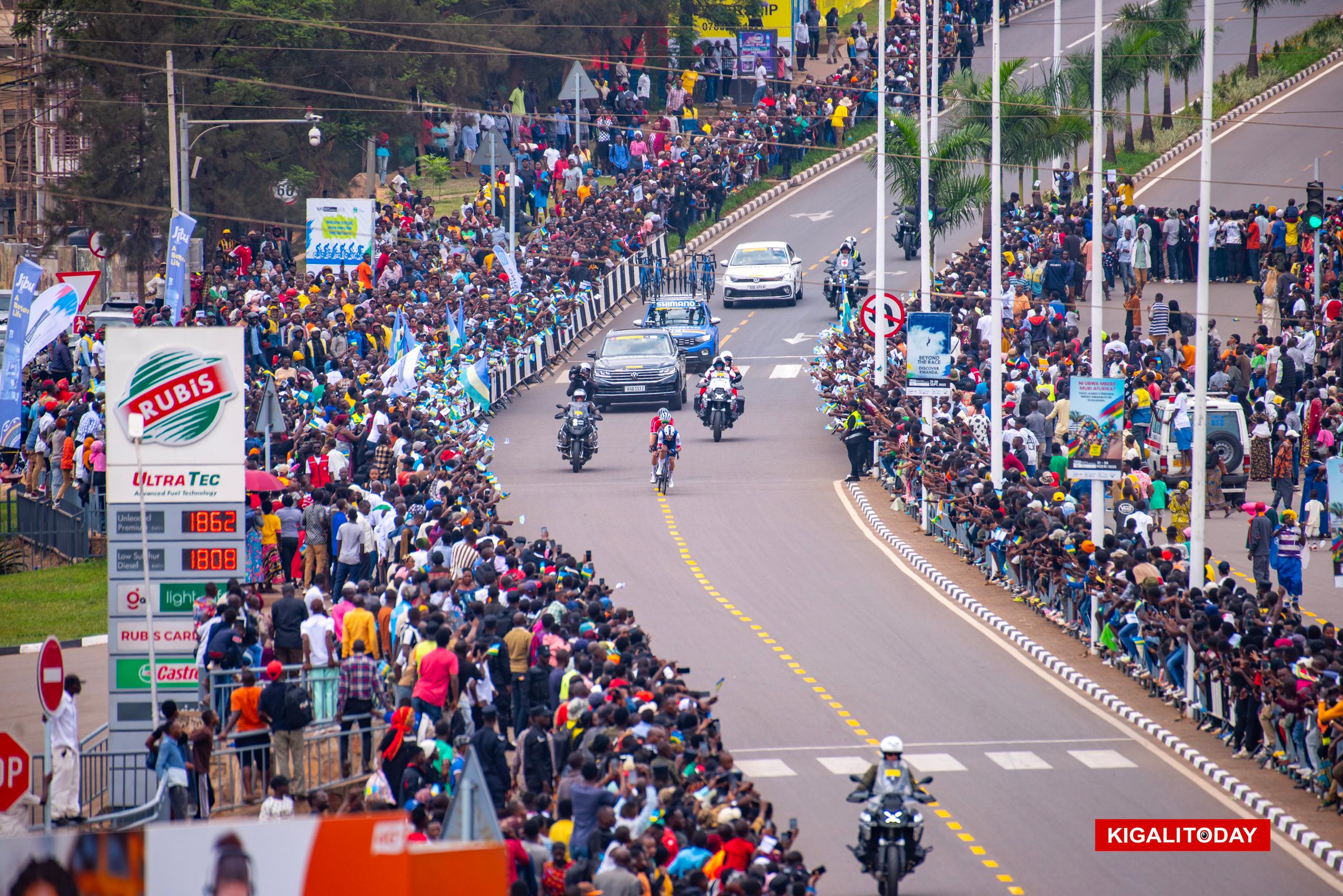
We did. Together with his elder sister, we sat among thousands of voices, the air alive with chants, drums, and cheers that echoed across the streets. As the peloton whizzed past—legs burning, wheels spinning—my daughter leaned in with a piercing curiosity only children possess:
“Dad, what’s so special with Rwanda that it’s hosting all cyclists from all over the world?”
I paused; my gaze fixed on the endless procession of colors on wheels. My answer came, not rehearsed, but from the heart: “Because Rwanda deserves and worked for it.”
“How?” she pressed.
“Because UCI leadership believed in Rwanda and Africa.”
And with that, the questions kept pouring in—questions that demanded answers far beyond a single race, questions that invited us into a story that stretches across history, resilience, and a nation’s unrelenting will to rise.
A first for Africa
The Union Cycliste Internationale (UCI) World Championships had never before set foot on African soil. For more than a century, Europe—its cobblestones, its Alps and Pyrenees, its cathedrals and squares—had borne the weight of the event. North America and Asia had had their turns. But Africa remained the continent waiting in the wings. Rwanda changed that.
When the UCI announced Kigali as the host, skeptics whispered: could a small nation, landlocked and scarred by one of the darkest chapters of human history, truly deliver a spectacle of such global magnitude?
The answer resounded louder than any whisper.
Voices heard from all sides
From the UCI President, David Lappartient, came this praise: “When they arrived, they thought, ‘Wow, this is really perfectly organized.’ The set-up of the race, the safety measures, and the beauty of Kigali have impressed everyone.”
Amina Lanaya, the Director General at the UCI, also spoke of Kigali setting a new standard. “Rwanda’s capital city … raised the bar so high in organising the global cycling event that future hosts will have to work harder to match its standard.”
At home, former national riders felt pride. Joseph Areruya, double champion of Tour du Rwanda, said this is not just another cycling event: “It’s a chance for our riders to measure themselves against the world’s best and dream bigger.”
Adrien Niyonshuti added that the event will strengthen grassroots cycling programs and leave behind a lasting legacy.
From competitors, the challenges were honest and vivid. Demi Vollering, after the time trial, said: “My feeling was not good today … The high altitude, punishing heat and variable air quality combined to make Rwanda’s test against the clock a unique challenge.” She still fought and won bronze.
The hills as stage and teacher
Rwanda’s hills are more than geography—they are metaphors of life. To cycle in Rwanda is to understand its story: the relentless climb, the breathless descent, the refusal to flatten out into mediocrity.
Each rider who battled Kigali’s sharp inclines was, in a way, conversing with Rwanda’s past. They climbed where survivors of tragedy once climbed back from despair. They descended through valleys that once echoed with silence but now resound with praise.
They sprinted on roads where children run barefoot, chasing not just bicycles but dreams.
It is no wonder that riders, beyond medals and jerseys, have spoken of Rwanda with awe. They remarked not only on the technical precision of the organization, not only on the crowds who cheered as though every cyclist was kin, but on the meaning of racing in a land where resilience is the national tradition.
More than a race
What set this UCI Championship apart was not merely the competition. It was the life it touched and the stories it unearthed.
Some riders left the polished tarmac and joined farmers in the countryside, bending their world-class bodies into the rhythm of subsistence farming. They tilled the soil, exchanged laughter, and found themselves not in hotels or podiums but in the humble embrace of the land.
Others swapped their carbon-fiber machines for the rugged, squeaky bicycles of rural riders. They pedaled with children whose daily commute is a winding mountain path, not part of a training regimen. In that exchange, cycling rediscovered its original heart—not sport or industry, but life itself.
This was Rwanda’s strength: to show that cycling here is not borrowed but born. Not a show for the world; a heartbeat of the people.
Kagame’s words, Rwanda’s voice
At the 194th UCI Congress, held during the Championships, President Paul Kagame addressed the gathered nations: “We are deeply inspired by you, and we will be there every step of the way to cheer you on.”
He reflected on how bicycles have long been part of the continent’s daily life—tools of transport and connection—and how now they had become symbols of global solidarity and achievement.
Rwanda’s sports leadership also spoke of “privilege and responsibility.” Nelly Mukazayire, Minister of Sports, said Rwanda does not just take pride in being host but feels a weight of expectation—to deliver at the standard many eyes would watch.
History backdrop, future as horizon
To understand the grandeur of this UCI in Rwanda, one must remember where Rwanda has come from. Thirty years ago, the country was synonymous with genocide, division, and despair. The idea of hosting the world for sport—let alone the most grueling of endurance sports—was once unthinkable.
But Rwanda’s story is one of transformation, of refusing to be defined by tragedy. The same hills that bore witness to tears now witness cheers. The same roads that carried refugees now carry champions. The same soil that drank blood now grows unity.
Cycling became a symbol in this journey. From the humble beginnings of the Tour du Rwanda—a local event attracting regional attention—to its elevation as a UCI 2.1 race, and now to hosting the world, cycling has mirrored Rwanda’s trajectory: uphill, resilient, unstoppable.
Africa’s turn
For Africa, this was more than Rwanda’s moment. It was the continent’s arrival.
The peloton here was not a mere visiting caravan. It was a statement: Africa is ready to host, to organize, to inspire. Africa is not only a consumer of sport but a contributor, a stage, and a storyteller.
Young Africans along Rwanda’s roads did not just watch; they dreamed. They saw themselves in the jerseys, in the determination, in the sweat. Perhaps in those crowds stand the next champions—born in Kigali, Addis, Nairobi, or elsewhere.
The brilliance of organization
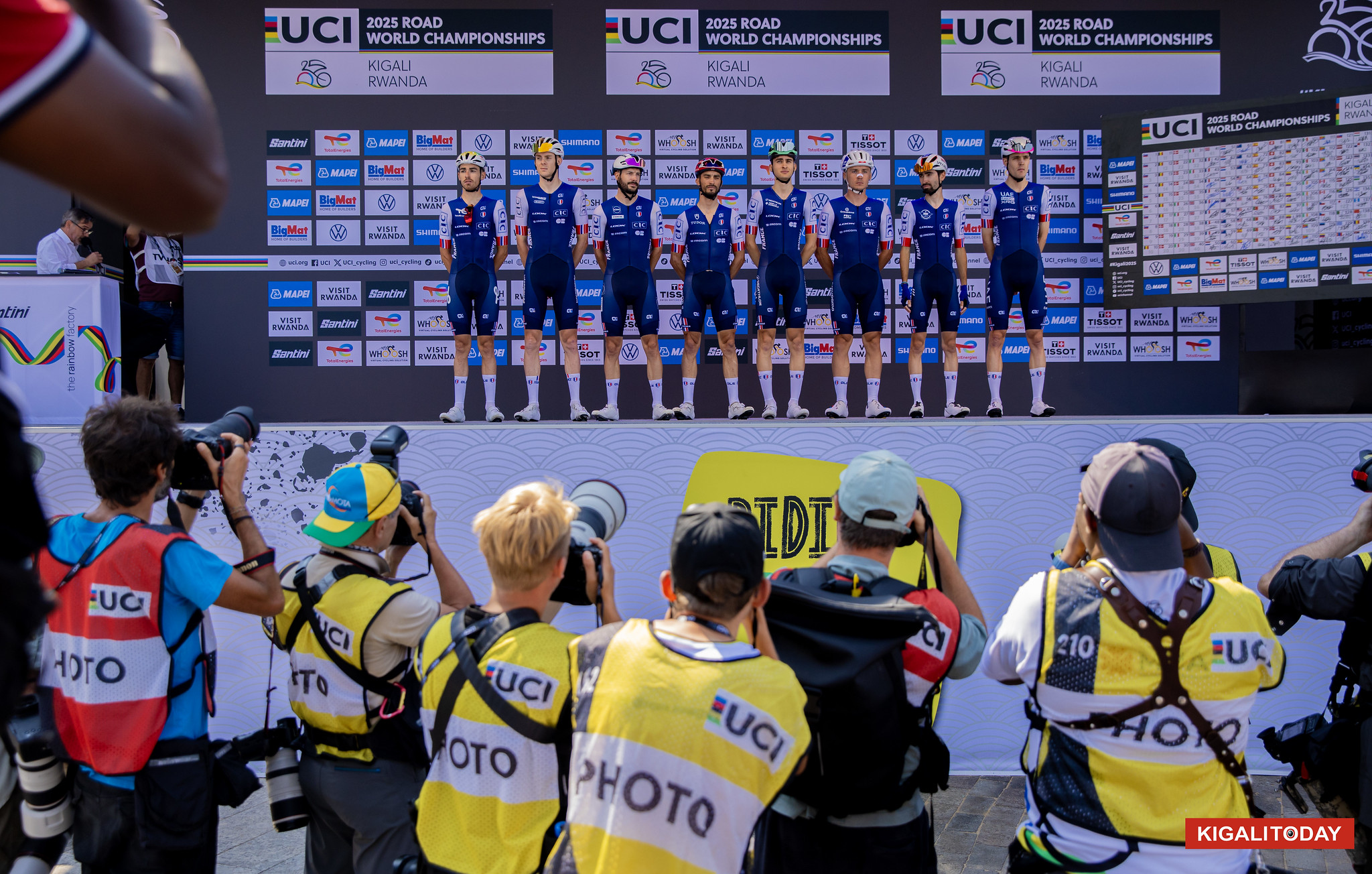
The world noticed. UCI President described the event as “perfectly organized,” with race set-up, safety measures, and the ambience of Kigali leaving an impression.
Local officials reassured everyone that infrastructure, hotels, communication—all were ready. Nelly Mukazayire declared, “We can confidently confirm that we are ready … ensuring that everything will run smoothly.”
A family’s memory, a nation’s legacy
As the race unfolded, my son’s eyes gleamed with joy, and my daughter’s questions did not cease. To them, this was both spectacle and classroom. To me, it was family time woven into national history.
We watched not just cyclists but Rwanda itself, riding uphill against the weight of history, descending with grace into the future, sprinting with courage into a destiny it has earned.
I realized then that the UCI World Championships in Rwanda were not simply about medals or winners. They were about stories—of a family, of a nation, of a continent.
Beyond the finish line
When the final rider crossed the finish line, when flags were lowered and chants quieted, Rwanda remained. The hills remained. The resilience remained.
The world had come, and the world had seen. And in seeing, the world understood: Rwanda is not a footnote in cycling; it is a headline. Africa is not waiting to be invited; it is hosting.
For my children, the memory of this day will outlast the results. They will remember the hills, the riders, the questions, and the answers. They will remember that on a birthday, we did not only celebrate six years of life but centuries of resilience.
And perhaps one day, when they are asked why Rwanda hosted the world, they will answer with the clarity of lived truth: “Because Rwanda deserves and worked for it.”
The Writer is the Editor-in-chief of Kigali Today Ltd, the parent company of KT Radio 96.7FM (plus for 4 other provincial channels), KT Press and KigaliToday.com
4 comments
Wooi this article deserves a 🌟 🌟 🌟 🌟 🌟 award. The best story telling slice among thousands of the events.
Man 🤝 U did it U kept simple, precise and heart touching.
Rwanda iragahorana Imana n’ibyiza.
I hope the UCI was just a beginning of the endless shows
Absolutely smart and interesting one.
Wooooow
Amazing 🤩
Comments are closed.