





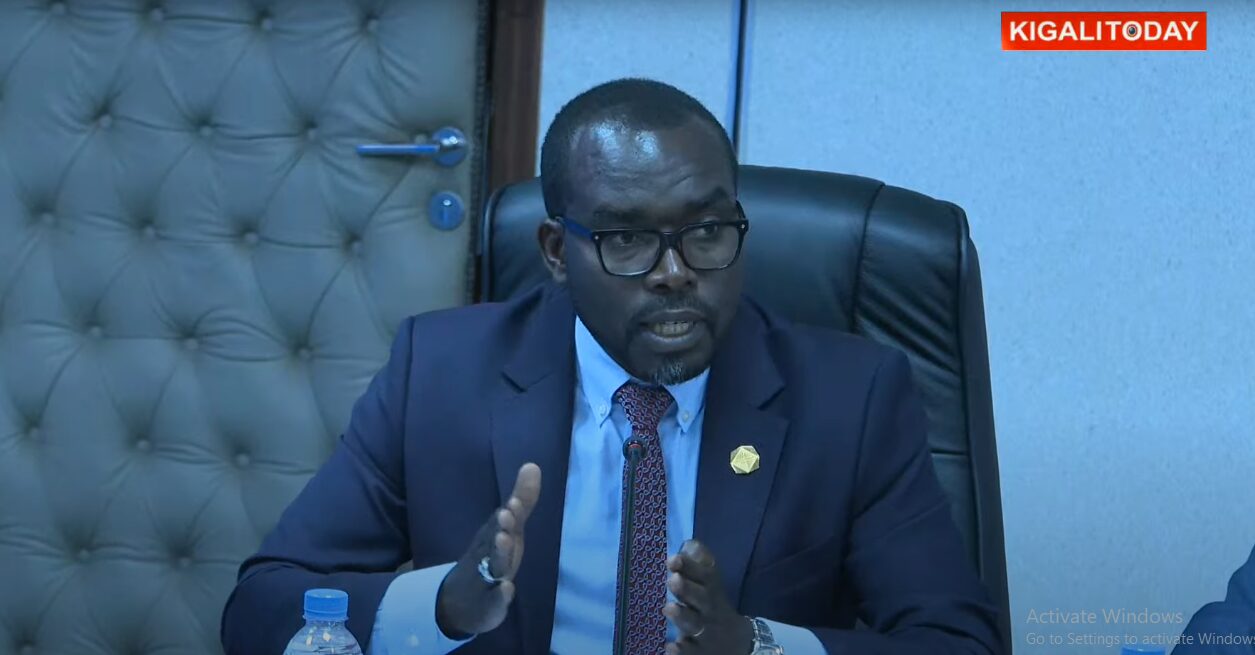
Prudence Sebahizi, Rwanda’s Minister of Trade and Industry
When the United States government announced a sweeping shift in its trade policy in August—introducing a new 10% flat customs tariff on imports from various countries—it sent shockwaves through many export-driven economies. But in Kigali, Rwanda’s capital, the reaction was different.
Instead of sounding alarms, Prudence Sebahizi, Rwanda’s Minister of Trade and Industry, took to the podium with a message of confidence, even optimism.
“We are lucky as a country to be among those that will pay the most minimal tariff compared to other countries,” Sebahizi told reporters. “This is an opportunity for Rwanda. We should not be worried by that decision.”
That optimism isn’t baseless. Rwanda, a small but increasingly strategic player in global trade, is turning what could be a constraint into a catalyst for deeper economic transformation.
Beyond the Tariff: A Strategic Pivot:
Unlike many other nations facing higher tariffs or more restrictive trade terms under the U.S.’s new reciprocal tariff system, Rwanda has managed to maintain a relatively favorable position.
The 10% flat tariff may seem like a setback, but for Rwanda, it’s being viewed as a manageable adjustment—especially given the context of new trade agreements with the Democratic Republic of Congo (DRC), facilitated by none other than the U.S. government itself.
These agreements, Sebahizi noted, will act as a conduit, especially for Rwanda’s booming mining sector, which stands to benefit the most.
“Key exports like tin, tantalum, and tungsten—already in high demand by U.S. tech and manufacturing firms—are unlikely to be directly affected by the tariff. This is where Rwanda will leverage its advantage,” Sebahizi explained.
Mining Momentum and Economic Growth:
The confidence expressed by the trade minister is rooted in Rwanda’s recent economic performance. According to the latest Q2 figures, Rwanda’s economy grew by 7.8%, with mining and quarrying among the top-performing sectors.
- Mining and quarrying saw a massive 12% growth, driven by rising global demand and new bilateral deals.
- Agriculture grew by 8%, with coffee production skyrocketing by 121%, thanks to new plantations and improved harvesting techniques.
- Manufacturing and construction also saw solid growth at 8% and 5% respectively, contributing to a more balanced industrial ecosystem.
Although trade figures in Q2 were modest, Sebahizi reassured the public that the industry sector’s full-year performance will show strong results, especially in reducing the trade deficit.
Navigating the Global Trade Waters:
Rwanda’s strategy moving forward appears clear: diversify, innovate, and regionalize trade partnerships, while also maintaining strong ties with global partners like the United States.
The 10% customs tax, instead of being viewed as a punishment, is being reframed as a challenge that Rwanda is well-equipped to meet—and even turn to its advantage.
“Our trade vision is not short-term. We are building resilience and value addition into every sector, especially mining, agriculture, and services,” Sebahizi said. “This new tariff doesn’t stop us. It is an opportunity for us.”
A Resilient Vision for the Future:
With U.S.-facilitated trade deals, booming sectoral performance, and a government that views challenges as stepping stones, Rwanda is charting a bold path in the face of global economic headwinds.
Rather than buckle under new customs rules, Rwanda is doing what it does best—adapting, innovating, and turning policy into opportunity.