


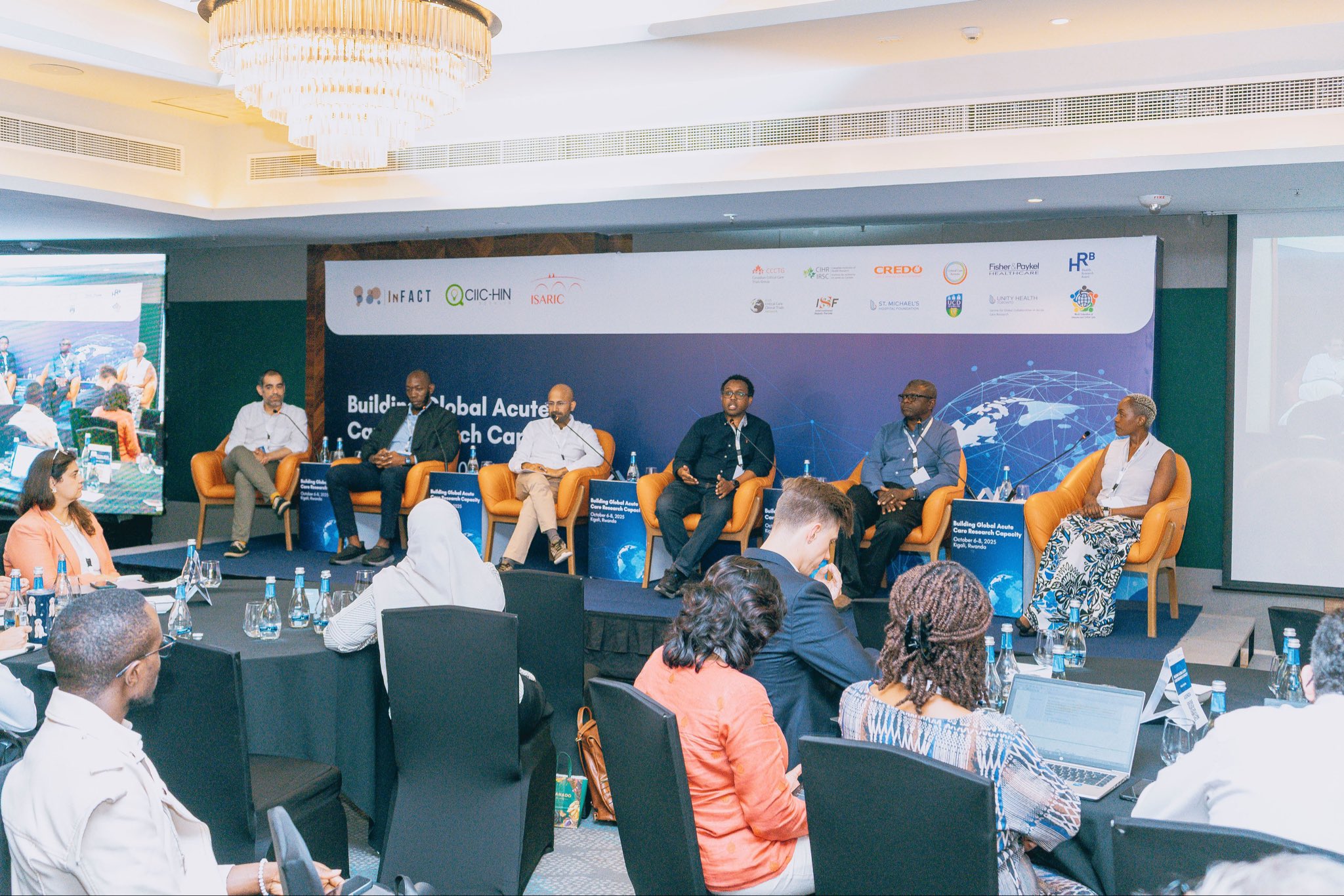
In a meeting that is concluding in Kigali on Building Global Acute Care Research Capacity, John Marshall, Professor of Surgery and Critical Care Medicine at University of Toronto gave two ideas to attract public attention on how the ‘dear health’ is being taken for granted, but also proposed how the world can make a U-turn.
“If you live in Kigali and fly, for example, to London, you’ll fly over a number of different countries and you’ll land in London. And that’s because London, Kigali, and all of those countries coordinate air traffic control. They are all working together to make sure that flight paths around the world are integrated and they’re safe,” he said and paused a bit before giving the second idea.
“If you look at the weather forecast for today, the reason we know what the weather is going to be like is because there are weather stations all around the world that monitor what’s going on, monitor cloud patterns, wind shifts. And so we can predict what’s happening around the world.”
From these two ideas, the seasoned professor drove his point home and said “It’s kind of remarkable to me that in health care, where it has the most impact on who we are, we don’t have similar networks that allow us to understand what’s going on in Rwanda and how that affects people in Canada, to understand what Canadians are doing and how that might help people in Uganda.”
For Professor Marshall, “there is need to have the same sort of sense of integration that we do for anything else that humans need to live together on the planet.”
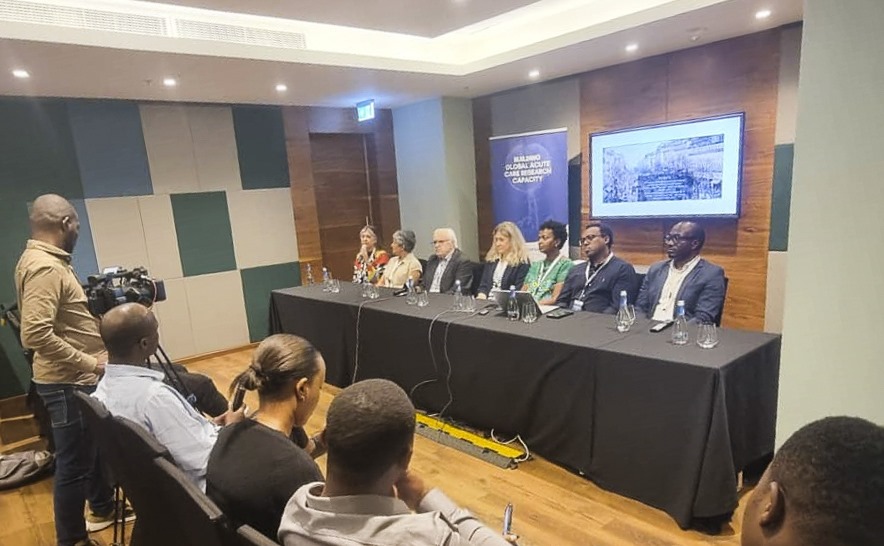
Some of the participants during a press briefing
This is exactly what clinicians from around the world are trying to achieve since a couple of years and this time round they convened in Kigali for a-three day meeting, but Marshall first and foremost explains their scope.
He said that theirs is not to make and try drugs from hospitals, rather he said, “We look after critically ill patients, and in looking after those patients, we realize that certain things we probably could be doing better, certain things we don’t really know what the right way of doing it is. And so we ask the question, for example, how much blood should we give a patient? What levels should we transfuse them at? How should we control their blood sugar? How should we provide them with air on a ventilator?” Thus, a meeting like the one in Kigali becomes important because clinicians share experience.
The host is CIIC-HIN, an organization whose vision to generate evidence for better health policy and practice, and to develop transformative health-system solutions and products that improve lives while building local and regional research capacities and capabilities for sustained development.
Prof. Jeannine Condo, the Chief Executive Officer of the Organisation said that the meeting intends, “to explore ways of supporting capacity building or different ways that our researchers, our clinicians can be also involved in drug discovery, clinical trials and so forth.”
Also making a similar point like Professor Marshall, she said the meeting “also seeks to connect, to learn from colleagues from outside, from Dublin, from Canada, other networks that exist in there, to learn how we can do even better together as we are preparing for getting ready. Whenever you have a pandemic or a threat, this is the right platform that we are putting in place now in Africa so that we can all be strong together.”
For Condo, the meeting positions researchers and clinical researchers to be ready to move forward with research ideas that would bridge clinical gaps.
Participants already have recent examples of threats in clinical researches, which push them to act today in order to be prepared to future challenges. Those threats include pandemics that befell the humanity like COVID-19, Ebola and recently Marburg and from this they draw their resolve to act quickly, without delay.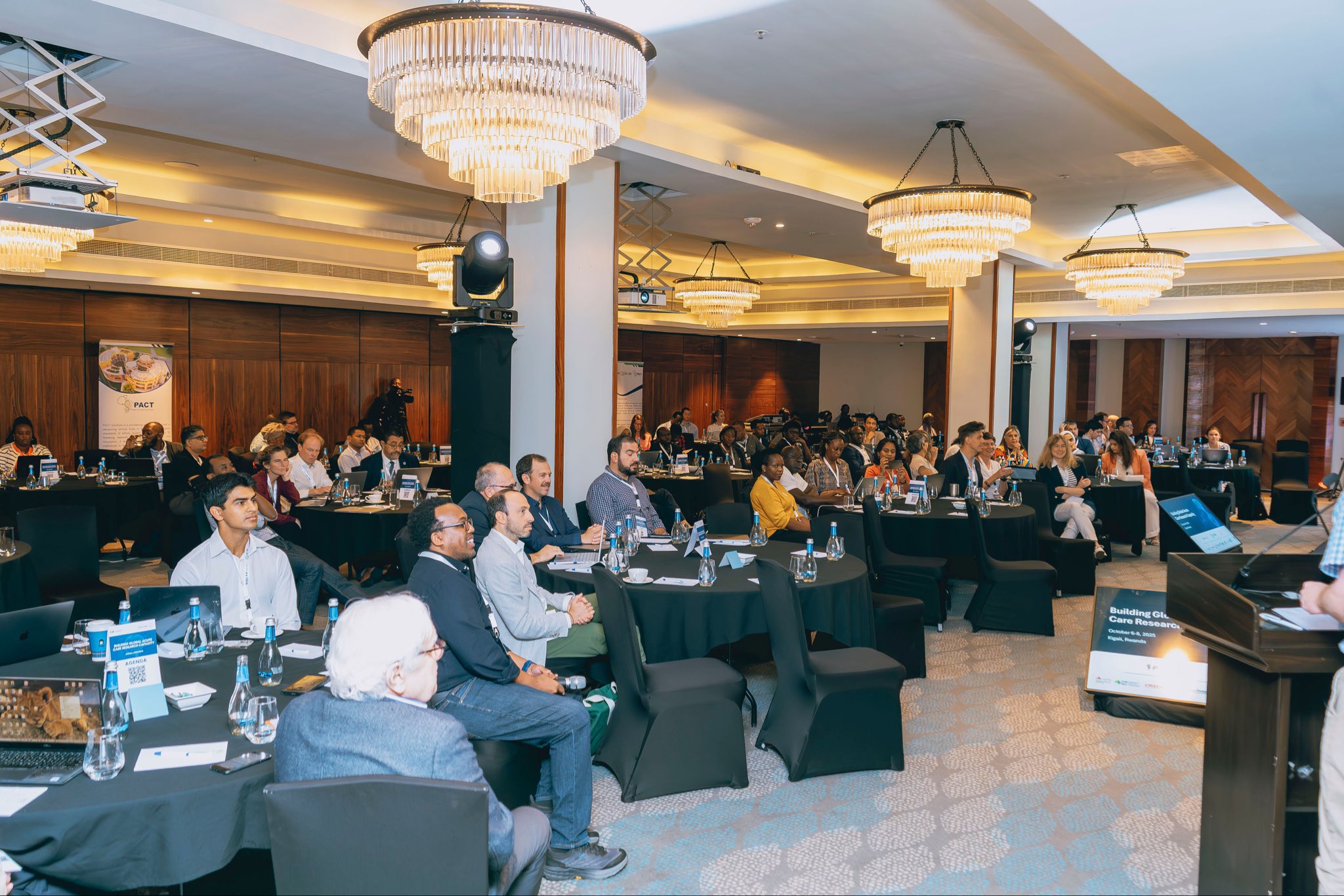
They have noted that clinical trials are concentrated in developed countries, yet low and middle income countries also need to be part of the trends, reason why Rwanda being the host this year, is an advantage, not only for the country itself, but also for African continent at large.
“I think that hopefully this is the first step towards Rwanda taking the same kind of high-profile leadership role as countries in the global north did in running clinical trials,” said Marshall.
Engaging the patient in trials
Participants in the meeting concur on an important point, that any trial should never be conducted without considering the patient as an important part of the research.
However, Dr. Madia Hashmi, chair of Department of Critical Care Department at Ziauddin University-Pakistan said it requires awareness to bring the patients on board, because it is not obvious that they will understand the difference between treatment and research.
She said, they might also need to know that, the research may not benefit them immediately, but may help future patients.
Several challenges that prevent low and medium income countries from doing trials, include poor funding, and lack of time of conducting the trials, because clinicians are always busy with intensive care of patients.
However, in the case of Rwanda, Condo’s CIIC-HIN does not sit back. She said they sometimes find some five weeks to train clinicians from their workplace after collecting existing gaps.
One of partners who pledge support of these local initiatives is the University of Global Health Equity(UGHE), according to Olamwole Sadami, the head of clinical trials at the University who said, that they want “to create an ecosystem of high-quality research.”
Participants say that networks like this in Kigali are important because 60% of acute care research comes from these kinds of networks rather than from companies that are developing a new drug.
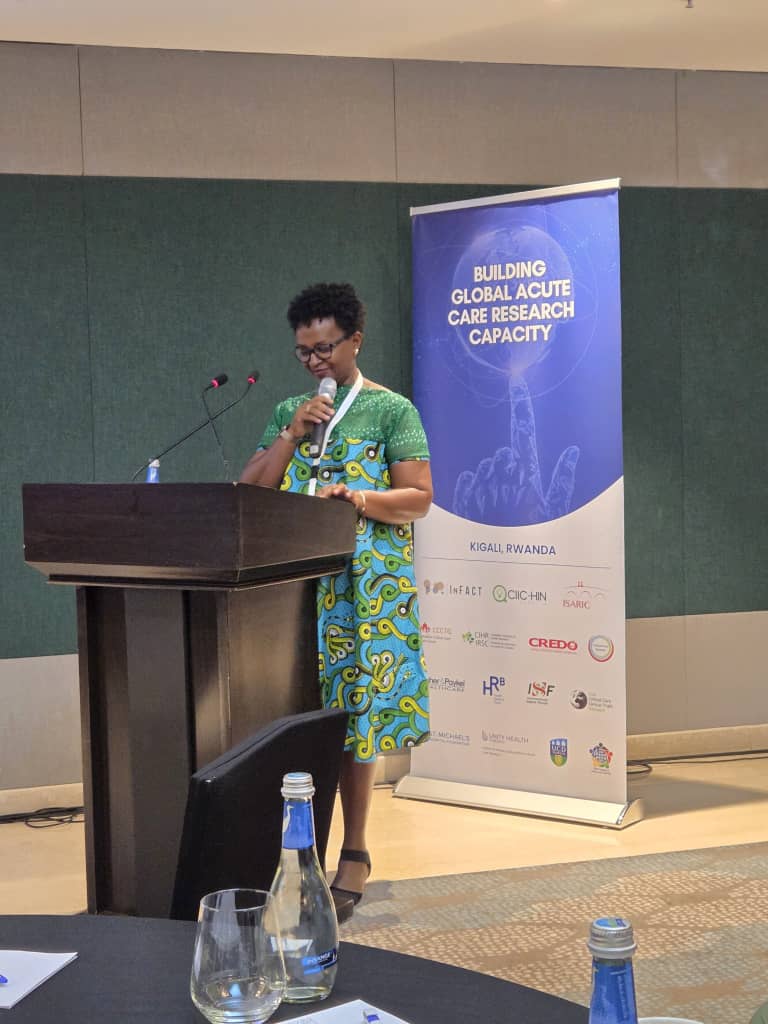
Prof. Jeannine Condo
They remind that drugs are not always the first thing to do when there is a threat. In case of advances in Ebola, said Marshall, saving lives in Ebola, it’s not about—primarily about getting drugs that kill the virus. It’s about understanding how to manage all the fluids that are lost during that period.
Meanwhile, countries were reminded that not all trials are expensive, reason why some models will be developed soon and rolled out in low and middle income economies.
Last year in Dublin – Ireland, a similar meeting took place in September and made a call to action for trialists, research teams, networks and trial groups, patient and public representatives, clinicians, allied health, and funders to work together in a collaborative approach, to revolutionize the way clinical trials are conducted.