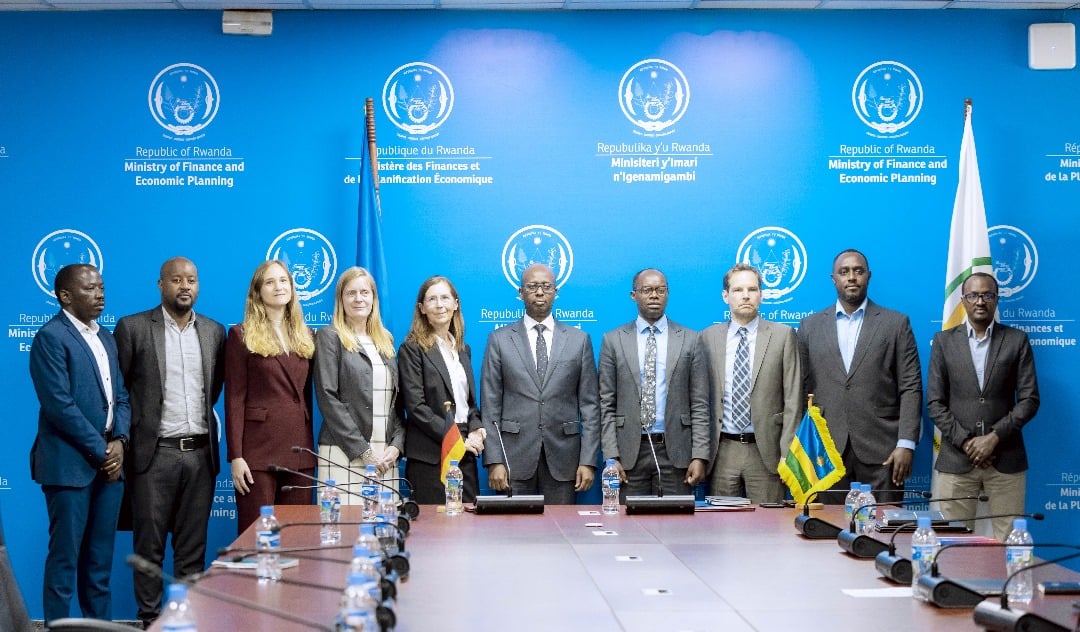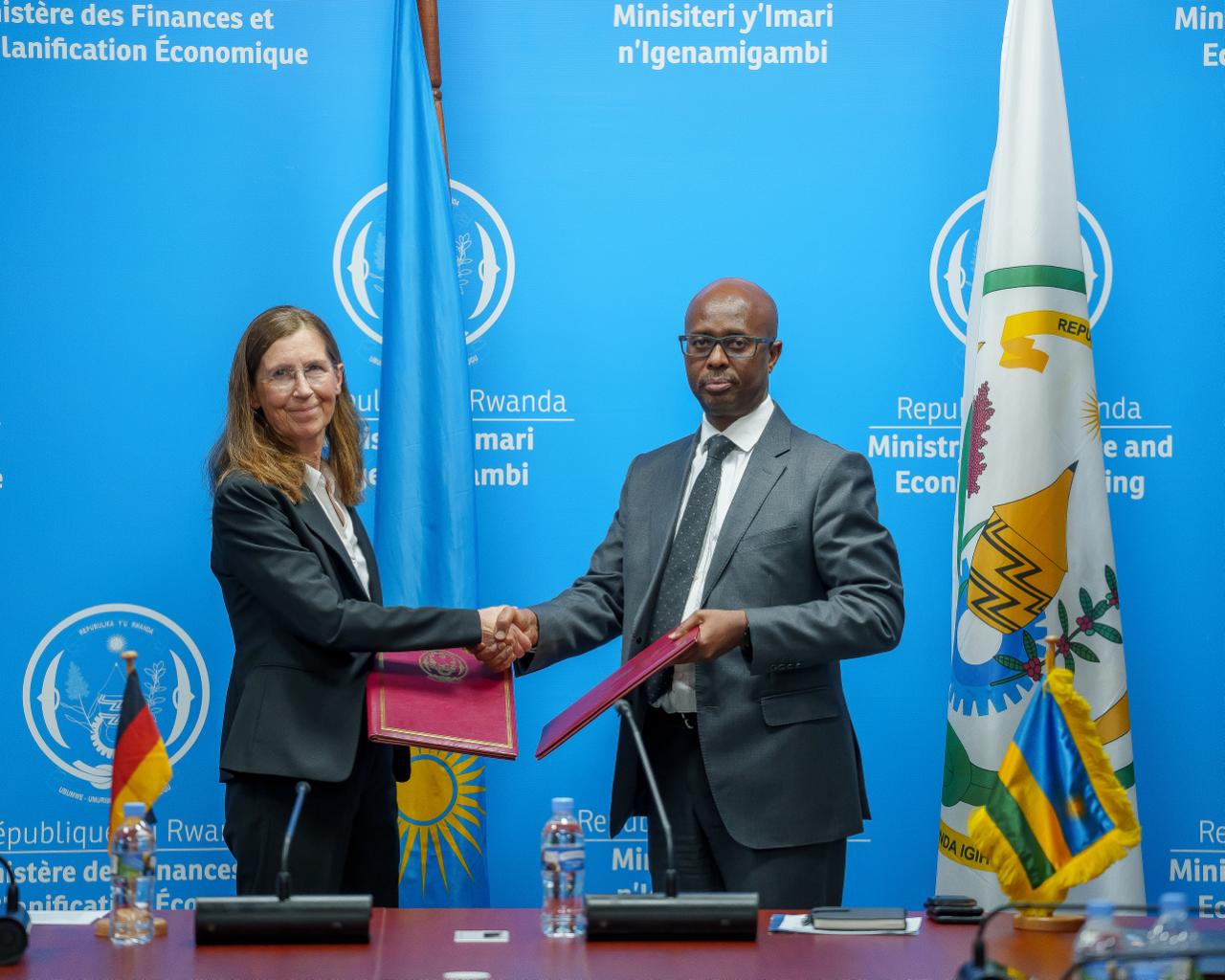
Kigali – Rwanda and Germany have signed a new EUR 18 million (approximately RWF 30.5 billion) grant agreement aimed at strengthening Rwanda’s inclusive social protection system and supporting efforts to lift vulnerable households out of poverty.
The agreement was signed between the Government of Rwanda and the Federal Republic of Germany, represented by the German Development Bank (KfW).
The funds will be implemented through the Local Administrative Entities Development Agency (LODA), which oversees community development and social protection programs across the country.
According to the Ministry of Finance and Economic Planning, the grant will reinforce key pillars of Rwanda’s social protection framework, particularly the Vision Umurenge Program (VUP)—a flagship initiative designed to accelerate poverty reduction and support the graduation of poor households from extreme poverty.
Speaking at the signing ceremony, Minister Yusuf Murangwa hailed the grant as another milestone in Rwanda’s partnership with Germany.
“This grant from the Federal Republic of Germany through KfW is a re-affirmation of our shared commitment and partnership to invest in the well-being of the people of Rwanda,” he said.
Germany’s Ambassador to Rwanda, H.E. Heike Uta Dettmann, emphasized the immediate and long-term impact of social protection on vulnerable groups.
“Rwanda has shown that investing in its population leads to a meaningful reduction in poverty,” she said. “Social protection has an immediate impact on the most vulnerable, and the project signed today is a joint step toward this goal.”
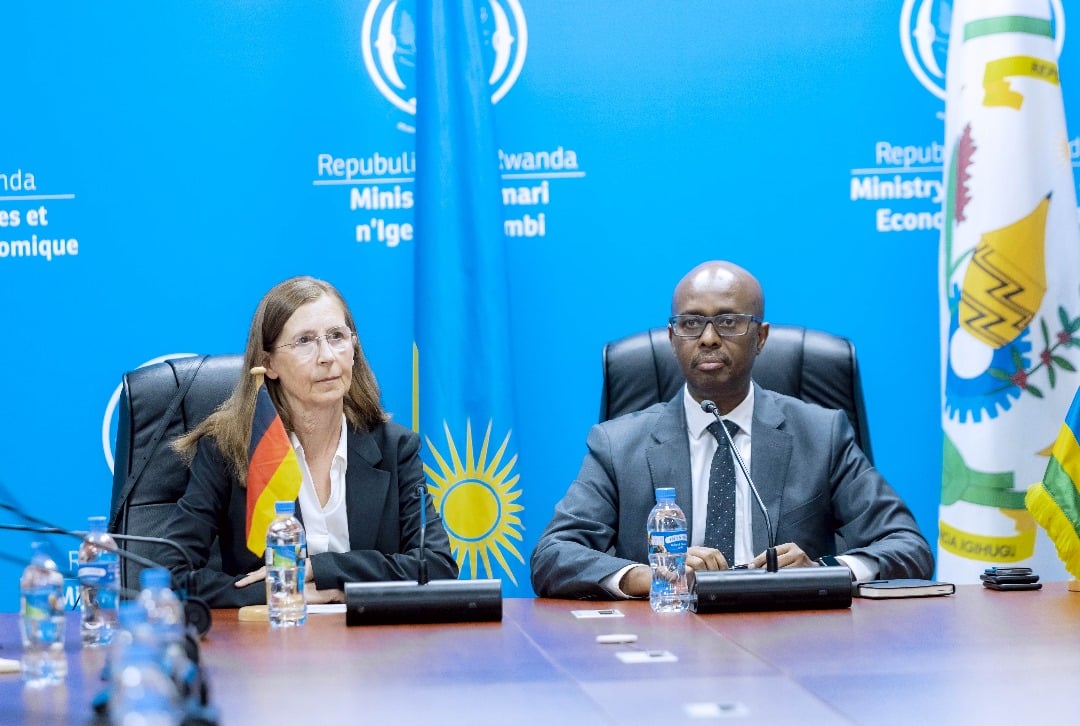
The new funding will expand support to poor and vulnerable households through direct income transfers, public works, and community-based development projects, ensuring that social protection reaches those who need it most.
Officials said the grant also reinforces the two countries’ long-standing cooperation in promoting sustainable development, resilience, and inclusive growth.
This partnership continues Germany’s strong support for Rwanda’s social sector and aligns with the national goal of ensuring that no Rwandan is left behind in the country’s journey toward equitable prosperity.